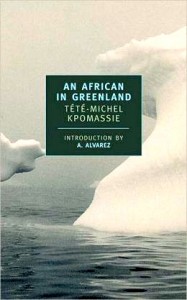
Note: This novel was WINNER of the Prix Littéraire Francophone International in 1981, and its English translation was one of The New York Times‘ Notable Books of the Year in 1983. It is a New York Review Books Classic.
“The view from my room overlooked the scattered houses, and I could see straight into the fjord where icebergs floated. An intense light slanting onto the houses, casting long shadows and reddening the tundra, showed that it was early morning. A morning after a night without darkness…Nothing moved in this strange morning light. The silence was overwhelming.”—the author’s first experience with “the midnight sun” in Greenland.
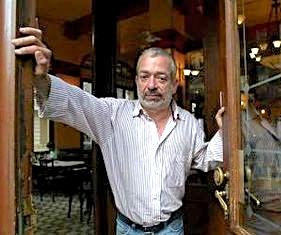
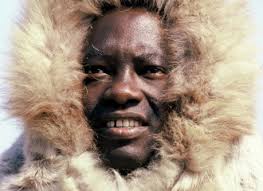
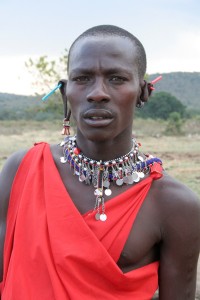
 If the title of this book doesn’t pique your curiosity from the outset, the photo of the author, below, probably will. The astounding ironies – the contrasts between what we are seeing in the author photo vs. what we expect when we see someone wearing traditional Eskimo (Inuit) dress – are only the first of many such ironies as Tete-Michel Kpomassie, a young man from Togo in West Africa makes a journey of discovery to Greenland. Kpomassie, the sixth of his father’s children by five wives, has lived a traditional life in his African community, attending school through the sixth grade, earning money by making straw mats from coconut fronds, climbing tall palms to get coconuts, and even saving lizard grease to improve virility. On one of his family’s trips into the dense vegetation to get coconuts, Tete, then sixteen, climbs to the top of a tall palm, then finds himself face-to-face with an enormous python sharing the top of the tree. As he tries quietly to slide back to the bottom of the tree, unnoticed, the snake follows him, and when he drops to the ground, he experiences intense pain, then falls unconscious.
Days and nights of traditional treatments for snake bite fail, and as his delirium increases, his father decides, at last, that the herbal medicines he has been using may, in fact, be poisoning his son. The only alternative is to take his son into the Sacred Forest where he can be treated by priests of the python snake cult. Days later, after a terrifying experience with more pythons as part of his cure, Kpomassie is well enough to travel, but there is a catch. He is now pledged to the python gods who have saved his life. When, during his recovery at home, he visits an Evangelical Bookshop, he discovers a book called The Eskimos of Greenland in Alaska by Dr. Robert Gessain, which he buys with his savings. The fact that Eskimos have a hunting tradition like his own but live where there are no trees, no snakes, and no hot weather appeals to him far more than the life of a priest in the cult of the python. He decides at that moment to run away.
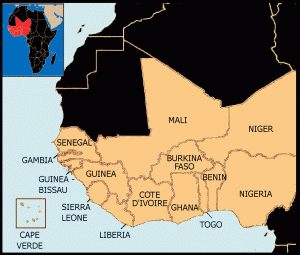
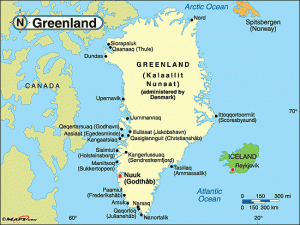
Double-click to enlarge map.
For the first sixty pages, the author describes life in Togo in lively detail, setting the scene for his lengthy journey from Togo to Copenhagen to get a visa for Greenland, an autonomous country within the kingdom of Denmark. As he travels over the years through Ghana, the Ivory Coast, Senegal, and Mauritania, before arriving in Marseille, Paris, Bonn, and eventually Copenhagen, he clearly establishes his background and experiences and the mindset and cultural background he will be bringing with him when he finally gets to Greenland after ten years of working toward that goal. In the interim, he reads constantly, learning about life in other parts of the world, befriending citizens of these countries, becoming fluent in German and French, and sensitively observing the differences between his culture and those of the other countries in Africa and Europe in which he has lived. By the time he is finally able to get a visa for Greenland, he is twenty-six, a highly skilled “anthropologist,” observing cultures and recognizing what is important, having learned what he needs to know through his own unconventional daily life.
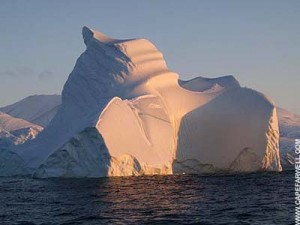
Iceberg at Cape Farewell, the southernmost tip of Greenland
In June, sometime in the mid-1960s, he leaves, at last, for Greenland, ill-equipped but full of enthusiasm, trusting in his ability not only to make his way in that country, which has fascinated him for years, but also to become part of the Eskimo culture there. Taking off in a cargo boat with eight other passengers, he enjoys the long days of the midnight sun (with the ladies on board sunbathing till eleven o’clock at night), before experiencing a horrific gale, followed by dangerous ice floes and icebergs as he approaches Cape Farewell, the southernmost tip of Greenland. His arrival in Julianehab (called “K’akortoq” in the book, and “Qaqortoq” on most internet sites), is at least as exciting for the inhabitants waiting at the dock as it is for Kpomassie: “As soon as they saw me, all talking stopped. So intense was the silence, you could have heard a gnat in flight. Then they started to smile again, the women with slightly lowered eyes…” Eight inches taller than the average Inuit, he is deemed kussanna (handsome) by the local women, a word he is to hear many times over the next sixteen months as he lives with the people of Greenland.
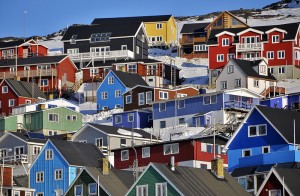
Photo of Qaqortoq (K’akortoq), the first village where Kpomassie stays. Note the pervasive snow on the ground. Photo by Kunuk Abelsen
The local inhabitants are universally hospitable, perfectly happy to provide a place for him to stay and to share meals and drink. Their children are allowed to do what they want, with little discipline, a pattern that extends to the schools, where teachers are extremely patient, rather than strict. Though people work for most of the day when there is sunlight, they get “tanked up” early at night and celebrate all occasions, with a whole month dedicated to celebrating Christmas. The Inuit willingly provide him with the fur clothing he needs in the winter, and the women in the families with whom he stays make him the specially sized boots and garments that he needs. Cooked rare reindeer steak is the tastiest food on the menu, which also includes the raw lungs and livers of seals, raw seal meat, raw birds, fish, the dried skins of whales, and the fat from seals and whales. Even dog meat is part of the diet. Cooked food is the exception, and in the winter, with temperatures that can be minus forty-five degrees, it is not unusual for food, even when heated, to contain ice crystals.
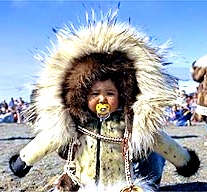
Inuit child in traditional dress (plus binky). Photo by Joel Sartore/Getty/National Geographic
With a wonderful eye for the telling detail, Kpomassie observes the differences between Greenland, the world in which he grew up, and the world in which he has lived in Europe. He becomes real, a stand-in for the reader who will enjoy living through his journey vicariously. The people he meets not only represent their culture but emerge as individuals through their interactions with him. Despite language differences, he is able to communicate and share their lives, and because of his honesty and his curiosity about their culture, he makes many friends in Greenland – and with the reader who shares his enthusiasm for discovery. His departure from Greenland is bittersweet, but eventually he feels that it is his “duty to help the youth of Africa to open their minds to the outside world.” His return to Europe and his later life as a citizen of the world, are testimony to his sense of adventure and his commitment to looking beyond the local to the universal.
Photos, in order: The author’s photo is from http://samfunnet.sib.no/
The map of West Africa, by Mondo Magic, is found on http://upload.wikimedia.org/ (Double-click to enlarge.)
The Iceberg at Cape Farewell, the southernmost tip of Greenland appears here:http://www.telegraph.co.uk/
Qaqortoq (K’akortoq), the first village where Kpomassie stayed, is colorful but snow-covered. Photo by Kunuk Abelsen. http://www.capscandinavia.com/
The Inuit child, photographed by Joel Sartore/Getty/National Geographic, is shown in traditional dress (plus binky). http://environment.nationalgeographic.com/
The Map of Greenland is from https://www.maps.com/ Double click to enlarge.
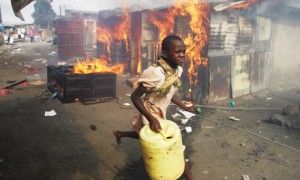
 These vibrantly descriptive opening lines introduce a chapter that is a textbook example of good writing, drawing in the reader, establishing an atmosphere, suggesting character, hinting at a father’s relationship with his son, and presenting a familiar scene of a child who can hardly wait for his first bicycle. By the next page, the author has created a much broader, more dramatic context for these characters, expanding the setting, placing this small episode in the context of the larger community, and suggesting ominous new directions for the action. In less than three hundred words, I was hooked. The author’s writing is so confident that I, too, became confident that this debut novel would deliver a well-wrought story with well-developed characters within the fraught atmosphere of Nairobi in 2007, and that it would do so with style and intelligence. It does.

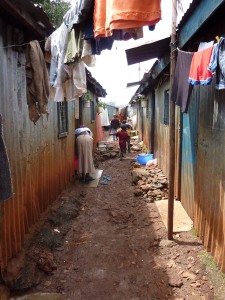
 This can’t-put-it-downer of novel about three generations of a disturbed family excites and unnerves the reader at the same time that it puzzles and terrifies with its eerie atmosphere and constant sense of imminent doom. A coming-of-age novel with a twist, it reveals the trials of a young boy, age six when the novel opens, constantly moving with his father through dark locales from Sweden to Denmark, and the reader quickly discerns that the father is hiding a terrible secret from the boy, who is never named, and from everyone else. The boy and his father clearly love and support each other, but they are constantly moving, and their lives are always changing with the father’s succession of oddball, low-paying jobs. The father, whom we come to know well, is obviously educated and intelligent, though he works doing manual labor, and when he has time at night, he tells the child stories about a King and a Prince who no longer have a home.


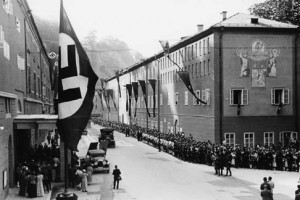
 Otto J. Steiner, an Austrian whose diary from July, 1939, to August, 1940, forms the basis of this novel, is not talking here about any imminent danger he feels because he is of Jewish descent, and though he is aware that some Jews and gypsies have been “transferred,” he is puzzled about why: “What’s the connection between the Jews and the Gypsies? They have nothing in common. Apart from being wanderers.” Few people know of his Jewish background because he has never practiced any religion, and he is not really concerned much with politics. He is a “pariah” because he is dying of tuberculosis and is confined to a sanatorium, not allowed to mix with the general population unless he leaves under his own power for occasional walks. The immediate problems Steiner faces – isolation, declining finances, the delayed rent owed him by a young couple living in his apartment in Salzburg – complicate his life in the hospital by threatening his ability to remain in a single room, instead of a ward. His wife has died, and his sister living in Vienna is married to a “bourgeois and a snob” and does not communicate with him. His son has emigrated to Palestine. The only thing that keeps him going is his love of music, the recordings he has brought with him, his phonograph, and his desire to go “one last time” to the big Festspiele, which will be held in Salzburg in six months.

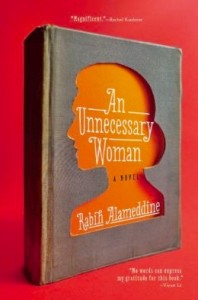 Told by Aaliya Saleh, a woman who “long ago abandoned [herself] to a blind lust for the written word,” this remarkable literary novel by Lebanese author Rabih Alameddine allows readers to follow the speaker into worlds which often feel familiar because of the emphasis on books the reader knows, but also into other worlds, previously unknown, based on her life in Beirut. The speaker tries to be empathetic – and totally involved – with her own reading, but she recognizes that most people read about crimes and tragedies believing they are done by “other people. ” We think we understand these “others” when authors show us (or tell us) during a novel that they have been “emotionally abused by their parents or had domineering fathers, or were dumped by their spouses.” When Aaliya says, “I am Raskolnikov…I am you,” she means it, but she also cautions the reader not to draw too many conclusions: “If you read these pages and think I’m the way I am because I lived through a civil war, you can’t feel my pain. If you believe you’re not like me because…only one woman chose to be my friend, then you are unable to empathize.” She is who she is, take it or leave it. “Like the bullet, I too stray,” she admits. “Forgive me.”