“She had been forced into prudence in her youth, she learned romance as she grew older: the natural sequence of an unnatural beginning.”
Anyo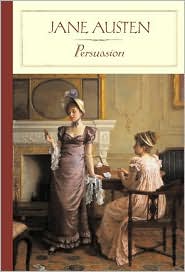 ne who loves the writing of Jane Austen cannot help but hope that this quotation from her last completed novel reflects her own life (1775 – 1817). Certainly Persuasion is a romantic novel, but in her depiction of main character Anne Elliot, Jane Austen also reflects a kind of freedom–and a confidence in her own sense of direction–that one does not find in her earlier, more mannered novels. Perhaps the book seems “freer” because she was ill and had less opportunity to revise and make her plots and characters conform exactly to the moral certitudes and the rigid codes of behavior of her day, but she also subjects some of her “overly proper” characters here to repeated scorn, and she celebrates honesty and the ability to see reality in less mannered ways.
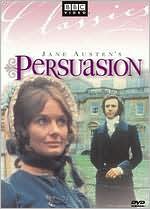
Anne Elliot, age twenty-seven as the book opens, is an older than usual heroine for Austen. As a very young woman, she had been deeply in love with Frederick Wentworth, a handsome young naval officer of no fortune and uncertain prospects who loved her deeply. The two became engaged, but Lady Russell, acting on behalf of Anne’s deceased mother, persuaded Anne to break off her engagement, convincing her that Wentworth could never be happy within their elegant family or make her happy, since she would be an outcast from the family and from the society she had always known. Anne has forever regretted the fact that she allowed herself to be persuaded, and for the past eight years has not been attracted to anyone else, turning down a marriage proposal which had been regarded as ideal. When Sir Walter Elliot, in dire financial straits, decides to lease Kellynch to Admiral Croft and remove the family to Bath, Anne has no idea that this will bring Frederick Wentworth back into her life. Wentworth is the brother-in-law of Admiral Croft, who has moved into Kellynch.
Wentworth, now a captain who has made a fortune during the Napoleonic Wars, gradually re-enters Anne’s life, though each tries to ignore the other because of their past sad relationship. Wentworth soon appears on the verge of becoming engaged to someone else, while William Elliot is paying court to Anne. Numerous other characters introduce complications and help develop Austen’s theme of “persuasion”–one character becoming seriously injured when she cannot be persuaded out of taking a huge, physical risk: she insists that she is going to do what she wants to do–that she is a strong person with a strong will. Unfortunately, the girl has little sense.
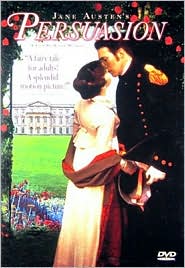 Though Anne has always regretted that she allowed herself to be “persuaded” to give up the love of her life at age nineteen because his prospects did not meet the requirements of her status-conscious family, but she now thinks for herself, while still trying to recognize her responsibilities to others. She is repeatedly embarrassed by the behavior of her older sister Elizabeth and her father as they try to ingratiate themselves with distant cousins Lady Dalrymple and her daughter; she resents her family’s criticism of her because she, “a lady” and an Elliot, might have been seen entering the home of Mrs. Smith, a friend from school, who lives in a poor neighborhood. She distrusts the motives of her cousin William Elliot, the supposed heir to the Elliot family home, Kellynch Hall, a man who has given the impression that he is interested in marrying her. For some members of the family and some of her friends the engagement is a foregone conclusion. William Elliot, however, was once persona non grata in the family because he married a wealthy woman far “beneath” him (now deceased), but he has, in a turnabout, suddenly been welcomed into the family now that Sir Walter, Anne’s father, is in financial straits. Anne is concerned about William’s motivations and does not trust him.
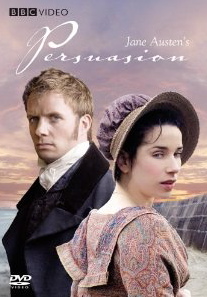 As in all Austen novels, the course of true love never runs smooth among any of the several budding relationships, but by the end, the expected engagements occur among Anne’s social set, though not necessarily among the characters one would have expected. Throughout all the romantic entanglements, Austen keeps Anne Elliot front and center, a voice of reason and good sense when the situation calls for it, yet a woman who, having made a total commitment of her love to Frederick Wentworth years ago, will never be persuaded to settle for less.
This novel is even more feminist than Emma, as Anne has much more freedom to move around the town and countryside and to explore her intellectual interests. Having been persuaded to do something against her will at age nineteen, Anne has taken heart from that lesson. She will never allow this to happen again. When she and Wentworth finally have a chance to open their hearts to each other, the conclusion becomes a celebration of the importance of a good person like Wentworth who has made his own fortune, and a veiled criticism of the artificial status given to birth and blood in English society. Austen recognizes the changes which have begun in England as a result of the Industrial Revolution and she reflects the beginnings of romanticism which parallel it. The paralyzing social expectations have started to change, and Anne Elliot and Frederick Wentworth are poised to participate in those changes.
Notes: As is obvious, many film productions, including two by the BBC, are available for this novel.
Also reviewed here: MANSFIELD PARK, LADY SUSAN, and EMMA.
 Quincy Winterslip is sent to Hawaii to retrieve his elderly Aunt Minerva, who has stayed with relatives in Hawaii long past the time she (and they) had originally intended, he fully expects to return home quickly. Though his family tree has long had “wanderers,” one of whom has settled in Hawaii, John Quincy knows HE is far too sensible to succumb to Hawaii’s charms. His Boston Brahmin roots, his successful investment business, and his “appropriate,” family-approved fiancee are all luring him back home.
 Some inherent racism, seen here on the part of the Winterslips when they meet Charlie for the first time, reflects the times. Biggers is more culturally sensitive than most other writers of the period, however, and in Charlie Chan he creates a unique “hero” who goes on to star in five more novels after this.
 kie Collins’s 1868 “sensation novel” keeps the reader entertained and engaged as a priceless yellow diamond, stolen from a Hindu religious statue of the Moon God in India in 1799, works its black magic and controls the action. Rachel Verinder, heir of Colonel John Herncastle, who murdered to obtain the jewel during the battle of Seringapatam, inherits this possibly cursed treasure on her eighteenth birthday in 1848, only to have it vanish before she can put it into the bank.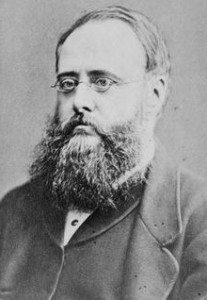
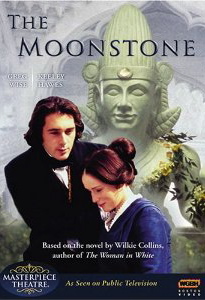 ew is one of the great advances Collins makes in the history of the novel. The fact that this is widely regarded as the first of the great mystery novels (though not dependent on a single detective) is another plus.
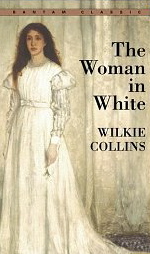 for writing serial romances, alternately attributed to Wilkie Collins, Charles Dickens, and Charles Reade, is epitomized in this 1860 novel by Collins, a story of thwarted love, a marriage of obligation, claims on inheritance, the victimization of women, and, most of all, engaging mystery. Collins, often credited as the father of the mystery genre, creates a fast-paced story of Victorian England, revealing much about Victorian society and its values–the role of women, the laws governing marriage and inheritance, the social institutions of the day, the contrasting attitudes toward the aristocracy and the lower classes, and even the level of medical care and the treatment of psychological illness.
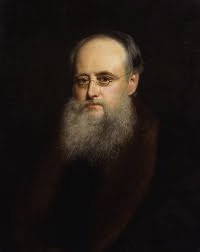 a Fairlie’s deceased mother. The “woman in white” is Anne Catherick, who looks just like Laura, but who is an escapee from a nearby mental asylum. Upon his arrival at Limmeridge House, Walter immediately falls in love with the beautiful Laura, but she has made a deathbed pledge to her father to marry to Sir Percival Glyde, someone Anne Catherick despises and blames for her own incarceration. Throughout the novel, Anne visits various characters to offer help in combating Sir Percival and his cohorts.
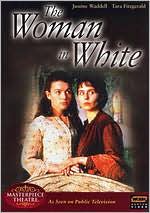 consecutive disasters, along with arguments, revelations of abuse, the fear of exposure, and the contemplation of murder by Sir Percival and Count Fosco, draws the reader irrevocably into the action.
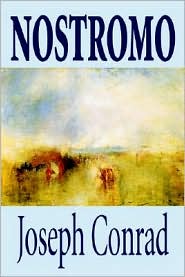 ed as Conrad’s masterwork, Nostromo, written in 1904, is also Conrad’s darkest novel, filled with betrayals at all levels and offering little hope for man’s redemption. A novel of huge scope and political intrigue, it is also a novel in which no character actually wins. All must accept the ironies which fate has dealt them.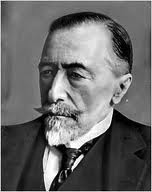
 When Nostromo agrees to protect a load of silver from revolutionaries by taking it out to sea, he takes Decoud with him, leaving him on an island with the silver when they almost sink. Decoud’s reaction to his isolation, and Nostromo’s reaction to the treasure that is suddenly “his,” provide a dark commentary on idealism and human nature.