Note: In April, 2014, Author Deirdre Madden was INDUCTED into the Hennessy Literary Awards Hall of Fame, marking the 43rd year of this award which celebrates Irish writing.
“Time present and time past
Are both perhaps present in time future,
And time future contained in time past.
If all time is eternally present
All time is unredeemable.” T. S. Eliot, Burnt Norton
 There’s an irony to the Amazon reviews of this elegant, but unpretentious examination of time present, past, and future, which the author reveals through the most “normal” of families and the way they live their lives. A large number of reviewers have downgraded this book because it has “no plot,” “nothing happens,” there’s “not much point,” the language is “pedestrian,” and the story is too “domestic.” And yet those who like (and in some cases, even love) the book (on Amazon as well as in the professional press), praise this novel for some of these same qualities: its quiet, contemplative tone; the main character’s desire to preserve the best, most meaningful moments from his life while also wondering if he is remembering “correctly”; his examination of what people did and said in the past and how that affects his present views of them and the past; and his constant daydreaming. He is an ordinary man with an ordinary family – all of whom (with one obvious exception) are a bit more thoughtful and more sensitive than is common in most novels – or in most families – people honest and open with their feelings, even though they are leading otherwise unremarkable lives. Though I am sad for the readers who will forget this book, that fact, ironically, is also part of the author’s point. We all remember from the present what we choose to remember, not necessarily what is “real,” and that, in turn, helps us to shape our futures.

For me, this was a rare and engaging novel with “voices” that speak directly from the characters’ hearts, and there is little sense that an author is present, pulling the strings and determining outcomes. It is 2006, and Ireland’s economy, the Celtic Tiger, is at its peak. Main character Fintan Terrence Buckley, age forty-seven, works as a legal advisor at an import/export firm in Dublin. Happily married for twenty-four years, he has a doting wife, one son out of college, one son just starting, and a seven-year-old daughter. Fintan, however, has been having some recent episodes in which words and language become strange to him as he stares at objects and people, and on one occasion, “It was as if the air had thinned out and the man [in front of him] was like something that had dropped out of the sky…” He is confused by his own reality and fascinated by the antique photographs at the restaurant where he has met this person. One photo from the past shows a terrible train accident at Harcourt Street Station in 1900, in which a locomotive slammed right through the wall and out the other side, incredibly without killing anyone. He also notices pictures of streets he has walked, past buildings he recognizes, though the people in the photographs are long dead. He ponders – in fact, questions – the reality of these scenes, just as he wonders about the reality of the man in front of him.

1900, a locomotive fails to stop at a station and plows through a wall. No one was killed in this horrific accident.
As the point of view changes from Fintan to members of his family, the reader comes to know Fintan’s mother Joan, with whom few get along. Her memories of time are different, affecting her ability to relate to families in general and to her husband, a loving man whom she had married to escape her parents. Now a widow, she is enjoying her present, and thinks little about the past: “There are worse things to be than a widow in your seventies.” Her unmarried daughter Martina, having returned from working in London after several years, has chosen not to live with her mother, but with her Aunt Beth. Martina has secrets which have had a profound impact on her life. When Fintan later visits Martina and Beth, he finds that little has changed in Beth’s house: “There is still that same air of the past that Fintan remembers from his first visits here, of the quality of time itself seeming different in these rooms.” Beth is still celebrating her twenty-year marriage, when she was in her fifties, to a man she adored, and though he has died, he is still very much alive to Beth in their house.

Statue of Wolfe Tone, which Fintan notices as he walks through St. Stephen Green. The statue is also known, ironically, as “Tone Henge.”
When Fintan asks Martina about some old family photographs, the themes of time and reality develop further. Who is the young woman from a hundred years ago in one of the sepia photos who looks so much like Martina? Who are the people in these family photographs? Are we just passing through our lives and the places we see, and if so, what does the existence of a “real” photograph do to our perceptions? Or does the photograph illustrate reality at a particular moment of time, a kind of reality which we can never really know by looking backward from another time? Then again, does our present grow out of a kind of spooling from a larger past, affecting not just us but other people, too? With Fintan’s sudden interest in color photography, the question of reality and time and our perceptions of both develop still further. He is particularly intrigued with the early use of three separate black and white photographs taken with three separate filters which, when reprinted through three similar filters become one single, colored photograph, a new reality.

Fintan finds the color photo work of “Russian Gotkin” astonishing, and it may have been similar to this photo. A picture of Alim Khan (1880-1944), Emir of Bukhara, taken in 1911. This is an early color photograph taken bySergei Mikhailovich Prokudin-Gorskii as part of his work to document the Russian Empire. Three black-and-white photographs were taken through red, green and blue filters. The three resulting images were projected through similar filters. Combined on the projection screen, they created a full-color image. Double click to enlarge.
As the novel reveals secrets and relationships from both the distant past and the present, the author herself becomes a character, near the conclusion of the novel, narrating the future of these characters whom we have come to know so well and telling us what happens to them as their realities change. With the banking crisis in Ireland and subsequent bankruptcy, families find they have no security, and students graduate and cannot find jobs, often leaving the country and their families to find work, examples the author gives to show how little control we all have regarding our futures, no matter how much we may study and try to learn from the past. “We all of us look towards a personal future that is imaginary…To engage too much with the future, in all its fragility and uncertainty, can make us feel dizzy with unease. Let us think, then, of the past, so that we may speak of real things that have actually happened; conscious always that the past, like the future, also shimmers behind the veil of imagination.”

Young homeless man in Dublin, 2008. after the banks crashed. Photo by Kim Haughton for the Guardian.
Philosophical, accessible, filled with characters the reader comes to know intimately and to care about, lively in its questioning of reality, thoughtful in its examination of the past, and beautifully written in language which is remarkably simple, considering the themes, Time Present and Time Past is a novel which I found completely engaging, one which manages to be charming in its meditations about life without ever being pedantic.

Panorama of Howth, a few miles outside of Dublin, where Fintan, Colette, and their family live.
Photos, in order: The author’s photo is from https://www.tcd.ie
The locomotive crash of 1900 is found on http://www.rareirishstuff.com
The Wolfe Tone memorial statue from St. Stephen Green, sometimes called “Tone Henge,” appears on http://www.welovedonegal.com/
The three-filter photograph, developed by Russians in the early 20th century, is from http://en.wikipedia.org The Russian Gotkin, whom Fintan found astonishing, used the same method as is seen in this photograph. I have been unable to identify who this Russian Gotkin is. Wiki says this is a picture of Alim Khan (1880-1944), Emir of Bukhara, taken in 1911. This is an early color photograph taken bySergei Mikhailovich Prokudin-Gorskii as part of his work to document the Russian Empire. Three black-and-white photographs were taken through red, green and blue filters. The three resulting images were projected through similar filters. Combined on the projection screen, they created a full-color image.
A young homeless man shows the effects of the crash of 2008 on the banking system of Ireland. Many other young men left the country to find work elsewhere. http://www.theguardian.com
The panoramic view of Howth by doyler79 appears here: http://en.wikipedia.org/wiki/Howth
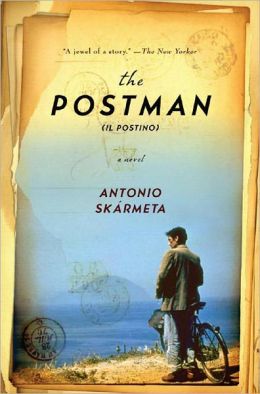
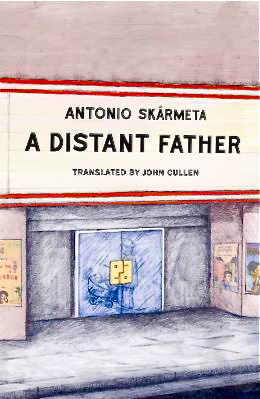 This village schoolmaster, named Jacques, already sounds old, as this small novella begins. In actuality, he is only twenty-one, however, almost a boy, but one who has already seen too much of the sameness of rural life. He has returned to Contulmo, his rural village in southern Chile after college, to be close to his mother, a woman who launders sheets for a living. His French father left them the year before to return to France, shortly after Jacques received his elementary teaching certificate from a college in Santiago. “I got off the train and he got on, boarding the very same car…I didn’t even get a chance to open my suitcase and show him my diploma.” Now Jacques sees no opportunities to broaden his view of life. He does get occasional translation jobs, translating French poetry into Spanish, but these poems are simple, “the things the people around here can understand. Poems by Rene Guy Cadou, village verses, not cathedrals of words,” like the monumental poems published in the Santiago newspapers. Though he is friendly with the local miller, who was his father’s closest friend, he himself is lonely and always sad. “Ever since Dad went away, I want to die.”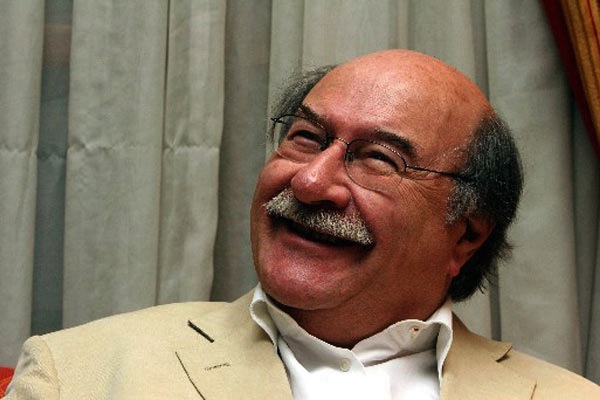


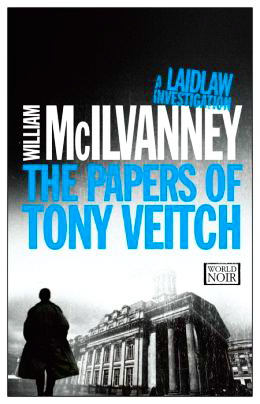 In the second of the three Laidlaw novels, written between 1977 and 1992, author William McIlvanney, considered the “father of Tartan noir,” continues a series that is so masterfully written that calling his novels “noir mysteries” underestimates their universal literary power for the reader. Though few American readers know of these now-classic novels, Europa Editions has decided to change that by reprinting all of them, and anyone who has ever enjoyed a noir novel or who loves mysteries is in for a rare treat. McIlvanney’s ability to describe, to connect even the homeliest and most ordinary details to the grand themes of literature, to create unique characters who linger in the memory, and to make his plots come alive, often with humor, is rare, if not unparalleled. A gifted writer of many genres, McIlvanney abandoned the Laidlaw noir mysteries after his third novel,



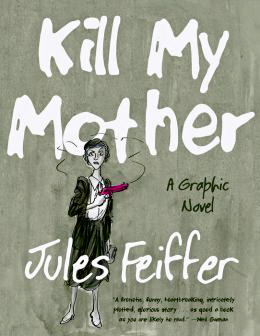 up the action and presentation in this noir graphic novel, the first such attempt by the legendary Jules Feiffer. Now eighty-five, Feiffer has already won prizes in all the many genres in which he has worked: The George Polk Award for his cartoons, a 1961 Academy Award for the short animated film Munro, the Obie for the play Little Murders, the Outer Circle Critics Awards for another play of The White House Murder, and the Pulitzer Prize for his political cartoons. For good measure, he has also won the Lifetime Achievement Award from the Writers Guild of America and the 2012 John Fischetti Lifetime Achievement Award for his edgy editorial cartooning. Still active and anxious to start something new, Feiffer says in an interview* that as he aged into his eighties, he found his interests “shifting back to what I loved most: the classic adventure strips of Will Eisner’s The Spirit and Milton Caniff’s Terry and the Pirates,” something he began to explore more fully and which led eventually to this full-length graphic novel.
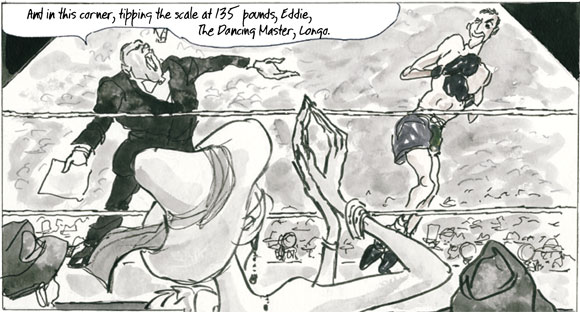
 Part I, Bay City Blues, 1933, features Annie Hannigan, a jitterbugging, shoplifting teen who wants to kill her mother for returning to work to support them after her father, “the only honest cop in the history of prohibition,” was murdered. Her mother Elsie has taken a job as a typist/receptionist for Neil Hammond, a drunkard who specializes in “confidential investigations” and in demeaning behavior and sexist remarks, often directed toward Elsie. She stays on the job because Neil has promised to help her solve her husband Sam’s murder. The job becomes more complicated when Neil assigns Elsie to set up a phony casting office to try to find a tall, blonde woman, over six feet tall, being sought by a wealthy client. Later, Neil, in debt to former bootlegger Tim Gaffney, indulges his gambling habit by requiring Elsie to accompany him to a prizefight, depicted with suitably action-packed graphics featuring lightweight fighter Eddie “The Dancing Master” Longo, and leading to the discovery of the client’s true identity.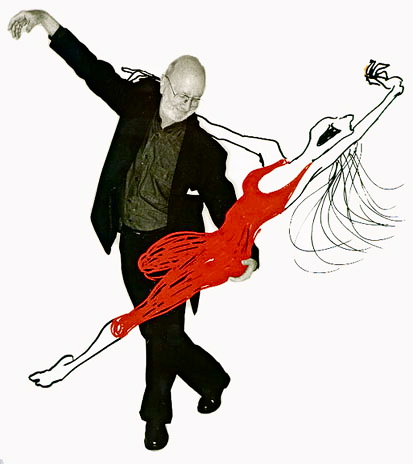
 The constant machinations of the Vatican and its hierarchy as they played all sides during the post-war years of World War II emphasize the fact that the Nazi Holocaust – ruthless, coldblooded, and almost impossible to believe in its inhumanity – was only one of the horrors faced by Jews in the 1940s. The Holy See, dedicated to the Gospel of love and charity, and committed to working with the poor, the sick, and the downtrodden, became so involved in international politics and so protective of its own power and relationships within Germany and Italy that it contributed to another whole level of international abuse of the Jews. Pope Pius XII, who had been papal nuncio to Germany from 1917 – 1929, spoke fluent German and had long-standing relationships with all the members of the church hierarchy in Germany, and many of them accompanied him to Rome when he became Pope and stayed with him for the rest of his life. Their attitudes had been formed during their years in Germany, and many people there believed that the Jews’ goal was to destroy Christianity. The institutional anti-Semitism which worked its way into the church is one of the primary subjects of this dramatic and eye-opening novel by former priest James Carroll.