Feed on
Posts
Comments

“You’re a crow with an ear for a beak.  No one can understand this story.  And no one would want to.  It’s useless.  Only the edifying fable with its moral will remain, only the husk of the facts, the pornography of horror…But what gave it meaning, what made it human—that dies with us…In the end what you’re looking for is a moral adventure tale.   That’s what will get you a publisher.”–Lorena, to her interviewer.

Addressing a “hypocritical reader, my double, my brother,” a former revolutionary from Chile has been asked to tell her story to a writer investigating the human rights abuses that occurred in Santiago in the 1970s.  The writer has traced her from Chile to a hospice in Stockholm, and the woman, Lorena, has consented to being interviewed, though she fears that he will reduce her story to a “moral adventure tale.”  She is old and dying, but she has a long history,  and as she begins her story, we see her back in the years just before the death of then-President Salvador Allende (in 1973).  She is young – a new, unmarried mother.  Her parents have divorced, her lover has disappeared, and she is rootless, except for her commitment to her child.  Like many of her peers, she believes in the socialist goals of President Allende, who is committed to improving the lives of the poor, and she worries about the repressive military which is challenging him directly and working to suppress the Marxist rhetoric so rampant in universities, where she and other students espouse it.

When a university friend takes her to a political demonstration in Santiago, she soon finds herself “caught up in something big, an enormous collective body; we sang together and I was part of the hope harbored by those who suffered, the poor of the earth.”  She eventually becomes an active participant with this group, the Red Ax, going to “meets” and camps, studying and arguing about Marx and Lenin and other revolutionary philosophers, developing a sense of purpose, and becoming attracted to some of the committed young men she meets as they jointly plan anti-establishment attacks.   Her attraction to one young man “was my rite of initiation, and [was] how I began the difficult process of self-elaboration that is necessary in order to embrace a moral asceticism,” she tells her intervewer.  “In those dark years,” she says, “belonging to that family, that secret and forbidden family that I had chosen, was to be born again, and to be prepared for the sacrifice, anytime, anywhere.”

After her torture, Lorena returns to her mother's home, where the apricot tree outside her window becomes a comfort - a reminder of her past.

Lorena’s story must be pieced together from episodes taken out of their natural chronology, as the narrative jumps around in time.  In the opening pages, which take place three or four years after she begins her connections to the Red Ax, Lorena quickly captures the interest of the writer of her story (and the reader)  by using strong and dramatic imagery of her running for her life from the Currency Exchange, with $30,000 in her purse.  For reasons that she can never explain, even to herself, she dives under a truck at the very moment when she could have escaped, and is captured.  Her torture by the authorities begins immediately, and it is torture so brutal it defies comprehension.  Lorena has been working as a French teacher by day and going to “meets” secretly at night, a particularly dangerous activity in the years after General Augusto Pinochet’s seizure of power from President Allende in a military coup in 1973.   Determined to wipe out all traces of President Allende’s socialism, and all leftist ideology,  Pinochet rules through fear, maintaining iron control with the support of the military, the  national police, and paid thugs who do not hesitate to use the most sadistic of tortures to maintain their power.
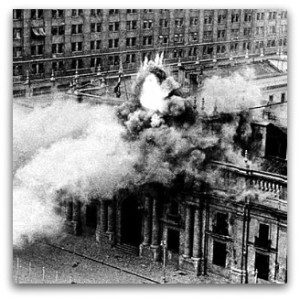
The burning of La Moneda, the Presidential Palace in a military coup, led to the suicide of President Salvador Allende on Sept. 11, 1973.

Though others in the Red Ax cell have sent their young children to Cuba to be educated in an environment they consider safer than Santiago at this time, Lorena has not yet sent her daughter Anita, now age five, who lives with Lorena’s mother.  She soon regrets this. Less than three months after her first interrogation and torture, she is picked up again, and this time, her daughter’s safety is used as the “bargaining” tool during her questioning.  If she does not give her interrogators everything they want, they will hurt her daughter.  Not surprisingly, Lorena’s commitment to abstract principles fades under these real-life threats.  Forever afterward, she will lead a double life—one in which she works with the enemy at the same time that she tries to remain friends with her Red Ax comrades.
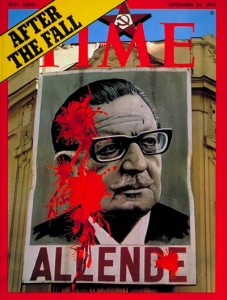
Time Magazine (Sept. 24, 1971) contains details of the attack on Salvador Allende and the aftermath. Cover by Carl Roodman.

Chilean author Arturo Fontaine, who is on the Board of Chile’s Museum of Memory and Human Rights, creates a novel which emphasizes the psychological strains on basically honest people who, like Lorena, are forced to see beyond the black and white positions on which so many others base their stands.  Fontaine uses subtlety as he creates the character of Lorena and then depicts her agonizing over her decisions.  Readers will empathize with her, recognizing some of the turning points at which she may have made the wrong decisions, while, at the same time, understanding the pressures which have led to her decisions.  As she tries to protect her interests on both sides of the political spectrum, quietly revealing some information while withholding other information, Lorena eventually finds herself admitting, “I’m the one I want to erase from my life.  Forgive myself?  How could I give myself something I don’t deserve?  Unhappiness has been my god.

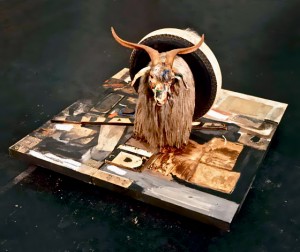
Lorena's lover in Stockholm introduces her to Rauschenberg's "Monogram," a piece in which a goat is constrained by an automobile tire. For more info, double-click on the photo.

Author Arturo Fontaine writes a novel in which the action takes place between 1972 and 1977, and is then revealed by Lorena in the present day, a technique which increases the reader’s involvement in events which occurred a generation ago.  This is not a novel that depicts the outrages of the Pinochet regime – there are already plenty of those – so much as it is a novel of people who happen to live in Chile at the junction of the regimes of both Salvador Allende and Augusto Pinochet, poles apart politically but conjoined chronologically.  As a result, the novel avoids most of the predictable violence and allows the reader to explore the depths of a character’s inner conflicts.  The novel is dramatic and thoughtful, thanks, in part to the sensitive translation by Megan McDowell, and Fontaine’s insights into Lorena’s psychological changes, often subtle, make this novel of double lives an intense and even personal experience.

Photos, in order: The author’s photo is from http://www.letralia.com/

The apricot tree may be found on http://www.daleysfruit.com.au

The Presidential Palace in flames (Sept. 11, 1973) appears on http://www.eurekastreet.com.au/

The Time Magazine cover, designed by Carl Roodman, may be accessed here: http://www.time.com

Robert Rauchenberg’s “Monogram,” a goat constrained by a rubber tire,  exhibited at Stockholm’s Moderna Museet, is featured in an article here: http://www.greynotgrey.com The quotation from ArtNet (below the photograph in the link) regarding the “barbarism” of the painting makes this image particularly relevant to the action in this novel.

ARC:  Yale U. Press

Note: Thomas E. Kennedy was WINNER of the Frank Expatriate Writing Award in 2002, his citation saying, “Kennedy has done for Copenhagen what Joyce did for Dublin.”

“Kerrigan Kerrigan

Whither rovest thou?

What you seek, you shall not find

Rather, let full be your belly.

Make merry day and night and forget the darkness.”

Wanting to find serenity, a new life, and maybe even a new love, Kerrigan has arrived in Copenhagen, the birthplace of his mother, hoping for changes in his own life, but “like Gilgamesh he kept finding instead a Divine Alewife who filled his glass and chanted” words like those above, urging him, instead, to eat, drink, and be merry.  Kerrigan, who has a Ph.D. in literature, experienced a personal disaster three years ago, one in which he lost his young wife, his three-year-old daughter, and an unborn child, and he has come to believe that “that is how all stories end. With the naked, withered Christmas tree tilted against the trash barrel.”  Now, as the new millennium is about to arrive, Kerrigan plans to “clothe himself in [Copenhagen’s] thousand years of history, let its wounds be his wounds, let its poets’ songs fill his soul, let its food fill his belly, its drink temper his reason, its jazz sing in the ears of his mind, its light and art and nature and seasons wrap themselves about him and keep him safe from chaos.”


Author photo by Laurie Hertzel

Kerrigan’s sense of his own personal mission directly parallels that of author Thomas E. Kennedy as he writes about Kerrigan in this third novel of his “Copenhagen Quartet.”  An American expatriate who grew up in New Jersey but who has lived in Copenhagen for over thirty-five years, Kennedy creates a novel focused on what is most essential, not just relative to Kerrigan, but to the city itself at the beginning of the twenty-first century, filling it with people and events that have been part of Copenhagen’s history:  the authors who have celebrated the city and authors who have been part of Kerrigan’s own history (and that of his Irish father);  the sculptors and painters who have created uncountable monuments of public art on the city’s streets; and the musicians, many of them jazz musicians from the United States, who, over the years, have found an enthusiastic audience in Copenhagen’s concert halls, bars, and clubs.  For Kennedy, as he relates the story of Kerrigan, Copenhagen becomes the equivalent of the Dublin which Stephen Dedalus explores in James Joyce’s Ulysses.

The exterior painting of the Palace Theater, which Kerrigan visits on his first walk around Copenhagen, was designed by Poul Gernes. (More info on Gernes in the photo credits.)

Kerrigan’s academic research has made him an expert in “verisimilitude,” the appearance of reality that allows “a writer [to create] a credible illusion to get the reader to “suspend disbelief enough long enough to listen and experience what the writer wants to transmit.  Beneath the illusion, if the writer is serious, lies the stuff of truth, of a deeper reality, that probably has little to do with the trappings of everyday life that were used to build the illusion…Fiction, even the most realistic-seeming fiction, is not existence, but about existence…For example, Kafka uses sensory images to make us believe, or at least accept, the preposterous notion that Gregor Samsa has turned into a cockroach, and because we believe that for a little while, we experience some deep mystery of existence.”  Kerrigan’s expertise in “verisimilitude” becomes ironic in view of his own difficulties seeing who he really is.

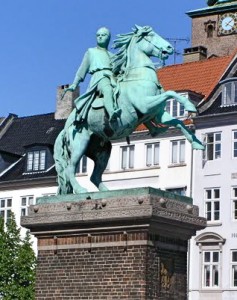
Bishop Absolom, founder of Copenhagen in 1167, photo by Willem Nabuurs

The immediate task for Kerrigan is not erudite.  Having hired an Associate who is a freelance research secretary, a woman of about his own age (he is fifty-six), Kerrigan will visit and evaluate the bars and cafes in Copenhagen.  He must “select a sampling of one hundred of the best, most historic, [and] most congenial from among Copenhagen’s 1525 serving houses and write them up for one of a one-hundred volume travel guide: The Great Bars of the Western World.”   He admits, however, that “he does not wish the book to be written.  He wants only to research it.  Forever.  For whatever forever remains to him.”

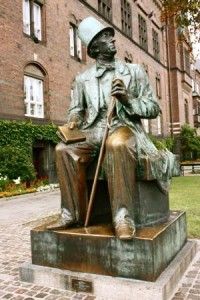
Hans Christian Andersen, socially inept, found his private life unfulfilling. An interesting anecdote appears in the photo credits.

As Kerrigan’s quest unfolds, with the assistance of his Associate, whose real name is finally revealed as “Annelise,” the reader gradually begins to understand the circumstances of Kerrigan’s marriage and the loss of his family.  In the meantime, Kerrigan is coming to understand and appreciate his Associate in ways new to him, though his dependence on alcohol complicates his ability to recognize and communicate that fact.  All this is hidden within mountains of information about the authors, musicians, artists, and historical figures who are part of the Copenhagen that Kerrigan knows.

Kerrigan carries with him a copy of Joyce’s Finnegan’s Wake, and he mentions that Joyce, who visited Copenhagen in 1936, believed that he had some Danish blood.  He pays tribute to Tom Kristensen, “one of Denmark’s great unknown sons,” whose work he especially appreciates, to Peter Hoeg for his book Borderliners, to Dan Turell, who seems to be one of the author’s own favorites, and to Hans Christian Andersen, whose writing career reached its pinnacle with the publication of his stories.  Goethe, Sir Walter Scott, Robert Louis Stevenson, Ernest Hemingway, Soren Kierkegaard, Frank O’Hara, Guy de Maupassant, Charles Dickens, John Steinbeck, J.P. Donleavy, Karen Blixen (Isac Dinesen), and many others also add color and insights in the novel.

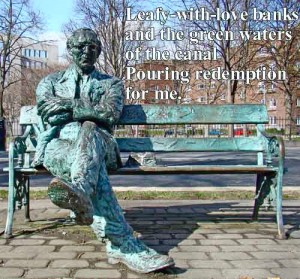
In Dublin, Patrick Kavanagh is second only to William Butler Yeats in popularity as an Irish poet. Double click on photo to read the quotation.

Dozens of Copenhagen statues and memorials and their artists receive attention. Singled out among musicians (as he was also in Kennedy’s In the Company of Angels), is the Finnish composer Rautavara, for his “Angels and Visitations,” along with Stan Getz, whose “Blood Count” by Billy Strayhorn was recorded while Getz was already dying. Chet Baker, Dizzy Gillespie,  John Coltrane,  and  Miles Davis are also featured.  Eventually, Kerrigan decides to go to Dublin to share the atmosphere which James Joyce celebrated in Ulysses, before returning to Copenhagen.

Complex and dense, the novel challenges the reader to understand the reality of Copenhagen within the “verisimilitude” of the plot and the character of Kerrigan, whose attitudes, knowledge, and psychological attributes are developed here, along with his literary, artistic, musical, and historical background and knowledge.  Eventually, Terrence Einhorn Kerrigan, whose initials are the same as those of Thomas E. Kennedy, stands before the reader and the Associate, ready to admit, with Matthew Arnold, that

McKluud's, a "western" bar, where Kerrigan has the second of his life-changing experiences in the conclusion of the novel. Double-click for more information. Photo by Scott Wood

“…the world, which seems

To lie before us like a land of dreams,

So various so beautiful, so new,

Hath really neither joy, nor love, nor light

Nor certitude, nor peace, nor help for pain;

And here we are as on a darkling plain…”

Then, again, we see him thinking for the first time, that even a darkling plain eventually has a dawn.

ALSO by Thomas E. Kennedy:  IN THE COMPANY OF ANGELS,      FALLING SIDEWAYS, BENEATH THE NEON EGG

Photos, in order: The author’s photo, by Laurie Hertzel, appears on http://www.startribune.com/

The Palace Theater was painted by Poul Gernes, who was famous also for overturning the idea that hospital rooms for sick children had to be white.  He used a rainbow of colors there instead. http://www.bikereader.com

The statue of Bishop Absolom, photo by Willem Nabuurs, may be found on http://www.panoramio.com/

Hans Christian Andersen used Louise Collin as the model for both the haughty princess in his story of “The Swineherd” and as the prince in the “The Little Mermaid.”  He saw himself as akin to the “Little Mermaid,” leading Kerrigan to observe that “[t is] hard to picture that lovely little bronze lady on her rock in the water of Langelinje as a transvestite.  Andersen in scaly drag.”
http://www.tripadvisor.com.au/

Poet Patrick Kavanagh of Dublin (1904 – 1967), is second only to William Butler Yeats in popularity.  As recently as 2000, ten of the “most popular poems in Ireland” were written by Kavanagh.  Photo from http://www.irelandcalling.ie

McKluud’s, a “western bar” in Copenhagen, is where Kerrigan has his second life-changing moment at the conclusion. The photo by Scott Wood appears on http://www.travelistic.co.uk (Posted with permission from Scott Wood)

ARC: Bloomsbury

“ [The painting of ] ‘The Center of the World’ became the hub of a wheel to which…everything that mattered was attached.  When [Rhinebeck] saw Helen’s tunic fall in folds of gold and light about her incomparable shoulders, he saw Regine and that room in Paris when he was so much younger. He saw the very pulse of the world; he understood how empires rose and fell and that power and pleasure beyond his ability to imagine were before him to be grasped.”—A viewer’s reaction upon first seeing  J. M. W. Turner’s painting of Helen of Troy

Artist J. M. W. Turner’s masterwork, “The Center of the World,” purported to be an interpretation of the classical story of Helen of Troy, creates universal reactions of stunned disbelief among everyone who sees it for the first time.  Some of these first-time viewers come close to venerating the painting in a religious sense, spending hours staring into it and experiencing the waves of pleasure that accompany every viewing.  Because of its very nature and the powerful sexuality it exudes from within, however, it is a painting that the patron and the artist never planned to show publicly.  Vanishing from sight almost immediately after the death of its patron, “The Center of the World” is certainly the “hub” of this novel’s “wheel,” drawing everything else into it as the novel unfolds through several different points of view and time frames.

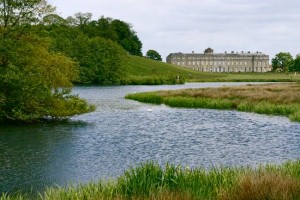
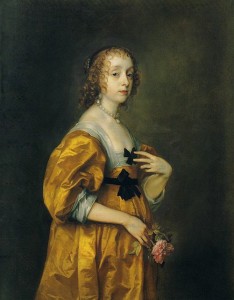
Photo of Thomas Van Essen by Mary Whipple, May 30, 2013, at Book Expo America

On its surface, Thomas Van Essen’s debut novel is a quest to find the missing painting, but the novel is more than that.  It is also a study of ecstasy, what creates it, and what enhances it, in art and literature (and even, indirectly, religion), and, of course, in real life.  The novel’s various points of view, in time periods extending over more than one hundred fifty years, illustrate the history of this  mythical painting from its “creation” to the present, convincing the reader that it is both real and as powerfully seductive as Helen of Troy herself.  In 1856, five years after the death of J. M. W. Turner, famed art critic John Ruskin, a Turner expert “entrusted with the memory of England’s greatest painter,” is instructing a servant to burn some of Turner’s erotic sketches on both paper and canvas so that they will not damage Turner’s long-term reputation.  The person doing the burning “had been to Paris when [he] was young and being no better than most young men, [he] had seen material of this sort for sale on the banks of the Seine.”  What gives him pause, however, is a set of notebooks.  “They seemed a study for a painting of some evil queen of antiquity.  Ruskin said she was Jezebel.  I didn’t say so, but I believe she was Helen.  She was more beautiful than I can say.”

Petworth House, now a museum

With a shift in time and setting, the reader learns more about “The Center of the World,” commissioned by George O’Brien Wyndham, third Earl of Egremont, during the time in which J. M. W. Turner was living at Petworth, Egremont’s estate.   Turner was expected to use Mrs. Spencer, Lord Egremont’s mistress, as the nude model for Helen, and a handsome, young guest at the estate as the nude model for Priam.   Life at Petworth is described in detail, and as the various relationships and events at the estate are revealed, the reader begins to understand the importance of this painting to the aging Lord Egremont.

Portrait of Lady Mary Villiers, painted by Sir Anthony Van Dyck, which dominated Charles Grant's bedroom at Petworth

Almost immediately after this brief section, the setting changes to that of the twentieth century and the point of view of a man who loves spending summers at a small property he inherited from his father at Saranac Lake in the Adirondacks.  With an unexciting and not very remunerative job, the man is trying to figure out how to continue to pay for the upkeep of the cottage, which is part of a larger property belonging to a man whose assets seem unlimited.  When the current owner of the “big house,” unexpectedly offers to buy the man’s property from him, the man wonders whether selling would be the right move.  Shortly afterward, the point of view flashes back a couple of generations:  Stokes, a man who is in financial difficulties, but who apparently possesses the mysterious Turner painting, is convinced to sell the painting to a Mr. Rhinebeck, wealthy owner of a large  estate which he enjoys with his male friends.

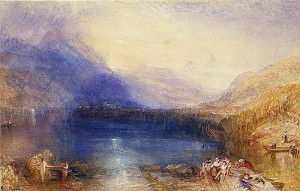
Watercolor of a Swiss Lake by Turner, mentioned in this novel.

Yet another point of view is that of Madison Partners, a contemporary corporation in which there is only one partner, Arthur Bryce, who deals with undercover art sales to avoid taxes.  He is totally dedicated to finding the mysterious Turner painting, and he has just hired Gina, an intelligent and ambitious young woman to help him trace the painting through England and the United States, and he will stop at nothing.  With these various points of view and a variety of time frames, the author is able to build suspense and create foreshadowing regarding the painting and its destiny.  As the scenes at Petworth become more complex, the reader becomes involved in issues regarding the painting itself.  Peripheral issues which take place in later time periods are also being developed, leaving the reader to process that additional information in order to solve the mystery.

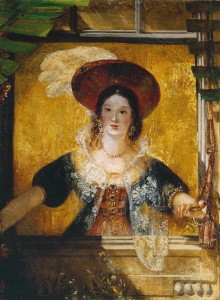
Jessica by J. M. W. Turner, described here as being a portrait of Mrs Spencer, Egremont's mistress.

The most crucial point, other than who has the painting, is the effect of the painting on those who see it. The author carefully illustrates the painting’s ability to overwhelm and emotionally capture the viewer, and he does not hold back in suggesting that much of the painting’s power is sexual. Drawing direct parallels between intense, sexual moments and the power of a painting to overwhelm the viewer, the author becomes graphic in his imagery. Some readers may be offended – and perhaps disappointed that the author chose to take this route, instead of drawing his parallels with greater subtlety.  The explicit sexual images described here between men and women, and between men and men, will be, for some readers, as unnecessary as they are distracting.   Romantic in its focus on personal feelings and the ongoing mysteries, the novel, overall, is exciting to read and insightful in terms of the work of J. M. W. Turner, even as it also leaves unanswered some important questions regarding the uninterrupted provenance of the painting.  Van Essen, however, creates a lively discussion of the painting, its history, and its artistic elements, and by the end of the novel, few readers will care whether or not the painting is real.

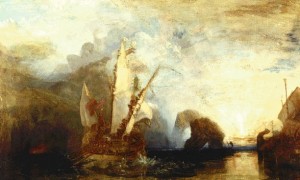
Odysseus Deriding Polyphemus, a classical subject like that of Helen of Troy. Odysseus was a suitor of Helen.

Photos, in order: The author’s photo was taken by Mary Whipple at Book Expo America on May 30, 2013.

Petworth House, photographed by Jazpops, the photo of Petworth House appears on
http://www.tripadvisor.co.uk

The Van Dyck portrait of Lady Mary Villiers shows the dramatic contrasts between this style and that of Turner.  Photo from http://pictify.com

In 1843, Turner returned from a trip to the Swiss Alps and painted a number of large watercolors like this one, “Lake of Zug.” http://www.metmuseum.org

“Jessica,” purportedly using Egremont’s mistress, Mrs. Spencer as a model, shows Turner’s weakness with figures.  The painting is flat and lacks the subtleties of his landscapes.  http://www.bbc.co.uk

“Odysseus Deriding Polyphemus,” one of Turner’s paintings of classical subjects, like that of Helen of Troy.   Odysseus was supposed to have been one of Helen’s suitors, leading twelve ships from Ithaca to Troy. http://www.victorianweb.org/painting/turner/paintings/polyphemus.html

ARC: Other Press


Note: Thomas Keneally was WINNER of the Booker Prize for Schindler’s List (1982).  He is a two-time WINNER of Australia’s highest award, the Miles Franklin Award in 1967 and 1968, and has been WINNER of the Peggy V. Helmerich Distinguished Author Award in 2007.

“It was the business of the army not only to fight wars but to shift the soldiers in Alexandria to Cairo and those in Cairo to Alexandria – and then for extra pleasure of authority to do it again.”

In one of his most expansive novels since Confederates, Australian author Thomas Keneally recreates the cataclysm of World War I, providing an epic vision of warfare with all its horrors, while focusing on the specific contributions of Australia, and its nurses in particular, to Britain’s war effort. Creating two sisters, young nurses from the rural Macleay Valley in New South Wales, who volunteer to serve in Europe and the eastern Mediterranean, Keneally develops the points of view through which he then describes the war, its atrocities, and the heroic actions of its Australian participants. The result is a grand saga in which these two nurses, their colleagues, their patients, and their soldier friends share their lives and their feelings as they deal with the accidents of fate which will change them all.

Nurses Naomi Durance and her younger sister Sally have a testy relationship with each other, and when they find themselves shipping out together at the beginning of the war, they are careful to avoid each other without being too obvious. During the four years of the war, they often go in different directions to different locations, each woman providing a unique point of view which broadens the reader’s understanding of the war and expands the novel’s scope. Their lively characterizations bring the reader into the action directly as the sisters and their colleagues observe and share the small, brave moments they experience personally; Keneally’s sensitive descriptions make the epic moments of life and death equally as vivid as the novel develops.

For the first hundred pages, however, the novel’s emphasis remains on the specific and personal, and one may wonder initially when the author will begin dealing with the larger questions and themes of the novel. Naomi and Sally leave Australia by ship and eventually arrive in Cairo. Sally’s trip to the pyramids calls forth the first observations connected to the themes when she intuits why the pyramids were built: “To deal with the infinity the Egyptians saw in all directions. Desert and those towering objects were so simple and triangular and undeniable that they called up memory of other things that were elemental and undeniable…but also put them in their place.” The sisters’ first experience with soldiers at this early point in the war emphasizes how young and naïve they all are: “suburban cherubs still, untempered by military exercises and desert manouevres.” Most of these soldiers are being treated not for wounds, but for venereal disease.

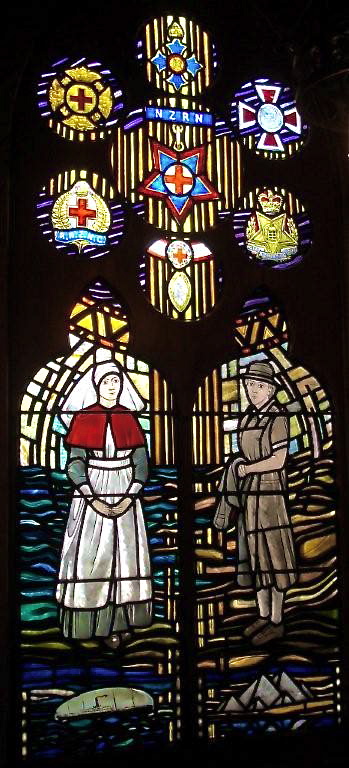
Note the two uniforms of the nurses, and in the lower left, their overturned ship.

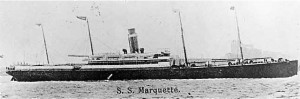
Naomi and Sally, assigned to the hospital ship Archimedes (which Keneally says he based on the real New Zealand hospital ship Marquette), join eighteen other nurses as they sail toward the Hellespont and the long, horrific Battle of Gallipoli (April, 1915 – January 1916), which caused over twenty-five thousand deaths and injuries to Australian troops alone. The Archimedes runs out of morphine and other medications as the medical staff deals with amputations, brain damage, typhoid, and dysentery in a losing battle against the Ottoman Empire. When the ship returns to Alexandria for re-supply, the staff learns that the Archimedes will soon be “going black,” traveling without lights and without a Red Cross insignia in order to transport troops and materiel back to the area. A torpedo hits the ship and leads to some of the novel’s most vivid scenes, with the chaos leading to many unnecessary deaths, including the deaths of a number of nurses. Sally and Naomi end up treating wounds on the Greek island of Lemnos, which soon becomes the site of another major battle.

In 1916, the sisters are in separate locations. Sally is stationed at a hospital in Rouen, where she must deal with the effects of gas warfare for the first time, along with shell shock among those men who have been fighting for too long under terrifying conditions. Naomi has traveled to London, where she reconnects with former nursing matron Mitchie, and meets Lady Tarlton, who has been using her own funds to supply hospitals in France. Her latest project is to establish the Australian Voluntary Hospital in France at an enormous, unused chateau. (Keneally reveals that he modeled Lady Tarlton on the real Lady Dudley, wife of the former Governor General of Australia, who once set up a nursing service in the bush, and, during the war, succeeded in establishing an Australian Voluntary Hospital in France.)

Lady Rachel Dudley, wife of the former Governor General of Australia, who served as model for Lady Tarlton.

Contemporary medical issues receive significant attention throughout. At least one physician at the clearing station begins to stress the importance of using masks when dealing with sick patients, especially as flu and tuberculosis become more prevalent. New strides are made in surgical procedures regarding amputations and even maxillofacial surgery, though the lack of antibiotics makes successful recoveries chancy, at best. Gas attacks continue, hospitals are bombed, even when they carry red crosses on their roofs, and aid posts and dressing stations must sometimes be abandoned, even when the wounded still occupy them.

Gender issues also play a part in the novel. Rape occurs, and some officers do not regard it as a crime worth pursuing. Nurses are sometimes treated rudely or as low-level servants, instead of  as professionals. Other issues, such as suicide, euthanasia, and the question of conscription play a part here, too. The needs of all the nurses and soldiers for connection and companionship is a major theme, and numerous love stories add to the complexities of the life at the front.

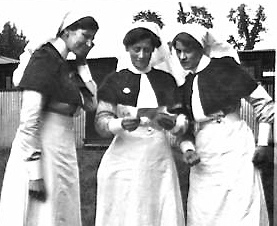
Three Australian nurses from Tasmania. See Photo credits for their names and histories.

Keneally successfully creates a broad picture of the contributions of Australian men and women, many of whom gave their lives for the Empire during World War I. Engaging and often moving, the novel explores life at the front a hundred years ago, with main characters whose psychological acuity gives them some depth. Though the novel does get a bit preachy in places and makes occasional moral pronouncements, Keneally has written an ambitious novel which pulls no punches: “There are only two choices, you know. Either die or live well. We live on behalf of thousands who don’t. Millions. So let’s not mope about it, eh?”

ALSO by Thomas Keneally, reviewed here:  SCHINDLER’S LIST,     THE TYRANT’S NOVEL,       VICTIM OF THE AURORA,     CONFEDERATES,     NAPOLEON’S LAST ISLAND

Hospital ship Marquette, the model for the Archimedes

Photos, in order: The author’s photo is from http://www.festivaloftheartsboca.org

This stained glass window by Veronica Whall, in the Christchurch Chapel, commemorates the nurses who died in the Aegean in World War I.  The seven medals at the top include the Florence Nightingale Medal, the highest award in the nursing profession. http://www.rootsweb.ancestry.com

The picture of Lady Dudley appears on https://commons.wikimedia.org/wiki/File:Rachel_Dudley_in_Australia.jpg

Three nurses from Tasmania, pictured here in the same uniform as shown in the stained glass window, above, are described on http://throughtheselines.com.au They are:   Sisters Cameron of Tasmania, (probably Mabel Letitia Cameron of Hobart, Tasmania); Edith Annie Foster of NSW and Clare Deacon, MM, of Tasmania. Sister Foster enlisted on 21 November 1914 and returned to Australia on 11 December 1918. Sister Cameron and Sister Deacon both enlisted on 21 November 1914 and returned to Australia on 29 January 1918. Sister Deacon was awarded the Military Medal on 24 January 1918 for her bravery during the bombing raids at the 2nd Clearing Station at Trois Arbres near Armentieres on 22 July 1917. From the collection of Mr Alfred Thomas Sharp.

The last photo, of the Marquette hospital ship is from http://www.nzans.org/

ARC: Atria Books


DAUGHTERS OF MARS
REVIEW. Australia, Book Club Suggestions, Epic Novel, Historical, Literary, Social and Political Issues, Nurses, World War I
Written by: Thomas Keneally
Published by: Atria
Date Published: 07/21/2013
ISBN: 978-1476734620
Available in: Ebook Paperback Hardcover

Note: Having recently finished Last Train to Zona Verde (2013), which focuses on the miseries of present day life along Africa’s southwest coast from Capetown to Angola, I decided to revisit author Paul Theroux’s earlier book, Dark Star Safari (2002), written about ten years before, in which he travels along Africa’s east coast from Egypt to South Africa, through Ethiopia, Kenya, Tanzania, and other countries. Though he begins his trip full of hope, he discovers that life on Africa’s east coast, as seen here in 2002, is not what he remembered from his Peace Corps days.

“Like the person so poor and downtrodden he loses self-respect and any sense of shame, African cities did not even pretend to be anything except large slums. Once, each city had a distinct look: Nairobi had a stucco and tile-roof style of architecture, Kampala had its harmonious hills, Dar es Salaam was coastal colonial, with thick-walled buildings designed to be cool in the heat. Such particularities gave a city atmosphere and an appearance of order in which hope was not wholly absent. Now, one city was much like another, because a slum is a slum.”Paul Theroux, 2002.

In this book from 2002, Theroux returns to Africa, forty years after he was a Peace Corps volunteer in Malawi and a teacher in Uganda, leaving the country just as Idi Amin came to power.  Despite the political upheavals of the 1960’s, his memories of Africa during this time are good ones, however. Now, approaching his sixtieth birthday, he is determined to travel from Cairo to Cape Town, believing that the continent “contain[s] many untold tales and some hope and comedy and sweetness, too,” and that there is “more to Africa than misery and terror,” something he aims to discover as he “wander[s] the antique hinterland.”

Traveling alone and using the same sort of transportation as that used by the typical resident of each country he is visiting, Theroux makes the five thousand mile journey by taxi, cattle truck, “chicken bus,” bush train, matatu, rental car, ferry, and even dugout canoe. Wanting to blend in as much as possible wherever he is, he buys clothing at secondhand stalls in public markets, carries only one small bag, and avoids the tourist destinations which give most westerners their only visions of Africa. Being a “common man” has its problems, however. Despite some pleasant moments and some fascinating encounters with unusual people, the trip is not one Theroux will ever repeat, he says, and it will certainly not inspire many imitators among the readers of this book.

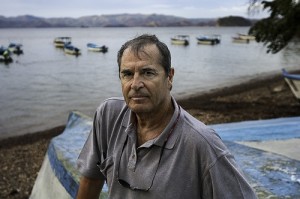
Photo credit: Steve McCurry Studios

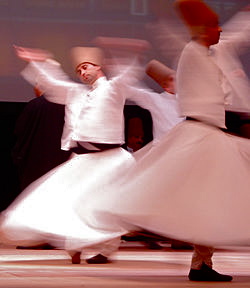
Theroux’s trip incorporates vivid descriptions of his visit to the Sphinx (“one of the epiphanies of my traveling life”) in Egypt, and whirling dervishes in Sudan; a delightful character sketch of Sister Alexandra from Ethiopia, a nun who has loved; and two Ethiopian traders, a father and son, who take Theroux to the Kenyan border, becoming so fond of him that the son bursts into tears when Theroux must decline their invitation to accompany them to Uganda. For Kenya, Theroux has no kind words, however. A cattle truck driver takes him through the bandit-infested northern area of Kenya to Marsabit, the northernmost city, and when the driver expresses surprise that there is a war in Ethiopia, Theroux regards him as an “ignorant inhabitant, traveling on a hideous road in an over-heated desert, in a neglected province of one of the most corrupt and distressed and crime-ridden countries in Africa.”

Matatu, a convenient form of tranportation in the Horn of Africa

Theroux finds Uganda, even after Idi Amin, to be a “tidier, better-governed place than Kenya,” though that is really no praise: everything in Kampala has changed for the worse. Tanzania is no better: “there was only decline – simple linear decrepitude, and in some villages collapse.” Upon his arrival in Lilongwe, capital of Malawi, halfway through the trip, he sums up his experiences to date: “I had been three days on the bush train from Mwanza; abused by the immigration people in Dar es Salaam; bewildered by the dreadful train to Mbeya, a filthy town where I had been overcharged at the hotel and cheated out of my bus fare; delayed by a bus that didn’t show up. Then the struggle to the Tanzanian border – where punks had tried to shake me down and the health officer wanted a bribe – before the nighttime trip through the roadblocks to Karonga, and at the long slow ride across the plateau to drizzly Mzuzu.”

Whirling dervishes

When he then goes to the U.S. embassy in Malawi, he finds that an “overpaid, officious, disingenuous, blame-shifting…embassy hack” there has not made any arrangements for him to speak at schools or universities because she’s had a hectic week. He wonders, “Had she, like me, been abused, terrified, stranded, harassed, cheated, bitten, flooded, insulted, exhausted, robbed, lied to, browbeaten, poisoned, stunk up, and starved?”

Theroux puts much of the blame for the deterioration of African countries over the past forty years, during which they have become independent, on well-meaning but misguided attempts by foreign aid workers and agencies. By identifying and trying to fix problems, these agencies, he believes, prevent the countries and their citizens from having to accept the responsibility themselves. Foreign aid packages prove tempting to those in power, and much, if not most, of the funding never reaches those it is designed to help. In addition, “some governments in Africa depended on underdevelopment to survive – bad schools, poor communications, a feeble press, and ragged people. The leaders needed poverty to obtain foreign aid, needed an uneducated and passive population to keep themselves in office for decades.”

Cattle truck on the road to Marsabit

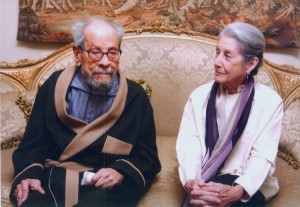
Theroux also comments about other writers in this account. While in Egypt waiting for a visa to Sudan, he visits with Nobel Prize winner Naguib Mahfouz, who has a sort of salon in Cairo. Surrounded by his admirers, they bemoan the fact that “When the [Nobel Prize] was given to Marquez, many other Latin American writers were inspired to write books and publish them. But what has happened in the Arab world [since Mahfouz]? Where is Arab literature? Nothing has happened!…Why hasn’t the rest of Arab literature achieved any recognition?…It is a conspiracy by the West!”

While in Ethiopia, he reminisces happily about  the writings of Rimbaud, who lived there in the 1880’s, but writers about Kenya get short shrift: Hemingway ‘s writings are “the private fantasy of a wealthy writer bent on proving his manhood.” Isak Dinesen is a “sentimental memoirist,” and Kuki Gallman is a “mythomaniac of the present day.” Only Nadine Gordimer of South Africa, among modern writers, is praised, described here as a “national writer who transcended nationality by being true to her art, like Borges in Argentina.”

Naguib Mahfouz of Egypt and Nadine Gordimer of South Africa. Photo by Abdel-Hamid Eid

Theroux is an observant and insightful writer who has dared to take a long journey on unfamiliar and often unfriendly roads. His descriptions of his travails are so vivid the reader can experience them vicariously, from the glories of places like the Sphinx to the miseries of life in Kenya. His interviews with people in the countries he visits are perceptive and very revealing of the political and social climate of these places. He is arrogant, however, and has become cynical and misanthropic over time, and it is difficult to like and “travel with” a man who testily refuses to give a half-eaten apple to a hungry child when she begs for it through the window of his train. And when he refers to his own “safari-as-struggle,” it is difficult to take him seriously. “Being in Africa was like being on a dark star,” he concludes, in what may be the only understatement in the book.

ALSO by Paul Theroux:   LAST TRAIN TO ZONA VERDE (2013) and     SIR VIDIA’S SHADOW

Photos, in order: The author’s photo by Steve McCurry Studios appears on http://www.miis.edu/

The matatu is from http://afrosocialiting.wordpress.com

The photo of the whirling dervishes appears on http://en.wikipedia.org

The cattle truck on the road to Marsabit may be found on http://www.virtualtourist.com/

The wonderful photo of Nobel Prize winner Naguib Mahfouz and Nadine Gordimer, by Abdel-Hamid Eid, is from http://weekly.ahram.org.eg/

« Newer Posts - Older Posts »