Feed on
Posts
Comments

Note: Patrick White was WINNER of the Nobel Prize for Literature in 1973.

“[Mrs.  Bulpit’s] forearms, hands, and face could have been moulded from natural marzipan.  The lips shone with crimson grease rising to a little bow, they matched the nails in the marzipan hands…The coulour of her hair made Mrs. Bulpit noticeable, the little curls with which her head was arranged were of a rich red such as you see in a windowful of new furniture.”
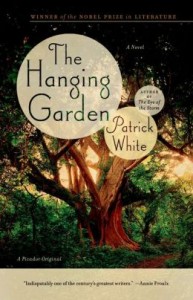
When Eirene Sklavos, a school-age child, sees Mrs. Bulpit for the first time, she has not even started to come to terms with the fact that her mother will be leaving her with Mrs. Bulpit indefinitely.  Having traveled with her mother from Greece to Australia to escape the horrors of World War II, Eirene has already dealt with the death of her father, a communist fighting for what he and his wife believe to be a better world for Greece.  Almost immediately after Eirene meets Mrs. Bulpit for the first time, her mother departs Australia for Alexandria, Egypt, where she plans to continue her political efforts.  Alone in a foreign country, Eirene will have to learn the hard way who she is and where she belongs.  She soon meets Gilbert Horsfall, a boy her own age, who is also living with Mrs. Bulpit, though his trip to Australia from England has taken much longer.  His father is working in New Delhi; his mother is dead.  He, too, has growing pains, and he, too, is a foreigner to Australia.  The degree to which the two children may be able to help each other is a question for much of the novel, as are the effects of uncontrollable outside forces on their lives as they grow and learn.
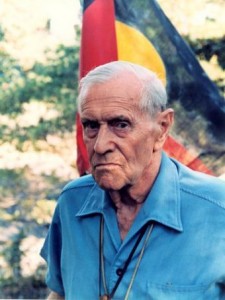
Patrick White, 1988. Photo by Barry Jones

Developing his themes of identity and connection (or lack of it) in an unfinished book that he never tried to publish, author Patrick White keeps his story line simple, but psychologically astute, using children as the main characters as he explores a variety of writing techniques that are not obvious in the bold, fairly straight-forward narrative style of his famous earlier novels.  Readers of this book, which White started in 1981, may be astonished to see just how experimental this book is, compared to Voss (1957), Riders in the Chariot (1961), and  The Vivisector (1970).  It very nearly remained unpublished and unknown.  White had indicated before his death in 1990 that he wanted all his incomplete works destroyed, but though he did destroy many letters and other writing over the years, and had the opportunity to destroy this work, he let it remain intact during his lifetime.  It was not until 2010 that his executor, Barbara Mobbs, began to consider the possibility of allowing this book to be published, and then gave her permission.

The result is a rare opportunity to read a hand-written and personally edited novel by Nobel Prize winner Patrick White, which, in addition to being a good story, provides a rare, direct insight into how he thinks and how he creates a draft.  The novel, according to David Marr, who wrote the Afterword, was intended to be presented in three parts, of which this manuscript was to be Part I.  Though the ending of the novel as we see it here is a bit “thin,” compared to the earlier part of the book, White has a clear sense of direction with his story and his characters while leaving his multiple, constantly changing points of view and his use of stream of consciousness intact.  Readers who have read only White’s earlier works may find that it is this aspect of the book which is most fascinating.

Gil bulds a treehouse, which becomes a "hanging garden" for Eirene

The novel opens with the meeting of Mrs. Bulpit and Eirene’s mother, which the reader observes from the mother’s point of view.  A page or two later, Eirene’s own observations become dominant, before the point of view moves back to her mother’s, and then forward again to her own.  By page six, White is introducing Gilbert Horsfall and his point of view, as Gilbert thinks about introducing himself to Eirene and her mother, before he suddenly remembers the bombings in London and the death of his best friend.  As quickly as changes occur in one’s own musings, Gilbert then recalls his voyage from England to the United States and his travels across the United States to the West Coast before his journey to Australia, all this in just a few pages.  White also inserts the points of view of those who accompanied Gil, both the adults and the other children on the trip.

The constantly shifting points of view take some getting used to.  Initially, these are not clearly delineated and the reader knows nothing about the individual characters to give clues as to who is “speaking.”  Gradually, Eirene and Gil begin to emerge as their own persons, and the reader begins to understand their backgrounds, their memories of  “home,” and their reactions to what is happening to them.  Sometimes, the points of view change several times within a single paragraph:   In this example, Mrs. Lockhart (Eirene’s aunt, who has arrived at Mrs. Bulpit’s house to say goodbye to Eirene’s mother), along with Eirene’s mother, and Eirene herself all share a paragraph:

“Well, Ireen [sic] can depend on me.  Couldn’t have her in my own house – four boys – and Harold didn’t want to risk a girl…Why are you not in bed, Eirinitsa?  Mamma is crying as you stand in the door like a wax figure, eyes closed, leaving anger and discipline to Papa.  You could feel Papa hated you, for that moment, anyway.  Will Aleko, his closest friend, hate too if he catches you staring at the wax figures?”

Two paragraphs later, White introduces stream-of-consciousness:

“Looking back from where you have dropped on your knees on something sharp it no longer matters worse blood could not be drawn the sisters have arrived at the window and stand looking out a fright or at least suspicion has shut them up for the present they stand in the wreckage of their principles…”

White’s gift for description keeps the reader engaged, even when the changing points of view and the narrative line may be challenging.  His realistic depiction of the children, who act like children throughout, even as they question who they are and where they belong, give a liveliness to the novel which benefits from the novel’s experimental style.  This work is a major contribution to the understanding of Patrick White and his writing, and readers familiar with White’s earlier work will treasure the new insights they gain here while they enjoy the characters and empathize with their struggles.

ALSO by Patrick White:  VOSS (1957),  RIDERS IN THE CHARIOT (1961) and     THE VIVISECTOR (1970).

Photos, in order: The author’s photo, by Barry Jones,  is found on http://www.abc.net.au

The treehouse appears on http://fellowshipofminds.wordpress.com

ARC: Picador

Javits Center, 34th St. and 11th Avenue.

Just returned from Book Expo America, 2013, in New York City, always a hectic but energizing experience.  On each of the three days in which publishers’ booths are open to librarians, teachers, book reviewers, and the press., et. al.,  (Thursday through Saturday of this past week), the entire Javits Center is filled with excited book lovers running around anxiously, and in some cases frantically, in an effort to obtain advance review copies of particular books by particular authors that they have been looking forward to.   Most of these books are for fall, with publication dates ranging from August to December.  Publishers and publicists from all the major houses carefully plan the release of their limited number of advance review copies for specific times during the Expo, in an effort to make them last for the entire three days of the event.  When the allotment of books for 9:00 on Thursday, for example, is gone, that book may not be available in the publisher’s booth again for several hours, at which point there will be another limited number available, until they are gone, at which point people must wait until Friday’s allotments.

When I arrived at the front doors to the Javits Center on Thursday, it was clear that the new Amy Tan book, Valley of Amazement (due November 5, 2013),  “a mother-daughter tale with rich historical implications,”  was already getting huge attention.  Every entrance, at least six of them facing 11th Avenue (at 34th St.), had banners showing the book’s cover, and large posters appeared inside throughout the venue. Harper Collins had scheduled five different times at which this title would be given out during the three days of Book Expo.  As an example of the demand, I was one of the earliest ones to arrive at the Harper Collins booth, arriving at 9:03, after the doors opened at 9:00.  All those Amy Tan books were already gone, with the next batch not being released till mid-afternoon.

Most publishing houses also have author signings throughout the event, with, perhaps, a hundred books reserved for those who line up to receive a copy from the publicist and have the author sign it.  The lines sometimes curl for long distances.  Enthusiastic publicists are always there to help out in the publishers’ booths, however, and, if a particular title is no longer available, they may interest participants in a similar book by a new author, someone too new to have fans but hoping to find them.

Doris Kearns Goodwin, signing Team of Rivals and The Bully Pulpit

Here are few of the authors who have been at BEA this year, signing review copies or finished copies of their books:

Colum McCann, Transatlantic, his first book to be set primarily in Ireland

Doris Kearns Goodwin, Team of Rivals, and The Bully Pulpit

Alice Hoffman, Survival Lessons

Aminatta Forna, The Hired Man

Robert Olen Butler, The Star of Istanbul

Alice McDermott, Someone, her first new book in eight years

E. L. Doctorow, Andrew’s Brain

Okey Ndibe, Foreign Gods

Sue Grafton, W is for Wasted

Thomas Van Essen, author of The Center of the World

Thomas Van Essen, The Center of the World, with artist  J.M.W. Turner as a major character

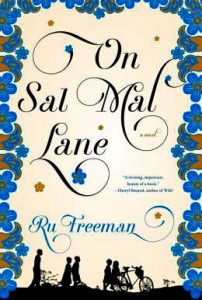
Ru Freeman, On Sal Mal Lane

Andre Dubus III, Dirty Love

Jonathan Lethem, Dissident Gardens, a book NOT set in Brooklyn

Norman Rush, Subtle Bodies

Jan-Philipp Sendker, a Well-Tempered Heart, sequel to The Art of Hearing Heartbeats

.

Some other new books coming this fall:

Kevin Barry, Dark Lies the Island, a story collection (WINNER of the IMPAC DUBLIN AWARD for 2013)

Kenneth Bonert, The Lion Seeker

Chang-rae Lee, On Such a Full Sea

Ronald Frame: Havisham: a Novel

Ann Patchett: This Is the Story of a Happy Marriage

Dennis McFarland, Nostalgia

John Boyne, This House is Haunted

Allan Gurganus, Local Souls

Nicholson Baker, Traveling Sprinkler, sequel to The Anthologist

Magdalena Platzova, Aaron’s Leap

Among my best memories of this BEA is the chance encounter I had with E. Bukowsky, “Booklover 10,” an Amazon friend for about ten years, someone I’ve met in New York several times and at BEA events since we first met in person in 2006.  We hadn’t made plans to get together this year, as both of us were rushed, but fate intervened (happily) and we were able to spend a few minutes together while she passed some time waiting in a book-signing line.  A reviewer of detective novels, she was looking forward to meeting Sue Grafton and receiving W is for Wasted. Great fun to be able to catch up for a few minutes and to see new baby photos of grandchildren – a nice dose of reality and a welcome break in the midst of the BEA maelstrom.

Thomas Keneally, author of The Daughters of Mars

For those thinking of going to a BEA event in the future, the experience is both exhilarating and exhausting, but best of all, great fun.  For those of us who have been reviewing for a long time (It’s going on eighteen years for me.), it is a chance to check in with publicity directors and publicists whom we have not seen for over a year but “know” from the many e-mails sent back and forth over the years.  Many of these publicists have become real friends.   Finally, BEA is a chance for us to see which books will be getting the biggest-time publicity, what the audience for these books is expected to be, and which books, geared to a smaller projected audience, might be just perfect for those of us who review primarily for a niche audience (like international fiction and regional US fiction).

Photos, in order:   The Javits Center photo appears here:  http://www.bvents.com

The Thomas Keneally photo is from http://www.festivaloftheartsboca.org/gallery/

The Doris Kearns Goodwin photo and the Thomas Van Essen photo are my own.

Note: This novel was WINNER of the Scandinavian Glasnoglen (Glass Key) Award for Best Crime Novel in Scandinavia when it was released in Denmark in 2010. The Department Q series has already sold over fourteen million copies around the world.

“His hunting ground was mid-Jutland, a region in which the concentration of religious sects was high. A couple of years had passed since he had last struck there. Whatever else one might say, he spread death with the utmost care and attention.”

Danish author Jussi Adler-Olsen’s third mystery to be translated into English continues the characters he introduced with The Keeper of Lost Causes and The Absent One, both of which topped of best-seller lists in Europe for almost a year. Carl Morck, the lead detective of these novels, suffers from post-traumatic stress disorder as a result of a shootout several years ago in which one of his friends was killed and the other, a six foot-nine inch giant, was left a quadriplegic. Morck’s drinking does not help his attitude, nor does his unfortunate love life. His wife has moved out but has not divorced him, his adult son has moved in, and the love of his life has gone off to Africa to work for Doctors Without Borders. His department has little use for him, having once described him as “lazy, surly, morose, always bitching, and [constantly] treating his colleagues like crap.”

Relegated to “Department Q,” created especially for him, and located deep in the basement of the Copenhagen Police Department, he is assigned the cold cases to keep him out of the way. Morck will be able to investigate cases on his own schedule and on his own terms, knowing his superiors will not fire him because his department has received a great deal of funding which his superiors want (and need) for other investigations. Morck’s assistant, who calls himself Hafez al-Assad, from Syria (an example of Adler-Olsen’s humor), was originally hired as custodian and handyman in the basement “office,” but he has proven to have a real talent for investigation, and he has been keeping Morck focused on cases, rather than his TV, because of his own interest and insights into investigation. In the previous novel, The Absent One, Rose also joins Department Q, a flighty woman with an infectious laugh (very different in personality from the Rose we see in this novel), hired ostensibly to act as a secretary. As is also the case in the two earlier other novels, internal politics, political grand-standing, and the self-aggrandizement of some in the upper levels of the department keep the tensions high within the department as Morck and his staff travel around Denmark investigating their own cases.

John O'Groats, a village at the northernmost tip of Scotland, where a message in a bottle is discovered.

Alternating several points of view by sometimes unnamed characters, Adler-Olsen’s most complex novel so far develops with remarkable speed even as it shifts among characters, time periods, and separate mysteries. In the Prologue, a teenager, held chained in a boathouse with his brother, suspects that his kidnapper will kill them at any moment. Using every ounce of his strength, he wounds himself with a sliver of wood and writes a note in blood begging for help. Putting the message into a bottle, he forces it through a crack and into the water beneath the boathouse. The second point of view is that of a young mother in Roskilde, twenty miles west of Copenhagen, whose husband who has been at home only briefly in the past few months. She knows nothing about his work or where he goes, though she suspects that he is having an affair. The third point of view introduces a policeman in John O’Groats, at the northern tip of Scotland, who receives a bottle with a message inside, found by a fisherman. The next episode, taking place in the Copenhagen Police offices upstairs from Morck, illustrates the department’s extreme busyness with gang wars and arsons which seem never-ending. Finally, a mystery man describes how he has driven his Mercedes to North Jutland and hidden it in a barn on property he secretly owns. Then he shares his plans for his next kidnapping with the reader, choosing his victims from among the children of several religious sects in the area.

The first kidnapping takes place at a school in Lautrup Gard in East Jutland, Denmark

The focus continues to expand exponentially when the message in the bottle, now thirteen years old, finally ends up in Morck’s department, where it is handed over to Rose. At the same time the kidnapper, his more recent victims, and their families (in three separate cases) reveal their interconnections, and, in the case of the families, the reasons that they have not gone to the police. Though extremely complex, the novel is meticulously developed as more characters are introduced, both in Morck’s private life and within his department. The kidnapper’s own background and his reasons for choosing victims from religious groups, his plans for his next kidnapping, his wife’s life apart from him, and the life of the woman with whom he has been living during his preparations for his next crime all add depth and complexity to the depiction of this villain. The agonies of the parents of the kidnapped children, told from their points of view, add further intensity to the novel. While all this is unfolding, Morck is also dealing with Rose’s failure to return to work, Assad’s investigations of arson, the new issues which arise when Rose’s twin sister arrives to take her place temporarily, and the details of several very bizarre investigations.

The kidnapper, as a child, idolized Charlie Chaplin.

Despite its peripheral plot lines, which also include arson and arms trafficking, the primary mystery – that of the kidnappings – is tight and well organized, and the characters and actions are well integrated.  Exciting to read, it is easy to see why this novel has won so many prizes in Scandinavia and why it has been so popular. The characters are all observed in action, with lively dialogue, as well as first person commentary, and whole episodes are devoted individually to each of the main characters and their associates, a technique that allows the reader to understand the who, what, where, why, and how of what is happening, though it is up to the reader to keep track of WHEN the various events occur. With the action covering more than one kidnapping in more than one time period, and plot lines that also include arms dealers and fires,  the reader needs to pay particular attention to names and places. The increasingly complicated home life of Morck, the mysteries which continue regarding the background and history of Assad, and the introduction of Rose’s sister, add to the character development of the repeating characters and help make this a good stand-alone for newcomers to this author. Though coincidence does play a major role here, as it does in most mysteries, and there are a few too many irrelevant plot lines, the excitement of the action keeps the reader from allowing logic to get in the way as the novel comes to its heart-stopping conclusion.

ALSO by Jussi Adler-Olsen:  THE KEEPER OF LOST CAUSES ,     THE ABSENT ONE,       THE PURITY OF VENGEANCE,     THE MARCO EFFECT

Ferslev, where the kidnapper has his retreat, is a few miles south of Aalborg in Jutland. Double-click on the map for an enlargement.

Photos, in orderThe author’s photo appears on http://penguinbooks.co.za/

John O’Groats, in Scotland, where the message in the bottle was found, is at the northernmost tip of the country:    http://www.scottishtours.co.uk

Lautrup Gard in Jutland is the home of this old church and manor: http://thyrashm.blogspot.com

Charlie Chaplin as The Tramp is a character that the kidnapper once idolized.
http://upload.wikimedia.org

The map of Denmark appears on http://www.wordtravels.com

ARC:  Dutton

Elizabeth Jolley–FOXYBABY

“Use me!” Miss Peycroft cried in ringing tones.  “I am absolutely ready.  Pure, so to speak, and unsullied, ready and waiting to be the heroine of your next novel.”–to Alma Porch, writer

Australian author Elizabeth Jolley completely won me over with Mr. Scobie’s Riddle (1983), a sad, funny, and wonderfully moving novel about the residents of a nursing home, and Miss Peabody’s Inheritance (1984), a delightful novel involving the lively correspondence between a popular Australian author and one of her admiring but repressed fans back in England.  Because Jolley grew up in England and did not emigrate to Australia until 1959, when she was thirty-six, I have always associated her with my favorite British authors of the 1970s and 1980s—sly and subtle female writers like Muriel Spark, Jane Gardam, Barbara Pym, Penelope Lively, Alice Thomas Ellis, and Beryl Bainbridge, who did not hesitate to use satire to bring down the pompous, while also creating memorable characters whose often humorous dialogue brings them to life on the page.  Products of their time and setting, these authors could skewer their characters’ social pretensions with the literary equivalent of a penknife, rather than a rapier, while maintaining a “lady-like” demeanor of innocence.  Not surprisingly, Bainbridge, Lively, and Spark were all honored by the Queen and became Dame Commanders of the British Empire.  In addition, Gardam has been honored as an Officer of the Order of the British Empire, while Ellis and Pym were elected Fellows of the Royal Society of Literature.  All have won numerous literary prizes.
The earlier books that I have read by Jolley, while a bit more boisterous in some ways than the works of her contemporaries in England during the period, seem to fit comfortably into the niche occupied by these other, better known authors, despite Jolley’s unconventional (and some might say outrageous) private life.  With Foxybaby (1985), which follows Mr. Scobie (1983)  and Miss Peabody (1984), however, Jolley permanently separates herself from her peers back in England, writing a book in which nothing is sacred, with characters who are sometimes crazy, usually self-absorbed, unashamedly earthy, and often bawdy.  She is realistic – and enthusiastic – in her depiction of sex in all its variations as salve for the souls of the lonely and the sometimes bored.  Nothing about this book is dainty or subtle.

The novel opens with Miss Alma Porch, a timid teacher and writer at a girls’ school, writing to Miss Josephine Peycroft, the Principal at Trinity College, located in a remote area of western Australia, about a summer job.  The principal has hired Porch to conduct a drama program which will be part of the session to build a “Better Body Through the Arts.”  On her way to Trinity, however,Porch is involved in a car crash which leaves her car and two others in need of substantial repairs.  She is not reassured when she overhears the conveniently parked tow truck operator tell a companion, “We’re in business.  I’m telling you, three cars orf to the smash yard just in one trip, not three trips but one.  Yo’ll get your share never youse worry.”

Wheat fields lining both sides of the road were the only scenery for Porch as she traveled west to Trinity College.

Her arrival at the school itself also has ominous overtones.  Miss Peycroft has her own ideas of the manner in which she wants Porch’s play to be produced “by the students,” and she demands that Mrs. Viggars, a well-off return visitor, be the lead player. Porch’s first vision of Mrs. Viggars is in a photo from the previous year in which Viggars, in a course called “Basic Self Expression,” is shown sitting in a refrigerator-sized box with a cushion on her head, rocking her way across the courtyard. As the other participants arrive, two of them being gorgeous young men brought by a former participant, it becomes clear to everyone except Porch that these additional participants are there to provide nightly “fun and games” for the people who brought them, and perhaps for each other. Porch is already aware from conversations which have taken place under her bedroom window, that the tow truck operator Miles, his wife, and another woman are already having a great deal of extracurricular fun, chasing each other around the grounds.   Openly lesbian and gay relationships abound, and assignations of all kinds occur at any time and place.  Throughout the novel, it is Porch who seems to be left out, though she often overhears her companions’ suggestive conversations and is frequently trapped so that she cannot escape participating in these events vicariously.

The play, “Foxybaby,” for which Porch has brought the requisite props, raises many issues which obviously parallel those of the participants in the program, the primary themes being the relationship between alienation, loneliness, and lack of love.  The play’s lead character, Mr. Steadman, a scholar and writer, is waiting outside a cafe for his daughter Sandy to leave and go home with him, as the play opens.  Sandy, “Foxybaby,” is recently released from prison.  She has just had a baby, and is suffering from drug addiction.  Her child is also infected and addicted – and not thriving.  The action, as Porch develops it, is accompanied by punk rock and disco music, though Peycroft keeps trying to change it.  The relationship between father (Steadman), daughter, and granddaughter reveals itself as the play continues.  Predictable complications arise. (Obviously, this play is not going to be a candidate for any Tony Awards.)
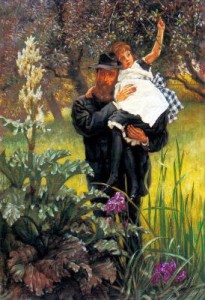
"The Widower," by James Jacques Joseph Tissot, a painting which Mrs. Viggars suggests represents what Steadman is facing--dependence, need, sorrow, protection, and possession.

Elizabeth Jolley is obviously having great fun taking advantage of the freer, more forgiving attitudes of Australia as she creates this over-the-top novel, filled with wild characters – some, like Porch, exceedingly repressed, and some like Mrs. Viggars and Miss Harrow, taking part in a summer program in the boonies where they have little else  to do except pursue their desires in a safe atmosphere, away from civilization.  Jolley’s large cast of characters is well-choreographed to allow their farcical actions to proceed in many different directions at once, though the novel’s focus and themes sometimes get lost in the confusion.  The ironies of the “Foxybaby” play, with its strange and sexual subtexts, stereotyped characters, and clichéd action, are frequently matched satirically with quotations from real literary sources – Sophocles, Goethe, Proverbs, Jon Dryden, Ibsen, Schopenhauer – to provide “breadth” and “depth” to the action. Ultimately, the novel connects the action in Porch’s play with real life, and this is where everything spins wildly, and some might say, quite happily, out of control.

ALSO by Elizabeth Jolley:    MR. SCOBIE’S RIDDLE and    MISS PEABODY’S INHERITANCE

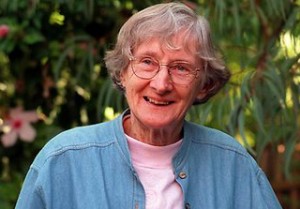
Photos, in order: The author’s photo is from  http://www.heraldsun.com.au

The Western Australia wheatfield may be found on http://markosun.wordpress.com

Alma Porch brought her fox stole with her for the play, “Foxybaby.” http://www.osfcostumerentals.org

James Jacques Joseph Tissot’s “The Widower,” painted in 1876, is symbolic of some of the action in Alma’s play. http://www.amazon.com

“People do not go to war, Nihil, they carry war inside them.  Either they have the war within them or they don’t have it.  The thing to think about is do you and I have war inside us?”—Mr. Niles to Nihil Herath

Living in an ethnically and religiously mixed neighborhood in Colombo, Sri Lanka, Nihil Herath is one of about a dozen children – Tamil, Sinhalese, Burgher, Hindu, Buddhist, Muslim, and Catholic – who take their cultural differences for granted.  Nihil’s Sinhalese family is new to the neighborhood, but they fit in immediately with their neighbors, and under the leadership of Nihil’s mother, Savi Herath, they soon become the backbone of their little community.  A teacher with a lot of experience, Mrs. Herath keeps her children and their friends active and busy, playing songs and encouraging their singing to her piano accompaniment, whether she, a Buddhist, is playing Christian hymns or the music from any of the other religions. A Sinhalese, Mrs. Herath has no hesitation about shopping in Tamil stores, even when her meddlesome next-door neighbor, Mrs. Silva, warns her against certain Tamil merchants.  She invites Rose and Dolly Bolling, two neglected and ill-clothed Tamil children, to join her children for tea, and she eventually sees that they receive clothing that they need, without embarrassing them.  Her goal is always to “do good,” though she does this instinctively and without moralizing.


Using the Heraths and their four children – Suren (age 12), Rashmi (age 10), Nihil (age 9), and the energetic and irrepressible Devi (age 7) – as the linchpins of this saga of Sri Lanka, author Ru Freeman creates a lively neighborhood which represents virtually all the forces contesting for influence from 1979 – 1983, as the revolutionary Tamil Tigers decide to forego the legislative process and try to take over the country by force.  Keeping the focus firmly on the children, who see and hear rumors of war, and the children’s fearful reactions to the increasingly dire news, Freeman creates a microcosm of the larger world and the devastation that is promised.  Her characters, both the children and the adults who influence them, are lively and realistic, especially in their focus on the small, the personal, and the minutiae of everyday life as it begins to change.

The fragrant blossom of the Sal Mal tree.

Much of the action surrounds Devi Herath, a seven-year-old with enough energy for ten people and little sense of fear, someone who scoots around befriending the friendless and including them in her world.  For Raju Joseph, a thirty-five-year-old Tamil with physical and mental challenges, the Heraths are the first family which pays attention to him, and he is particularly drawn to young Devi.  Sonna Bolling, a sad, fourteen-year-old whose father resents and often beats him, acts out as the neighborhood bully, but even he is drawn to the music he hears through the Heraths’ windows, and he wonders why there has never been music in his own life.  Nihil Herath finds a thoughtful friend in old Mr. Niles, a bed-ridden Tamil man across the street who cannot help but think of Nihil as a son.  Chaste childhood crushes begin to develop between some of the boys and girls, and their different ethnicities concern no one.

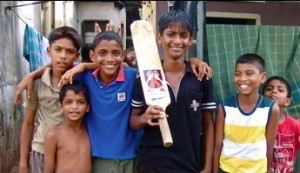
One of Nihil's goals is to become part of a national youth cricket team.

The simple little worlds of the children on Sal Mal Lane soon change dramatically:  “The main road that abutted the lane marked a boundary beyond which lay a country where trouble was brewing.  It was the sort of trouble that would soon overflow its banks and flood the nation, turning the small ponds of concern and occasional tears of Sal Mal Lane into their own tributaries of discontent.”  A nation-wide strike, in which Mr. Herath is involved, fails, and eight thousand people lose their jobs.  When the former prime minister is stripped of her civil rights, her left-leaning political party falls into disarray, and a new political majority arises, committed to different economic policies – “deprivation, privatization, theft of natural resources, and the end of self-sufficiency.”  The author’s abrupt (and artificial) insertion of this information into the story prepares the reader for the disasters to come, even as the people of Sal Mal Lane themselves continue on with their normal lives, at least for a while.

One of hundreds of Sri Lankan villages burned during the 26-year civil war, 1983 - 2009.

Though the reader knows and expects certain results based on the historical background provided by the author, this information is not fully integrated into the novel’s story line, and the reader must wait for some time before important changes take place on the level of plot.  It is not until riots finally break out in the poor neighborhoods across the main street from Sal Mal Lane that the historical background and the stories of the characters finally begin to coalesce.  Though life goes on for the children, their innocent cricket matches and song-and-dance shows are set into sharp relief when seen in relation to the real life “shows” of riots, looting, and horrific fires. Within a day, the riots are everywhere, even on Sal Mal Lane.

The conclusion of this novel is dramatic, emotionally moving, and filled with insights as the aftereffects of the rioting are revealed, not only to the reader but to the participants themselves.  Each family has had its own set of problems throughout the novel and has had to ensure the safety of its own members, but each family is also aware of the sometimes more difficult problems faced by their neighbors on the lane.  All know that the rioters will target specific people because of their cultural and political loyalties, and the residents of Sal Mal Lane, accustomed to sharing their lives through celebrations and quarrels, must make difficult decisions during the crisis.  It is not until the next day that everyone finds out the full extent of the devastation.

A Sri Lankan troop in 2008, twenty-five years after the setting of this novel, and one year before the end of the civil war.

The use of a child’s point of view is not one of my favorite techniques, but Freeman’s children are neither saccharine in their charm nor naïve to the point of silliness.  Instead, they often behave intelligently, like small adults, dealing with some of the same problems as adults but often seeing them more clearly.  They do not accept things at face value, and they often willingly seek help from adults whom they respect.  Some children, like some adults, are victims, through no fault of their own.  In this novel, the use of children allows Freeman to approach the complex issues of the war in Sri Lanka from a broad, but much simpler point of view than would have been possible with adult characters, and she takes full advantage of this technique, illuminating major themes about what it means to be human while obeying the old adage to “Keep Things Simple.”

Photos, in order: The author’s photo is from her website: http://rufreeman.com

The Sal Mal blossom and the blossoms of other flowering Sri Lankan trees may be found here:  http://www.sightseeinglanka.lk

The happy hero of a local Sri Lankan youth match and his friends:  http://news.bbc.co.uk/

The photo of the burned village is part of a story on the war in 2009: http://www.rnw.nl/

The Sri Lankan army troop is still fighting the Tamil Tigers in this photo from June, 2008, 25 years after the setting of this novel. Photo by EPA.

ARC: Graywolf

« Newer Posts - Older Posts »