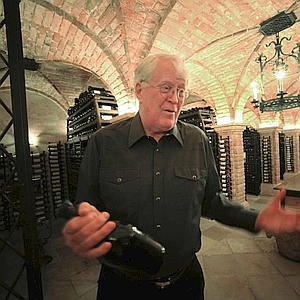
As [William] Faulkner’s daughter, Jill, wrote, “Pappy was getting ready to start on one of these bouts. I went to him and said, ‘Please don’t start drinking.’ And he was already well on his way, and he turned to me and said, ‘You know, no one remembers Shakespeare’s child.’ ”
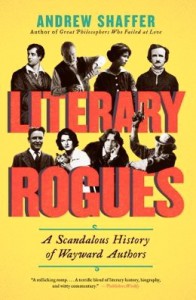 In his brief biographies of approximately forty “literary rogues,” from the Marquis de Sade (1740 – 1814) to James Frey (1969 – ), author Andrew Shaffer enumerates the many addictions of each author – virtually all of them associated with alcohol and drugs and/or their frequent carryover into sexual obsession. In fact, if one were to regard these authors as typical of the period, one might conclude that, until the last couple of decades, addictions of all kinds were practically mandatory for successful writers. How else, these authors seemed to think, could a writer tap into his creativity and release his “inner story-teller” with all its attendant angels or demons?
 While there was plenty of addiction to go around among authors over the years, these authors probably are not the norm, the non-addicted simply not being scandalous enough to have been included in a book of this type. It is significant, too, and reflective of the role of women writers during the times about which Shaffer writes, that of the approximately forty authors Shaffer describes, only six women receive more than a sentence of recognition: Mary Shelley; Zelda Fitzgerald, Edna St. Vincent Millay, and Dorothy Parker, who were all contemporaries; Anne Sexton; and Elizabeth Wurtzel. While these women could hold their own with the literary male alcoholics and addicts of their times, they seem to be a small percentage of the relatively small number of women who succeeded as authors during this period.
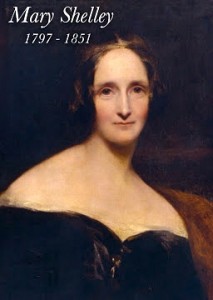 The first half of Shaffer’s book deals with European authors, beginning with the Marquis de Sade, the source of the word “sadism.” Sade was a sick man who spent the last part of his life in prison after his mother-in-law turned him in to authorities for serious crimes ranging from prostitution to attempted murder by poisoning. Coleridge, as we all know, was an opium addict; Robert Burns was a hopeless alcoholic; and Thomas De Quincey was addicted to daily laudanum (mentioned in a chapter which also refers briefly to Louisa May Alcott’s addiction to laudanum). The English Romantics, including Lord Byron (who may have impregnated his half-sister); Percy Bysshe Shelley; and Mary Shelley, author of Frankenstein, were hypersensitive, uninhibited, and prone to suicide. Poe, an American who married his thirteen-year-old cousin, used drink and drugs to escape his “torturing memories,” and he was also a gambler, though he was supposedly never addicted to laudanum.
Baudelaire, Rimbaud, and Verlaine added absinthe to the French drug culture of which they were part. Oscar Wilde, back in England, claimed to be “the high priest of decadence,” while Ernest Dowson, claimed to be “as decadent as one could get without actually being French.”
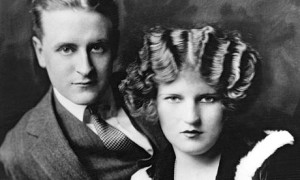
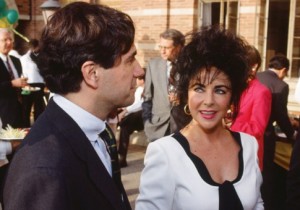
Scott and Zelda Fitzgerald
With the Lost Generation, however, the novel begins its focus on authors from the United States, including, first, Scott and Zelda Fitzgerald, who moved back and forth between the US and Europe, and whom Dorothy Parker found “too ostentatious for words, their behavior calculated to shock.” Despite this, Parker managed to have an affair with Fitzgerald. He died at the age of forty-four, though he “died inside himself at around the age of thirty or thirty-five, and his creative powers died somewhat later.”
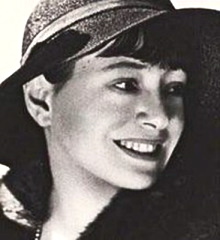
Dorothy Parker
Dorothy Parker, Edna St. Vincent Millay, Robert Benchley, Robert Sherwood and several other members of the Algonquin Round Table, were alcoholics, with Parker addicted to Scotch and also to cigarettes (smoking three or four packs a day). Of all the Round Table authors, however, it is Parker whose “literary celebrity has stood the test of time.”
Ernest Hemingway’s alcoholism did not keep him from winning the Nobel Prize for Literature in 1954, but it probably did contribute to his paranoia. Even while he was retired in Cuba, he “saw FBI agents everywhere,” and it was only after his death that his publisher discovered that J. Edgar Hoover actually did have him under surveillance for his activities in Cuba, and that his hospital room, where he underwent eleven electroshock treatments in 1960, probably was bugged. Faulkner, also an alcoholic, once walked the halls of a New York City hotel nude, and was known to average twenty-three martinis a day. He, too, won the Nobel Prize for Literature (in 1949), despite his alcoholism.
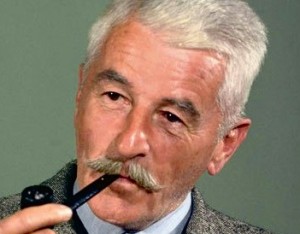
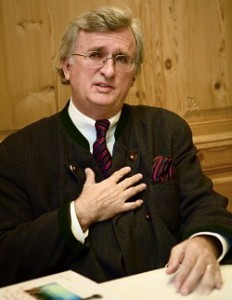
William Faulkner
Jack Kerouac, William Burroughs, Alan Ginsburg, John Berryman, Anne Sexton, Ken Kesey, Truman Capote, Norman Mailer, Hunter S. Thompson, John Cheever, Raymond Carver, Jay McInerney, Bret Easton Ellis, Elizabeth Wurtzel, and James Frey bring the list of “wayward authors” up to date, their drugs of choice ranging from alcohol to LSD, mescaline, and cocaine. It is in this final section that the author introduces ideas and observations which are different from the stories we already know. Beginning in the 1980s, authors began to lose their influence on popular culture – there were many other ways, many of them electronic and/or cinematic, through which those with something to say could find an audience. In addition, writers like Wurtzel had sought and received help from the medical profession for their depression, something that writers had avoided in the past. As Wurtzel says, however, “The question of whether the ‘real you’ is the person on lithium or the person on illegal drugs doesn’t matter…What matters is whether you function or not. We don’t know that the medication isn’t helping you become the real you.”

Elizabeth Wurtzel, now a practicing attorney
Joyce Carol Oates once pointed out that “nobody tells anecdotes about the quiet people who just do their work,” and the author himself observes that if you “Take a look at any list of the top hundred novels of all time…you’ll see plenty of quiet, sober names…As memoirists have known for years, the more [messed] up your life, the more compelling your life story.” Here some of the “wayward authors” get more of the attention they obviously sought, but the fact that they are here, and known to the reader at all, attests to the fact that they somehow managed to achieve fame, if not respect, despite their various addictions and problems. For them the pen was mightier than the weakness.
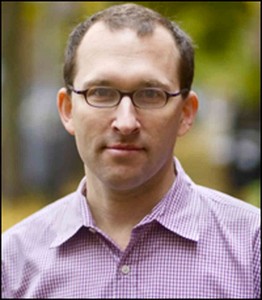
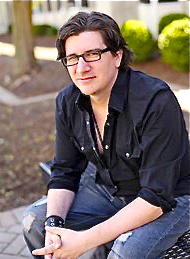
Photos, in order: The author’s photo by Sally Ryan may be found at http://www.nytimes.com
Mary Shelley’s portrait appears on http://www.underthegoldenappletree.com
Scott and Zelda Fitzgerald are from http://www.thelmagazine.com
Dorothy Parker’s photo is from http://behindthecurtaincincy.com
The William Faulkner photo may be found on http://jthorsson.com
Elizabeth Wurtzel’s portrait appears on http://www.thesecretlanguage.com
ARC: Harper Perennial
 One of the best debut novels I have read in a long time, Falling to Earth focuses on the aftermath of the largest and most powerful tornado ever to hit the United States, one known as the Tri-State Tornado of March 18, 1925, which traveled two hundred nineteen miles through northeast Missouri, across southern Illinois, and into southwest Indiana over the course of three hours eighteen minutes. Destroying everything in its path, it killed almost seven hundred people. Author Kate Southwood describes the aftermath of this storm in the town of Marah, Illinois, a rural composite of all the communities hit by this horrific storm. What elevates this novel above a journalistic report of buildings destroyed and communities devastated is Southwood’s focus on the effects of the tornado on one family – not the inspiring survival story of a family that has lost everything, as one might expect, but the story of a family that has lost nothing, their children safe, their home undamaged, and their lumber business intact.
 As Paul Graves, owner of Graves Lumber, hurries home to check on his family after the storm, having saved himself by hugging the base of a telephone pole as the funnel cloud hit, he hears wailing and screaming, people calling out names or crying for help. Bodies lie everywhere, automobiles are overturned, and a woman is “frozen, screaming under a tree, a child’s body caught high in its branches.” Paul’s children, he realizes, have escaped the fate of those killed in the collapse of the elementary school; they were home with the chicken pox. The rest of the family – Paul’s wife Mae and his mother Lavinia – have also escaped death having had time to reach the basement shelter that Paul built.
 Soon the Graves’ front porch has become a makeshift morgue as over a dozen bodies are brought there, many of them as-yet-unidentified children, and Mae and Lavinia quickly get to work tearing up sheets to cover them, pulling down the window shades so that Mae’s three young children will not see the horrors. Those survivors who have no place to go gather what they can and begin walking down the street with their children. “[The children] see what the adults cannot; that one is responsible to a beating heart, that the simple act of walking means moving forward in more than just the literal sense, and that even the act of reaching into the wreckage of a house to save a book or a tea kettle is a kind of beginning.”
 tent city. It is Mae, however, who points out why the neighbors are in a hurry to leave their house as soon as possible. Paul is no longer “the man with everything to share, he’s just the man with everything,” a condition which soon begins to cause resentment among the townspeople. Unable to understand the random nature of the storm, they soon begin focus on “why him?” Even small things such as Paul’s cleaning of debris from his yard leads to snide comments, such as “Nothing to rebuild, so he prettied up his yard.” The family tries to blend in as much as possible, and they refuse to plant flowers in the spring or even put up the porch swing, but to no avail. The resentment grows as the community slowly realizes how much they have lost in comparison to the fortunate Paul Graves.

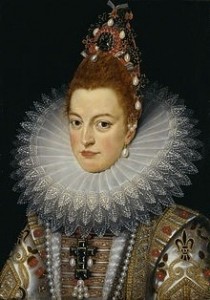
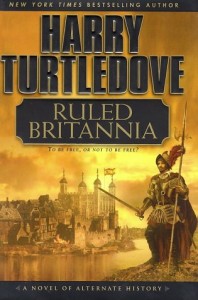 For more than ten years, Harry Turtledove’s Ruled Britannia has been my personal Gold Standard for novels of alternative history. Having just read (and about to review) a new alternative history, I went back to this one to see how it stood the test of time. I liked it even better. Starting with the premise that England did NOT defeat the Spanish Armada in 1588, during the rule of Queen Elizabeth I, author Harry Turtledove puts Elizabeth in the Tower of London and makes King Philip II of Spain the official ruler of Britain, with his daughter Isabella Clara Eugenia representing him on the formerly-British throne. All the leading writers, philosophers, and artists so famous to students of Elizabethan England, when it WAS Elizabethan, are still hard at work in London, but now, their patron is Spanish, not British.
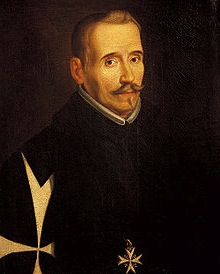
 London citizens have endured the Inquisition, the continued imprisonment of Elizabeth in the Tower of London, the use of Irish barbarians as thugs and enforcers by the Spanish occupiers, and a constant sense of uncertainty born of religious and political turmoil. The pageantry and spectacle of an auto-da-fe, with its awe-inspiring and terrifying burnings at the stake, open this novel, its horrors made real by the cry of a condemned man, begging for help from an acquaintance in the mob, William Shakespeare, who can do nothing to help, and whose own life is endangered by the man’s pitiful appeals.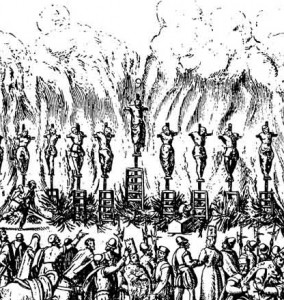

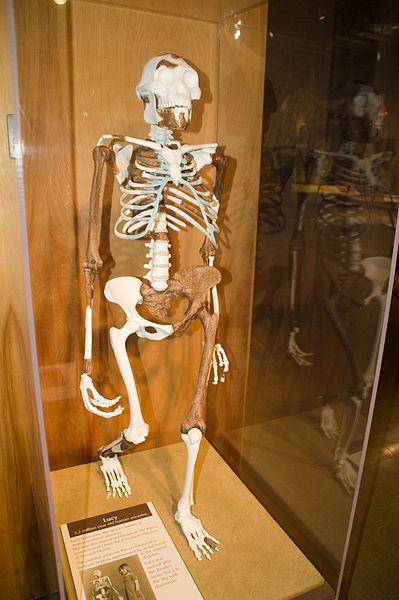
 When Awaleh, the elderly grandfather of this novel, is musing on the earth, its mysteries, and its spells, he is reflecting on the ancient history of his country, now known as Djibouti. Adam and Eve, for him, are a relatively recent concept, reflecting time as recorded in the Bible. “Little Lucy,” by contrast, is a 3.2 million-year-old hominid, a fossil who was “waiting” in the nearby Rift Valley to be discovered by paleontologist Donald Johanson in 1975. Lucy is one of the earliest of hominids – and represents a unique species, Australopithecus afarensis. Fully grown, she was only a bit more than three feet tall, but she is more closely related to the genus Homo than any other fossil discovery made to date. For Awaleh, that kind of long view of history is what matters most, and he spends much of his time in lyrical contemplation of nature and the beauty within it, even as he yearns for the nomadic past.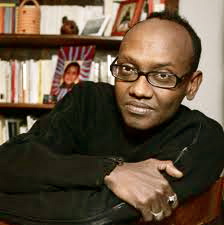


 Each of the speakers has his own style of monologue, the most difficult for the translators, David and Nicole Ball, obviously being that of Bashir, who speaks in slang which does not translate easily. For the reader, however, none of the monologues is easy or completely clear, and all have flashbacks and changes of point of view within. The recognition of a plot comes gradually as the details from different time periods sort themselves out, and when the reader reaches the end of the novel, the author has an Epilogue from Harbi which addresses the universal refugee situation: “We are grains of sand washed up onto someone else’s desert, and that’s what we’ll always remain…We’ve left our stories, our melodies, our books of magic, and our ancestors behind. The danger awaiting us is this: if you live only in the present, you’re likely to be buried with the present.”
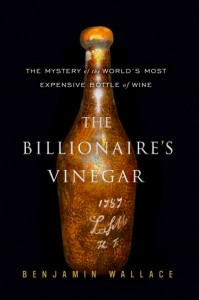 Could the bottle of Lafite, with the initials of Thomas Jefferson and dated 1787, then sitting on a pedestal at Christie’s auction house, possibly have been part of a newly discovered Nazi hoard? On December 5, 1987, Michael Broadbent, the head of the wine department of Christie’s, readied himself to auction off this bottle, the oldest authenticated bottle of red wine ever to come up for auction at Christie’s. He knew its provenance was crucial, as it would certainly become the most expensive bottle of wine ever sold. Some suggested that it had a Nazi history. Others knew that a section of the Old Marais district in Paris had recently been torn down, and wondered if the bottle could have been found walled up in some basement to avoid theft during various wars. Then again, Thomas Jefferson had sent hundreds of cases of wine home to Monticello (and some to George Washington) when he left his job as Minister to France to become the Secretary of State, and one of these cases may have been lost or stolen. Auction excitement was high, and speculation was rife because of the age and importance of this bottle, not just for its qualities as wine but also because it was an important historical artifact.