“Sometimes I think I’ve got something, only in the next minute to be thrown into confusion once again. I don’t like being confused; I have no tolerance for it. That’s why I wish either I didn’t have this ability to capture details, or I had the greater ability to assemble them into a picture that made some sense. It’s a bad job on God’s part to give a man with so little intelligence such a good eye for detail.” –Harry Hole, in Australia
 Norwegian author Jo Nesbo’s seven thrillers available in English are the third through ninth of the Harry Hole series, beginning with The Redbreast, published in the US in 2006, selected by Norwegian Book Clubs as the Best Mystery/Thriller of All Time, and continuing through Phantom, published in the US in October, 2012. The Bat, Nesbo’s first Harry Hole novel, has just been translated into English and has been available in the UK and Canada since October, 2012 (readily available through Amazon.ca and Amazon.co.uk). Originally published in Norway in 1997, it is intriguing for many reasons, not least for the growth it shows in Nesbo’s narrative and stylistic talents.
In this novel, Harry Hole, fifteen years younger than he is in Phantom, has been sent to Australia to spend a week with the Sydney Police, who are investigating the murder of Ingrid Holter, a young, blonde Norwegian woman with an Australian work permit. His hosts in Sydney have made it clear that the four detectives assigned to the case, not Harry, will be doing the investigation, important in the  run-up to the 2000 Olympics. Harry’s first discovery is that no one can pronounce his name correctly, always calling him “Hole,” as in “mole.” Ironically he starts referring to himself as “Holy,” much closer to the correct pronunciation though not his character, and the “Holy” spelling continues through the narrative. His second discovery is that he will be working with a powerfully built former boxing champion, an Aborigine on the force whom Harry likes and finds intriguing, both personally and culturally.
Ingrid Holter, the victim, had once hosted a children’s program but was working at a local bar when she was killed. An attractive blonde, she had been fending off advances from “Mr. Bean,” the strange bartender; avoiding her even stranger landlord and his vicious “Tasmanian Devil” of a dog; and spending her nights with a man known to have many connections to the drug world. As the police investigate, with Harry, of course, inserting himself into the action, it becomes clear that the police department may be looking for a serial killer, someone obsessed with blonde women. A check of murders over the past ten years shows four women who have been strangled with the killer’s bare hands, leaving no clues.
 Nesbo’s well-known penchant for creating unusual characters from the dark side of town is clear even in this first novel. One character, an Aborigine clown, plays the role of Henry XVI in a circus act in which he is “beheaded.” Another, widely thought to be a gay man, is a “closet hetero.” Still others lead secret lives that even Harry does not suspect. Most interesting of the unusual characters is Harry himself, whose backstory is revealed here in some detail, going back to when he was barely out of his teens, and including some stories about his sister, about his yearning to be punished for a death he caused as a youth but which others covered up, and about his family. These homey details stand in stark contrast to the life of Andrew Kensington, the Aborigine officer with whom he is working. Andrew, a former hippie and boxer so good he had to quit for fear of killing someone with his
 fists, has never known his parents. Part of the Stolen Generation of Aborigine youth who were removed from their parents and educated by outsiders, Andrew has been doubly hurt, denied a family and denied a culture. Nesbo shares much information about Aborigine culture, their myths and legends, beliefs, and value system here, and while it is clear that the author himself is fascinated with this culture and its contrasts with what he sees of the seamier sides of Sydney life, these digressions, unfortunately, do not advance the action and seem like add-ons to his story.
As in the other Nesbo novels, Harry also falls in love, he gets physically attacked, sometimes viciously, and fights a losing battle with the bottle, once again.
 The novel occasionally has the feeling of a travelogue, with each trip to a new part of Sydney or outside it described in vivid detail – his trip to a remote area in New South Wales, to the Sydney Aquarium, to a clown circus, and to several well described parks, in one of which another body is discovered. Nesbo does provide enough blood and thunder to keep readers reading, however, even when they may wonder where the plot is going. The dialogue is sometimes unrealistic, with one character often expounding for a long paragraph before he is interrupted by another character, who answers in another long paragraph, rather than conveying information through the give and take of normal conversation, as Nesbo does in later novels.

One reference gave me long pause in the course of the novel. After Harry has discussed an accident in which he, as a youth, was responsible for a death, and for which he has never been punished, he refers to Charles Van Doren, a (real) American professor and scion of a famous intellectual family, who in 1957 won the equivalent of over a million dollars on the American TV quiz show “Twenty-One.” Van Doren confessed, in 1959, to a US House Subcommittee on Congressional Oversight, that the producers of the show had given him the questions in advance. Though I could identify with Harry’s statement that “I think people feel a kind of need for punishment when they can no longer accept their own actions,” I could not understand what would have made Nesbo include this particular reference as a parallel for Harry’s sense of guilt in this 1997 novel, almost forty years later. I later discovered that the film “Quiz Show,” released in 1994, not the original events, must have been the inspiration for this odd choice of image.
For those who have enjoyed other, later Nesbo novels, this one is worth reading, but if you have not yet discovered Jo Nesbo, my suggestion is that you start with The Redbreast, probably Nesbo’s most interesting and challenging thriller and go forward from there. It is set in Norway, the country Nesbo knows best.
Also by Nesbo: THE DEVIL’S STAR (2005), HEADHUNTERS (2008, not part of Harry Hole series), THE LEOPARD (2011), NEMESIS (2008), PHANTOM (2012), THE REDBREAST (2006), THE REDEEMER (2009), THE SNOWMAN (2010), POLICE, THE BAT, COCKROACHES (1998), THE SON (2014), BLOOD ON SNOW (2015), MIDNIGHT SUN (2016), THE THIRST (2017), KNIFE (2019)
Photos, in order: The author’s photo is from http://article.wn.com
Boxing is a big sport among Aborigine youth. The photo here is from http://www.abc.net.au
The police are now actively recruiting aborigine men to act on behalf of the Australian Police. This photo and the story related to it is found on http://www.northernstar.com.au
Harry and his girlfriend visit the Sydney Aquarium in the middle of one night. The Great White is one of the most famous exhibits in the underwater tunnel: http://www.cityknown.com
Centennial Park in Sydney is seen here: http://www.last.fm
 Author Louise Erdrich, a member of the Turtle Mountain band of Chippewa (Ojibwa) Native Americans, here writes one of her most powerful and emotionally involving novels. Though it starts as a crime story on the reservation, it quickly becomes an intense search for justice on all levels. As in Erdrich’s other novels, it also develops into an examination of the lives of her characters, both old and young, as they face the challenges of reservation life. Their lives, as she shows in this novel, are seriously restricted by 1988, when this novel’s action takes place, far more restricted than they were even two generations ago, and totally different from life at the turn of the 20th century when the Chippewa still controlled wide swathes of the northern boundary of the United States and Canada. The buffalo on which they once depended for sustenance have become extinct in the wild, and the federal government of the United States has systematically appropriated nearly all the lands which the Chippewa and their ancestors once controlled and roamed at will.
 Native Americans who want to honor the “old ways” on the reservation must now survive on infertile lands which cannot support them. Their culture has been seriously compromised by the arrival of dedicated Catholic priests who have weaned them away from the myths and traditions which have always provided a cultural center, sense of meaning, and shared heritage among them. Legal jurisdiction over crimes involving Native Americans is also an issue, since tribal officials, state police, and even the FBI all have interests in areas in which crimes are perpetrated by whites against Native Americans and vice versa. The cultural bases for many “laws” held as inviolable by each group are not always compatible, and many on the reservation, discouraged, are unable to find much reason to hope for improvement in the future, often finding solace in television, drugs, sex, and alcohol.


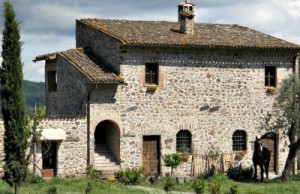
 When three middle-aged losers independently and simultaneously show up to look at an old farmhouse for sale in the countryside of Campania, outside of Naples, each sees it for its potential as a Bed and Breakfast retreat. For each of these men, creating such a retreat would represent a whole new way of life, one far more satisfying than anything he has known to date. None of them can afford this dream, however. Though they do not know each other, they are (barely) smart enough to realize that the only way any of them can afford to participate in the B & B project, is to pool their resources and buy it together. Within a month, this disparate group has signed the papers together and received the keys to a farm that someone else once tried to restore but has abandoned. They do not recognize that there may have been good reasons that the previous owners gave up.

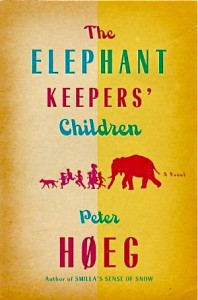 Danish author Peter Hoeg can never be accused of “writing the same book twice.” This one, like its predecessors, is completely different from all his other novels. Smilla’s Sense of Snow is an exotic thriller; Borderliners (my personal favorite) is a complex experimental novel of psychological suspense with a disturbed main character;
 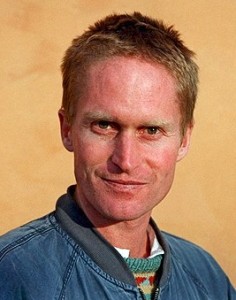 hases and escapes in which the fourteen-year-old main character (named Peter, in typically Hoeg fashion, suggesting issues the character might have in common with those of the author, on some level), along with his sixteen-year-old sister Tilde and terrier dog Basker, sets out to find their parents, sometimes aided by Hans, their older brother who is studying away from home. They know they must find their parents themselves before they are remanded to a children’s home by adults who seem to fear what they might do if left alone.


 When he is just a boy in Trujillo, Peru, Victor Sobrevilla Paniagua has his fortune told one Sunday in the plaza just outside the local basilica. A dwarf fortune-teller, with a miniature cathedral on his cart, has trained a monkey to draw fortunes from small drawers in the façade of the little cathedral. When Victor and his aunt receive his fortune, they see no ironies in the fact that Don Victor had just gone to Mass and confession and that this fortune is drawn from a toy cathedral by a monkey. Both Victor and his aunt believe the destiny inscribed on the small pink paper: “Beware! There are those who think you a dreamer. Pay them no mind. They are small-minded people… who would have you doubt your goals.”

 lict between new and old ways of living. Swirling from present to past and back, as the characters’ backgrounds and action combine, Arana develops engaging characters and the fully drawn community of Floralinda, creating a novel that lovers of literary fiction will celebrate.