“Onwards and outwards the news of Barry’s death spread, radiating, halo-like, from those who had been at the hospital. Onwards and outwards as far as Yarvil, reaching those who knew Barry only by sight or reputation or by name….In places, Barry himself was lost behind the nature of his ending, and he became no more than an eruption of vomit and piss, a twitching pile of catastrophe.”
 This passage from the opening of J. K. Rowling’s latest novel provides a hint of the style changes to come in this, her first “novel for adults.” Focusing on life in the very small community of Pagford, perhaps similar to the small communities Rowling herself grew up in as a child in Gloucestershire, Rowling emphasizes the pettiness, the rivalries, the back-biting, and the cruelties of “ordinary” life as people try to cope with the messiness of existence as it unfolds. There is no magic here to offer any hope of change, no wizard to sweep down and offer aid, either to the characters or to the reader, and as the action progresses, with its focus on the unpleasant and often violent aspects of many lives, the reader is forced to examine the elements of chance which can devastate everything that one might dream of.
Barry Fairbrother, a banker in his early forties, dies of an undiagnosed aneurism at the outset of the novel, a victim of a genetic defect. He leaves behind a wife and four children– and creates a “casual vacancy” on the Parish Council, which governs the community. Sixteen Council members deal with a  variety of community issues, one of the most pressing being the proposal to separate an area of Pagford called the Fields from the rest of this picturesque community and make it the responsibility of Yarvil, the more industrialized community which is its neighbor. A second issue involves the closure of a drug rehab facility located near the Fields, from which most of its clients are drawn. These clients are a financial and social burden for Pagford, since they vandalize bus stations, streetlights, footpaths, and public seating, all of which must be maintained by Pagford. The Field residents in their barely habitable low-cost housing are also viewed as belonging to a completely different social class – lower economic level, less education, less sense of social responsibility, and somehow less worthy of the efforts by Pagford’s citizens.
 These two external issues are as divisive within the community as one would expect such issues to be. The head of the Parish Council, Howard Mollison, has long been a rival of the deceased Barry Fairbrother. Mollison, the owner of a delicatessen and restaurant, wants to split off the Fields and close the rehabilitation center, while Fairbrother sees opportunities for change and hope. The likely votes on these issues will be very close. As a result Mollison is hoping to fill the vacancy on the council with a hand-picked candidate who will support his own point of view.
Rowling introduces over thirty characters in the first fifty pages of the book, providing enough brief but specific descriptions for each character to participate in the plot which quickly unfolds on several levels of simultaneous conflict. Husbands and wives fight, spouses fight with their lovers, children and parents fight, teenagers fight with each other (sometimes resorting to bullying on the internet), teenagers fight with teachers, and two children fight simply for survival. The issues relating to the “casual vacancy” on the Council create even more conflict.

As the action develops, several people already on the council are hounded to resign after the anonymous “Ghost of Barry Fairbrother” begins to post incriminating messages on the Council’s website. Racial prejudices surface, as do prejudices based on class.
The style which was so effective for Rowling when she was writing Harry Potter is less effective in this “adult” novel. Here she creates characters who are memorable for some aspects of their characters without being unique, while on the level of plot, the conflicts and crises, based on real life, are already familiar to devoted readers of contemporary fiction and, I regret to say, feel trite. At five hundred pages, this novel gave Rowling many opportunities to introduce broad themes and to develop them with sophistication and attention to universal values. Instead, she gives us a long novel which is sometimes exciting on the limited level of plot, but which remains on that limited level, never soaring into broader realms of wider scope. What starts in Pagford stays in Pagford, unfortunately.
 For those old enough to remember the excitement which accompanied Peyton Place when Grace Metalious published it in 1956, this novel bears some similarities. Peyton Place, however, was new and exciting over fifty years ago, and its focus on the hidden, the secret, the mysterious, and the sexy felt refreshingly original and astonishingly real. This novel, while sometimes exciting in individual scenes, felt artificial to me, as if the author had a list of characteristics that she thought would work for an adult novel. The characters here sometimes feel like paper dolls, limited by their rather stereotyped depictions, while their sheer numbers prevent the author from developing subtleties that make them come alive. A few characters are exceptions, but part of the reason these are exceptional is that their stories are so sad and so pathetic that the reader is hoping for their success, despite their limitations as characters. The conclusion, which feels powerful and moving to some readers, felt contrived to me. I do not think of myself as a cynic, but I had expected the plot to contain these twists, based on the direction the novel was taking over its five-hundred-page duration, with no miracles, no twists leading to happy surprises. Ultimately, I agreed with the harsh conclusion of Tessa, the guidance counselor, who tells one of her students here: “You think reality is up for negotiation, that we think it’s whatever you say it is. You must accept that we are as real as you are; you must accept that you are not God.”
Photos, in order: The author’s photo (Reuters) appears on http://www.csmonitor.com
Yate, the Gloucestershire town where Rowling was born, features this central shopping center: http://www.yourlocalweb.co.uk
Tutshill, the Gloucestershire town where Rowling lived from age nine, is shown on http://www.panoramio.com
One of the unusual characteristics of Pagford is its ruin of an Abbey on the top of a hill. Hailes Abbey, shown here, is also in Gloucestershire and may have served as the inspiration for this detail. http://www.panoramio.com
According to the British press, Rowling has rejected the rural culture in which she grew up and which is seen in this novel. A story about this may be accessed here: http://www.telegraph.co.uk/
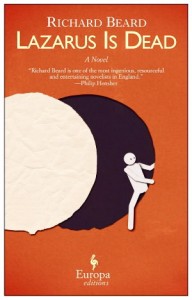 In this startling and ingenious “biography” of Lazarus, told with a light, often humorous touch, Richard Beard defies the limits of biography by mixing known elements from the Gospel of John (and from historical research) with elements from his own imagination. Often “proving” his theories about the relationship of Lazarus and Jesus by drawing on the equally fertile imaginations of many other novelists and artists who have also explored the story of Lazarus, Beard then adds additional elements of fantasy, where necessary, to flesh out the story and make his points. The result is a unique look at the life of Lazarus – and of Jesus – which will surprise and delight readers who have a flexible view of scripture and a sense of perspective, if not humor. I hasten to add here that Beard is not writing a satire or a farce, and he is especially careful in his presentation to avoid any sense of disrespect toward the religious context of his story – he is simply offering some alternatives to a contemporary reader while giving new meaning to the term “fictionalized biography” as he depicts Lazarus.
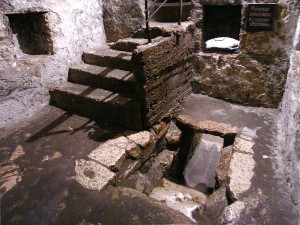 ngible threat to the Romans and to several different branches of Judaism who are losing their congregations to Jesus, but when Lazarus’s future father-in-law questions him about Jesus and their friendship, Lazarus downplays his importance – “He was a small boy with scabs on his knees. Like the rest of us. He couldn’t even swim.”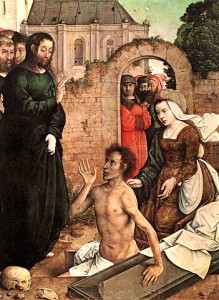
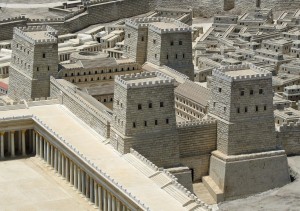 A whole panoply of other authors helps author Beard to make his case for the “realism” of his depiction of Lazarus and his relationship with Jesus. Jose Saramago in The Gospel According to Jesus Christ (1991), Karel Kapek in Lazarus (1949), Nikos Kazantzakis in The Last Temptation (1961), Robert Graves in King Jesus (1946), Par Lagerqvist in Barabbas (1950), and Norman Mailer in The Gospel According to the Son (1997) are among the many authors who “testify” to the truth of Beard’s assumptions about Lazarus and Jesus. Art works by Juan de Flandes, Leonardo da Vinci, and the Limbourg Brothers in their Tres Riches Heures of the Duc de Berry (1412 – 1414) provide additional “insights” into the death of Lazarus, while works by Fra Angelico (1520), Andrea del Castagno (1447) and Leonardo da Vinci depict Jesus’s Last Supper and the Crucifixion.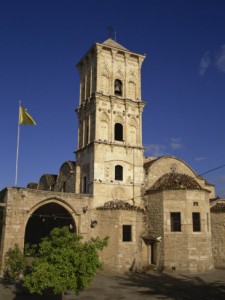
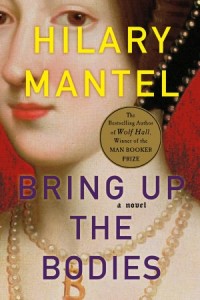 In her previous novel,
  Anne has given birth to Elizabeth, she has been unable to bear him a son, and with the marriage less exciting than it once was, Henry has convinced himself that she never will bear him the heir he wants. Assigning Cromwell to find a way to free him from his new queen, Henry begins to pursue the plain and modest Jane Seymour, whose virginal ways stand in sharp contrast to those of Anne.




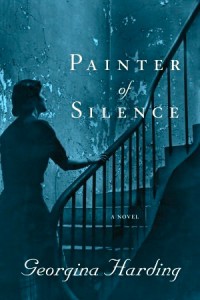 In this sensitive novel about an unusual and touching friendship, author Georgina Harding tells the story of life in a rural community in Romania beginning in the 1930s and extending through World War II and the Communist Occupation. As the novel opens, a sick and starving man has just arrived by train in Iasi, a place with which he is completely unfamiliar. He is looking for a woman, but he does not know where or how to find her. Knowing no one there, he spends the night on a park bench. In the morning he sees a nurse dressed in white walking past him, and, thinking she is an angel, he follows her to a hospital where he collapses at the entrance. The man is Augustin, known as Tinu, and he is looking for Safta, a childhood friend whom he has not seen since they were separated by the war and Communist Occupation.
 when they are adults in Iasu. Tinu, is the son of the estate’s cook, and Safta, the daughter of the estate’s owners, yet they form a unique and lasting bond. With exquisite care, the author recreates the world of childhood as Tinu and Safta experience and understand it, never resorting to easy sentimentality as she tells their stories.
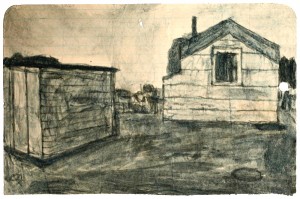 than humans…and cows and chickens.” Safta, with the innocence of childhood, sees how dramatically different his world is from her own, but she also understands intuitively the way he thinks and the conclusions he draws about life. From his infancy, he would “[watch] her dancing movements as if she was some flickering, endlessly absorbing film running before his eyes…the little girl a tiny dark silent actress,” not completely real. Though she tries to teach him to write, she is a child, too, easily distracted by the natural excitements of her own childhood, and she has other friends with whom to spend time, especially as she develops into adolescence and is courted by a summer visitor. “Tinu had a way that let you forget him,” she notes, years later. “Even when he stood right in front of you there was no insistence to his presence.”


 In one of the most stimulating novels I have read in months, Djibouti author Abdourahman A. Waberi, now living in France, explores issues of crucial contemporary importance while examining the history of religious extremism and how young people are drawn to it. He does this within the context of an intriguing, often poetic, novel which contains mysteries, a spy narrative, secret identities, a writer speaking from the grave, and a mystical, real-time connection between two characters who never meet during the narrative. I was glued to the pages of this short novel, and I am still thinking of all the mysteries the author raises here as he takes the reader in new directions, offering no easy answers.
 under control. His employer, Adorno Location Scouting, has been contracted to investigate on behalf of a client which wants to do some development there, but they need someone like Djibril with insights into the country itself for the security analysis. Despite being away from Djibouti for more than a decade, however, Djibril is not anonymous – he is tracked by unidentified men from the instant he sets foot on the soil.

 As Djibril investigates, without much in the way of results, he remembers his past, his loving relationship with his grandfather, his difficulties with his mother, and his problems with his twin brother. He enjoys the memories of his best friend and soul brother, David, a Jewish boy. The prisoner, however, has harsher memories, and is clearly influenced by the intensity of the blind prophet and his own devotion to him and to Allah. As he is recording his Venerable Master’s words, however, he is suddenly overcome by a mystical experience: the paper on which he has been recording the Master begins to look as if it has other words, not his own, written there in tiny script, a “palimpsest.” When he breathes on the paper, the script becomes clear, and it is foreign, associated with someone named Walter Benjamin, a German-Jewish philosopher, critic, and writer. Benjamin was forced to flee Germany and then France during the Nazi takeover, ultimately escaping toward Spain in the hope of reaching Portugal, just as Djibril has fled to France from Djibouti. Long passages from this “Book of Ben,” continue to raise ideas in conflict with much that the prisoner has learned.
 The drama ratchets up when Djibril makes contact with someone who can provide him with information he needs, leading to a climactic final scene. Throughout, Djibril’s seemingly casual, comfortable attitudes draw in the reader, in contrast to those of the prisoner, who is distant and driven. Still, there were times in which I wondered (wrongly) whether the prisoner even existed and whether he might be an alterego for Djibril, since they seemed to share something on a psychic level. Parts of the “Book of Ben” are at times obscure, and a coherent picture of Walter Benjamin’s ideas does not fully emerge, but this does not limit their interest or their effects on the reader, including the prisoner. The author deliberately leaves questions unanswered while creating many ironies in his conclusion, and I suspect that I will be thinking of this unsettling, evocative, and memorable novel for weeks to come.