“Thirty-one degrees [89 F] three hours before dawn, and not a breath of cooler air anywhere in the city. Even the moon, shining perfectly round and white overhead, seemed to give out heat. During the day there were distractions but at night, in those long dead hours between midnight and dawn when by rights the world should be cooling, the heat bore down like a weight…”
 During the one week in August in which the action in this novel takes place, the city of Florence is almost claustrophobic with the heat, with temperatures over a hundred degrees (Fahrenheit), paralyzing the city during the day, with no respite at night. Many residents have decamped for the hills or the ocean to escape, and those who remain behind, usually without air conditioning, must simply add the day’s heat to the other aspects of life which they must endure, even in a city as beautiful as this one. In a welcome change from the darkly violent noir novels which have been so popular among mystery aficionados in recent years, author Christobel Kent uses this setting to create a character-based “summer mystery,” focusing on several groups of characters as they cope with the summer heat and with a mystery which the author presents through their eyes. The novel is effectively plotted, with plenty of excitement, but it develops as the outcome of the characters’ actions and their thoughts as they deal with a disappearance and the eventual determination of murder, rather than through author-initiated violent twists, turns, and fast-paced dramatic action in which the characters are pawns of the author. The unique characters reflect many different aspects of life in a realistically depicted Florence, not the Florence to which tourists flock on competitive shopping sprees. As in any other city, crime does exist here. Murders and disappearances do take place, and innocent people are often tormented by the impact of these crimes on their lives. The heat just adds to the intensity.

With four stand-alone novels and three written as part of the Sandro Cellini series, of which this is the third, author Christobel Kent shows her long literary experience, creating a can’t-put-it-downer which is so smooth that the reader is swept along, yielding to the tide of events and to the charm of the many characters while also being engrossed and actively involved trying to figure out who has committed the dastardly deed of murder.
The novel opens with the discovery of a man’s body which has been lying off the road for two days, almost totally hidden. While it could have been a suicide by someone who has deliberately walked into traffic, the damage to the body is so extensive and its location is so hidden that it is obvious to Sandro Cellini, a former officer with the Polizia dello Stato, now a private investigator, that this is a murder case. Cellini is representing a young pregnant woman whose fiancé is missing. Since her fiance has been working on an apartment for them and the baby, she is sure that he would never have left her voluntarily. Soon several other sets of characters, all concerned about the identity of the same body, become part of the milieu. Kent has a cast of characters who keep the interest high as Sandro Cellini, unassociated with the police (except through his former buddy Pietro, with whom he meets privately) investigates on behalf of his penniless client and others with whom he shares a warm, even paternal relationship.

Santa Croce, with the statue of Dante Alighieri
Three levels of characters include Sandro Cellini and his wife Luisa, married many years and still devastated by the loss of their only child, after only a day and a half of life. Luisa, who has worked for years for a fashion boutique, has also suffered from breast cancer, and she is hoping that they will soon be able to move from their neighborhood into a larger apartment in a different, safer neighborhood. They are mentors to Guili, a woman in her early forties who has been a drug addict and ex-con and who is now working part-time for Sandro as a receptionist/secretary and part-time for a women’s center. She is the person who has introduced Sandro to his penniless client, Anna Niescu, a young, shy, pregnant woman, working at a down-at-the-heels lodging house/hotel, run by an old woman who works her hard and suffers no excuses for slacking off. Anna’s fiancé is a mystery man who introduces the third set of characters – those who operate a small Florentine bank: the manager, the prideful assistant manager, a teller, and a man who works (or

Monterosso, the beach resort to which the Brunelli family retreats
loafs) at the bank. Anna’s boyfriend Josef has always arrived on time at the bank, once a week, with the weekend receipts of a nearby cinema, and his failure to make a deposit during the week of this novel raises questions about where he is and whether he might have been the victim discovered beside the road.
Gradually, the characters overlap, their relationships developing and their connections to the community expanding. Florence is a “small town” in terms of its relationships among long-time residents, and as Sandro Cellini investigates, he uses his own connections, as do his wife and the various other characters, to try to figure out the who, how, and why of the murder. Eventually, another body is discovered, and the process continues, with all the characters then looking for connections, real or imagined, between the two deaths.

Ponte Alle Grazie, where Sandro meets with Pietro, his former colleague - one bridge away from the Ponte Vecchio
Author Christobel Kent creates a taut and psychologically intriguing novel about characters dealing with crises of life-changing dimensions during a period in which the August heat ratchets up the drama by its claustrophobic intensity. The characters as a group are pragmatic people dealing with life on their own terms, and as they try to come to grips with the changes that circumstances may be hurling their way, they evoke great sympathy from the reader. Sandro Cellini, different from the more typical private eye/former police officer in that he is not a drunk, not a loner, and not a “hard” man, draws the reader’s attention to some of the smaller issues which are of particular interest to him, and as he reaches out to the people around him, providing emotional help, a characteristic rare among main characters of mysteries, he elevates his status as a hero. All the characters associated with Cellini and his wife Luisa are good people, and it is satisfying for the reader to be able to empathize with them as they live their lives. As the novel comes to a grand climax, the reader races to keep up with the action, hoping, all the while, that the characters with whom s/he has identified will survive the crises to go on with their lives in a way that is as satisfying for them as this novel has been for the reader.

Photos, in order: The author’s photo by Donald Robertson appears on the author’s page on http://us.macmillan.com
Santa Croce, built between 1224 and 1442, containes frescoes by Giotto and the tomb of Niccolo Machiavelli. Dante’s statue is outside its entrance. http://www.ssqq.com
Monterosso, the beachfront resort, appears on http://www.planningatour.com
The Ponte Alle Grazie from which most of the photos are taken of the Ponte Vecchio, its neighbor, is shown on http://www.casadeitintori.it
I was startled to discover that this Lamborghini is owned by the Polizia dello Stato, though I have no idea of its national purpose. http://www.militaryphotos.net
ARC: Pegasus
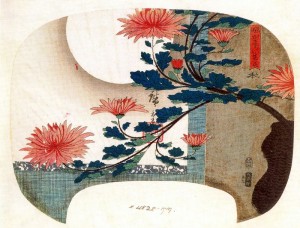
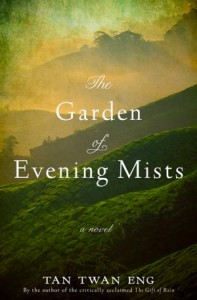 Setting this unusual, aesthetically intriguing, and often exciting novel in Malaya/Malaysia, author Tan Twan Eng* provides insights into the Japanese Occupation of Malaya from 1941 – 1945, while recreating the horrors endured by the local population. At the same time, he also illustrates the highly formal aesthetic principles which underlie Japanese gardens, ukiyo-e (woodblock) prints, and the practice of horimono (literally “carving”), which is part of the long tradition of irezumi, Japanese tattooing. Amazing as it may sound, Tan succeeds in accomplishing an elegant blend of these seemingly incompatible subjects and themes while also appealing to the reader with characters who face personal tragedies and strive, somehow, to endure.
 back Yangiri’s original beauty: first, to honor the memory of Aritomo, whom she originally despised for his connections to Japan, where he was gardener to the Emperor, and second, to honor the memory of her sister, Yun Hong, who did not survive the work camp to which they were both consigned during the Occupation. She knows how hard the restoration work will be – she worked with Aritomo in creating the original masterpiece. She also plans to record all her recollections of the approximately ten years she worked with Aritomo. “I will dance to the music of words,” she says, “one more time.”
 sing on the Japanese labor camp where Yun Ling and Yun Hong are imprisoned, and on the tortures visited upon the detainees, especially the women. Yun Ling is the only survivor of her camp, but how she survived remains a mystery for much of the novel. Other mysteries also keep the interest high. Questions arise as to whether Aritomo may have been involved in a group called “The Golden Lily,” which stole treasures from Japanese-occupied countries and sent them to the Philippines, on behalf of the Emperor. Other questions arise about the Boer family of Magnus Pretorius, which owns the Majuba Tea Estate, located beside Yangiri, and whether someone there may have had connections with the Communists during the war.
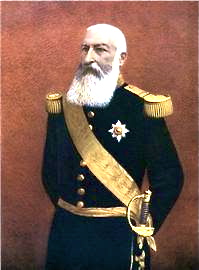
 When young Chrysostome Liege arrives by boat to begin his service in the Belgian Force Publique for King Leopold II in the Congo, he is clearly an innocent – a shy, religious, and humorless young man thrust into circumstances which challenge everything he, and the reader, consider “civilized.” It is 1903, and the Congo is King Leopold’s private fiefdom. Though the country has been called the Congo “Free State” since 1885, King Leopold has been the sole shareholder of this “non-governmental organization” which he founded so he could be a “benevolent ruler” to an area in central Africa more than twice the size of New England and New York combined. In reality, “freedom” and “benevolence” have never been part of the King’s plan. He has, from the beginning, used the Congo for his own purposes, forcing an unwilling native population to supply huge amounts of ivory, mahogany, minerals, and rubber which would benefit only him. Failure to meet nearly impossible quotas has resulted in the loss of a hand for the unfortunate laborer.

 , no apparent need to be part of it, and since he also has no feeling for irony or absurdity, even in circumstances in which the ironies and absurdities are patently obvious, the reader is alternately horrified by some of the officers’ activities and somewhat nonplussed by Chrysostrome’s apparent attitude of being above it all. All of the men except Chrysostrome drink in the Club Royale, which they have built, and all of them except Chrysostrome also gamble. As one of the officers notes, “I’ve no idea whether he’ll be a good soldier or a bad one, but he’ll certainly be a miserable one. As miserable as a mandrill.”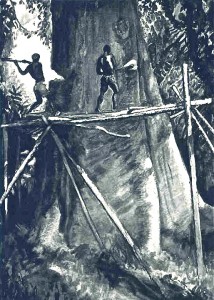

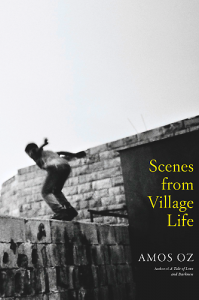 Although he emphasizes some aspects of contemporary Israeli life which he describes as sad and regrettable in this novel, Amos Oz also shows humor in his attitudes toward some of his characters. Eighty-six-year-old Pesach Kedem in “Digging,” for example, is a man with no friends. His political party fell apart twenty-five years ago, and he is now mean-spirited and resentful, “pitiless in his criticism of his opponents and enemies, all of them long since deceased.” The younger generation, he believes, is worthless. The press publishes only nonsense, and, as far as he is concerned, even the weather forecaster cannot manage to get it right. His benighted daughter Rachel, whom he sometimes calls Abigail, the name of his deceased wife, tries to placate him by writing down his “memoirs” as he speaks, but Pesach remains determinedly disagreeable and uncooperative.
 dings of Pesach’s now-defunct farm, surprises Pesach by asking him about the unexplained digging that he, too, has heard at night. Both Pesach and Adel are struggling to deal with changes in the foundations of their lives, but Adel’s point of view is obviously different from Pesach’s, which is quoted at the top of this review. “[The Arabs’] unhappiness is partly our fault and partly your fault,” Adel proffers, “But your unhappiness comes from your soul.”
 Though the stories overlap somewhat, with some characters appearing in several stories, their subject matter and style differ, though their themes connect. “Heirs” is a kind of parable, telling of Arieh Zelnik, descended from one of the founders of the village, as he deals with a clever scoundrel who claims to be a relative and who wants Arieh’s land. “Relations,” which follows, is the sensitive story of Dr. Gili Steiner, a childless, forty-five-year-old physician, who has always loved her nephew, a soldier who appears to have autism or Asperger’s Syndrome and who does not arrive for his scheduled visit. “Lost” is a mystery, in which a real estate agent tries to effect a sale as a strange woman who “looked as if she had stepped out of a foreign advertisement for nature walks” appears in a garden, then disappears; a heavy package without an address or apparent owner shows up on a bench along the road; and someone gets lost in the dark.
 To the extent that this final story is the culmination of the previous stories and their sometimes subtle themes, Oz may be suggesting that there is less hope now for present day Israel to solve its social problems than ever before in the past. The younger generation in this collection has a different vision of the future, and the present society or government is rigid and uncompromising in its views. Though these stories are exciting to read, a great deal of fun, and decidedly apolitical, they nevertheless suggest that the author is not showing much optimism (or hope for compromises) within present Israeli society or its government. The power of this story collection, which is absolutely riveting, lingers long after the book is closed.
 In this old-fashioned, “once-upon-a-time-in-the-old-country” saga set in northern Italy, author Valerio Massimo Manfredi introduces the Bruni family of farmers. Living in the rural hills outside of Bologna, Callisto and Clerice Bruni, parents of seven sons and two daughters, have worked the same land as generations of their ancestors, occupying the same house as their parents and grandparents, with the same large barn for their cattle. During the cold winters, the barn becomes the night-time gathering place for the family, since the warmth of their cows keeps the barn warmer than the house, and they willingly offer a warm place there to any travelers or passersby who need a place to sleep. Some of these strangers tell stories to amuse the family, some of them help with the farm work, some stay for a few days, some stay for weeks, and some, like Cleto, the umbrella mender, have been visiting so often over the years that the family now knows them well. Though the Brunis do not own the land, farming it for a landowner in exchange for half the wheat and corn crops, they feel secure and are never hungry. “In their lives, everything is always the same…one night like any other. Only nature can surprise them.” Through the stories which people bring to their door, they share the legends and mysteries of the region and add their own interpretations to events happening around them.

 alties, and when the older generation dies off, the younger generation goes in different directions, the idea of a strong family unit destroyed by time. As the author continues their stories, these characters become paradigms of the sociological changes taking place.