“For [Ellie] Tom’s death meant quite simply that Tom was gone now for good and was never coming back. [Jack] could see that this was a perfectly sound position. But for him it meant just as simply – though it was a position much harder to argue for – that Tom had come back…He’d come back as surely as if that letter announcing his death had really been Tom himself knocking on the door.”
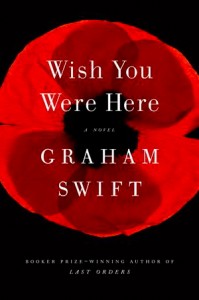 Booker Prize winner Graham Swift has never shied away from literary challenges, and with this novel he tackles two issues which few other writers would even attempt, much less succeed in overcoming. This novel is almost totally about death in all its aspects, with no humor to leaven the heavy mood and the profound sadness which the novel ultimately evokes. And, making his subject and themes even more difficult to bring to life, he creates a main character and many peripheral characters who are inarticulate people who think in clichés and deal with the everyday challenges of their lives in “tried and true” fashion. The reader quickly becomes aware that these characters have few, if any, thoughts about the larger world, any perceived role they might have in it, and even how they might differ, in the grand scheme of life, from the animals on the farm to which they have devoted their lives. Still, Swift manages to create a novel which inspires the reader’s complete empathy with his limited main characters who stay true to their limited views of life and their limited expectations. His novel becomes, ultimately, a study of how an unreflective, uneducated everyman handles the disasters that fate and time deal out to him, over which he believes he has no control.

The novel opens in a caravan park owned by Jack and Ellie Luxton on the Isle of Wight. Thirty-nine-year-old Jack, the only remaining member of his family, has just received a letter from the military saying that his younger brother Tom, an Army recruit with whom he has had no contact for thirteen years, has died from an IED explosion in Iraq. Jack’s family has never been open with their feelings, and as the author’s focus swirls backward, forward, and around again from the time between Tom’s departure, when at age eighteen he left their Devon farm for the army, and the present, Swift depicts their history and their values. Famous in the town of Marleston because two Luxton brothers died during World War I, where one of them received the Distinguished Conduct Medal, the Luxton family’s descendants still polish the medal once a year for Remembrance Day, where it is displayed. They have owned their land on Jebb Hill in Devon since 1614, but in recent history, after an epidemic of hoof-in-mouth disease, and later, mad cow disease, they have lost their entire herd, euthanized to protect the interests of the nation as a whole, though none of their herd has ever been infected. The history of the Luxton brothers from World War I and the devastating effects of the most recent killing of the entire herd of Friesian dairy cattle, have dominated the family history to the present, affecting every member, most especially Jack’s father, Michael.

Distinguished Conduct Medal
As the novel opens, Jack Luxton is alone, with a shotgun on the bed in the master bedroom, his wife Ellie having stormed out of the house in anger. They have disagreed about something Jack said after receiving the letter about his brother Tom’s death, and about her seemingly inappropriate answer. When Jack has to go to the mainland to receive Tom’s “repatriated” remains from Iraq, he goes alone to greet the plane with the ashes of Tom and two other British soldiers from Iraq. The burial service, which Jack has arranged in Marleston, the Devon town where he and Tom grew up, is depicted in great, sensitive detail. Jack’s reaction to Tom’s death, despite their lack of communication for thirteen years, and his sudden return to the family’s old farm, now owned by the family of an investment banker which “weekends” there, are devastating events which upset Jack’s emotional equilibrium. His mother’s death, his father’s inability to communicate or to share his feelings with anyone, the father’s death, and Jack’s own ability to express himself only in words that sound like a greeting card, are also revealed through flashbacks, and the reader begins to understand the personal crisis that Jack is facing.

Holstein-Friesian cows, like those raised by the Luxton family in Devon
Swift’s swirling time frame reveals the family’s history (and Jack and Ellie’s long history) over several decades and creates an intimate portrait of people who have rarely had the leisure or the inclination to contemplate life’s verities. The characters are presented with the respect they deserve, while also shown with all their limitations. As Swift develops their characters within their own environments, he creates an almost symphonic narrative in which many facets of their lives and personalities sing out individually to create a grand picture of life on a larger scale, while emphasizing their limitations and, sadly, their inabilities to see the broader picture. The many mysteries which intrigue the reader at the beginning of the novel are resolved as the points of view alternate between Jack and the other characters with whom he comes into contact. The author also interjects himself, occasionally, to explain (somewhat intrusively) what his characters are doing or thinking.

Caravan Park, similar to that of Jack and Ellie Luxton
Though a number of Amazon readers complain about the lack of strong plot in this character-based novel, I found it completely enthralling, as I came to know intimately the limited Jack and his self-serving wife Ellie as they dealt with their lives, present and future. The author is careful not to wallow in sentimentality, however much the reader may respond emotionally to the characters’ well-described predicaments. The lives of some peripheral characters are described in greater detail than necessary, however, and though these descriptions sometimes allow the themes to expand, they are a bit frustrating for a reader looking for more insight into the main characters. Mystical moments at the conclusion fit the narrative and reveal Jack’s state of mind but leave the novel open to the charge that the conclusion is somewhat artificial in its execution. Ellie’s reasons for her failure to accompany Jack to the funeral are thin, at best. The novel, overall, however, is stunning, a closeup of the lives of people dealing with complex problems endemic to the present day, people who do not understand how we got where we are or what, if anything, we can do about it.
ALSO by Graham Swift: MOTHERING SUNDAY, HERE WE ARE
Photos, in order: The author’s photo appears on http://www.literaryfestivals.co.uk
The Distinguished Conduct Medal may be found here: http://medalblog.blogspot.com
The Friesian dairy cows raised by the Luxton family: http://commons.wikimedia.org
Jack and Ellie Luxton’s caravan park on the Isle of Wight has thirty-two units, similar to this one: http://en.wikipedia.org
 Readers who enjoyed Danish author Jussi Adler-Olsen’s first mystery to be translated into English,
  His “assistant,” Assad, whom he hired originally to do the custodial work in the basement, while he, Morck, watched TV and snoozed in his office, is a mysterious man from an unstated country in the Middle East. Assad, however, proves to have a remarkable facility for dealing with the internecine rivalries of the police department, a fine eye for detail in handling difficult cases, and the ability to interest Morck in pursuing cases that he himself finds intriguing. Slowly, Assad, the custodian, has brought Morck back into the real world, though no one knows where his considerable police talent comes from.
 Though very little new or dramatic information is learned about the personal lives of Morck and Assad in The Absent One, the two come to know each other better and their characters deepen as the author shows them at work and interacting with each other. Here, Morck also finds himself with another new employee, this one a secretary on “mile-high heels” who has been cheering up the other secretaries with her “infectious humour” for the past few weeks. She has now been assigned to Morck, an assignment thought to be, essentially, “the end of the line” professionally, as far as the Copenhagen police hierarchy is concerned, and Morck is not pleased. All three characters work together, however, when they begin to investigate a twenty-year-old case file that has mysteriously appeared on Morck’s desk. No one in the police department knows who put the file there.
 d, she decides she will take down those involved, and she amasses an arsenal which also includes grenades, automatic weapons, and silencers. With no conscience, she is clearly the “absent one,” but the author manages, remarkably, to make her a sympathetic character despite her behavior, and few readers will fail to respond to her pathetic neediness.
 acrificed for the shooter’s thrills, and many participants have received serious, even life-threatening injuries. Life holds no value for any of this group, and as the author slowly reveals the many and varied crimes they have all committed, including those against Kimmie, who is perhaps the most sadistic of them all, the novel becomes filled with dark psychological twists and turns. The novel is enhanced by the fact that Morck, Assad, and Rose are also unique characters who do not respond in traditional ways, and moments of humor accompany much of the horror. Eventually, Morck begins to let himself feel human again, leading the reader to expect even more complexity to his character in the additional novels now being translated.
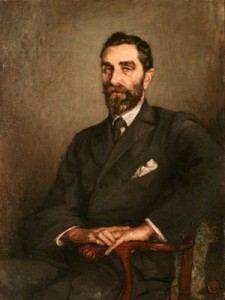
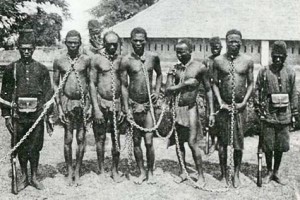
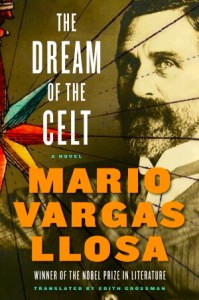 In jail awaiting the results of his appeal of the death sentence for his attempt to help Irish rebels by bringing guns and ammunition into Ireland from Germany, Roger Casement, age fifty-one in 1916, is ill, friendless, and suffering emotionally. Casement has been jailed following his capture on Banna Strand, where he was expecting to be met by the rebels he planned to help with twenty thousand rifles, ten machine guns, and five million rounds of ammunition. He had secured these munitions in Germany, along with the promise of help, and had traveled to Ireland in a German submarine, trailed by a ship loaded with the armaments. The uprising was scheduled to occur on April 23, 1916, and Casement, who was opposed to the uprising without more involvement of the populace, had planned his own arrival with weapons to coincide with the April 23 date. Upon his scheduled arrival at Banna Strand, no one is there to meet him – the date was changed after he departed from Germany. The ship with all the guns and ammunition was sunk, and Casement was captured.
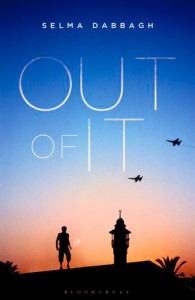 In her debut novel, Out of It, British Palestinian author Selma Dabbagh creates a family from Gaza which reflects all the stresses, conflicts, and competing philosophies endemic to that world, a small strip of land along the Mediterranean coast in the westernmost corner of Israel, bordering Egypt. Main character Rashid Mujahed, the second son of his family, lives with his mother, twin sister Iman, and older brother Sabri, and though the family is well enough off to be able to travel abroad, they are firmly linked to Gaza, their home, at least for now. From a satellite Gaza looks like a “bonery…dried out coral, ridged, chambered, and sandy,” Rashid observes, while the other side, the Israeli side, “the place they came from, that had been theirs, the one they weren’t allowed to even visit anymore, it wasn’t bones, but a blanket: an elaborate blanket of modernist design…That side glinted.” Rashid has applied to attend graduate school in England, with the aid of Lisa, his activist girlfriend from London, and despite the frantic activity going on around him in Gaza, with many political movements arising and competing with each other, he despairs of much change.

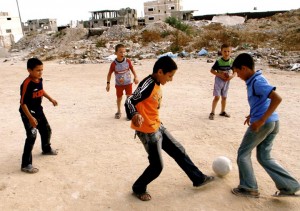 Conventions, but he is foiled on two levels. A close neighbor is arrested for having been a spy for the Israelis for many years, and a friend of Rashid goes missing. As Sabri complains, “My thesis [is] that the Occupation, the closures, the siege have made amputees of all of us, crawling around in the mud. Legless in Gaza. The lot of us.”
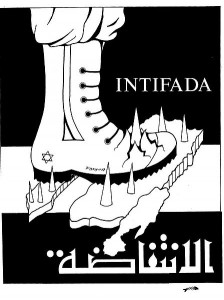 By showing the action through members of a single family with differing points of view, the author makes many issues come alive in new ways and shows how they affect family dynamics. And though the issues and the different political factions attempting to deal with them are sometimes a bit muddled for those of us who are not already familiar with all the various groups in Gaza, Dabbagh’s focus is clearly on those issues. We come to know the characters within the limits of their points of view, and they and their fates become part of the message rather than ends in themselves. The novel is enlightening and often entertaining, descriptive and often memorable, and exciting but often horrific, with few hints that any real solution is forthcoming.
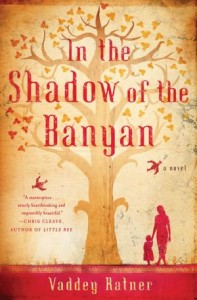 In this autobiographical novel, author Vaddey Ratner has accomplished what every novelist hopes for – she has created a main character and family so vibrant that every reader will truly feel “replanted” and rooted in a different place – Cambodia – where s/he then shares every aspect of the characters’ lives and hopes for the future. Telling the story is Raami, an engaging seven-year-old child of a large and loving Phnom Penh family, which also includes her nanny, cook, and beloved gardener. Together they inhabit a lush, lovely, and endlessly fascinating natural world which offers constant visual surprises and inspires the stories, tales, and poems Raami relates here. Many of these poems and stories have been written by her father, a man she adores, and they infuse her whole life with the magic and beauty of words, offering hope and inspiration even through the atrocities she eventually witnesses.
 Raami’s insights and observations – ingenuous, intelligent, and honest – reflect a kind of reality almost non-existent among other child narrators, and bring the characters within her family to life. Her much younger sister, who enjoys playing with jewelry, is described as “not a child…She was a night bazaar.” Her grandmother (Grandmother Queen) is “blissfully ensconced in old age and dementia.” The hefty family cook, who inexplicably vanishes, eventually “materializes” among a group of butterflies, where she is, to Raami, the “rainbow-colored moth, ” and an elderly couple looks like “old trees that walk and talk.” Her loving father tells her that “In you I see all of my dreams,” and reminds her that “I want you always to believe that the tiniest glimpse of beauty here and there is a reflection of the gods’ abode. It is real, Raami…You have only to envision it, to dare to dream it. It is within you, within all of us.”

 Still, even under these circumstances, Raami remembers the stories from her father, looks for signs of new life in nature as he has taught her, and refuses to give in. She knows that as long as she has some kind of hope, it may be possible for her to survive. Working all day long as a human scarecrow, forced to wave her arms constantly to keep crows from eating the rice, she does what she is told, even as her mother is digging rocks to shore up the flood control embankments. It is not until the Vietnamese begin to attack the Khmer, that many revolutionaries in rural areas abandon their positions, and some signs of hope arise for Raami and those in her camp. Eventually, some in the camp take advantage of the lack of organization and head west for Thailand.