“Great acting is being able to say ‘Pass the salt, please,’ without sounding weird or odd or stupid or portentous. Great acting is being able to say ‘Horror! Horror! Horror!’ without sounding weird or odd or stupid or portentous.”
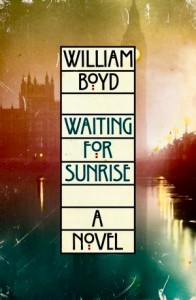 Lysander Rief, the actor-son of famed Shakespearean actor Halifax Rief, is in Vienna, as the novel opens in August, 1913, seeking treatment for an embarrassing sexual problem. A close friend has suggested psychoanalysis, and Lysander has gone there for treatment. His doctor, a believer in “the fabulating function” of Bergson, not the methods of Freud, has told him that “If the everyday world, everyday reality, is a fiction we create, then the same can be said of our past – the past is an aggregate of fictive realties we have already experienced – our memories.” His goal is nothing less than to help Lysander change his damaging “old fictions” into a unique blend – “a union, a fusing – of this individual imagination and reality.” What is real versus what merely seems real is obviously the primary theme here as Lysander deals with his problem, even as Europe deals with its problems and past histories in the lead-up to World War I. Additional themes of love and sex, and life and death as they overlap with the ideas of reality and fantasy enhance the main theme and bring it to life in new ways.

However well drawn the themes may be (and the fiction vs. reality theme is extremely well done), the novel is memorable primarily for its good story, a trademark of author William Boyd throughout his long career. Vienna is bursting with activity as Lysander meets men and women from the British consulate and military, the Viennese world of art and the theatre, the psychiatric world inspired by Freud and others, and the servant world at the Pension Kriwanek, where he lives, and he feels “strangely at home” in Vienna. Some of the tensions endemic to the period surface, however, when a Slovene cavalry officer at the pension faces a criminal tribunal, only, he says, because he is Slovene, and when anti-Semitic remarks appear in conversation. Lysander, concerned primarily with solving his sexual problems, however, is too pre-occupied to spend much time thinking about the political stresses which will end in war just one year later.

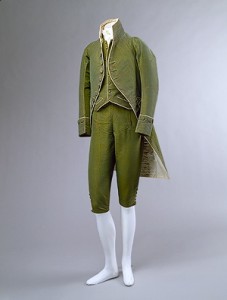
Lysander’s uncle Hamo has just purchased a Turner Two-Seater with collapsible hood
Providing plenty of well-developed background for his main characters, Boyd also leaves mysteries in their lives, developing these mysteries to add complexity to his plot as the novel progresses. Lysander’s whole wealthy family becomes part of the story here—his parents, his step-family, his uncle—as does Blanche, his fiancée in London – all of them staid and steeped in the traditions of their social class, it appears. In Vienna, away from his roots, Lysander sees new opportunities. Hettie Bull, a femme fatale, succeeds in persuading him to pose nude (wearing only a “cache-sexe”) for a sculpture she is working on. She disregards all the societal norms, poses nude for a poster which horrifies Vienna, sleeps with anyone who appeals to her, lives most of the time with a man to whom she is not married, and uses cocaine, but even Hettie has her secrets and plots. Consular officials and British military attaches are involved in spying, and half the city seems to survive by blackmailing the other half and then, in turn, being blackmailed by them. Nothing and no one are what or who they seem to be.
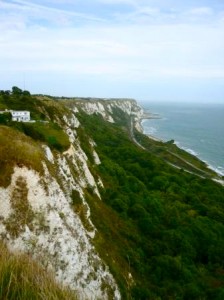
Winchelsea, where Lysander visited his uncle upon his return from Vienna
When war breaks out, Lysander enlists and faces skirmishes in France, at one point losing his bearings on the battlefield (his memory proves false), but he soon finds himself drafted for a new kind of task. As an actor, he has spent his professional life bringing other characters to life, and when Britain suspects that there is a “mole” in the British high command, conveying key information to the enemy, they assign Lysander to figure out who that might be, giving him a false identity and putting him to work as a spy. He quickly discovers that his work in Shakespeare’s Measure for Measure, which is set in Vienna and deals with issues of purity vs. lechery, and moral corruption vs. moral triumph, has provided little insight into the task he is expected to perform now, not just to save the country but to save himself as he plays the most important role of his life.
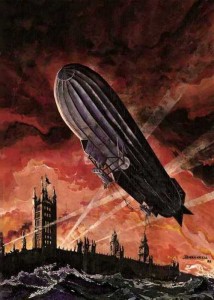
Zeppelin over London, 1915. Lysander found them “mesmerizing” before the bombs fell.
The British have intercepted coded messages which consist of a string of numbers, and they suspect that this is a one-to-one code, limited to only two individuals who use the same edition of a specific book as the key. Lysander must identify the book and who among the British high command, perhaps someone in the War Office, is responsible, a phantom referred to as “Andromeda” by investigators. Lysander’s mysterious liaison named “Bonfire,” the reappearance of Hettie Bull, a wide variety of characters who are not who they are thought to be, and even an opera from 1912 combine with secret messages, torture, shootings, and betrayals to add depth and excitement in the last part of the novel, taking the theme of reality vs. pretense to its ultimate conclusion. As one character says:
“Maybe this is what life is like – we try to see clearly but what we see is never clear and is never going to be. The more we strive the murkier it becomes. All we are left with are approximations, nuances, multitudes of plausible explanations. Take your pick.”
NOTE: This theme is clearly one that Boyd enjoys exploring, and he obviously had great fun in 1998 when he was responsible for a HOAX which occurred when he published NAT TATE: AN AMERICAN ARTIST, the “biography” of abstract expressionist “Nat Tate,” who “died” at age thirty-one and whose collection of paintings from the 1950s is included in the book.
ALSO by William Boyd: ANY HUMAN HEART, NAT TATE: AN AMERICAN ARTIST, SWEET CARESS, RESTLESS (link to Amazon review), LOVE IS BLIND, TRIO
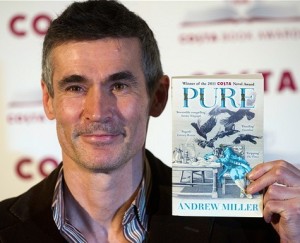
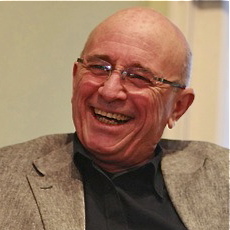
Photos, in order: The author’s photo appears on http://www.news.com.au
Lysander’s uncle Hamo has just purchased a Turner Two-Seater with collapsible hood, shown here: http://www.localhistory.scit.wlv.ac.uk
When Lysander comes back from his first trip to Vienna, he pays an enlightening (and thematically revealing) visit to his uncle in Winchelsea, on the cliffs, shown here: http://www.tripadvisor.co.uk
In 1915, the Germans sent a Zeppelin over London, where it bombed the theatre district. Lysander found it mesmerizing to watch and seemingly “serene” before the bombs fell: from http://www.dieselpunks.org
 Ivan Shutov, a Russian author/critic in his fifties, now living in Paris, is brooding about his difficulty getting his work published, about the current lack of real romance in his life, and about the incipient departure of his lover, a young woman who has fed his ego for two and a half years. Impatient and self-centered, he has been indifferent to her own needs, unwilling or unable to recognize that she is a real person with her own ideas. Instead, he sees her in terms of his creative writing, always looking at her and their relationship from afar – as if he were a participant in a fictional romantic scene which includes her as a character. Initially he had felt that “everything about her that caught his eye had the completeness of a sentence that needed no rewriting,” but he now realizes that he had “never said anything to her that was vitally important.” He believes that his mistake had been “his desire to love Lea as one loves a poem.” However much he may admire the heroes of Chekhov and Tolstoy for their romantic elegance, however, Shutov has little in common with them; he has far more in common with the self-absorbed “heroes” of the modern novels that he so despises.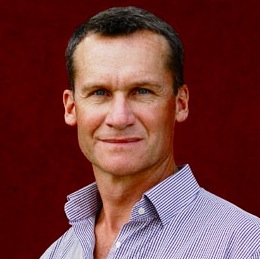

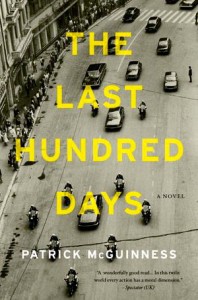 By 1989 Nicolae Ceausescu had been the communist ruler of Romania for twenty-four years. This was to be his last year. Focusing on Ceausescu’s last hundred days, author Patrick McGuinness recreates all the forces leading to the overthrow of the government, telling his story through the eyes of an unnamed twenty-one-year-old speaker from the UK. The speaker, whose home life had been a disaster, had dropped out of college after his first year, but when his bullying father finally died, the young man applied for a foreign posting and was given a job teaching English in Bucharest, a job for which he had neither applied nor appeared for an interview.
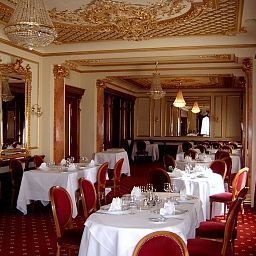
 .” At the Capsa the party faithful and those who have money come to make connections, negotiate personal deals, be seen, and enjoy food not available elsewhere in the country. “It’s all here, passion, intimacy, human fellowship,” Leo tells him. “You just need to adapt to the circumstances…it’s a bit of a grey area to be honest. Actually…it’s all grey area round here,” but this is “the Romanian way,” the speaker learns, and it is adapt or get out. Leo has adapted to Romanian life completely, scorning equally the party apparatchiks and the British expats who live in a compound and spend their free time at the local pub, the Ship and Castle (better know as the Shit and Hassle). Not incidentally, Leo is also Bucharest’s biggest black-marketeer, making deals with virtually everyone and storing his plunder in the basement of the two biggest museums in Bucharest.
 Gradually, Bucharest comes to life through the speaker’s eyes – “a heat-beaten maze whose walls and towers melted like sugar, and where the roots of trees erupted through the pavements.” The city is being bulldozed at a rapid rate, and the old architectural monuments and historical buildings are being replaced with cheap, modern buildings, some of them with steel framing only to the third or fourth floor, the remaining floors built on top of each other, floor after floor of concrete, with all the weight borne by the bottom floors, an unparalleled structural disaster. Shop signs appear on new buildings, but the shops are empty. Hungry people wait in long lines, often discovering that though they are waiting for flour, it has run out. If they are then offered some non-food item instead, they take whatever is available. They can always barter whatever they get on their own black-markets. Most shockingly, even the headstones have disappeared from most cemeteries, appropriated and removed by the government for use in the building of the People’s Palace, since it is the only marble or appropriate stone left in the country that can be used to complete this colossal monument, begun in 1983 and second in size only to the U.S. Pentagon.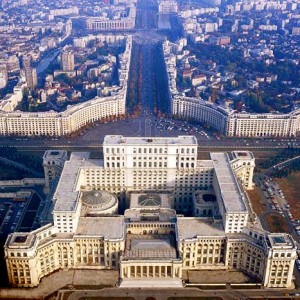
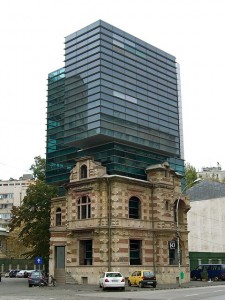 The author does a remarkable job of recreating Bucharest, which is really the main character here, a place with incredible resilience, around which all the human characters revolve as the author connects them with the city’s history, its communist functionaries, its “flexible” morality, and its often inflexible laws and dictates. As people constantly seek (and often find) ways around the restrictions here, the reader is encouraged by the cleverness and originality with which they operate, but appalled in the same degree by the betrayals committed by some in order to advance themselves, and the violence which accompanies these betrayals. The speaker and his friends find themselves in fraught circumstances throughout the tumultuous three months leading to the fall of Ceausescu, and the drama rises inexorably. The reader, familiar with the characters, comes to know and expect them to act in particular ways, but often discovers at the last minute that someone has betrayed someone else. The author is particularly realistic in making no real value judgments about most of these characters, even those who may act in ways contrary to what most of us would consider “ethical.” In times of such crisis, who knows what any of us would do, he seems to suggest. Subtle, often humorous, and profoundly ironic, this is a unique approach to a study of a city in the midst of evolution and then revolution and its aftermath, and none of the characters here will remain unchanged. Fascinating on all levels.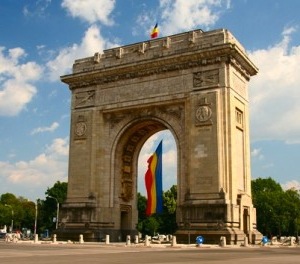
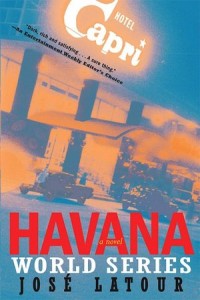 Billed as a master of “Cuban noir,” José Latour presents a dark novel of gambling, the American mob, and violence in Havana in 1958, during the presidency of Fulgencio Batista, a friend of mob boss Meyer Lansky. Fidel Castro is making some waves politically with his appeal to the poor, but he is still in the provinces and unlikely to have much influence on Lansky’s gambling empire in the immediate future. Of far more importance to Lansky and his henchmen in Havana is the threat posed by Joe Bonnano and his “family” in New York, mobsters who are threatening to muscle in on a piece of Lansky’s gambling “pie” in Havana.
 A motley group of locals, working for Elias Naguib, a Lebanese businessman with ties to New York mob boss Joe Bonnano, has been working for weeks, planning a “fool-proof” robbery of Lansky’s take after the Series concludes, before Lansky and his men can get the money out of Cuba and into Miami. All the details have been worked out – the percentage each of the men will receive, who will do what during the heist itself, where each man will go following the robbery, what will become of the money, and where each man will hide his own stash. Ironically, it is the death of Pope Pius XII and the early closing of the casinos “out of respect” on the last night of the World Series that causes the timing of the heist to be pushed up and an element of uncertainty to be injected into the foolproof plans. Not surprisingly, a bloody mess results, and Lansky, smarting from humiliation and having lost face because of the robbery, is determined to recover his cash, punish those responsible, protect his Havana turf, and come out a winner once again.
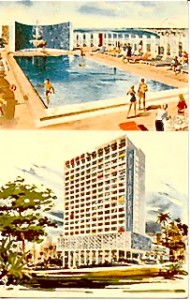 Latour is an extremely precise, controlled, and very directed writer who never strays from his narrative or gets lost in details. He has plotted his novel to the last microdetail, leaving no loose ends unresolved, and the novel moves along smartly, despite its complexity. Lansky’s activities and the depiction of his gambling empire alternate with the play-by-play of each of the six World Series games, lending a sense of credibility and realism to the tumultuous Havana political scene and spotlighting the conditions which have allowed Lansky and his American mobsters to flourish in Havana. Corrupt politicians and police combine with venal mobsters to exert control over businesses ranging from prostitution and abortion to the international sugar, jewelry, gaming, and spare auto parts industries. Tawdry Havana with all its neon tackiness and grubby glamour comes alive here, attracting the fringe-dwellers of society and their cohorts. Though Latour is not primarily interested in presenting a sociological study of these marginalized characters, he nevertheless gives color to his narrative by presenting the background of each, allowing the reader to decipher what motivates each one and what each hopes to gain from his activities during the crucial period of the 1958 World Series.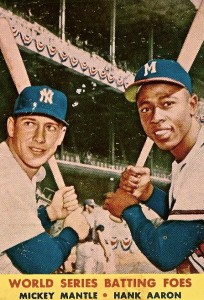
 nd masculine in its presentation and full of the violence and uncertainty which presaged Castro’s arrival into Havana. Latour, a Cuban himself, spares neither the American mob nor the corrupt Havana power-players from blame in his depiction of a country which may have been taken over by Castro because everyone else in Havana was out for himself.
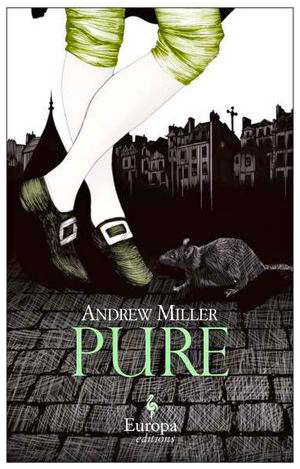 Writing some of the clearest, cleanest prose in recent memory, Costa Award winner Andrew Miller uses his pristine sentences and uncompromising descriptions with great irony as he illuminates the vile and stomach-turning conditions of a heavily populated area in central Paris. Set in 1785, just four years before the French Revolution, Miller’s main character, Jean-Baptiste Baratte, a young engineer from rural Belleme in Normandy, arrives in Paris, hoping for a job which will allow him to put his skills to use in ways not possible at home. Interviewed at Versailles and hired by a minister there, he learns that his job will be to empty the Cemetery of the Innocents in the heart of the city of its entire underground contents, and with over twenty burial pits located within a small, enclosed area, the work will be “both delicate and gross.” The entire neighborhood around the cemetery has become so putrid after the long use of this cemetery (and, more recently, the hurried interment of fifty thousand humans in less than a month in mass graves during the latest plague) that the stench permeates everything there – buildings, food, and ultimately people, their very breaths reeking of decay. Baratte’s assignment is to make the cemetery “new, pure,” in just one year.