Note: In 2008 this novel was WINNER of the Diamant Bullit Award for Best Thriller of the Netherlands and Belgium.
“Who is this withdrawn, exhausted man sitting with atrophied decency opposite [Chief Superintendent] Luyckx and staring at him fuzzily through his glasses? What is he hiding, sitting there so quietly? How many revolting stories have been piling up for years behind that impenetrable mask? Why does he not ask any question, why does he sit there petrified, sunk in thought….”
 Flemish author Patrick Conrad, who is also a poet, screenwriter, director, and painter, combines his varied talents in this lively and unusual novel of the silver screen, and fans of the classics, including early black-and-white films, will be kept thoroughly entertained and engaged throughout. Several Antwerp deaths modeled after murders in classic films, or associated with the scandalous lives of Hollywood stars and directors, keep Chief Superintendent Fons Luyckx, known as The Sponge, and his assistant, Detective Inspector Lannoy, involved with all the gory details as they search for real clues to real murders while also searching for film connections which might provide them with ideas as to possible motivations of the killer or killers.
At the heart of the mystery is Professor Victor Cox, who teaches the History of Cinema at the Institute of Film and Theatre Studies and who first comes to the attention of the police when his wife Shelley, known as Dixie to her friends, vanishes one night. The pol ice quickly discover Shelley’s mangled body. While staggering, drunk, across an Antwerp bridge with a companion, she had been hit by a car, her body thrown off the bridge by someone unknown. In a double irony, Shelley was still wearing all her jewelry when she was discovered, all of it props used in classic films—her wedding ring the one which Veronica Lake wore in This Gun for Hire, her earrings those worn by Karen Morely in Scarface, two other rings worn by Barrie Chase in Cape Fear and Ida Lupino in High Sierra, and her pearls worn by Tony Curtis in Some Like it Hot. The dark humor of the latter is not lost on the detectives, one of whom wears a Smurf shirt, though they take their jobs seriously as they search for the person who drove the car which killed Shelley. When they interview Cox, they learn that that his car, matching the description of the death car, is in the repair shop for front-end damage. Several other deaths soon lead the police to decide that all have been committed by the same person, and Cox is associated with at least three of the victims.
The author keeps  the tension high as five new deaths unfold, and fans of classic films will almost certainly become involved in trying to figure out which famous films provide clues to these deaths, only one of which is obvious. Death #1, chronologically, is the death of an actress who dies of carbon monoxide in a classic car. Death #2 is that of a nurse found naked in a pool of blood in the parking garage of a hospital. Death #3 takes place at the decrepit Babylon Motel, where a school teacher is stabbed to death in the bathroom. Death #4 is that of a high-class prostitute, who dies outside Antwerp near where Cox is staying, her body found half-burned in a trash container. Death #5 is that of a young baroness, found naked in her greenhouse, with lipstick drawn on her body and a message in lipstick left on the window. And while all this is going on, Starr Mortenson, a student of Cox whom he thinks resembles Clara Bow, disappears when she goes for a swim alone at night while spending the weekend with him.
 Clues to these murders come at random as the police investigate, leaving the reader with the challenge of keeping straight the names of the victims and the nature of their deaths; the plots of the various films that Cox ponders for clues to the deaths; the names of the victims in the films; the screen names of actresses who have played in those films and their real names; and the possible connections to Cox. In addition to all this, the author inserts red herrings galore, all of which are fascinating from the standpoint of film history. “Real” life and “reel life” become confused both in Cox’s mind and in the reader’s as the investigations continue.
Though classic noir film has never been one of my passions, I was captivated by this unusual mystery. Confusing as the novel may be at times, since Cox’s musings are often random and go in many different directions, the  information, most of it new to me, about directors, actors and actresses, their lives, and their films kept me wanting to know how the author would resolve the details of six deaths within one novel. Loaded with references to Hollywood stars, from Frances Farmer and Clara Bow to Elizabeth Taylor and Clint Eastwood, to name just a few, the novel also features numerous, well known directors and insights into their films to keep the interest high. Cox, the professor, constantly associates even small scenes from his own life with films, and as the pressure on him increases and one wonders if he has completely lost his grip on reality, his tendency to escape into his film memories increases.
 Original, filled with dark humor, and great fun to read (even for novices to classic film), this novel creates a real persona for Cox, and though the novel can hardly be considered a psychological study, it does go beyond the flat characters one so often associates with novels in which the police must solve multiple murders. The conclusion, which comes rather abruptly, does connect the deaths here with specific films or with the lives of specific actors, so no reader will be left in the dark about the films or actors used as models here, and though the connections are tenuous and strain credulity in several cases, the author’s clever and original use of detail will keep the reader smiling.
Photos, in order: The author’s photo appears on http://www.houtekiet.com
Actress Clara Bow: http://projects.latimes.com
Prof. Cox has a private museum where he stores the memorabilia he has collected from films. An item featured in this novel, and in his museum, is one of the 27′ tall elephants used in the Babylon scene from D. W. Griffith’s film, Intolerance. http://gocalifornia.about.com
When concerned about Starr’s disappearance while they are away for the weekend, Cox goes to the beach and sees a scaly creature like this one from Creature from the Black Lagoon: http://www.fanpop.com
This iconic photo from one of the classics of horror film appears on: http://absolutad.com
ARC: Bitter Lemon Press
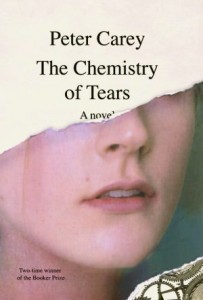 Although he has often dealt with the themes of identity, reality, and what it means to be human, Australian author Peter Carey creates a whole new approach to these ideas in this complex and sometimes strange novel with two overlapping narratives set one hundred fifty years apart. Catherine Gehrig, a Curator of Horology (clockwork) at the Swinburne Museum in London, has led a secret life for thirteen years, enjoying an affair with Matthew Tindall, the married Head Curator of Metals. On April 21, 2010, she arrives at work to discover that Matthew is dead, and that she is apparently the last to know. Frantic with grief which she dare not show at the office, she cannot even imagine how to go on with her life without Matthew. “Light the leaves and pyre wood,” she thinks, “because nothing could hurt more than this.”
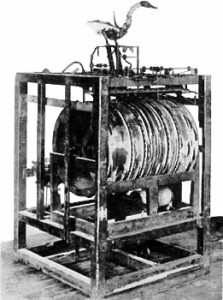
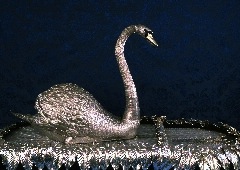
 along with assorted papers, associated with an automaton of a duck from the mid-1850s. The Swinburne specializes in “mechanicals” like this, and Carey’s descriptions of these creations are stunning. Croft’s “singsongs,” usually very elaborate, jeweled creations with many moving parts, were collected by the very wealthy in the mid nineteenth century; the automaton which Catherine will work to restore is simpler, though it still has over four hundred parts – a duck which moves, eats, and defecates.
 Anyone who reads this book will recognize immediately that no “crime” is being committed here! All of this author’s talent is given full sway in a mind-boggling “quest novel” which operates under its own rules, defies expectations, twists and turns on its own momentum, and ultimately resolves itself in ways the reader never predicts. Entitled Chinaman: The Legend of Pradeep Mathew in the UK, the novel has received rave reviews from every major newspaper that I checked there, but then, UK readers probably include many passionate cricket fans who appreciate references that will elude most readers in the US. Cricket plays an enormous part in the lives of the main characters here, to the exclusion of much of the in-going political turmoil which has threatened their country and changed it over the years – “the match would go on even as the world crumbled,” they assert.
 American readers who are passionate about their home teams in the various sports which dominate American culture, will find that though the first hundred pages of this novel may be challenging because of the unfamiliar cricket vocabulary, the book itself is ultimately not just about cricket, as much as it is about people living in a country which has marginalized them, people who love cricket because it provides them with an exciting escape from the everyday humdrum (if they are lucky) and people who believe that cricket offers some structure in which the injustices of their lives can be seen playing out against the larger world. The Sri Lankan team rarely wins, but the passion with which the fans support it suggests that they find their losses attributable to “cosmic” forces beyond their control, such as corruption, game fixing, the interference of the government, and tampering with players, all of which appear in this novel. Racism and the stratification of Sri Lankan society also play a role.
 Wijedasa Gamini Karunasena, known as Wije, the main character here, is a sportswriter who has covered cricket for years. Winner of Ceylon Sportswriter of the Year, 1969 and 1976, he has worked for the major newspapers and broadcast venues in Sri Lanka. He has always believed Pradeep Mathew, a Tamil who was a star in only four games over his career, to be the best cricket player in Sri Lanka, someone whose feats have been wiped out, somehow, in the records. Though hobbled by drink, and in poor health, Wije and his friend, Ariyatne Cletus Byrd, his statistician, buddy up and decide to produce a documentary with the help of SwarnaVision, about the best cricket players in Sri Lanka, with one whole episode devoted to Pradeep Mathew, whom he describes as “perhaps more rat than squirrel. Not so much the polecat beast that roams our roof, but more akin to the grey kitchen mouse that no one wants to touch.” As Wije does his never-ending research on Pradeep, he discovers that every lead seems to end, that every clue seems to disappear, and that Pradeep seems to be on the receiving end of a plan to wipe him off the face of Sri Lankan cricket history.
 Two major achievements are always identified with Pradeep: He is the person who took a pitch called “the Chinaman” to new heights, a left-handed pitch, a “googly,” which looks as if it will break INTO a right-handed batter on the bounce, but breaks AWAY instead. His other achievement involves a double bounce as it comes in on the batsman, illegal in some games but practiced unofficially.
 Wije’s own life becomes more complicated as the novel progresses. His drinking becomes serious enough to threaten his life, and though he gives it up for seventeen months, he does not find the happiness he thought abstinence might bring. His wife Sheila is frustrated by his alcoholism. His son Garfield is alienated, living outside Sri Lanka and marrying and divorcing more than once. His friend Jonny is arrested for pedophilia, and Ari, his statistician, wearies of Wije’s problems. All this time, Sri Lanka is fighting for its political life, with the Tamil Tigers battling for total control of the north and east and the military trying to maintain control of the rest of the country. Bombings, assassinations, and terrorism accompany the daily news about the latest Sri Lanka cricket team losses and occasional victories, with the characters here more concerned with the cricket results. “Sport can unite worlds, tear down walls and transcend race, the past and all probability,” Wije observes. “Unlike life, sport matters.”
 Sri Lankan author Shehan Karunatilaka writes an unusual and sometimes wacky story about Wije’s quest to find Pradeep Mathew, while all the world around Wije is crumbling. The novel, filled with wonderful dialogue and humor, portrays life in Sri Lanka in ways not seen before in literature. Whether or not the reader is interested in cricket (and the novel will be much more enjoyable to those who are), the novel manages to be filled with action, able to sustain suspense because of the charm and attraction of the main characters, regardless of their problems. The line between what is true and what is fictional blurs, and the reader benefits from the mystery and the uncertain chronological time line which keep the suspense lively. A unique look at an unusual part of the world through a sport which few Americans know or understand.
 In this novel about a woman who works in Britain’s Special Operations Executive (SOE) during World War II, author Simon Mawer focuses on Marian Sutro, a composite character representing the fifty-four women who served in France between May, 1941, and September, 1944. Of those real women, thirteen were murdered by the Germans following their capture. Recruited to perform extremely dangerous duties, all these women were fluent in French and often bilingual, and all of them were willing to perform under extraordinarily dangerous conditions.
 England – or are needed by the British for their unique skills in the war effort at home. She practices to become a sharpshooter, and learns codes and double codes so she can operate as a “pianist,” a wireless operator. She develops physical strength and speed and eventually spends several days on her own undergoing final testing in a remote area where she must avoid tails, find food and safe houses, and refuse to give up information if intercepted.
 While thinking of her growing responsibilities one day beside a river in the countryside, Marian notices that “In the water there were trout beneath the surface, hanging in the flow and swinging their tails against the current. That was what an agent had to be,” she decides, “a fish in water, entirely at home. But at Meoble Lodge they had learned how to catch trout by placing their hands in the icy stream beneath the animals and then flipping them, helpless, out onto the bank.” Even fish in water are subject to extreme danger from anyone determined enough to catch them.
 Marian’s work takes her throughout much of France, from the drop areas in the southwest to Paris. Everyone she meets is a potential enemy and a potential traitor, and she must operate on her own most of the time. Many different factions with many different goals operate among the allies in France, and additional dangers from the police, French collaborators, and the Germans, make every moment a trial, especially in Paris. “The danger of Paris is a cancer within you, invisible, imponderable, and probably incurable,” she notes. Despite all this, Marian does manage to find comfort with two men, as she tries to figure out whether she is in love with both, with one, or with neither.
 Like his more serious literary fiction, such as
  The novel’s focus on the women who helped advance Britain’s goals within occupied France provides enough impetus to make this an interesting adventure story, but while individual events hold their excitement, the plot ultimately feels almost as chaotic as the war itself. One is never sure, in the conclusion, just how much Marian has actually grown during her tour of duty, and how much she is at the whim of fate, and she and the people with whom she works never seem to develop into living, breathing humans. The statement by one of Marian’s superiors, early in the novel, proved sadly prophetic: “From now on, it is not your work that is secret; your whole life is secret…You have to appear to be dull and uninteresting. It is a particular skill.” Perhaps it is this secrecy which makes Marian less appealing than one might have wished, but the exciting events and wartime drama which highlight the work of the women in the SEO will keep most readers on the edge of their seats.
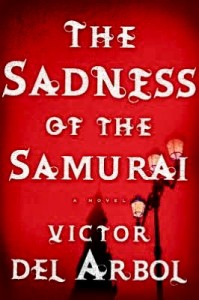 Set in Spain in 1941 during the rule of General Franco and the Falangists, with their connections to the Nazis, and again in 1981, in the run-up to the first real democratic elections, debut author Victor del Arbol creates a whirlwind of mysteries within mysteries that will keep even the most demanding reader entertained. Filling the novel with twists and turns, surprises, and action that doubles back on itself, the story line constantly changes, rewriting the information we think we already know, and creating new complications to ponder as we try to reconstruct what we think is happening. The interrelationships among the main characters and their families continue for the forty years of the time span, becoming ever more complex as motivations, betrayals, lies we have accepted as truth, and characters who are not who we think they are become central to the action.
 Ultimately, the novel raises questions more challenging than those of the typical thriller: questions of our own identities, our perceptions of ourselves and others’ perceptions of us, along with the deliberate manipulation of those perceptions by groups or individuals (often politicians) who wish to affect our ideas of guilt and innocence, right and wrong. Extremely clever, unusual in its focus, and carefully plotted to keep the interest and excitement high, this novel could well become one of the hits of the summer.
 ors, but many of their right-wing supporters remain in office, and Maria, who knows some of their secrets, is unwilling or unable to reveal them. A police guard outside her door remains there, in case she changes her mind, but she has no intention of telling the police what they want to know – there is too great a chance that those who still retain power might act against people she feels honor-bound to protect. As one of her former clients had warned her recently, “This democracy of ours is like a little girl who has already learned how to hide her dirty laundry before she has even learned to walk.” Another part of Maria’s story involves Maria’s father Gabriel, a metal worker who refuses to leave his home in San Lorenzo in Catalonia for medical treatment. Maria does not know any of the important facts about Gabriel and his war-time past, and Gabriel, a widower, is not telling.
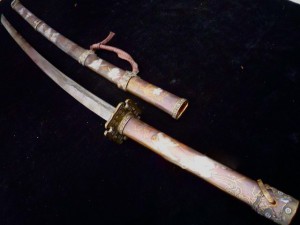 Andres, Isabel’s disturbed son, whose sadness at Isabel’s disappearance has been alleviated by the gift of a Japanese katana (saber) he had coveted, is another part of the story, but he is incapable of understanding all the issues and he is hidden away, guarded from public eye. Additional complexity is added through Andres’s teacher, Marcelo Alcala, who came to Barcelona in 1941 to teach Andres, bringing his son Cesar with him.
 When Isabel’s older son, Fernando, returns from the Russian front as part of Spain’s support for the Nazis, he finds Spain changed and his father hostile. Even in the later part of the story, 1981, all the earlier characters are still involved, and the government is still secretive. Democracy is not yet in flower, and those politicians with guilty consciences have surrounded themselves with others who will support them in exchange for favors which they themselves need to protect their own lives and reputations. Again, the reality of the situation is very different from the “facts” given in the “corroborating” evidence, and even Maria suspects she has made a mistake, though it is not one she can correct.
 Complex and challenging in its plotting, the novel is a real thriller, energetic and fast-paced. The characters are memorable, in part because none of them are perfect, and several are trapped into committing terrible acts because they believe they have no choice. The interrelationships between guilt, innocence, chance, and fate keep the reader engrossed, and though the violence is sometimes melodramatic, even lurid, the author avoids neat “fictional packaging” in his ending. Fate rules.