“Those you seek are wolves. Wolves do not wish to be found, they are themselves the hunters, slipping between trees, out of eyesight, close to the ground. They survive, they thrive, on their cunning…They have been at their trade for hundreds of years. This way of life it is in their blood, their bones.”—comments made to Driver after he has suffered repeated attacks.
 I make no secret of the fact that I think James Sallis is one of the best writers in the US today, regardless of genre. Though his novels recently have been firmly categorized as “American noir,” a genre I do not particularly enjoy because of the sometimes extreme violence, I do find Sallis’s writing style admirable, if not brilliant, for his ability to say much in few words and to convey tension without being melodramatic. His dialogue, usually terse, says all that needs to be said, and his ability to describe in perfect images of few words is unparalleled. “Minimalism” takes on new meaning in his hands. His earlier novels, such as the John Turner trilogy, combined under one title as What You Have Left, are noir interpretations of the Southern Gothic genre, and his recent novel The Killer is Dying is a unique combination of three separate stories of three separate characters whose lives just glance off each other near the end, and then continue on separately. That novel is compressed, every image counting, and his themes of man’s isolation are well developed through his vibrant characterizations.

His novel Drive, recently made into a hit film starring Ryan Gosling, precedes this novel, Driven, and both are short novels which lack the fully developed characters one finds in Sallis’s other novels. Drive, the story of a man who works as a stunt driver by day and as the driver of getaway cars by night, is full of violence, and the body count in the book and film is extremely high, some of the deaths coming at the hands of Driver himself as payback for egregious betrayals. At the end of the novel and film, Driver drives off, seriously wounded.
Driven begins six years later. Driver has been keeping a low profile under the pseudonym of Paul West in Phoenix, and he has been successful in avoiding trouble – and in falling in love with Elsa. The novel starts with a bang. On page one, Driver and Elsa are attacked, and though Driver manages to disable one attacker, the second one fatally stabs Elsa before Driver can take care of him. He has no idea who the attackers are and why he was selected for attack. He ends up going to Tempe, where he buys a 1970s Ford Fairlane and adapts it for the hard driving he expects he will have to do in the coming days. Several more attacks occur, always involving two people, always involving fatalities, but, still, Driver has no idea who is behind the attacks or why. Eventually, the trail leads to New Orleans, but his own connection there remains obscure. As one of Driver’s friends comments, “Do the dots connect? Could be all rando m. Separate storms. And in the long run what does it matter? The question’s always the same: What do you do? How do you act?…If you don’t want to carry through, you can go away again. Be missing.”
Driven is a peculiar book, one that feels unfinished to me. The back cover sports a sentence which I regarded at first as an obvious spoiler: “Driven tells how [Driver], done with killing, becomes the one who goes down ‘at 3 a.m. on a clear, cool morning in a Tijuana bar.’ ” Yet that scene never occurs in this novel, despite the misleading suggestion that it will be Driver’s fate. It is a quotation from a screenplay which his friend Manny wrote years ago, and it has nothing whatever to do with this novel. The novel, less than one hundred fifty pages long, with large type and wide margins, feels a bit like an outline, rather than the compressed but fully developed novel which Sallis is known for. The ending of this novel suggests that there might yet be another novel about the life of Driver.

Those who have not read Drive or seen the film will want to do so before reading this continuation of Driver’s story. And those who have never had the pleasure of reading Sallis at all may want to start with something else. (My own favorite among the recent books is The Killer is Dying, a terrific novel which is one of my Favorites of 2011, despite its noir focus.) Though I enjoyed seeing what happens to Driver after Drive ends, this novel felt too abbreviated and too undeveloped, even for minimalist fiction, to stand with Sallis’s previous novels, at least to me. Time will tell if it, like Drive, is optioned for another film, and whether there is another novel in the works, making this part of a complete trilogy.
ALSO by Sallis: DRIVE, DRIVE (the film), THE KILLER IS DYING , and WHAT YOU HAVE LEFT (which consists of all three novels on the Turner trilogy: CYPRESS GROVE, CRIPPLE CREEK, and SALT RIVER). Also, OTHERS OF MY KIND, WILLNOT, SARAH JANE
Photos, in order: The author’s photo by Karin Sallis appears on http://www.noexit.co.uk
The 1970 Ford Fairlane with “429 cubes” may be seen on http://www.musclecarclub.com
The photo of Ryan Gosling (Driver) may be found on the Drive Facebook page: https://www.facebook.com/DriveTheMovie
ARC: Poisoned Pen Press
 If this novel were a “thriller,” it might be possible to dismiss the horrors contained within it as fiction. Not so, with this book. This dramatic and heart-stopping novel recreates very real events of shocking, unimaginable brutality which take place in Argentina in the fall of 1979, three years after the end of the Peronist democracy, and you will not forget these events. After the military seizes power, the characters, as real as you and I, and with the same goals and dreams, have no alternative but to go about their lives trying to maintain a low profile, and as the atrocities continue, they soon affect these characters and the people they know and love. The novel becomes a revelation in which one cannot help but wonder, ultimately, how these atrocities were allowed to begin at all, and, even more importantly, how they were able to continue unimpeded within a country which was part of the Organization of American States. Was the belief, widely accepted outside Argentina, that subversives were trying to destabilize the country, and that dramatic steps were therefore needed to prevent anarchy, enough to justify the tortures and horrific deaths imposed on ordinary citizens? And why did no other country, especially the United States, ever sound the alarm?
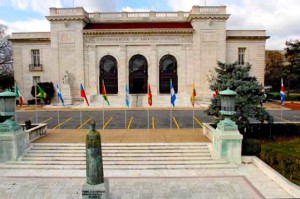 Kevin “Solo” Solorzano, an Argentine-born interpreter living in Washington, is sent to Buenos Aires to act as an interpreter for Admiral Rinaldi, Argentina’s Foreign Minister, during the visit of President Jimmy Carter. Rinaldi, very smooth, has hired an American PR firm for his speeches when he has been in the US, and he has spoken in the past to Senators Jesse Helms, Claiborne Pell, John Glenn, Bill Bradley, and Susan Sigal, a Representative from New York. Part of a delegation from the Organization of American States, Solo has not been to Argentina for sixteen years, but he looks forward to visiting with a dear friend, Malena Uriburu-Basavilbaso, daughter of a well-connected family and now the aide to the Ambassador to the US, and with Ines, a young woman he almost married when they lived together in New York City. Solo’s mentor, Alberto, in New York, has also asked him to take some money to his aunt and uncle in Argentina and see if he can find out what happened to their daughter, son, and daughter-in-law, who have disappeared.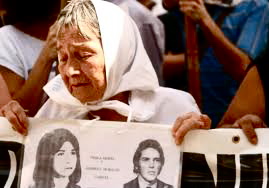
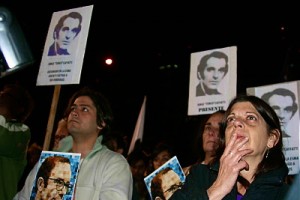 ment of the Church in the massacres, about the secret deals that various officials have made with each other and with officials in the US and elsewhere, and about the tens of thousands of “desaparecidos” (“disappeared”) of whom there is no record at all, he is devastated. At the same time, he is also dealing with personal issues back home affecting his own family, while also investigating how his father drowned in a ship accident in Argentina sixteen years ago. The various characters come together when Diego, the unwilling soldier, is targeted for assassination.
 ves is so horrific that every reader will cringe at what is happening to people with whom they can identify. The insights into the US position regarding the human rights abuses in these countries, and the secrecy with which they were treated are illuminating, as is the collusion of the Catholic Church in the abuses. Ranking among the best debut novels I have read in years, this novel is an incredible achievement, not only because of the subject matter, but because the pace and the plotting keep the reader on tenterhooks from beginning to end.
 While on their honeymoon in Venice, Czech citizens Viktor and Liesl Landauer meet architect Rainer von Abt at a party given by an acquaintance in an ancient palazzo. The next day he shows them display models of the dramatically different buildings he has been creating, and after indicating that he was once a student of Adolf Loos, who hails from their Czech city (known here as Mesto), he extols “the virtues of glass and steel and concrete, and decrie[s] the millstones of brick and stone that hung about people’s necks.” He believes that Mesto is now looking toward the future, and he wants to be part of it, explaining that “Ever since Man came out of the cave he has been building caves around him…But I wish to take Man out of the cave and float him in the air. I wish to give him a glass space to inhabit.” Viktor is enthralled, suggesting, “Perhaps you could design a Glass Space (Glasraum) for us.”
 two world wars, all of them affecting the fate of the house and the architect’s dream. But it is also a story of the family, Viktor and Liesl Landauer and their children, who build and live in the house. Though Liesl is a gentile, Viktor is Jewish, and when the National Socialists seize power in Austria and begin their campaign to dominate the Sudentenland of Czechoslovakia, Viktor quickly realizes that they must leave the house, the Glasraum they love, and sell his business (the famed Landauer motor cars) to Liesl’s Christian family, if they are to survive. “If you play with mad dogs, you are going to get bitten,” he declares.
 mmunist takeover, and the rebellion and eventual liberation of the country. Subplots and many secondary characters repeat throughout, connecting and reconnecting over the sixty-year time span. Viktor Landauer’s infidelities, including one with a woman who later becomes the nanny of his children and a friend of his wife, set the Nazi takeover into sharp relief, and his eventual arrival in the United States becomes a stopping point in the novel but not its conclusion.
 He keeps the reader completely occupied as he explores the issues of the house and the Landauers’ relationship, their friendships (and/or infidelities), and their household staff, which stays behind when they leave. Hana Hanakova, Liesl’s close friend, a sexually adventuresome free spirit, apparently bisexual, expresses her genuine love for Liesl throughout. Even after Liesl leaves the house, Liesl and Hana remain in touch. Kata, hired as the nanny, is Viktor’s mistress, though she and Liesl become good friends, as do their children, with whom they share the Landauer House. Kata and Marika, her daughter, accompany the Landauers when they leave the house, becoming “six characters in search of a home.” Lanik, their untrustworthy chauffeur, assumes the role of caretaker of the abandoned house, eventually becoming an official with the Red Army. As time passes and the various characters make their peace with the circumstances in which they find themselves, for better or worse, the reader feels the whole weight of history unfolding, both politically and emotionally.
 Focusing initially on the story of a great architectural achievement, the novel also explores several stories of love and betrayal; stories of love sanctioned, illicit, and forbidden; and the fraught history of Czechoslovakia (and peripherally, Austria) between the wars. Though few exact dates are provided, the novel reflects the growth of the Nazi movement, the exodus of those Jews fortunate enough to have the means to escape, and the aftereffects on the Landauers, their household, and on the Glass Room. Mawer’s prose is efficient, and his style keeps the reader on pace, never having to stop to figure out what the author “really” means. Filled with vibrant imagery, both of the external and internal worlds of the characters, the novel has something for everyone. Ultimately, the stories of all the characters are resolved, with only one loose end, and readers who enjoy this novel will want to reread the preface for further insights after completing the novel. A fully-developed and thoughtful novel with a unique focus and point of view.
 Revealing the final days of Alice Valentine, a former headmistress who is being attended by her sons and closest friends, Andrew Miller’s thoughtful novel Oxygen remains remarkably hopeful, never descending into the bathos of so many other end-of-life novels. Alice’s dying, though realistically described, becomes, in fact, the fulcrum upon which the novel studies three other characters as they gain new insights into their own lives. All of them have some “unfinished business” with which they have not come to terms, and as these characters focus their attention on Alice, while reminiscing privately about their own pasts, the novel goes far beyond the customary focus on the meaning of life and death to include each character’s secret failures, the guilt accompanying these, the nature of true happiness, and what it requires to become a “successful” human being. Ultimately, Miller’s characters ask “Who are we?” As Alice herself muses, “Was the ‘she’ who thought all [these things] just a brain that would die when the last of the oxygen was used up? Surely there was something inside, some inward shadow, the part that loved Mozart [perhaps].”
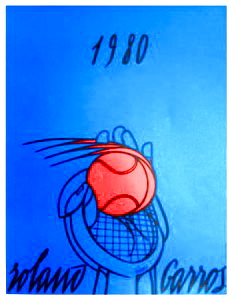
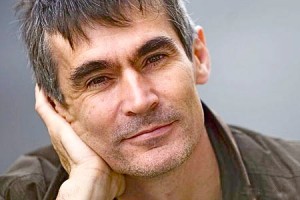 Alice’s elder son Larry, a handsome, well-built, former 1980 French Open tennis champion now living in the US, has starred in a TV series, now canceled. His alcohol and cocaine consumption have jumped, leaving him in financial straits, and his marriage is in trouble. By keeping his California life secret from Alice, Larry remains the apple of her eye. The least sensitive among the people at Brooklands, Larry wants to tell his mother that her vision of him is false – and the fact that he has sunk to a new low with his latest film project weighs heavily upon him. He is “agitated by a great backlog of thinking. He could not decide whether there were a great many decisions to be made, or none at all; whether his situation warranted some explosion of energy, some drama of action, or if he should simply wait and see; if indeed there was nothing he could do that would make the slightest difference.”

 In this complex, challenging, and unconventional novel, Iraqi author Ali Bader takes on nothing less than the ethnic and political history of the Middle East from 1926 – 2006 for his scope. An unnamed Iraqi writer, whose life parallels that of the author in many ways, has been asked by USA Today News to ghostwrite a 1000-word article about the murder of Kamal Medhat, an eighty-year-old Iraqi violinist whose body has recently been found. Because Baghdad is so dangerous and so risky for westerners, the speaker will do the investigatory work there, but the finished story will appear under the name of John Barr, one of USA Today’s senior correspondents, a common practice for western news media these days, the writer explains. The Press Cooperation Agency and AC Media & News group also want a full-length biography of Kamal Medhat, however, and they will pay all the speaker’s expenses and supply him with files and documents for the eventual biography which he will write under his own name. As a result of this support, the writer will stay in Baghdad’s Green Zone for a month; in Tehran where the violinist stayed on several different occasions, before going to Moscow, where the writer will also go; and in Damascus where the writer spends another two months of research. What he discovers about the murdered violinist’s life becomes the main narrative of this book.