Note: Jane Gardam is WINNER of the Heywood Hill Literary Prize for a lifetime’s contribution to the enjoyment of literature. She is also the only author to have been a two-time WINNER of the Whitbread Award.
“Suppose I had stayed [in rural northeast England]—like my mother. [Imagine] a sort of castaway girl who lived there all her life like Robinson Crusoe. I’d give her a library—her dead grandfather’s vicarage books…I’d give her knowledge of the heart’s affections. And I’d show the power of her childhood landscape, the enfolding murmuring magical marsh so flooded with light sunshine, silvery rain and mist, and the running sea.” – Jane Gardam, Preface, 2011.
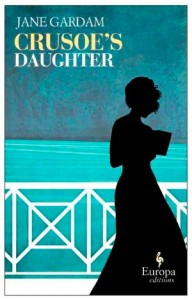 In the introduction to this re-publication of Crusoe’s Daughter (1986), author Jane Gardam admits that “This [is] by far the favourite of all my books.” Brought up in near isolation in the rural north of England, like the main character of this novel, Gardam herself eventually escaped to college in London, but though she joined London’s academic world and had great success as a novelist, she admits “It was the elf-light of childhood that still hung about, the wonder of the marsh…the people still more real to me in the vanished place than most of the people I’ve met since.” Her mother remained in the rural north for her whole life, and Gardam uses her mother’s life as the starting point of this novel, setting it at the turn of the twentieth century on the northeast coast (in or near North Yorkshire and Northumberland, judging from her geographical clues). Though Polly Flint differs in significant ways from her mother, as Gardam explains in the Preface, she admits that when she finished the novel, “I felt I needn’t write any more books. Take it or leave it, Crusoe’s Daughter says everything I have to say.” Fortunately for us, she did write additional highly successful novels, but this one, her favorite, is the most poignant, told with an honesty and affection for her setting that her dryly humorous, more satiric novels lack, however wonderful they are in their own right.
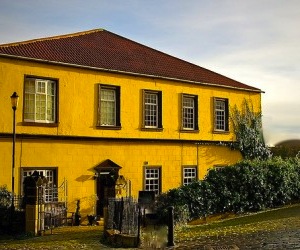
 As the novel opens at the beginning of the twentieth century, five-year-old Polly Flint and her father arrive at Oversands, a big yellow house on England’s wild northeast coast, by the river Tyne. Her father, a sailor whose wife died when Polly was an infant, had left her with a series of foster mothers in Wales during her first five years, and his visit with Polly to the home of his wife’s older, unmarried sisters is completely unexpected by those quiet ladies. Shortly after arriving at Oversands, Polly’s father dies, leaving her to be brought up by her Aunts Mary and Frances in a place so isolated that there are virtually no other children. Though she likes her aunts and is particularly fond of her Aunt Frances, she admits that “I would not have known what to do with love if it had been offered.” There is no school she can attend, but she is bright and curious, and she quickly learns to read from her aunts. Through the unpleasant Mrs. Woods, who also lives at Oversands, she also learns French and German. Every day is predictable, however, and the same people come to the house for the same purposes every week.
 In her loneliness Polly finds her greatest solace from the books in the library of the house, especially when she discovers Robinson Crusoe, whose twenty-eight-year isolation on an island offers her a way of dealing with her own isolation. Crusoe, an obviously pragmatic man who must deal with each day as it comes, relies on his own ingenuity to solve his problems, just as Polly knows she will have to do. Her first real conflict with the aunts comes when she is twelve, as she firmly rejects being Confirmed in the church, refuses the idea of communion, and criticizes the church’s large wooden crucifix with carved blood dripping from it. Her aunts’ religiosity cannot stand up to Robinson Crusoe’s realism for Polly. “I’m young and I’m empty of life. I just am,” she cries. “I can’t ever forget myself and how I have to be. All the hymn-words spring up and the Collects, Creeds, and Epistles. There doesn’t seem to be anything else.”

Love and death eventually complicate life at Oversands, and in her teens Polly goes to stay with elderly family members, Arthur Thwaite and his sister Celia, who live on the Yorkshire moors, some distance away. Their house, an artists’ retreat, expands her vision of life dramatically, though she is not sure if it is a madhouse, a hospital, or a private asylum. Poets, writers, and musicians, some of them failed, provide a totally different kind of life for Polly, the other extreme from what she has known, leading Polly to tell her Aunt Frances in a letter that “I don’t believe I shall ever fit in anywhere.” A few friendships and one or two romantic crushes give Polly’s life a semblance of normalcy as she matures to her twenties, but as the novel continues to progress up to the 1980s, two world wars, industrialization, and population growth create chaos even in the rural countryside.
 Gardam creates real atmosphere here in both time and place, and rural northeast England becomes almost a character of its own, a place filled with wild beauty, harsh weather, and untamed landscapes. The novel’s realism keeps Polly’s story from becoming a romance, however much the reader may empathize with her, and the author’s honest feelings for her characters, many of them based, in part, on her own family members, endow the novel with a poignancy that one does not often find elsewhere in Gardam’s novels. The Robinson Crusoe leitmotif is well integrated, running throughout the novel over the course of more than eighty years, and it firmly connects all aspects of the novel’s long chronology. A delightful “conversation” between Polly and Crusoe on the nature of fiction, late in the novel, is one of Gardam’s classics. “[Fiction] will have to change,” Polly tells Crusoe. “It’s become quite boring – all about politics or marital discord. The minutiae. You should see the fiction they have thought up about you and Friday.” To which Crusoe replies, “Yes, well, he could be very trying.” The novel’s final pages, as close to a grand finale as Gardam will probably ever get, will leave a smile on the face of every reader – filled as it is with the dry wit and sense of dramatic irony for which Gardam is so famous, a perfect ending to one of her warmest and most enjoyable novels.
ALSO by Gardam: GOD ON THE ROCKS, QUEEN OF THE TAMBOURINE, THE PEOPLE ON PRIVILEGE HILL, A LONG WAY FROM VERONA OLD FILTH, THE MAN WITH THE WOODEN HAT, LAST FRIENDS, THE FLIGHTS OF THE MAIDENS
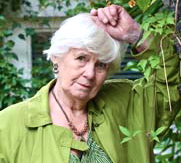
Photos, in order: The author’s photo by Eamonn McCabe appears on http://www.guardian.co.uk
The photo of a yellow house in South Shields, on the Northumberland coast by the river Tyne, is by demonsub and appears on http://www.flickr.com
The untamed moors leading to the ocean are shown on http://www.enjoyengland.com
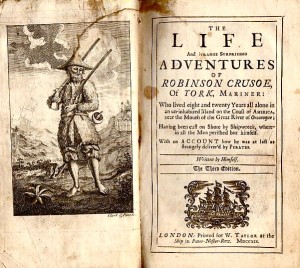
An old edition of Robinson Crusoe appears on http://imaginactory.com
ARC: Europa
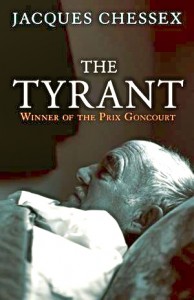 An author revered as much for the controlled lyricism of his prose as for his uncompromising characterizations, Swiss author Jacques Chessex (1934 – 2009) was the first foreign citizen to win the Prix Goncourt, France’s most prestigious literary award. In this dramatic novel from 1973, he tells the story of Jean Calmet, a thirty-eight-year-old schoolteacher, whose physician father has just died and with whom he has had a fraught relationship. The youngest of five children, Jean both loved and feared his father, with good reason, and he is glad that his father has been cremated, rather than buried. “The doctor would be reduced to ashes. He could not be allowed any chance of keeping his exasperating, scandalous vigour in the fertile earth,” Jean thinks. “Make a little heap of ashes of him, ashes at the bottom of an urn. Like sand. Anonymous, mute dust.”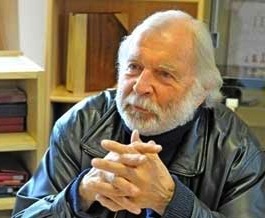



 In this seventh novel in the Harry Hole series to be translated into English, author Jo Nesbo, with over eleven million thrillers in print, continues to detail Harry’s fight against the symbolic “white whales” of injustice. Here, all Harry’s experience and knowledge as an Oslo policeman are readied for the biggest fight of his life, one to which he willingly makes a complete emotional commitment. Though he has lived in Hong Kong in self-imposed exile for three years, Harry has just learned that Oleg, the son of Rakel, the love of his life, is now jailed on remand in Oslo for the murder of a drug dealer. Harry has always had problems with alcohol, bureaucratic nonsense, and self-control, even during his career with the Oslo Police, and he has battle scars, both visible and invisible, which have made him a cynical man, but he immediately returns to Oslo to review the case, hoping that he can save Oleg, who has always thought of him as “Dad.” Now “clean,” Harry needs to find out more about Oleg’s involvement in this case that he must win.
 Nesbo gets a bit cute (or darkly humorous) with the beginning of the novel, which he tells from the point of view of a rat trying, unsuccessfully, to reach its hungry babies. The reason she cannot reach them is that the body of a wounded young drug addict is blocking her access. The point of view then switches (via change of typeface) to that of the dying young man, Gusto, who is reviewing the circumstances of how he ended up where he is, knowing that he is dying and unable to save himself. Each of the first three parts of the novel begins with the rat and the drug addict, as Nesbo carefully reconstructs the immediate circumstances of his death. Through these sections, the author provides Gusto’s history from Gusto’s own point of view, even as Nesbo is moving backward and forward in time through the other characters in the body of the novel.

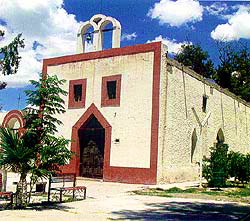
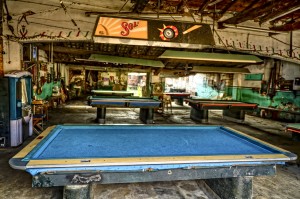
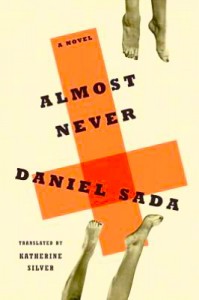 Much admired by both Roberto Bolano, who said, “Of my generation I most admire Daniel Sada,” and by Carlos Fuentes, who said that Daniel Sada “will be a revelation for world literature,” Mexican author Daniel Sada has now been published in English for the first time by Graywolf Press. Almost Never, “a Rabelaisian tale of lust and longing,” provides a bawdy and mildly satiric look at the whole concept of machismo as it exists in the mid-1940s in Mexico. Sada’s main character, Demetrio Sordo, almost thirty when the novel opens in 1945, grew up in rural Parras in northern Mexico, but he has recently been living near Oaxaca in southern Mexico, working six or seven days a week as an agronomist in charge of a large ranch. Bored by the usual nightly “entertainments” of “dominoes in seedy dives,” dull strolls for a mile or two followed by a cup of coffee, he finally concludes that “sex was the most obvious option.” Taking a taxi to a local brothel, he meets the beautiful brunette Mireya, revealing his personal charm by introducing himself with “Hey, you, come on already, let’s go to bed.”
 days traveling there and three days back, with only one day at the wedding itself. Demetrio has no car or truck, and there are few paved roads. At the wedding in Sacramento, however, he meets and falls instantly in love with the beautiful, virginal Renata Malgarejo, so closely tied to the local culture of virginity that when he uses the pronoun “tu,” in telling her he will write to her from Oaxaca, she is shocked by his “familiarity.” She may allow the use of “tu” next time he visits, she says—on his vacation in August, nine months from then. He may even be allowed to hold her hand.
 less….” Faced with one woman who will do literally anything for him and who wants to get married right away, and another woman whom he has never even kissed and who plays the ultimate “hard-to-get” role, Demetrio faces a rare set of challenges, determined to get what he wants from both.
 f a whole generation of young men for whom the sky seems to be the limit. The biggest danger, of course, is that these young men, including Demetrio, are actually inexperienced and naïve to the ways of the outside world, potential victims of other men who are more clever, more powerful, or more worldly, just as the women are victims of the men who have been dominating them socially and sexually for generations.
 The story with all its complications and bawdy language mocks the pretensions of its characters at the same time that it explains and even, in some cases, tries to justify them in terms of the social context of the period. The action is often absurd and the characters’ behavior outrageous. The language and sexual imagery are crude, and some readers will find them at least as vulgar as Demetrio is, something the author, no doubt, intended. Translator Katherine Silver deserves much credit for translating this novel and maintaining its tone, with a only few minor missteps (a character told to “suck it up,” someone referred to as “screwed up”), which seemed jarring for a novel set in the mid-1940s. Daniel Sada, whose novels have been, until now, unknown to the English-speaking world, should become a major “new” Mexican author, receiving the praise he deserves here for works of which we have been ignorant until now.
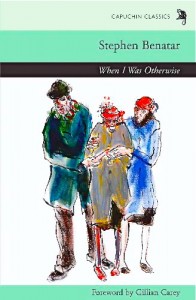 No one incorporates black, ironic humor into novels about earnest, often batty, elderly people better than the British. Gerard Woodward in
  versation. Now When I Was Otherwise, Benatar’s third novel, written in 1983, has also been republished in England this past spring by Capuchin Classics. With a first paragraph as dramatic and ironic as the one quoted above, it is easy to see why Benatar succeeds in selling fifty to a hundred books each weekend.
 The novel starts at the end and works its way back to the beginning, jumping back and forth among time frames as the backgrounds and the entire histories of each character are laid bare. Often information about one character is conveyed by another, usually Daisy, from her own point of view, and Benatar is absolutely brilliant at writing dialogue which reveals character, attitudes, and information simultaneously. Daisy has a knack for saying exactly the wrong thing at the wrong time, while seeming to be ingenuous and innocent, and the reader quickly believes that no one could be so insensitive by accident. In short order Daisy alienates everyone, works her wiles on more than one man at a time, turns characters against each other, and causes some to question their own sanity, a problem that only increases when she moves in with Dan and Marsha in their somewhat run-down, “three bedroom, semi-detached” house in Hendon, outside of London.