“I think of our bloodline’s progression. Our missionary ancestors came to the islands and told the Hawaiians to put on some clothes, work hard, and stop hula dancing. They make some business deals on the way, buying an island for ten grand, or marrying a princess and inheriting her land, and now their descendants don’t work. They have stripped down to running shorts or bikinis and play beach volleyball and take up hula dancing.”
 Matt King, who is a descendant of a Hawaiian princess and the haole who married her and inherited her land, could “sit back and watch as the past unfurls millions into [his] lap,” but he prefers to live on his own salary as a lawyer. The primary beneficiary of the family land trust, Matt is now trying to decide what to do with the land on behalf of his cousins and family since the trust is in debt and the demand for prime land in Hawaii is enormous. Though the land has been in the family since the 1840s, developers have been solicited for bids, and some of the twenty-one beneficiaries of the trust are anxious to reap the millions which will come to them with a sale.
As we discover from the beginning, however, Matt will be making no decisions in the immediate future. His thrill-seeking wife Joanie, who had been pushing for the sale of the land to a particular developer, now lies comatose after a boating accident, and her lack of progress alarms the doctors at Queens Hospital in Honolulu, who have her on life support. Their two daughters, one a seventeen-year-old model, and the other a precocious  ten-year-old attention-seeker who torments other girls, have not had the kind of close care and attention they need, except from the housekeeper, and Matt has now committed himself to learning for himself who these daughters really are and what they are doing with their lives—until Joanie gets better, he thinks. He intends to become the guiding force in their lives—a bit late for this effort, perhaps, but he is well-intentioned, nevertheless.
When Joanie takes a turn for the worse, older daughter Alexandra returns home to Oahu from boarding school on the Big Island and, accompanied by Sid, a friend from a previous school, determined she will live her own life, even under the eyes of her father at home. Scottie, the ten-year-old, continues to act out. As Matt visits their close friends and Joanie’s family to tell them about Joanie’s condition, his internal dialogue and self-examination really begin, and as Joanie lingers in the hospital, Matt’s discoveries about her and their relationship lead to important lessons and new awareness of his own responsibilities.
The clear, often  humorous presentation of events, the exceptionally realistic dialogue, and unique imagery give life to this strong debut novel, and the narrative speeds along as each character tries to deal with Joanie’s declining condition. The author’s insights into Matt’s conflicts and his self-examination during his long vigil, along with his daughters’ understandable tumult, provide some emotional resonance, even as moments of dark humor provide some respite from the tension. The subplots, involving the decision on whether to take Joanie off life support, the issues involving sale of the land, the individual problems of the daughters, the background of Alexandra’s friend Sid, and the sudden discovery of Joanie’s lover and whether to involve him in her hospitalization, are well integrated, and the conclusion is satisfying.

The character of Matt is not based on any particular person, but Hawaiian readers cannot help but make associations between him and the Big Island’s Parker family, adding an aura of “realism” to Matt’s exotic background as the heir of a princess. (The Parker family of the Big Island, descended from a Hawaiian princess and amassed a 240,000-acre ranch, the largest privately owned ranch in the country, before estate taxes led to the sale of some land in the past generation.) His generosity toward Joanie’s lover strains credulity, however, and the peripheral characters often exhibit extreme behavior with which it is difficult to sympathize. A number of unusually dramatic and cinematic moments late in the novel make this a good melodrama, and prime fodder for an exciting film, though not necessarily an emotionally resonant one. Entertaining, and filled with tugs at the heartstrings, The Descendants captures the life of a family at a crossroads, and does so with lively self-assurance.
Notes: The newly rel eased film of this novel, starring George Clooney as Matt King, has received rave reviews in Hawaii and elsewhere. In the film the family’s land trust is located on Kauai, rather than the Big Island, but the other major aspects of the novel apparently remain unchanged, and the acting of the cast seems to elevate this story above the melodrama that overwhelmed this book for me. (Will review the film when I see it.) See NYTimes review: http://movies.nytimes.com
The author’s photo is from http://www.wordandfilm.com
The unlimited horizons of the Parker Ranch land are seen in this photo, which also shows Mauna Kea, home of the Keck Observatory: http://www.localpropertyindex.com
The cover of the paperback, released to coincide with the film shows George Clooney as Matt King.
In the film, Matt King and his two daughters face the trauma of the accident of their wife/mother. http://movies.nytimes.com The review of the film may be seen by clicking on this link.
The film trailer is here:
 Described by Milan’s daily newspaper Corriere della Serra as “the only true first-rate writer that the new millennium has given us for now,” Erri De Luca writes a story of Naples, and its “persons.” The author has made it clear that you “don’t call them people, they’re persons, each and every one. If you call them people you lose sight of the person. You can’t hear the thoughts of people, [only] of persons.” Here he recreates Neapolitan life, filled with well-developed characters who live through three different time periods – 1943, as Naples has its popular uprising against their German occupiers; the early 1950s, when the unnamed narrator, a young orphan of about seven, is growing up; and the early 1960s, when the young man is now finishing school and about to set out on his own. The novel moves back and forth in time, as the author writes an often lyrical novel full of noble sentiments and wise observations, at the same time that it is packed with details about life and behavior.
 The young orphan grows up in the early 1950s without any real supervision. Having never known his parents, he lives in a back room belonging to Don Gaetano, the doorman of an apartment building. The boy is desperate for acceptance into some group, especially the much older soccer players in the neighborhood. His monkey-like ability to retrieve the ball when it goes into balconies and other areas inaccessible to larger children leads to his becoming the goalie of the team, the first real sense of belonging that he has ever had. On one occasion, when the ball goes into the niche behind the statue of St. Ruggiero the Norman in the piazza, the young orphan, crawls inside the niche to discover that there is a secret passageway down into a grotto which he explores. He tells no one. Lovely descriptive passages make the depths of the city, its sponge-like tufo substratum, and its coolness come alive, and when the boy discovers a bed, a Bible, and some books in the secret grotto, he also discovers a whole new world. Often going there to read, starting with The Three Musketeers, left behind by some unknown previous resident, he expands his knowledge through his love of reading and later befriends a seller of used books who allows him to borrow one book a day if he returns it the next day.


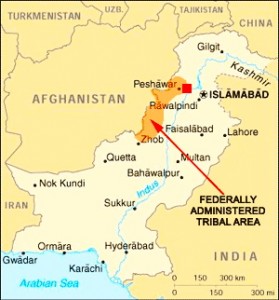
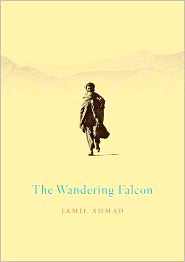 What an astonishing book! Completed in 1973 and packed away for almost forty years, the manuscript of The Wandering Falcon found a publisher only when the world’s attention suddenly focused on the virtually unknown tribal cultures living along the bloody border between Pakistan and Afghanistan. With great sensitivity, respect, and sympathy for his characters, seventy-nine-year-old author Jamil Ahmad has created a collection of unique interconnected stories about vibrant individuals from the various tribes living in and near the Federally Administered Tribal Area (FATA) of Pakistan. Nomads who have followed the seasons and the needs of their animals and families for thousands of years, these illiterate tribes have no concept of national boundaries. Every generation has moved constantly, driven by the need to find food and water for their sheep and camels, following traditional routes from Afghanistan to Pakistan in the autumn, then back to Afghanistan in the spring.
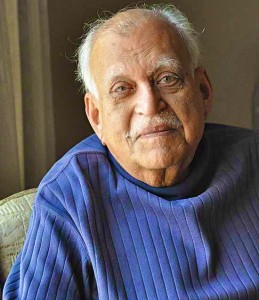 The author, a powerful Pakistani official who lived and worked in the tribal lands from the early 1960s through the mid-1970s, believes that the people he came to know in the Swat Valley possessed a kind of honesty, openness, and lack of pretense which is absent from much of “civilized” society. Despite their willingness to shed blood against their enemies, Ahmad was able to trust them implicitly because he understood them, and, as he explains in an
 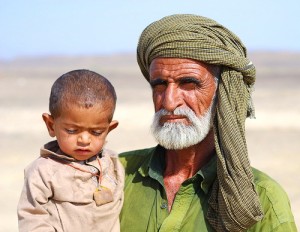 Opening with a haunting description of a lonely military outpost located “in the tangle of crumbling, weather-beaten, and broken hills where the borders of Iran, Pakistan, and Afghanistan meet,” Ahmad describes the arrival of a man, a woman, and their camel staggering out of the dust in desperate need of water. The Siahpad couple then asks for refuge, and in a show of the subtleties of the cultures and the laws, the leader of the outpost says, “Refuge I cannot offer. I know your laws well, and neither I nor any man of mine shall come between a man and the laws of his tribe…[but] shelter is yours for the asking. For as long as you wish it, for as long as you want to stay.” The unmarried couple, in which the man has run away with his master’s wife, lives there contentedly for six years, du
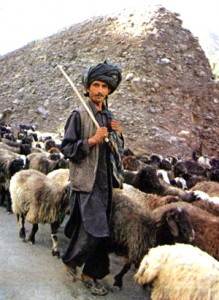 ring which time they have a son. When the “enforcer” of their tribe’s laws and his men finally do discover them, the inevitable “justice” happens. Shortly afterward, their tiny son, protected against the powerful wind by the body of the dead camel which once belonged to his family, is discovered and adopted by the old, nearly-blind leader of a group of Baluchis who have accepted an invitation to parley with Pakistani officials over their killing of two army officers. Ahmad emphasizes their honor and unwillingness to compromise – and also their naivete – as they meet with the government.
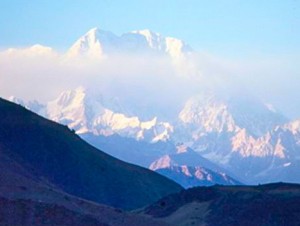 Tor Baz is the vehicle through whom similar stories are also told of hardship and official betrayal affecting the Pawindahs, the Wazirs, the Mahsuds, and the Mohmands. These groups all have their own languages and cultures, and some, like the Wazirs and the Mahsuds, even war against each other on a regular basis, while also warring against the larger, more “civilized” national government which they do not recognize. Fascinating battles of wits between the tribes and officials are unending, and lively stories concerning individuals reveal surprising aspects of the culture and give new meaning to the word “vengeance.” The story of a guide who regularly escorts climbers up the gigantic (and, at that point, unconquered) mountain of Tirich Mir and what happens after the mountain is eventually conquered provides particularly surprising insights. The attitudes toward the wives and daughters in these tribes, accepted by the women themselves, will horrify the western reader. Slavery is explicitly
  Almost two generations have passed since Jamil Ahmad’s stories of these tribal areas were written, and much that he foreshadowed has occurred. The nomadic tribes have been particularly vulnerable, easily displaced by those who could take over “their” tribal lands during their yearly migrations. Though some migration apparently still takes place, the widespread migrations by large tribes across national borders appears to have ended. As early as the 1970s, the author points out, the Gujjahs recognized that their days were numbered and decided to teach their children to blend into Pathan society and to learn the Pashto language. Other tribes have undoubtedly followed that lead. The fact that only one author, Jamil Ahmad, has recorded the vibrant lives of these illiterate tribes, emphasizing their honor, honesty, and most importantly, their cultural vulnerability, in the years immediately before major changes took place, makes this one of the most important books of the age, not just for anthropological reasons, but for the universal truths which the tribes reflected.
 Reading this recently translated 1999 novel by Icelandic author Arnaldur Indridason feels much like reading a movie. A stand-alone thriller of World War II and its aftermath, Operation Napoleon is not part of the author’s later, more character-based Erlendur series, with its dark themes and grim visions of human nature. This is not to say that this novel is not also full of violent behavior against innocent characters, but in this novel the villains are the Americans based in Iceland, who will stop at nothing to further America’s global interests. The “heroes” of the novel are the honest Icelanders who inadvertently run afoul of US interests.
 challenges in damage control – by whatever means are necessary. Elias, one of the young men, has described what he has seen in a last-minute cell phone call to his sister Kristen, and she, a lawyer with the justice ministry, begins to ask frantic questions in an effort to find her missing brother.
 trong was visiting Reykjavik, a distraction which the intelligence agency had hoped would allow them to excavate the plane before it was swallowed by the ice. In each of these sections, key information is provided to the reader, suggesting some of the reasons that this mission is considered so important that even murder can be justified by the mission’s leaders.
 uld go to such extremes to hide the (finally revealed) contents of this plane from 1945. If, as the director of the US spy agency says, “the past is irrelevant now,” and if we really can “reinvent history for our own purposes,” how can a reader believe that this mission was realistic, much less crucial?
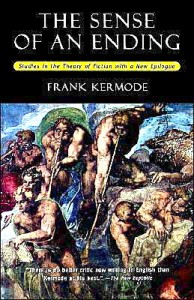
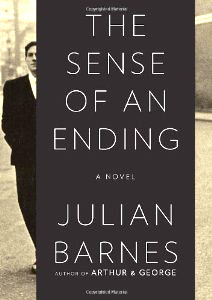 In one of the most exciting and intellectually stimulating novels of the year, author Julian Barnes tells a two-part story that reconstructs the lives of four young British secondary school students in the 1960s as they study literature and history and argue about philosophy in an effort to solve the riddles of their universe. Through narrator Tony Webster, one of these boys, the author describes their lives up to their early twenties, then leaves them to their fates until Part II begins, forty years later. Webster, now in his sixties, twice divorced and retired, suddenly receives a bequest which suggests hitherto unsuspected revelations about one of his school friends who died young. For forty years, his memories of these school friends and the experiences they shared have informed and affected his life and his philosophy, but now he discovers that the memories may all have been constructed on lies based on incomplete information.
 passage socially, as they hope to find willing girlfriends and learn for themselves the physical joys of eros and its connections to thanatos (sex and death, as explored conceptually in the philosophy which they have read) combine with their need to impose order on time in their own lives, despite believing in general that time is chaos. “Yes, of course we were pretentious – what else is youth for?…[we] enjoyed saying ‘That’s philosophically self-evident,’ and assured one another that the imagination’s first duty was to be transgressive. Our parents saw things differently.”
 responsibility, and “whether there’s a chain of it, or whether we draw the concept more narrowly, I’m all for drawing it narrowly…Start with the notion that yours is the sole responsibility unless there’s powerful evidence to the contrary.” In the stunning, dramatic conclusion, Tony Webster explains, “You get toward the end of life – no, not life itself, but of something else: the end of any likelihood of change in that life. You are allowed a long moment of pause, time enough to ask the question: what else have I done wrong?…And I thought of a cresting wave of water, lit by a moon, rushing past and vanishing upstream, pursued by a band of yelping students…There is accumulation. There is responsibility. And beyond these, there is unrest. There is great unrest.” A brilliant, challenging, and ultimately important novel of time, order, and chaos and how we survive.