“[It’s] a homegrown Icelandic scandal of the kind that we’ve seen so many times before…Public money is used to set up a dodgy company that then gets floated while all the scumbags in the know get share options. They get a fat contract through some shady back-door deals with other government departments…and the moment the contract…becomes public their share value will go through the roof.”
 Having lived in Iceland for over ten years, Quentin Bates had a chance to get to know the country and its politics well, before moving back to the UK during Iceland’s continuing economic crisis. He had observed political corruption in Iceland with the fresh eyes of a newcomer, and he now uses his outrage as the basis of this complex and unusual murder mystery in which he illustrates how some elected officials are able to parlay their connections into illegal gains and large personal bank accounts, while moving the country toward bankruptcy. Officer Gunnhildur, a widow described alternately as “robustly built” and a “big fat lass with a face that frightens the horses,” has been with the police department for sixteen years and now runs the police station in the small village of Hvalvik. Obviously not a member of the “boy’s club” which handles most of the action in Reykjavik, Gunna has had to work hard to gain the respect that she deserves. She is, however, smart and conscientious, usually taking care of business through her knowledge of the community.
 When the body of an unidentified young man is found in the water beside the docks, Gunna investigates, but it quickly becomes clear that she will need more resources, and those can only come from higher-ups in Reykjavik. This is a time of economic crisis, and everyone is worried about their diminishing resources, the falling housing market, a jittery business environment, a health system which may be privatized, and unemployment, so Gunna’s ability to gain one more investigator to help her and her one other officer—“older, but junior”—is welcomed. Department higher-ups want to write this off as the death of an intoxicated person who fell off the dock and drowned, but Gunna does not believe it, and when she discovers that one of the victim’s close friends was killed in a road accident the previous spring, she becomes sure that it is murder. Both had been interested in Clean Iceland, an organization which promotes clean energy and keeps an eye on dams, the environment, and power sources.
 At issue is a contract that has been awarded recently for the building of a privately run smelting company across the bay, and that company and its public relations offshoot, Spearpoint, are directly connected to the Ministry of Environmental Affairs and run by the wife of one of the ministers.
Author Bates keeps the action and interest high as he handles many subplots simultaneously. A mysterious “Skandalblogger” constantly roils the political waters as he posts regular updates on political scandals, relays rumors, and chides politicians: “We’ve heard the rumours circulating around environment and trade, and the PM’s office, and we’re not going to believe it, as we know what a great guy you really are. We are absolutely certain that you’d never sideline the National Power Authority….” A young magazine writer is “shadowing” Gunnhildur for a story he plans to write about her, and he often discovers information that is helpful to her. One of Gunna’s own relatives has been mixed up in crime in the past and may now be involved with the person whom she suspects of being a murderer. Whethe r the suspect is colluding with politicians is an open question. Gunna, with two fatherless children, has home responsibilities, and as she becomes more and more involved in this investigation, she must consider an offer from a higher-up that she accept a job as chief of a tiny station on the other side of the country.
Over two dozen characters, all having unfamiliar Icelandic names, nicknames, and aliases, are involved in action that takes place on many levels at once, in a variety of places which also have unfamiliar names. As the characters move from the murder subplot into other areas of the story, their exact roles become less clear and may overlap, forcing the reader to stay alert for small clues and bits of information. Dialogue is especially important here in conveying personality and motivation and is a key to helping the reader stay abreast of the interrelationships as the action unfolds. Complex, full of detail, and very carefully planned, the various subplots all come together effectively at the end.
The first of a new series starring Officer Gunnhildur, Frozen Assets sets a high bar for the additional mysteries which are expected to follow. (The second in the series, entitled Cold Comfort, is tentatively scheduled for release in the US on January 3, 2012.) Not as dark as the Icelandic mysteries of Arnaldur Indridason, Frozen Assets aims for a broader scope. However, the intensity of the Indridason mysteries, related to the almost claustrophobic atmosphere, is missing here as the reader’s attention is drawn to far more subplots, places, and characters. Time will tell whether Gunnhildur becomes for Bates the compelling (and popular) figure that Inspector Erlendur has become for Arnaldur Indridason. In the meantime, Iceland is providing much new local color for its new “Nordic noir” novels.
Photos, in order: The author’s photo is from http://graskeggur.com
The author indicates that Hvalvik is a fictional place but that it has much in common with Grindavik, shown here. The photo of the power plant beside the Blue Lagoon is by Paul A. Souders: www.guardian.co.uk . Iceland now gets 100% of its power and heat from renewable sources, much of it geothermal.
Gunna’s husband was a fisherman. The fishing fleet is the only group in the country to continue to use fossil fuels for power, but plans are underway to convert that industry to hydrogen fuel cells within the next 20 – 30 years: www.guardian.co.uk
The main street of Seydisfjordur, the small town where Gunna has been offered a “promotion,” is seen here: http://patulkaa.jogger.pl
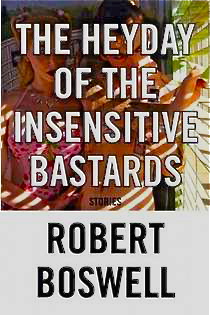 tories about life’s uncertainties, Robert Boswell picks up his characters like mechanical toys and winds them up tight, and just when they are at maximum tension, he twists the key one more turn, guaranteeing that they will unwind noisily, out of control. Virtually all his characters are losers. A woman, having lost her disabled husband, now finds that she has also lost her best friend. A housecleaner has been abandoned by her husband. An attention-seeking motel manager demands that a patron strip search her. A needy young man goes broke while in the thrall of a fortune teller. A priest tries to help a pathetic family by offering a “story to have faith in, even if he cannot entirely believe it.”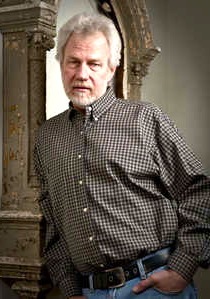
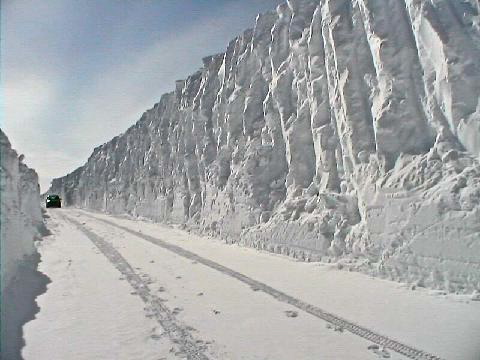
 “A Walk in Winter” features a young man who has returned to Chapman, North Dakota, in the middle of winter. Riding with the sheriff, he is on his way to identify his mother’s frozen remains. His mother had disappeared following an argument with her husband when the boy was ten, and he has been brought up by his aunt. When he sees the detached jawbone, he remembers the last time he saw his parents, suddenly shocked into understanding all the missing pieces of his early life. He remembers an accident he had five years earlier, with his girlfriend’s child in the car, wondering whether he, himself, will be “one of the stones on which [this small boy’s] character was built.”
 hese unforgettable characters with their haunted and damaged lives, leave the reader uncomfortable with their ironies. Damaged as many characters are, they are close enough to ourselves and those we know to feel familiar to us. Here in this outstanding collection, Boswell creates a variety of personalities in a variety of tension-filled situations, speaking with a variety of voices about the dilemma of being alive.
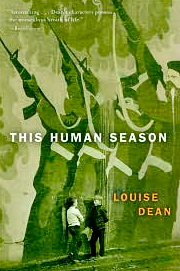
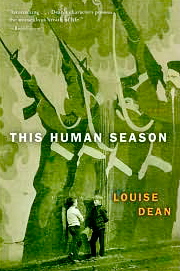 From the time of Irish “independence,” recognized by treaty between Ireland and Britain in 1922, to the Good Friday Accords of 1998, the island has suffered from sectarian violence. Even in recent years, after the “Peace” agreement, many Republicans, nearly all of them Catholic and including the IRA and Sinn Fein, continue to want a united Ireland and the return of the six northern counties which have been ruled by Britain for eight-five years. Ardent Loyalists, mostly Protestants who support British rule and the Royal Ulster Constabulary, want to protect their minority interests by remaining in control in their limited area of the island. Set in Belfast in November and December of 1979, this novel by Louise Dean focuses on the violence which reached its irrational peak at that time, and she holds back nothing in describing the brutality and tit-for-tat horrors in which both sides engaged.
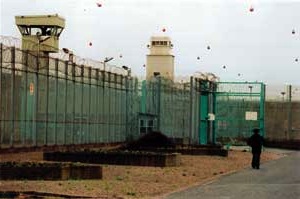 Dean’s focus is primarily on illustrating the conditions and the thinking of the time as the minimal plot unfolds. Kathleen Moran, Sean’s mother, becomes involved with the Relatives Action Committee and attends secret meetings. His thirteen-year-old brother is arrested for throwing a petrol bomb. Their local priest is at odds with some other priests because he supports the hunger strike and the protest within the prison. Brendan Coogan, who lives outside the prison, represents Sinn Fein inside the prison and in the community. Prisoner O’Malley, maintains IRA control within the prison, and uses his visitors to direct retaliatory murders on guards outside the prison walls. The activities of the guards sometimes make Dunn, a more sensitive man than most, reluctant to participate and to regret his job. Killings of prison officers in their own homes or neighborhoods add tension to the parallel stories of the two families.
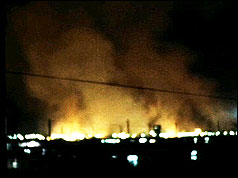 Historical events in Belfast are primary—becoming more than just a framework for the novel. Though the reader develops a sense of horror at what is happening on both sides, there is little sense of identification with particular characters, despite the episodes which tell about the life of Kathleen Moran and the home life of John Dunn. The hard-case attitudes of the prisoners allow little room for exploration of their characters, and the many guards, while having individual quirks, are not very different from each other. The character who comes closest to capturing the reader’s interest is Dunn, but Dean develops such obvious forboding about his fate and that of other guards from the outset of the novel that the reader avoids becoming involved because of the direction in which Dean seems to be taking the conclusion. The novel reveals the depth of the turmoil in Belfast in 1979, along with the people and factions involved in the troubles, and that seems to have been Dean’s point. The characters are vehicles through whom this information is conveyed, rather than a focus of the novel for their own sakes, but it’s powerful information—and it will keep readers who are interested in Irish history glued to their seats.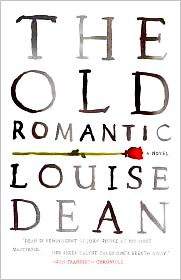
 Living in the jungle of Brazil, a group of American researchers working for a pharmaceutical company is trying to complete their long research project on a dramatic rainforest discovery and ready a new drug for presentation to the FDA for approval. The leader of the project is Dr. Annick Swenson, a tough and disciplined seventy-three-year-old woman who has not left Brazil for over a decade. Though the pharmaceutical company is paying for all the expenses, no one at the company can find out the status of the project–the last person sent to check on it, Anders Eckman, died of fever shortly after his arrival at the camp. When word of Eckman’s death reaches the company, the president decides that someone must return to Brazil, find out more about what is happening at the lab, and bring back Eckman’s effects. Marina Singh, a single woman in her forties, who once studied with Annick Swenson, has shared an office with Anders Eckman, and it is natural that she be the person to make a follow-up trip to the jungle.


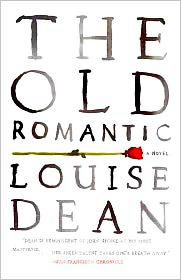 , and Nick Goodyew has not seen his father, Ken, in fifteen years, or Pearl, his mother, in twenty. His parents’ acrimonious life together, and their divorce, have come to typify the family’s way of dealing with issues—escape, a way of life for virtually all of them. Pearl left home and divorced Ken when she could not deal with his anger and nastiness a moment longer. Their son Nick, who “committed all sorts of betrayals to get ahead,” turned his back on his poor home and his parents and left, never to return, after he won a scholarship to private school and college. Now he has a new life as a successful attorney, far from Ken and Pearl, with a home in a picturesque town (only twenty miles away), a Range Rover, and Astrid, a beautiful companion. His put-upon brother Dave, still resentful of Nick’s behavior, lives on a farm near Hastings, not far from his father, with his wife and children. Dave has been the only conduit between Nick and the rest of the family, feeling “duty-bound to all parties to pass unkindness back and forth.” His father, unhappily remarried, now believes he is going to die, and, despite the on-going rancor, typified by a surprise Christmas phone call, he still wants to get the family together to make peace with the past. “He’s what you call a hymn short of a funeral service, our dad,” Dave avers.
 his current wife June and her family, his son Dave, and Nick himself, preferring that his estate, whatever it is, will go to Dave’s son, his only grandson. Yet Nick is very much like his vengeful father, emphasizing to Astrid that he will refuse to attend the eventual funeral, blaming Astrid for his own ill-temper and mean-spiritedness, and accusing her of having been responsible for the in-person meeting with his father in the first place.
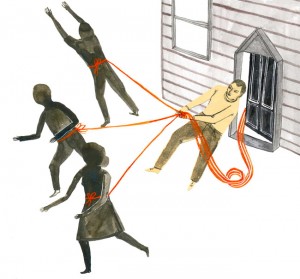 Scenes alternate among all the main characters, as they begin to communicate and learn more about themselves, where they come from, and where they would like to go. Ken befriends Audrey, who runs a funeral home, volunteering to work for her, and the scenes involving Audrey and Ken at work in the funeral home are some of the darkest, funniest, and most ironic in the book.
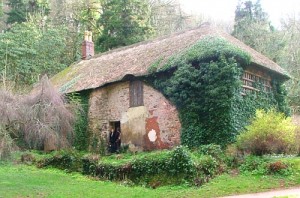 chapels of rest. He peeps into one of them. It’s a narrow room, just big enough for a coffin…The point of focus behind the head of the coffin is a stained-glass window with a brass crucifix on its ledge and, on a lower shelf, the alternative option, a white porcelain dove. ‘I’ll have the cross,’ he says wearily. ‘Stuff the dove.’ ”