Note: This novel is WINNER of the Costa Award for First Novel for 2011.
“We are sick of the failed promises. Sick of sickness. Sick of our environment filled with pollution and our rivers filled with oil spills. Sick of guns. Sick of no electricity. Sick of our government putting billions of pounds in their own pockets. We are sick of the oil companies giving these men money, knowing it will not go to the people.”
 Twelve-year-old Blessing and her fourteen-year-old brother Ezekiel find their comfortable lives in suburban Lagos dramatically changed when their parents suddenly separate and they must follow their mother to her native village, a tiny community near Warri in the Niger Delta. There they find life completely different—no electricity, no generator, no air conditioning, no refrigerator, no running water or flush toilets, no separate bedrooms, and a school system that uses harsh corporal punishment for the most minor of infractions. Living in a small house with their grandparents, while their mother takes the only job she can get at a bar at the nearby oil company compound, Blessing and Ezekiel quickly learn what it is like having almost no money while living in an area with some of the richest oil deposits in the world. The profits from this incredible resource are unavailable to ordinary Nigerians who live on top of these deposits, yet it is these local residents who must cope with the fatal pollution of the Niger Delta–the largest wetland area in the world.

A close-up view of the lives of an Ijaw family in a small village, which peacefully supports both Christian and Muslim religions, the novel is more personal and descriptive than it is plot-based. Very little actually “happens” during the first hundred pages, as author Christie Watson, who lived in Nigeria for several years, creates a family which is remarkably real, living a life which rings true in the smallest of details. Ezekiel becomes very close to his grandfather, a Muslim preacher (newly converted from Christianity) who has created an outdoor mosque behind their house, and they are observant (except for Grandfather’s alcohol consumption). The children’s grandmother and mother both turn over their earnings to the grandfather, who is always on the verge of “getting a job as a petroleum engineer” at the oil company, though never succeeding, spending his time at The Executive Club instead, drinking brandy and talking about all his big plans. When they repeatedly run out of money for the barest necessities and Blessing and Ezekiel have to drop out of school, they wonder where the money comes from that grandfather Alhaji uses to buy brandy. The fact that all the women in the family have full-time jobs, none of them high-paying, while Alhaji apparently does not work at all, makes the issues that much more emotional. The women who are employed are already trying to support themselves and the family, plus a chauffeur, his four wives, and his seventeen children, all of whom live with them.
 Blessing, who never is able to return to school after her initial experience there, becomes her grandmother’s assistant, delivering babies—and she and Grandmother, both together and separately, handle even the most complex obstetrical emergencies with confidence—and no anesthetics. This work allows the author to integrate an important subplot about the mutilation of young girls, often when they are infants, a problem which affects to up to eighty percent of the girls in very rural, very closed tribal communities. (The percentage in the larger, more open communities has been dropping steadily but is still an issue.) These young girls, who may be only thirteen or fourteen when they have their first babies, have a very high rate of complications as a result of their mutilations, with deaths to the mothers and babies not uncommon. Blessing is horrified by this discovery.
As Ezekiel, an asthmatic who also has peanut allergies, becomes thinner and thinner, unable to eat meat, which is always fried in peanut oil to counteract the spoilage due to lack of refrigeration, the characters in the family become more and more sympathetic. Olive oil or vegetable oil is extremely expensive, and their mother, on probation in her new job, has no way to “borrow” it from the bar. Blessing saves her vegetables for him so he won’t starve. The air pollution makes Ezekiel’s breathing problems even worse. These are exacerbated further by Alhaji who believes that Marmite is a cure-all, even when Ezekiel has run out of emergency injections for his allergic reactions and inhalers for his asthma. Timi, the mother, is helpless to change this.
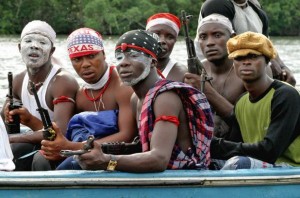
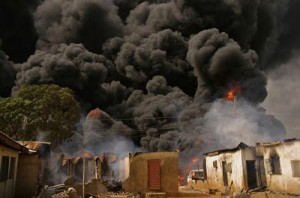 As the lives of the Kentabe family unfold, the reader observes how they try to cope with rivers so polluted they cannot use the water, air that no one should have to breathe, trees and crops that will no longer grow in the soil, jobs that are given to foreigners and those with close ties to the government, poverty due to corruption of government officials, and the greed of the oil companies, most of them run by Americans. This pollution of the land, rivers, and air has continued unabated for over fifty years. As it continues to get worse, we see here, young Nigerians are organizing to seize “their heritage”–the oil under their land. Violence has become endemic. Blessing and Ezekiel are warned not to go near the river when the Sibeye Boys (young thugs), with their guns, are out on patrol, or beyond certain areas of the forest, where heavily armed rebels may be hanging out, planning attacks on pipelines and on those who work for oil companies. Explosions, deaths, and kidnappings for ransom have become common.
 Though the novel starts slowly, with its emphasis on developing character and setting, it becomes, eventually, a series of interconnected episodes which illustrate the problems of the country, as Blessing, Ezekiel, and their mother Timi try to find happiness in their new life. When Timi, the mother, finds a new suitor, Ezekiel becomes an angry teenager and acts out in ways that no one has ever seen before, precipitating a crisis.
The author’s style is simple, straightforward, and easy to digest, with much of the action being conveyed through dialogue. The author gives the reader everything s/he needs in order to imagine what is happening, rather than requiring a reader to “stretch” or fill in blanks. While this may sacrifice suspense and make the novel unusually episodic, the totally engaging characters are well drawn and keep the interest high. A book that deserves its place on CNN’s list of “Twelve Novels to Keep You Entertained All Summer.”
Photos, in order: The author’s photo is from http://www.otherpress.com
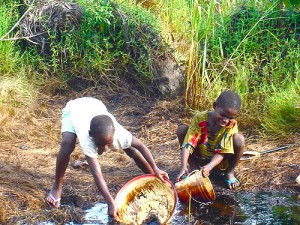
Like Blessing and her family, two boys are drawing water from the polluted river:
Armed young men, some still boys, in a gunboat along the river: http://www.thedailymaverick.co.za
An oil fire threatens a small village nearby: http://sherpas2.blogs.sapo.pt
The Tiny Sunbird, similar to a hummingbird, was photographed by Nik Borrow: http://www.birdquest-tours.com
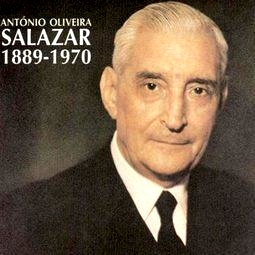
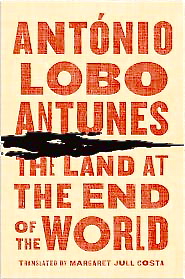 rature fever dream of a novel, written originally in 1979 and newly translated, the images often seize and explode with powerful emotion. Author Antonio Lobo Antunes describes the life of a newly graduated Lisbon physician who has been sent to Angola from 1971 – 1973, during Portugal’s war to preserve its colonies, along with its traumatic aftermath. As the novel begins, six years have passed since the speaker has returned to Lisbon from Angola, but the young physician still cannot come to grips with all he saw and felt there. Furious by the betrayal of the Portuguese government, consisting of the ultra-right wing Estado Novo led for many years by Antonio de Oliveira Salazar (or “the Castrato, as the speaker calls him), the speaker accuses that government of responsibility for all the Angolan and Portuguese dead and for the living, but lost, souls who had to fight a war which they, as soldiers on the ground, could see made no sense at all. At one point he explodes in rage: “Standing at the door of the operating room, with the barracks dogs sniffing at my clothes, greedy for the blood of my wounded comrades,” he cries, “I hated the people who were lying to us and oppressing us and humiliating and killing us in Angola, [those] serious, dignified gentlemen in Lisbon stabbing those of us in Angola in the back, the politicians, magistrates, policemen, informers, and bishops…”
 After bedding a woman he has just met, he is suddenly impelled to tell her about his experiences in Angola, and, once started, he cannot stop. “I am a tender soul,” he says, “very tender, even before I’ve had my sixth neat Jim Beam or my eighth Drambuie.” As his life in Angola unfolds in this long monologue, he is constantly aware of how much he has changed and how much he has lost. “Perhaps,” he says, “the war has helped to make me the person I am today whom I deep down reject: a melancholic bachelor whom no one phones and from whom no one expects a call, who coughs occasionally just to feel as if he has company.”
 , thick descriptions of the countryside and its activity are so life-like that the reader sometimes feels like squinting—images almost too intense to process. In one fairly typical paragraph, in which he describes his arrival in Luanda, the speaker notes that “the water resembled murky sun lotion smeared onto old, grubby skin veined with rotting cables.” Thick with vegetation and insects, the harbor also features “whores, worn out by heartless men from Lisbon…like dying whales stranded on a final beach.” The paragraph continues: Black men sitting along the pier are “watching with timeless absorption, simultaneously acute and blind, [as] you see in photographs showing the closed, inward-turned eyes of John Coltrane as he played his bittersweet, drunken-angel music on the saxophone.” And, he concludes, “I’ve always been in favor of erecting in some suitable square in Portugal a monument to spit, a spitting bust, a spitting marshal…a spitting equestrian statue…something that would provide, in the future, a perfect definition of the perfect Portuguese male; someone who spits and boasts about his sexual prowess.”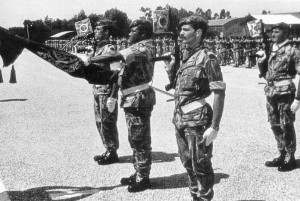
 Then, in an anguished cry, he asks, “What have they done to my people, what have they done to us, sitting here waiting in this landlocked place, imprisoned by three rows of barbed wire in a land that doesn’t belong to us, dying of malaria and bullets…fighting an invisible enemy, fighting the endless days that never pass..fighting the dark nights as thick and opaque as a mourning veil that I draw over my head in order to sleep, just as when I was a child, I used the edge of my sheet to protect myself from the phosphorous blue eyes of my ghosts.”
 In this newly reprinted book from 1998, William Boyd details the life and work of Nat Tate, an artist whose work became highly sought-after in the 1950s. One of the Abstract Expressionists in New York City during that decade, he could usually be found at his studio in the heart of the art district, at galleries, in conversation with Gore Vidal, Frank O’Hara or Peggy Guggenheim, or drinking with Jackson Pollock, Willem de Kooning, and others at the Cedar Tavern on University Place. He traveled to Europe in 1959 and visited Pablo Picasso and Georges Braque, who became his idol. Every one of his paintings sold almost immediately, most of them before the scheduled gallery openings even took place. His most famous work consisted of over two hundred pen-and-ink drawings of the Brooklyn Bridge, in honor of his favorite poet Hart Crane’s “The Bridge” cycle, and he had started a new series, also honoring Crane, called “White Buildings.”


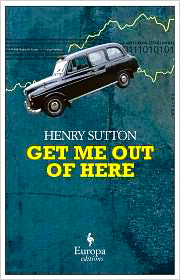 on Amazon and elsewhere as a satire and as “the first credit crunch novel,” something that, frankly, would never have lured me into reading it, Get Me Out of Here is much more like an adult version of Patrick McCabe’s novel of psychological horror, The Butcher Boy, than it is a broad picture of the London business community at large. The book focuses almost exclusively on Matt Freeman, a thirty-three year-old Londoner who is trying to run his financial business. An overly-driven yuppie with all the stereotypical hang-ups about appearances, brand names, personal connections, and the toys of success, Matt, a first person narrator, conveys every thought that enters his mind, every twisted bit of false logic, every sensation, every hope for the future, and every self-deluded justification for the crimes he commits—and he commits a lot of them. We know his personal friends, all his lovers, and his neighborhood–he is individualized, not the generic stick figure one usually sees in satires. The focus here is on the small, not the broad and universal – the life of one young man whose problems are so extreme that he cannot be considered “typical,” even among psychopaths.
 Within the first forty pages, Matt Freeman has already committed a murder. But “it’s not his fault.” It’s the victim’s own fault. She wouldn’t have ended up dead at all, he tells us, if it hadn’t been for the “cheap, man-made material” in the neck of the shirt she was wearing. “Another branded ripoff. She should have stuck to John Smedley [designer knitwear], like me.” Addicted to recognizable labels, Matt believes that they are essential to maintaining the appearance of success in London’s financial world. We never find out much about what he did, exactly, before he started his own business, nor do we know, even, whether this business is, or ever was, real, but he tells friends that he is working on a big business deal with North Korea, talks about all his travels all over the world, and indicates that he is also working on deals with Iran and Kuwait. He frets, fusses, and fumes his way through his life, sharing every piece of trivia. Slowly, the reader realizes that he is also having some financial problems, though typically, he never admits this.
 In addition to creating a compelling character in Matt Freeman, Sutton also includes unique descriptions of such arcane subjects as Matt’s personal “television free zone,” the smells of Kentucky Fried Chicken vs. Burger King when eaten by passengers on the Tube (“KFC was a notch or two above Burger King when it came to pungency.”), and the dental hygiene of the North Koreans. (“For some reason I couldn’t imagine the North Koreans flossing their teeth with any regularity or passion.”) He often tells the story obliquely, creating “ah-ha” moments for the reader who has suddenly figured out what has happened by reading into Matt’s comments and realizing what he does NOT say. And he also tantalizes the reader by leaving much unresolved at the end. After all, Matt, the narrator, does not know what will happen, either.
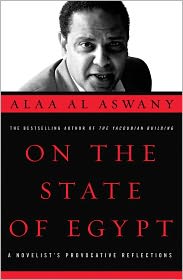 Alaa Al Aswany made his literary mark in 2002 when he wrote