“It’s a sin to force a child who doesn’t have much life experience to conform to someone else’s experiences or thoughts, and to the habits they’ve picked up from the crazy world. I think all tragedies begin right there. Furthermore, should we feel contempt for a young person’s dream just because it’s a dream?”
Described as a “masterpiece of Korean fiction of the twentieth century” and as “one of the outstanding literary achievements during Korea’s colonial era,” Three Generations, written in 1931, has recently been translated into English for the first time. Published in Seoul as a newspaper serial from January through August of 1931, author Yom Sang-seop appeals to his Korean audience with his vibrant characters and his depiction of real life, especially as lived by traditional, middle-class Koreans. The action reveals, on the domestic level, the challenges to traditional ways of life and the sociopolitical conflicts of the era.
For western readers, Three Generations is a bit daunting, at first. The Koreans who read the book in 1931 were all too aware that their country was then occupied by the Japanese and had been since 1906, so the author’s failure to mention this as he opens his novel is understandable. Western readers, however, may find it helpful to read the critical Afterword to the book before starting the novel itself. The novel’s unexplained references to the Japanese in Seoul at the beginning of the story, the fact that Deok-gi, the main character, has been studying at Kyoto Prep School and at a Tokyo college, the tensions between some young Koreans and Japanese at a bar, references to “the Third Empire,” and the mysterious political activities of characters referred to as “young Marxists” become more understandable when seen in the context which the Afterword provides.

Keijo in the 1930s, with Japanese sign (not Korean) advertising milk.
The novel traces three generations of one family – the Jo family – consisting of the grandfather and family patriarch, his middle-aged son (Sang-hun, and his wife), and Sang-hun’s 23-year-old son Deok-gi (and his wife and baby), the character around whom most of the action revolves. The family lives in Seoul in a large traditional house with inner and outer quarters, separate living areas for the several families, and spaces for the family’s servants. The grandfather, who governs the family purse strings, has recently married “the Suwon woman,” much younger than he, by whom he has a four-year-old child. The “Suwon woman,” clearly an opportunist, demands obeisance from the other women. Sang-hun, a gambler and ne’er-do-well, has had a lover, Gyeong-ae (a young friend of his son Deok-Gi), by whom he has a young child whom he does not see or adequately support. Sang-hun needs money to pay off debts, and the “Suwon woman” expects to become an heiress. The fact that Deok-gi is widely regarded as the likely heir to most of the grandfather’s money, however, adds to the intrafamily hostilities. As the various characters try to protect their interests, all must carefully watch their backs.

A family dressed in typical Korean fashion, 1930
Within the household, traditional family values are being threatened. The grandfather requires that traditional ancestral rites (very elaborate and expensive) be performed for family members going back as far as ten generations, though Deok-gi finds excuses not to attend. Arranged marriages are sought and performed (even for Deok-gi) to protect the family’s wealth, and real affection is not a requirement since the taking of concubines is accepted. No legal obligations exist between men and these concubines if the women have children, and their difficult lives come under scrutiny here.
As Deok-gi travels around the city, his relationships with many other characters show how traditional society is being challenged. Resentments against the Japanese, the embracing of Marxism by college age students, infiltration of the country by communists from Russia, and turmoil in neighboring China create serious challenges to existing society. A strong police force with no scruples about the use of torture, even on women, acts quickly at even the slightest hint of provocation. Deok-gi is considered a moderate, though he, like the Marxists he has met, believes in and actively works toward improving the lives of the poor and needy, a huge percentage of the population. His friend Kim Byeong-hwa is a revolutionary who has broken from his family over demands that he follow his father’s directions regarding his college education, and his secret meetings with revolutionaries and his attempts to recruit others become a dark subplot of the novel.

Snowy day in Seoul, 1930
Though the author tends to keep his separate plots running on separate tracks and not integrating them as fully as modern novels do, he manages to make the novel interesting and relatively fast-moving. The intricate manipulations within the Jo family keep the complicated lives of its members challenging and absorbing. Though the Afterword points out that author Yom Sang-seop was famous in his era for using the often crude vernacular of his characters, some western readers may find the use of contemporary, twenty-first century slang in this translation quite jarring. Calling a character from 1931 a “wiseass,” or a “piece of work,” and referring to actions such as “talking shit,” “wising up,” and even “chipping in,” feel out of place in a work which is otherwise presented in relatively formal language.
Notes: Keijo in the 1930s, with Japanese sign (not Korean) advertising milk. The photo was probably taken from the Mitsukoshi department store, according to the photo caption. http://koreanhistory.info/oldphotos.htm
Upperclass Koreans wearing traditional clothes, ca. 1930: http://www.gettyimages.com
Image of Keijo (Seoul) in snow, 1930: http://cgi.ebay.com
 uthor Danticat introduces her story of Haitian immigrants and the lives they have escaped in Haiti with the story of Ka, a young sculptress whose parents think of her as a “good angel,” her name also associated symbolically with the Egyptian Book of the Dead. Ka is in Florida with her father to deliver a powerfully rendered sculpture to a Haitian TV actress. Ka’s father, who served as the model for the sculpture, however, destroys it, confessing tearfully that he is not the man his daughter has always believed him to be, and admitting that the disfiguring scar on his face was not the result of torture in a Haitian prison. He was “the hunter,” he says, and “not the prey,” one of the “dew breakers,” or torturers, who as part of the Tonton Macoutes, committed political assassinations and inflicted unimaginable tortures on orders of dictators Francois Duvalier and his son “Baby Doc” between 1957-86.

 rst biography of his new Great Stars series, which also includes Humphrey Bogart, Gary Cooper, and Bette Davis, author David Thomson examines the career of Ingrid Bergman, from her makeup-free screen test for David O. Selznick (1939) through Autumn Sonata (1978) made with Ingmar Bergman. Using the plots of her films as a framework for placing Bergman’s life and career into perspective, Thomson shows how each film drew on her life experience and increasing maturity to provide added depth to her characterizations. Thomson, a film critic, film historian, and author of Have You Seen…?”: A Personal Introduction to 1000 Films, is uniquely suited for this role, and as he presents each film and critiques Ingrid Bergman’s performances, the reader sees her growing on both the personal and professional levels.
 tural as an actress, and impulsive and romantic as a person, Bergman conveyed sensuality at the same time that she conveyed innocence, and the public loved her. They saw her as Sister Mary Benedict in Bells of St. Mary’s and as Joan of Arc, never knowing much about her private life, and ignoring the fact that she left her young child and husband, Petter Lindstrom, at home in Sweden to come to the US to make movies. Her affairs with Gary Cooper and Victor Fleming were never reported. Alfred Hitchcock was unabashedly in love with her and was devastated, as was her public, when she became involved with Roberto Rossellini in 1950, while working on the film of Stromboli. Her flagrant affair, her pregnancy, and her out-of-wedlock child in 1950 became the subject of a speech on in the US Congress and were regarded as a complete betrayal of the public trust which had believed her image. Bergman stayed out of the US until 1956, when she made Anastasia, with Yul Brynner and Helen Hayes, for which she won another Academy Award, though she did not make any public appearances in the US until 1958. Her friend Cary Grant to accepted her Oscar for her in 1956, but when she finally appeared in 1958 as an Academy Award presenter, she received a standing ovation from the audience.
 s remarkable debut novel, set in her home country of Ethiopia in 1974, brings to life the historical period from the assassination of Emperor Haile Selassie through the communist revolution and the subsequent resistance movement which followed shortly on its heels. The Emperor had failed to recognize and take action to mitigate the horrific famine which had cost two hundred thousand lives. A well-publicized 1974 television documentary, showing the educated Ethiopian public the horrors of famine in the remote areas of their country, juxtaposed against films of the wasteful excesses of palace functions, set the country up for revolution. Initially planned by students who wanted more accountability and change, the revolution was soon pre-empted by the strong military, which had its own agenda. Within a year, the ultra-right , known as the Derg, was in charge of the country, the military consolidating its power while arresting many of the students who had made the revolution possible.

 The novel is well constructed, with characters the reader comes to care about, but it is difficult to read. The violence, which increases in intensity over the course of three hundred pages, involves false arrests, beatings, rapes, psychological warfare, brutal tortures in an effort to extract sometimes non-existent information, and the mutilation of women and children. Some scenes involving the maiming of a child are almost impossible to read. The author’s dedication to presenting a full picture of the almost inhuman behavior of the country’s powerful leaders and misguided followers, however, creates unforgettable tableaux, and makes the reader hope for a better future in the aftermath of this action.
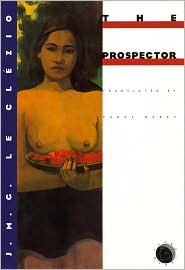 France in 1985, The Prospector signaled a change in what had been the author’s style until then. Abandoning the experimental style he employed in the 1970s, with its elusive characters and almost plotless “stories,” author J. M. G. Le Clezio here creates an adventure story which is also a coming-of-age story and an exploration of culture. Setting his narrative in Mauritius, where his French family has deep roots and where he now has a home, he creates a unique novel filled with lush descriptions and vibrant characters who appeal to the romantic in all of us while simultaneously evoking the violence and horror which mar their lives and make a mockery of “civilization.” The novel’s exotic setting inspires dreams of lost worlds, mysteries, and lives tied to nature and its beauties. At the same time, however, the author is exploring the damage wrought by foreigners whose sole purpose is to tame the land and use it for commercial purposes, specifically the plantation owners who have created and cruelly oversee the sugarcane fields worked by underpaid local help.

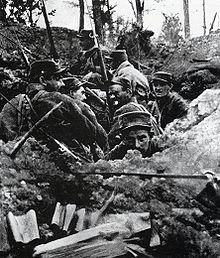 n or emphasizes a theme, to which the author deliberately calls attention. At various times his characters remind us that “Gold is worthless. You must not be scared…,” “[Death] is deceitful and insidious, keeping its whereabouts secret until it wants to pounce,” “In the end it’s the lice who win wars,” and “It is as if everything we see taking place here is only a game.” The lush descriptions, the often idyllic setting, and the sensual romantic scenes counteract the moralizing, however, while the constant intrusion of harsh realities keeps the novel from becoming sentimental or predictable.