Note: Naguib Mahfouz was WINNER of the Nobel Prize for Literature in 1988.
“Forget your qualifications. Don’t waste money on applying for a job. The question boils down to one thing: Do you have someone who will intercede for you? Are you related to someone in a position of power? Can you become engaged to the daughter of someone in the government?”
Set in th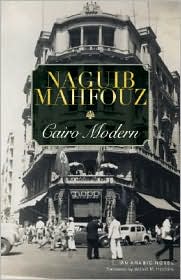 e 1940s, during the reign of King Farouk, Cairo Modern is, by turns, ironic, satirical, farcical, and, ultimately, cynical, as the author creates a morality tale which takes place in a country in which life’s most basic guiding principles are still undetermined. World War II has kept the British in Egypt as a foreign power, a weak Egyptian monarchy is under siege by reformers, and the army is growing. The plight of the poor is an urgent national problem. As the novel opens, four Cairo college students, all due to graduate that year, are arguing moral principles, one planning to live his life according to “the principles that God Almighty has decreed,” while others argue in favor of science as the new religion, materialism, social liberation, and even love as guiding principles. None of the students have any respect for their government, which they see as “rich folks and major families.” As one points out, “A representative who spends hundreds of pounds to get elected cannot represent impoverished people.”
Among the students, Mahgub Abd al-Da’im is the poorest, living on a pittance, which is all his father and mother can provide him. His father’s sudden stroke, however, reduces Mahgub’s three pounds a month to only one pound, and he must literally starve himself in order to finish the school year, becoming more and emaciated as time passes. His father, unable to work, has only enough money to survive for one month after Mahgub graduates on May, so finding a job is truly a matter of the whole family’s survival for Mahgub. When Mahgub contacts a former neighbor, Salim Al-Ikhshidi, for help, Al-Ikhshidi lays out the facts of life regarding government jobs like his own—certain people will help him in exchange for a flat fee or a portion of his salary over several years—unless he can find a wife among the daughters of ministers, an impossibility considering Mahgub’s poverty.
Before long, however, Al-Ikhshidi, in consultation with higher-ups, has devised a plan for Mahgub, who is in no position to be selective. If Mahgub will agree to marry the lover of a high-ranked government official and become part of a ménage a trois, all his expenses will be paid and a job will be guaranteed in the ministry where Al-Ikhshidi himself works.
 The marriage of Mahgub and Ihsan is filled with the expected complications as Mahgub tries to hide his poverty-stricken past and his betrayal of a college friend, at the same time that he is rising in the government, associating with wealthy and influential friends, and becoming arrogant, all sources of great humor and satire by Mahfouz. Elegant society parties attended by people who “surpassed [Mahgub] in his own cynical principles” reveal Mahfouz’s opinion of this level of society.
The final scenes are worthy of the grandest of farces, and it is easy to imagine this as a period film, with the complications turning Mahgub’s life into a disaster. The Egyptian setting, while important, ultimately becomes less important here than the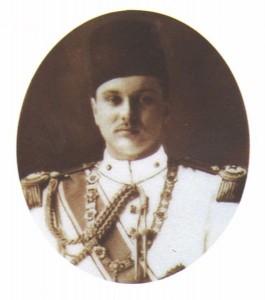 universal themes and attitudes which the author is satirizing—the naivete of college students, the lure of wealth, the arrogance of power, the pretentions of the newly affluent, the willingness to sacrifice principle for expediency, and, ultimately, the ability of “the clique of most powerful criminals to destroy the weaker ones.” As Mahgub’s friends gather to discuss the latest governmental scandal at the end of the novel, they hark back to their arguments at the novel’s opening, wondering about the role of religion, the definition of evil, the mores of their society, and all the interactions among these. Life is busy for these young men, however, and tomorrow is another day.
ALSO: THE DAY THE LEADER WAS KILLED, KARNAK CAFE, THE MIRAGE,
Notes: Also reviewed here are MANY other novels by Mahfouz. See Authors tab at the top of the Home page for links.
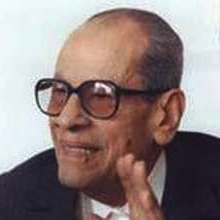
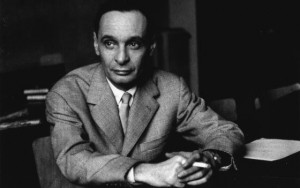
The author’s photo appears on http://news.softpedia.com
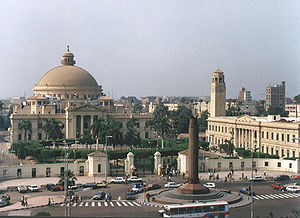
Cairo University is depicted on http://en.wikipedia.org
Ascending the throne in 1936, King Farouk was Egypt’s last king. His reign lasted until 1952. http://en.wikipedia.org
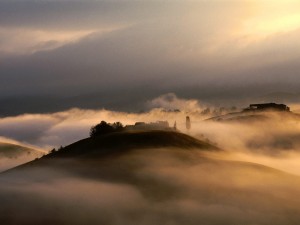
 t novella written by acclaimed Italian author Romano Bilenchi before his death in 1989,
  ey live—replete with malice, ignorance, and even vengeance, which affect every aspect of the lives of the teenagers as they are growing up. Whether one is “good” or “bad,” in the universal sense, becomes more an issue of whether one has been good or bad as perceived by local consensus, and in this respect the novella is more socially conscious than the typical coming-of-age novel, which is usually focused on the main character’s own responses to external issues.
 her but must deal with the real, existing, world and the interrelationships which govern it. On the speaker’s return from his hike, he discovers that his beloved grandfather has passed away, a traumatic experience which dramatically affects his life.
 he feels about his role in a wider world. His family does not help him to deal with these problems.
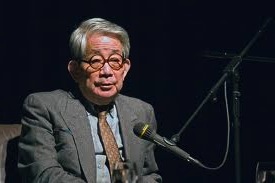
 1958, when the author was only twenty-three, this debut novel is stunning for its depiction of two societies–the society of peasant villagers who live in a remote and nearly inaccessible mountain village, and a society created by young delinquents when they are abandoned and blockaded inside this small village. It is also reflects the author’s vision of the broader society of Japan in the aftermath of World War II. Author Kenzaburo Oe himself grew up in a remote and nearly inaccessible village in Ehime Prefecture on the island of Shikoku. He was ten years old when the war ended and the Emperor, the “living god,” announced the surrender of the country. In the years leading up to the publication of this novel, Japan and the Occupation forces came to agreements and influenced each other, and Oe believes that this led to a sense of emptiness and ambiguity in society–the old values and ways of life were gone, while the increasingly influential western values were not necessarily compatible with Japanese history.
 ine and powerful emotions, violence presented as an understandable response to injustice, and an indictment of the communal mindset which can lead to expedient decision-making at the expense of the individual and his liberty. The Lord of the Flies atmosphere which evolves here is a strong statement of Oe’s feelings about his society–one he feels lacks a clear appreciation of the value of the individual.
 Away from normal society, the boys are free to express their own emotions, and the narrator and others quickly show their inner humanity. The narrator’s much younger brother, an innocent, depends upon the narrator, who is protective and warm towards him, with several people protecting also the young daughter of the woman who died from plague, a girl who was abandoned when the villagers evacuated and left all the “undesirables” behind. As the boys help each other, the author creates a real sense of pathos about their sad predicaments. Passages of great beauty–especially the morning in which they discover snow–contrast with the misery of their attempts at survival. Then everything changes.
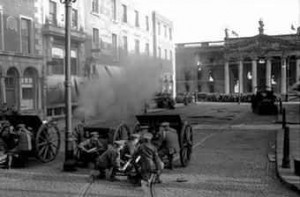
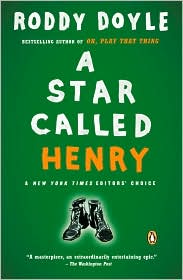 mart, born at the turn of the century, leads such a miserable childhood that he is on the streets by the age of five and solely responsible for his younger brother Victor by the age of nine. Always cold, hungry, and lacking a warm place to sleep, Henry and Victor are at the mercy of the elements, so concentrated on staying alive from moment to moment that they have no time to think toward the future. By the age of fourteen, Henry has met up with other poor who have some of the same resentments he has toward those who have dominated the land and commerce for so long. In 1916, the Irish Republican Brotherhood takes over the General Post Office on Easter Monday, declares the establishment of a new government, and raises its flag, and Henry is there–not out of a sense of patriotism so much as a sense that he is at home–and is fed–when he is among these people. When the shooting starts, Henry’s first bullets are aimed not at the British or at the police, but at the store window across the street, which he sees mocking him with its shiny new boots, something he has never had.
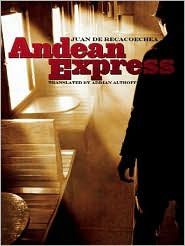 The twenty-four hour train ride from La Paz, Bolivia, to Arica, Chile, through the Andes at an altitude of up to 16,000 feet, from which the railway descends to the sea, provides the “closed room” setting for a murder which takes place in 1952, somewhat akin to Agatha Christie’s Murder on the Orient Express (1934). The key difference, however, is that the passengers on the Andean Express are, for the most part, local people traveling for a variety of reasons, and not wealthy Europeans traveling for pleasure. Their issues and resentments are local, based on their long histories with the victim, a man so loathsome that few can find anything positive to say about him. “Killing Alderete would not be murder; it would be a settling of accounts,” one remarks.
 their goals. In a novel notable for the clarity of the prose and the simplicity of the narrative structure, the author tells a fast-paced story. The murder is not a mystery to be solved so much as it is a question of whether the killer will be able to escape prosecution for killing a man everyone believes deserves to have been killed. The biggest mysteries here are what took people so long to act against him and how much the passengers may be willing to close their eyes to let the murderer escape prosecution.
 The author keeps the narrative moving, creating enough information about the various characters that the reader will appreciate the overlapping of stories and motives. None of the characters are fully developed, but they are developed enough to satisfy the needs of the story and keep the reader intrigued. The dialogue, well translated, makes the circumstances feel natural, however bizarre they may seem, with a classic line included at a key moment: “I can’t believe it. This could be a Billy Wilder comedy.”