Note: Indridason was WINNER of the Glass Key Award for Best Nordic Crime Novel in 2002 and 2003, and WINNER of the Gold Dagger Award from the Crime Writers’ Association in 2005.
“Tragedies, sorrows and death, all carefully classified in computers. Family stories and stories of individuals. Stories about me and you…you can call it up whenever you want. A Jar City for the whole nation.”
Icelandic author Arnald ur Indridason begins his mystery series starring Detective Inspector Erlendur (the Icelandic people do not usually use “last names”) of the Reykjavik Police in this dark and engrossing novel, first translated into English in 2004. Since then, five more novels in the series have been released, all to enormous acclaim. Erlendur, fiftyish and divorced for twenty years, with almost no contact with his ex-wife, tries to maintain contact with his children, his daughter Eva Lind, an actress and active drug addict, and his son Sindri Snaer, who has recently been released from drug rehab for the third time. Called to investigate the death of a sixty-nine-year-old man named Holberg, who has been murdered with a crystal ashtray, he has few clues, except for the unusual message left on the body which says, “I am him.”
Murders are rare in Iceland, and are always attended by enormous publicity. Holberg, a truck driver, appears to have been without family, and there are few clues regarding his death. Erlendur, however, discovers the photograph of the headstone of a four-year-old child, who died in 1968, hidden beneath a drawer in Holberg’s apartment. The child, Audur, died of an unusual brain tumor, and her devastated mother, Kolbrun, committed suicide three years later. Who took the photo and what, if any, connection it might have had with Holberg is unknown. Erlendur contacts Elin, the aunt of the dead child, who blames the Reykjavik police for their inaction as a cause of the death of her sister.

As Erlendur investigates, he discovers that the child, Audur, was the product of a rape. All evidence points to Holberg as the rapist. Though Kolbrun had reported the rape a few days after it happened, the policeman to whom she reported it, and who interrogated her, led her to believe that he did not believe a word of her report. Nothing ever came of her agonized testimony. Additional investigation leads Erlendur to believe that there was at least one other rape by Holberg, and possibly another child, and that there may have been some genetic problem which led to the deaths of these children.
Indridason, despite his personal difficulties, is an investigator who cares, and his study of the possible reasons for Holberg’s death is engrossing. The murder becomes a study of genetics and of who might have benefitted especially from Holberg’s death. His assistants, also conscientious, investigate with the same sense of purpose as Erlendur, and as they report their findings, much is made of the extent to which these findings represent the “typical” Icelandic murder, described at various points as “clumsy,” “not complicated,” “squalid, pointless and committed without any attempt to hide it,” and as generally not leaving “anything behind but mess.”
 This mystery contains many fascinating twists and turns, and ultimately provides a satisfying ending. As it progresses, the author reveals a very dark and sometimes bizarre sense of humor (at least I think is supposed to be humor, though it does not conform to the definition of humor as I have known it). While this presents no problem with the novel, since the reader is allowed to interpret as s/he will, it is a different story when this novel is converted to the screen, as this one has, for a more universal audience. The ambivalence of the novel, with its possible weird ironies, become, on screen, quite different, the subtlety sacrificed in favor of shock value.
Both the novel and the film have won innumerable prizes. The novel has won the Glass Key Award as Best Nordic Crime Novel. The film, entitled Myrin, won the Grand Prix Award as Best Film at The International Film Festival in Valenciennes, France (2008), while the Director Baltasar Kormákur won for Best Director, and lead actor Ingvar E. Sigurdsson won as Best Actor in Leading Role. It also won the 2008 Audience Award at the Festival du Film Policiers in Liege, Belgium. Providing many dark and gloomy visions of life in Iceland, the film is a classic of noir writing, and its film adaptation matches that mood. The four successors to this novel continue this tone and atmosphere.
Notes: Also reviewed here: Indridason’s THE DRAINING LAKE, HYPOTHERMIA, VOICES, OPERATION NAPOLEON, REYKJAVIK NIGHTS, INTO OBLIVION (2017)
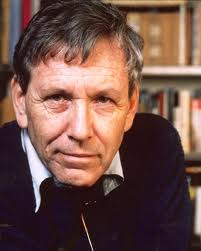
The author’s photo by Einar Falur Ingolfsson appears on http://www.nytimes.com as part of an article by Marilyn Stasio.
Erlendur is played in in the film by Ingvar E. Sigurdsson, the photo is from Bergsteinn Björgúlfsson/IFC Films, reprinted in a review in the New York Times: http://movies.nytimes.com
The trailer for the Icelandic film of Jar City, released in the US with English subtitles, is here:
 steemed novelist Jane Gardam follows up on the success of
 el focuses on Betty/Elisabeth, Gardam also uses the novel to provide more insights into Edward. At the end of
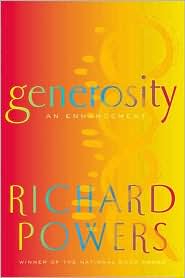 gain, Richard Powers has emerged with a new novel which reinvigorates the whole concept of the “novel of ideas.” Powers, who was a physics major at the University of Illinois until he took an honors literature seminar with Robert Schneider, who convinced him that that “literature was the “perfect place for someone who wanted the aerial view,” has written yet another intellectual novel, based on neuroscience but defying facile categorization into genres. In some respects GENEROSITY is a social satire, and in some respects it verges on science-fiction, but it also incorporates elements of metafiction, and its intellectual focus keeps the reader on his/her toes as Powers develops and expands themes and plot lines about the human genome that are both fascinating and original.
 ome public. A dweebish “nice guy,” he never expected that his human interest stories might offend some of his subjects or their families and return to haunt him over the years. In his defeated response to the personal criticism, he has sought work on a community newspaper and on a website for which he edits and improves the grammar in the “personal stories” submitted by readers to the site. He has no interest in personal fame or publicity.
 At the same time that Thassa is charming and winning her classmates with an optimism that cannot be quenched, Thomas Kurton, a pure scientist studying the human genome is investigating the chemistry that underlies emotions and the genome which may be responsible for human happiness. Kurton, who is fifty-seven and looks thirty-two, also believes that “aging is not just a disease; it’s the mother of all maladies. And humankind may finally have a shot at curing it.” The concept of deliberately “adjusting” the genome to produce happier, longer-living people with less disease, drives him relentlessly. Tonia Schiff, the TV film-producer of “The Genie and the Genome” who is regarded as “America’s most irreverent science television journalist,” often features Kurton on her programs, “humanizing” him so that non-scientific viewers can identify with his discoveries. When Russell Stone begins to wonder if Thassa’s constant cheerfulness can be a sign of mental illness, he contacts Candace Weld, an on-call college counselor, for insights.
 even the arts) in light of that are thought-provoking and get at the heart of the (threatened) values which have endured for thousands of years. Though the characters sometimes give the impression that they have been created specifically to illustrate the non-fictional, scientific points the author wants to develop, and the plot sometimes wanders afield, the novel is both enlightening and absorbing for any reader who is curious about neuroscience. Filled with surprises, twists and turns in the plot, and an ending that is a somewhat predictable tour de force, this unusual and thought-provoking novel is thoroughly entertaining to anyone interested in the cutting edge of scientific investigation into the nature of humanity.
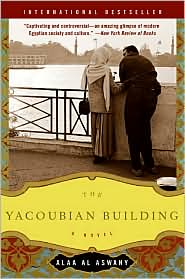 The Yacoubian Building is a true blockbuster—“the best-selling novel in the Middle East for two years and the inspiration for the biggest budget movie ever produced in Egypt,” according to National Geographic. American readers coming to this novel will find it a vibrant and descriptive primer illuminating the various forces in contemporary Egypt that affect its current political climate. It is also a thoughtful analysis of why certain forces are as influential as they are today—the movement for democracy, the growing Islamist counterculture, the power of the sheikhs and their differences in scriptural interpretation, the inbred culture of the military and the police, the student movements, and, most of all, the long-term influence of generations of poverty.
 cians who took over after the revolution of 1952, when the wealthiest citizens lost much of their property and their investments. The beautiful boutiques on the ground floor are now more plebian retail outlets, and the bars and cocktail lounges there now must hide their alcoholic inventory and make payoffs to stay in business.
 cripple who has raised three daughters and who helps support his brother, is secretly stashing away funds to buy one of the iron rooms on the roof. Taha, the son of the doorman Shazli, having been a conscientious and extremely hardworking student, is preparing for the police academy, a job he’s wanted all his life. Also in the Yacoubian Building are Hatim Rasheed, a gay newspaper editor, and his lover; Hagg Muhammad Azzam, very wealthy, who is believed to be involved in drug dealing; Kamal el Fouli, a law professor who is also a corrupt.
 abuse because they need the money. Always in the background is the contest of wills between those who wish for true democacy and those committed to an Islamist future.
 e cry from an unnamed speaker, “age eleven years and two months,” reflects the angst of a child whose whole life has turned inside out through decisions he has made himself, decisions that seemed ideal when he made them but which, as is typical of childhood decisions, have brought consequences he never expected. Israeli author Amos Oz’s novella about childhood in 1947 Israel bursts the bounds of its setting and achieves universality through the wonderfully observed character of the child, his self-created predicaments, and his intelligent commentary about life and change. The feelings of the speaker toward adult authority, especially his father, will resonate with readers.