“The legend of El Dorado pales in comparison to the reality of Guyana’s resources.”
 Long thought to have been the source of the El Dorado legend, and home of what was once the largest open-pit gold mine in South America, Guyana is quickly becoming a pioneer in wildlife conservation and ecotourism in South America. Birding trips near the capital of Georgetown can lead to the sighting of more than 50 varieties of birds in just an hour or two. The Kanuku Mountain sanctuary, inland, is home to more than three hundred fifty bird species, and the country as a whole is home to over eight hundred bird species. Well over two hundred mammal species, many of them unique, populate the three climate zones–forest, savannah, and coastal.
 To prevent the loss of habitats for these birds and mammals, some areas of the country are now under government protection, especially in the Kanuku Mountains and in the northernmost beach areas which serve as breeding grounds for several rare turtle species.
One of the reasons that ecotourism is being promoted is that Guyana, unlike Venezuela and other Caribbean-facing countries, has no white sand beaches, eliminating the possibility of large-scale beach resort development, though its placid rivers and rich flora and fauna have recently made it a fascinating cruising destination for small boat owners. Its nearly three hundred unique flowering plants and over five hundred species of orchids are unparalleled in beauty.

Aquaculture in Guyana
First inhabited twelve thousand years ago by people who arrived from Mongolia, Guyana became the home of their descendants, the Amerindians, a culture which remained intact until the arrival of Spanish explorers in the sixteenth century, followed by African slaves brought in to work in the sugar industry, and later the Portuguese, French, Indian, Chinese, Dutch, and British colonizers and settlers, all of whom contributed to a melting pot culture. Independent from the British since 1966, Guyana is the only English-speaking country in South America, “a land of contradictions and superlatives” boasting, among other features, the tallest wooden building in the world, the highest single-drop waterfall, the world’s largest freshwater fish, the largest undeveloped rainforest left in the world, the world’s largest spider–a bird-eating spider with an eleven inch leg span–and the world’s largest bat–with a one-meter wing span!

Birding trips can take ornithologists into the interior to places like Kaieteur Falls
Gorgeous photographs accompany the fascinating history of Guyana in this well-written text, which dramatically illustrates the country’s potential for growth, along with its need for better infrastructure. The country has some problems in and around the cities with unemployment, underemployment, and the underdevelopment of major industries there, and the government recognizes these need to be addressed. In the countryside, however, agriculture is already a major industry, and freshwater aquaculture and ecotourism could become major industries there. The Guyanese people, are energetic, culturally diverse, and forward-thinking, and they are already making strides toward protecting their immense natural resources and preserving the environment, while still developing viable and self-sustaining industries that benefit the entire nation. Hats off to Guyana!
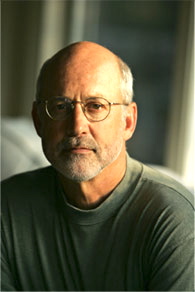
Notes: The author’s photo appears on http://www.stabroeknews.com
Aquaculture culture in Guyana: http://farmertofarmer.blogspot.com
Birding trips can take ornithologists into the interior to places like Kaieteur Falls: http://homepage.mac.com
 gins his story as a teenage busboy at a rural hotel, progresses to waiter, and eventually to successful hotel owner. It gives nothing away (and the book cover itself includes this summary) to say that when the Czech government falls to communism, Ditie ends up working the roads in a mountain village.
 Ditie is a delightful story-teller, using the casual, almost innocent language of a young boy at the beginning and becoming philosophical and contemplative by the end. Hrabal’s sensitivity to small details and his accurate depiction of real people responding to real situations in sometimes odd and often darkly humorous ways make this sometimes satiric novel a delight to read.
 takes a new, darker turn, when Ditie, labeled a German sympathizer for his relationship with the German woman he later marries, leaves Prague to live in the mountains at a breeding station the Germans have established to develop a “refined race of humans.” Lise, his wife, becomes commander of the nursing corps and travels widely, while Ditie remains behind. When Lise returns from Warsaw with a small suitcase full of valuable stamps, confiscated from the Jews, they both know that their financial futures are secure.
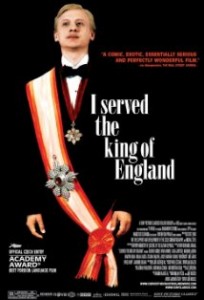 By turns hilarious and poignant, satiric and sensitive, the novel depicts many aspects of Czech society and culture, but it is, above all, the story of Ditie, in many ways an everyman. With symbolism throughout, and a repeating character, Zdenek, the headwaiter who “served the King of England,” who appears at every crossroads in Ditie’s life, the novel is more than a comic romp. A record of a time, place, and culture, it is also Ditie’s meditation on his life and his role, if any, in the wider world.
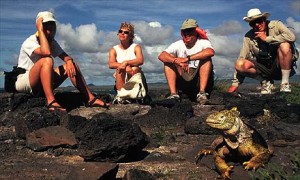
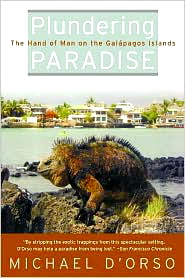 While these images may have been true forty years ago, when small tour boats brought the first tourist-adventurers to the islands, they are far from true now, according to Michael D’Orso, who made a number of visits and spent many weeks on the islands from 1999 – 2002. Located 600 miles from Ecuador, which both claims and governs them, the islands have experienced devastating changes in the past ten years, and some real crises in the past three years. Here D’Orso comments on the crises he’s observed, all of which threaten the very existence of this priceless biological resource and natural laboratory.
 resource which they inhabit. In recent years, however, the handful of families which have lived there for generations have been inundated by 20,000 newer immigrants, mainly economic refugees from the Ecuadorian mainland, all wanting a piece of the tourism pie and not caring what they have to do to get it.
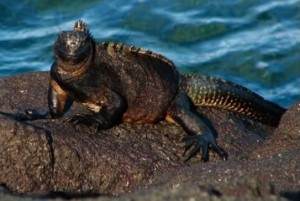
 depends, and some formerly lush areas are now denuded. The wanton flouting of fishing regulations, both by the new immigrants and by the government, and the failure of the authorities to prosecute violators have led to the continued harvesting of sea cucumbers and other marine life, willy-nilly, while fishing boats with long-lines up to 75 miles long continue to hook and kill protected species. Leaky, never inspected oil tankers, sometimes owned by highly placed officials, carry petroleum to the islands, and the first major oil spill has already occurred. Many of these tankers, like the one responsible for the recent leak, carry bunker fuel, almost raw petroleum, which is so heavy that it sinks to the bottom before it can be contained, leaving the oil and the permanent damage from this latest spill underwater, unable to be calculated.
 Jack Nelson, U.S. Consulate warden, whose family was one of the earliest to settle in the islands, tells D’Orso that it’s not the tourists who are the problem. It’s the people and businesses that “have flocked to the islands in pursuit of the dollars washing off those tour boats [that] are the agents of destruction.” These people have resorted to violence. So determined is the most recent batch of immigrants to undermine environmental control that they have brought in thugs, “lobster mobsters,” to help them gain a freer hand to mine the marine riches of the islands. Recently, these men physically destroyed the National Park and Darwin Station offices, along with the homes of the employees, even ripping out the toilets. The government’s response? Extending the fishing season, as the protesters demanded.
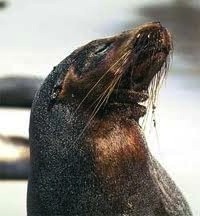 With the fall-off in tourism as a result of September 11, the economy of the Galapagos is now feeling significant economic effects. The demands to reduce the environmental regulations even further are getting louder, as the “cash cow” of tourism seems to be vanishing, and the current Ecuadorian President seems to be listening to the demands to relax controls even more.
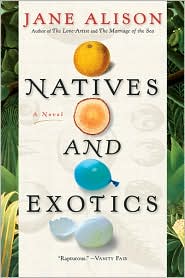 es” and “exotics,” terms often used to describe the relationship of plants to their environments, also refers, in this novel, to the characters who populate it, since all of the main characters live in foreign environments which have their own native populations. The Forder family, in the first of three major story lines, is on assignment in Ecuador in 1970, where the father works for the US State Department. Rosalind Forder, the mother, and Alice, her daughter, are doubly displaced since they are originally from Australia.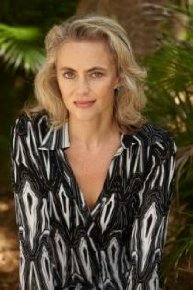
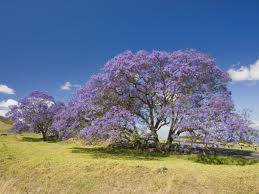 Alison is first and foremost a novelist telling a good story, however, and she does not become polemical, softening her message through the love that some of the characters feel for the environment and through sensuous, lyrical passages of immense beauty. Young Alice loves the natural world in Ecuador—”She felt opened up and seared…all at once she was ripped open; all that light and color poured into her. It could not be encompassed by words such as love or like; it was moving and growing and green and live, even the ground smoking, steaming.”
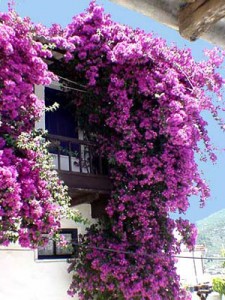 Her descriptions of geological processes and eras are so vivid the reader is transported to a different world, making the contrasts effected by civilization more strongly felt—”Far away, in the jungle or near the coastal plains, tropical trees were being cut down to make room for the [Pan-American] highway and pipeline, and soil that was loosened by the removal of roots began to slide, great mud slides that covered villages completely so that you wouldn’t know anything had ever been there. Just as living things had once been covered by silt and over millions of years transformed, but now rose again, bubbled up warm and sometimes flaming, pure vaporous energy, inanimate life.”
 A powerfully descriptive book with a theme of particular relevance today, Natives and Exotics is a memorable novel with believable characters who often try and equally often fail to do what is right. Her displaced characters and their difficulties in adapting to their lives humanize her themes, broaden her scope, and put man into a geological perspective—as a relatively new but dangerous species which, nevertheless, has the capacity to learn from experience.
 ws between the horrific and the hilarious. Surprising in his ability to wrest unique images from universal experiences, Novakovich writes with such clarity and directness that the reader immediately identifies with Ivan in his predicaments and empathizes with him as uncontrollable forces buffet him throughout his life.
 eventual marriage, fatherhood, employment, and decision to engage in “preemptive adultery” lead to further absurdities (and some long-standing enmities) as he ages into his fifties. Having studied philosophy, Ivan continues to look for meaning in life throughout his adulthood. Often engaging in his own religious debates, he searches for “a chance to think something essential,” something which would “give him the sensation of being alive.”