“When I, just yesterday, look
and recognize myself, me Juan Nobody,
and today, Juan Somebody
I have everything today…
I have, let’s see,
the pleasure of strolling through my country,
master of everything within it,
with things at hand that
I didn’t or couldn’t have before…”
—from Nicholas Guillen, “Tengo,” required reading for every Cuban school child.
Set in 1994, w hen Cuba allowed its citizens to leave the country for the United States on anything that would float, Ruins, by Achy Obejas is a touching, close-up look at one man and his family and how he represents the life of the failed revolution of 1959. Like his countrymen, Usnavy Martin Leyva, named for the ships outside his mother’s house near Guantanamo Bay, has always lived in the shadow of the United States, ninety tantalizing miles away. Unlike many of his contemporaries, however, Usnavy truly believes in the revolution and in the revolutionary songs sung by elementary school children.
Even now, two years after the Russians have abandoned Cuba, taking away with them the last of their meager financial support, Usnavy believes in the future, though he and his neighbors are starving. His recent discovery that their neighbor Rosita is selling highly spiced, marinated “meat” sandwiches that actually consist of pieces of blanket that she has marinated until they start to fall apart, shocks him, and he is even more shocked when he finds that his desperate wife has bought one of these sandwiches to feed to their starving fourteen-year-old daughter.

An honest man working at a bodega where the shelves are bare and he has to tell people with ration cards that there is no bread or eggs or milk, he is fair to all, not rewarding friends at the expense of the rest of the poor. Though he has friends who have offered him a chance to escape with them to the US, he refuses, telling his best friend that “This is my dream,” as he watches his friend’s raft vanish “into the bright nimbus of dawn.”
The brightest spot in Usnavy’s life, apart from his daughter, is an enormous multi-colored dome lamp, a huge lamp anchored to the ceiling of his tiny house, so big that if the wind blew it, it would hit the side walls. Inherited from his mother, the lamp may be a Tiffany lamp, but Usnavy has never sought to find out—he loves it, and its provenance and history do not interest him.
On the night that his best friend departs for the US, Usnavy pauses on his way home to Old Havana from the coast. Some of his neighbors are scavenging at a collapsed construction site. Repelled by the activity, he is nevertheless hypnotized when he sees some colored glass winking at him from afar. Carrying his own bike and the one his friend has bequeathed him for his daughter, he locks them together in order to dig at the site of the beautiful glass reflections, and finds a small lamp, perhaps a Tiffany lamp, broken, but interesting, and possibly valuable enough to bring him a few dollars cash. Exhilarated by his discovery, he is brought down to earth when he sees two men in the distance carrying off his bicycles, his only means of transportation.
 His quest to find parts to fix the little lamp brings him into contact with glass artisans, and he (and the reader) gradually learns the history of Louis Tiffany and his relationship with the island. Tiffany was hired to decorate the Presidential Palace, now the Museum of the Revolution, but the obvious addition of a major Tiffany lamp at the entrance of the palace never occurred. If the lamp had ever been made, in fact, it would be the “Cuban Holy Grail.” In the meantime, Usnavy learns that many of the “Tiffany Lamps” that are so valuable were actually made by counterfeiters in Cuba, who took glass making to new heights, sometimes more effectively than Tiffany himself. Usnavy quickly determines that if he can just fix and sell the little lamp, he may be able to get enough money to buy a bike for his daughter.
 Poet Achy Obejas, born in Cuba but raised in the US, creates a vibrant, and sad picture, of life among the Cuban populace through Usnavy, her Everyman. The emotions conjured in this book are intense, though the action is limited to the everyday life of Usnavy as he tries to live a real life within a revolutionary framework that he will not admit has failed him. Because of its intense personal focus, Usnavy’s emotional struggle resembles drama more than typical fiction, and it is easy to imagine the six parts of this novel as six scenes from a play—one which ensnares its audience in the life of a man trying to keep believing in a dream which has failed, an experience which can only be evaluated in terms of classical tragedy. With its compressed imagery and symbolism, and its dark vision of life as it may still exist today, Ruins by Achy Obejas is a memorable addition to “Cuban noir.”
Notes: The author’s photo appears on http://www.penfaulkner.
The former Presidential Palace is now the Museum of Revolution: http://en.wikipedia.org
Louis Tiffany was hired to create a stained glass entrance to the Presidential Palace in Havana, perhaps something that resembles this entrance to the White House in 1882. http://en.wikipedia.org/wiki
 poverty-stricken Laotian society in which people eat virtually all insect and animal life, Montgomery attempts to track down a golden bear with Mickey-Mouse-type ears and a black mane, thought to be a variety of moon bear, and unlike any other bear known to science, possibly “the scientific finding of a lifetime.”
 A writer, rather than a hard scientist, Montgomery is often lyrical in her descriptions, romantic (some would say excessively so) in her observations and imagery: “Emerging from the deathly still of hibernation, out of gravelike dens, bears rise, Christlike from the dead.” She tends to anthropomorphize her subjects–a bear “reminded me of a street waif,” a civet “stared at us defiantly,” and a pleated gibbon was “stunned and hopeless.”
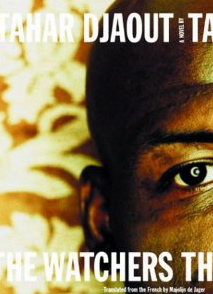 Recreating the traumas that Third World citizens face every day, Djaout offers vivid pictures of their complex but fragile lives. Here, in an unnamed country, presumably Algeria, government bureaucrats are concerned only with protecting themselves, their jobs, and their kickbacks, their fear of change so ingrained that any hope of modernization and real progress is squelched. The average citizen tries to remain anonymous, making do in a society which does not reward excellence. As one bureaucrat explains, “…the words ‘creation’ and ‘invention’ are sometimes condemned because they are perceived as heresy, a questioning of what exists already…of the faith and the prevailing order.”
 y affecting to read a book which is not in its final form because its Algerian author was assassinated in 1993 at age thirty-nine. Doubly moving for the reader is this book’s warning cry against mindless practitioners of fundamentalist oppression, the very people responsible for the author’s death in Algeria. Djaout clearly knew he was in danger, knew why he was in danger, and knew why he, along with other writers and artists, represented a threat to single-minded fanatics in his country, yet he continued to create, leaving behind this final book, a legacy not just to compatriots who might feel like lonely soldiers against intolerance but to lovers of books throughout the world who sometimes take for granted the power and glory of a free press.
 is the powerful story which the reader cannot help but conjure of the author’s own travails as a writer trying to find an outlet for his creativity within a similar society, and his eventual assassination. Equally compelling is the interior story the reader cannot help but create, and which I believe the author expected his reader to create, of what his own life would be like under similar circumstances.
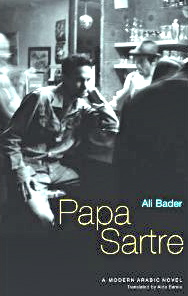 n unnamed speaker is contacted by a gravedigger and his “depraved friend” to write a biography of the recently deceased philosopher Abd al-Rahman, “the existentialist of Baghdad,” he is told that the biography will be financed by a wealthy merchant and that they have documents to give him for his research. Though the writer knows that these people are scoundrels, he is so destitute that he agrees to accept the job. Constantly looking for valuable information which will eliminate the possibility of distortion, the speaker begins his research. Ultimately, one of his financial backers, a trader in art and antiques, tells him just to “present [me] with some endings, and [I] will choose one.”
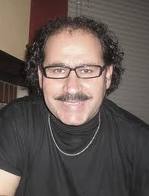 sires of the well-off Abd-al-Rahman, who is always seeking the goal of “nausea” through wine, women, and self-indulgence. Whenever he is invited to write an article for publication, he turns it down with the excuse that “Whoever writes finds something worthwhile, a meaningful life. How can I then go on believing in a meaningless world?” They believe in constant talk, not writing – conveniently rationalizing their behavior in terms of their search for “nausea.”