The Heart of Darkness has never been so dark.
 It is 1897, and a motley group of British functionaries is running a concessionary station, only marginally successful, in Ukassa Falls in the Congo Free State, trading and exploring, mapping new areas of the country for further exploration, and using natives to strip minerals from quarries. Individually, however, their primary mission is protecting themselves and their jobs, while keeping an eye on a more lucrative Belgian enterprise across the river and on the slave-trader Hammad, who fancies himself the potential emperor of a future, native-run country. When gunfire signals the arrival of an unexpected visitor, Capt. James Frasier hopes it means the return to British jurisdiction of his friend, Nicholas Frere, who, missing for 51 days in the wilderness, is now in Belgian custody, awaiting trial for killing a native child.
At an agonizingly slow pace, Edric builds the tension and an ominous sense of mystery. Though he readily admits his guilt, Frere refuses to defe nd himself, simply accepting whatever fate has in store. He is almost certain to be turned over to local authorities in Brazzaville for trial and hanging, eventually, but he will not tell anyone, even Frasier, the circumstances of the child’s death.
Edric’s characters come to life through their conversations, conflicts, and actions, rather than through passive descriptions or long biographies. The reader, too, must be active, accumulating important details on his own by observing the action, some of it intense, and participating in it, however reluctantly. Several grim and explicit scenes of atrocity attest to Ed ric’s abhorrence of the mistreatment of indigenous people (the subject also of his novel Elysium, set in Tasmania) and of the destruction of birds and wildlife. His opposition to colonial arrogance, religious fanaticism, mindless bureaucracy, and lock-step adherence to rules and regulations underlies all the action here.
Describing the wilderness as “more permanent and invincible than anything else I can imagine, something as potent and as indestructible as evil or truth itself,” Edric transmutes it into a living force which dramatically affects all its inhabitants. The river, with its traffic, both unites and divides, and when, at flood tide, it scours its banks and destroys pilings and jetties, one cannot help but see parallels with the interrogat ions of the steadfast Frere. Images of light and dark and echoes of Heart of Darkness are constant, and when “the horror” is finally revealed at the end, it out-horrors anything Conrad ever dreamed of. With a conclusion full of literary pyrotechnics, this is a chilling recreation of the worst nightmares of colonialism and of man’s inhumanity to man.
Notes: The author’s photo and a terrific interview appear on http://www.thisishullandeastriding.co.uk
Henry Morton Stanley’s drawings of the “founding of Congo Free State” in 1885, may be found in http://commons.wikimedia.org
Boyoma Falls in the Congo are a potential source of power: http://fizzyenergy.com. It has seven sets of waterfalls, with the average height of two hundred feet.
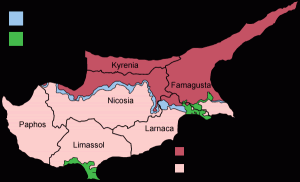
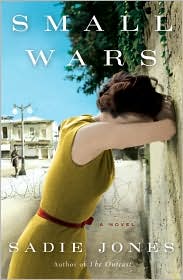 ays of the British Occupation of Cyprus were times filled with revolutionary zeal and guerilla attacks by Cypriots demanding independence. For the British, Cyprus represented one of the last colonies in the Empire, and they believed that its loss at the hands of “a few insurgents” would cause further damage to Britain’s waning international prestige. By January 1956, the British and the Cypriots were in their third year of a terrorist “Emergency.” Using every tactic imaginable, the insurgents were constantly on the attack. The British actually had to go so far as to attach vertical poles to the bumpers of their jeeps to break piano wire that insurgents stretched across roads in an effort to behead British soldiers. The civilian wives and children of British officers were not safe, either. Bombs were lobbed into their homes, and the local police station in Limassol was burned.
 d they move into base housing. A by-the-book officer with deeply held values and a total commitment to his country, Hal has a tough time, emotionally, when some of his overly “enthusiastic” soldiers use their search assignments to avenge themselves on the insurgents by ransacking and destroying homes of possibly innocent citizens. As the Emergency becomes more pressing and hostilities increase, Hal’s wife Clara, a busy mother, is left alone for days on end, with only the other wives and their children for company. Though she loves her husband, she resents his absences and failure to communicate and feels justified in believing that he is more married to his job than to her, a no-win situation for both of them leading to additional misunderstandings and simmering resentments.
 battles with insurgents, bombings, and life-or-death pursuits through the mountains in an effort to locate guerilla hideaways, but he also faces emotionally and intellectually challenging situations within the structure of the military itself. Hal, a man with a conscience, is appalled by the torture of young teenagers by the Special Investigations Branch in an effort to gain information from them. Water-boarding is common, as are beatings, and maimings. (“It isn’t an extreme method of interrogation to nearly drown a man if you are saving lives,” one officer declares.) When a military interpreter tells Hal about three soldiers he has seen committing rape and a cold-blooded execution–war crimes–Hal follows procedure–and then learns that things are not as clear-cut as he has always believed. “Naked corpses with their hands cut off, vichyssoise for lunch, rumours of a new governor, the illegal torture of a teenage boy–if you reflected on it, thought Hal, one topic was pretty much like any other.” Eventually, Hal and Clara must examine their consciences to see if they have a shared destiny.
 on as there’s a bomb, an earthquake…or a riot, I call the travel agent,” Tahir Shah says, explaining his thirst for adventure. In this account he searches for King Solomon’s legendary gold mines, armed with books and research he acquired in preparation for his trip and a “treasure map” he purchased in Jerusalem. King Solomon had built a lavishly appointed temple there three thousand years ago, using gold which the Queen of Sheba had brought from Ophir. No one knows from what direction she came or where the legendary Ophir actually was, however, with different researchers claiming that it was in Zimbabwe, South Africa, or even Haiti or Peru.
 The author keeps the reader constantly intrigued with the fascinating characters he meets during his many side trips. When he hears that hyenas guarded Solomon’s gold, Shah travels to Harar, Ethiopia, seeking out Yusuf, the hyenaman, who handfeeds wild hyenas each night so they will not steal the town’s children. He meets Noah, a powerful miner at a dangerous, illegal mine; Rachel, an elderly woman, who is the last survivor of Beta Israel, the group of Ethiopian Jews who were airlifted to Israel; a “miracle man,” who performs four miracles; and Kefla Mohammed, leader of a salt caravan, who weeps when he must euthanize one of his camels. And Sha
 h also includes wonderfully revealing photographs of these people and the artifacts he finds.
 rred to him. His unflagging sense of adventure is admirable, however, and he brings fascinating and unique Ethiopian cultures and people to the attention of readers who would not otherwise be exposed to them. In providing rare glimpses of a world which few tourists have seen, he provides a service for which we can all be grateful.
 h is dense, dramatic, and saturated with images of violence of all kinds, Vargas Llosa reconstructs the final, tumultuous years of Rafael Trujillo’s despotism in the Dominican Republic.
 The heavily masculine atmosphere, redolent of whiskey and sex, and full of dramatic scenes of intrigue, sudden violence, graphically depicted torture, and casual murder, reflects the realities of life under Trujillo–nothing is gratuitous or irrelevant, however ugly it may be. In fact, the book’s only “soft” feelings are elicited by Urania’s story and her long-term rejection of her father after his betrayal of her, thirty-five years ago, when she was fourteen. While this is the least “important,” and perhaps least effective, of the story lines, it gives a necessary feminine perspective on the violence and on Trujillo’s government, and it keeps the reader from becoming overwhelmed by the sheer weight of the violence in the other stories.
 The scope of this novel is large, and it is well worth the reader’s effort to concentrate, during the first hundred pages, on the large cast of characters and their interrelationships. All these characters are integral to the final outcome, and as they rotate among the three story lines, the reader benefits from increasingly broader and more subtle portraits which emerge from the new points of view, making the conclusion and the political aftermath of the assassination especially intriguing. This is a beautifully developed novel of power and its excesses, presented lucidly and unambiguously. I was stunned by its power.
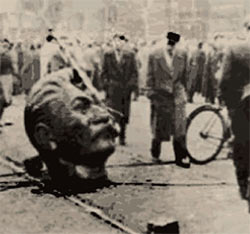
 Zsuzsa Bank, in her debut novel, accomplishes a remarkable feat. She writes a novel with virtually no plot at all, yet she makes us care about her characters and their lives. It is 1956 in Hungary, a time of enormous social upheaval. Living conditions are poor, workers are discontented, journalists are upset at their restrictions, and the governing Communist party is doing nothing to ameliorate the situation. When a rebellion, involving many students and young people breaks out and fighting begins, better-armed Soviet troops enter and start shooting. Over 250,000 people leave everything behind to seek new lives in other countries as refugees. One who leaves without any warning or goodbye is Katalin Velencei, wife of Kalman Velencei, and mother of young Kata, about eight, and Isti, about six, all of whom, abandoned, remain behind.
 Katalin (the missing mother), and the various characters who play roles in the lives of Kata and Isti as they move from family to family. Their grandmother does get letters from Katalin, who is in Austria and then Germany, and she reads them to Kata and Isti, but they do not hear from Katalin directly, and they clearly mourn her loss throughout the entire novel. The combination of their mother’s absence and the country’s own pessimism creates days of gray inactivity, and the events which are the “excitements” in their lives—seeing snow, riding in a car, reading a letter, visiting a train station, a wedding—are events of interest primarily because they break the monotony of the days.