“The consciousness of humans differs from that of the animals in two main ways, knowing fire and knowing death.”
With Frie ndly Fire, A. B. Yehoshua, one of Israel’s most honored contemporary novelists, creates a magnificent novel filled with real, flawed characters who come alive from the first page. The alternating narratives of Daniela Ya’ari, who is visiting her brother-in-law in Tanzania, and her husband Amotz Ya’ari, who remains behind in Tel Aviv, reveal their relationships to each other, their family, their culture, and ultimately their country. Daniela has been protected by Ya’ari (as he is usually identified) for her entire marriage, but she has traveled to Tanzania alone this time. Her older sister Shuli died two years before, while Shuli and her husband Yirmiyahu (Jeremiah) were living in Tanzania, and Daniela, who has never really grieved, wants to come to terms with her death.
Yirmi has suffered a double loss. He has lost not only Shuli but also their son Eyal, a soldier who was killed in the West Bank by “friendly fire.” Yirmiyahu refuses to return to Israel, wanting a rest from “the whole messy stew, Jewish and Israeli…a time out from my people, Jews in general and Israelis in particular.” Working on a remote anthropological dig, he feels most at home with the African researchers.

Daniela’s husband Ya’ari, who runs a Tel Aviv engineering company, needs to be in control, and his inability to control the vagaries of nature (and other people) frustrates him. In an unforgettably described passage at the outset of the novel, Ya’ari has been summoned to correct the unbearable moaning noises which emanate from an elevator whenever the wind blows, an engineering problem that Yehoshua actually manages to make exciting. Ya’ari is also facing family issues involving his elderly father, his son Moran (who has repeatedly refused his call to army reserve duty), Moran’s gorgeous but irresponsible wife, and their two unruly children.
The action, which takes place during one week, opens on the second day of Hanukkah, the eight-day “festival of lights,” with each chapter representing one of the eight candles. Though Ya’ari and Daniela observe the holidays, Yirmiyahu, in Tanzania, prefers the “friendly [camp]fires” of the dig in Africa to the “friendly fires” of the Hanukkah candles. Ya’ari’s children are also less observant. The use of fire as a symbol sometimes combines with religious symbolism. Daniela discusses with Yirmi the Book of Jeremiah (Yi rmiyahu), a prophet who predicted God’s judgment on Jerusalem. Yirmi read it, ironically, after Eyal’s death in Jerusalem by “friendly fire,” and when he then read the Song of Songs, a book about the fires of love, the contrast overwhelmed him, and he gave up organized religion forever for the animism of Africa.
Friendly Fire goes beyond Israeli and Jewish issues to touch on universal issues affecting all of humanity. Intensely realized, thoughtful, and stunning in its unique imagery and symbolism, this unusual novel deals with seemingly everyday issues, offering new insights into the human condition–life, love, and death–while fire serves throughout as a universal symbol of man’s humanity and his evolutionary differences from the rest of the animal world. Readers familiar with Judaism and Israeli history may appreciate some aspects of this book more than other readers, as may those who practice a strong religious faith, but Yehoshua is so skillful at developing rounded characters that most readers, regardless of background, will find them memorable, if not touching, as they deal with their everyday lives.
Notes: Also reviewed here: Yehoshua’s A WOMAN IN JERUSALEM and THE RETROSPECTIVE
The author’s photo appears on http://www.sixthandi.org
Two volunteers work on an archaeological dig in Tanzania: http://www.msnbc.msn.com (Photo credited to Earthwatch)
 e colors, scents, and sounds of exotic Burma and Malaya in the 1860’s, this novel comes to life within the Glass Palace of the royal family and in the streets of Mandalay, which are sometimes the only “home” of its ordinary citizens, in the final days before Britain’s voracious, imperialist juggernaut shoots its way up the Irrawaddy River.
 ate in the important historical events which occurred in this part of the world, Ghosh does a remarkable job of personalizing these events and making them memorable for readers (especially if they, like me, have little knowledge about these countries). The action, especially during the World War II invasion of Malaya by the Japanese, is vivid and dramatic, as people try to flee the shooting in Malaya but find roads closed to Burma and Siam.
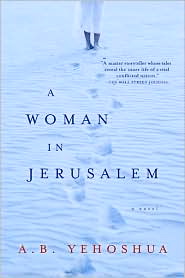 A Jerusalem bombing results in the death of an unidentified forty-eight-year-old woman, after she has been comatose for two days. Unvisited at the hospital during the last days of her life, she remains, unmourned, in the local morgue for more than a week, until a pay stub finally traces her to the bakery where she worked. When an aggressive newspaper reporter breaks the story of the unmissed and unmourned employee, the bakery’s eighty-seven-year-old owner is both embarrassed by the publicity and furious at the story’s accusations that the woman was treated callously by the bakery’s management. For the owner, an apology on behalf of the company is not enough. He assigns the human resources manager to find out who the woman is so that “a more tangible expression of regret from himself and his staff, a clearly defined gesture” can be made on her behalf.
 paper publicity, all negative, leads the bakery owner to insist on memorializing Yulia and to seeing that she has a dignified funeral, and he eventually assigns the resources manager to escort her body back to the Russian village she came from so she can be buried there. The timid human resources manager soon learns more than he ever bargained for about Yulia, life, bureaucracy, and ultimately, about the human resources he himself possesses.
 ccept the coffin, and as he travels farther and farther into the bleak interior of the Russian steppes, a terrible winter storm approaches. The manager spends time living underground while the coffin remains unburied, out in the open. The action soon develops into a full-scale slapstick comedy of noir elements, with the manager announcing that “Atonement was turning into lunacy.”
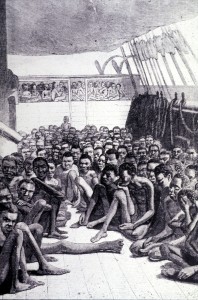
 s, a “blackbirder” leaves Calcutta and sets out across the Bay of Bengal, carrying “indentured migrants,” many of whom will become the equivalent of slaves, the seas darken and become stormy. As the ship tosses and conditions deteriorate, the ship soon becomes a microcosm for life on land, full of tumult and unexpected twists of fate, and each person’s heart is laid bare. Everybody aboard is escaping from something, so anxious to put their problems behind them that they see no choice but to submit to the atrocious living conditions and sometimes sadistic overseers aboard the Ibis. Life aboard the ship is as stratified and as subject to both cruelty and courage as the occupants have experienced on land, but as the ship heads for new ports in foreign lands, its occupants still see it as the only possible escape from their past and its problems.
 picts the lives of these characters and their acquaintances in extravagant and thoroughly researched detail, bringing to life Deeti’s misery, the expectations for her within her husband’s family, the customs which she must honor, and the life which her six-year-old daughter must expect (including marriage within three or four years). Zachary Reid, aboard the Ibis, becomes the protégé of Serang Ali, the leader of the lascars, those native seamen who perform the hard manual labor aboard ships. Though Reid’s own background is not so different from that of the lascars, he is a foreigner, a man who has no known caste within Indian society, and Serang Ali treats him as a superior to the lascars, all of whom are either low-caste or caste-less. With the support of the lascars and Serang Ali, Zachary Reid has the potential to progress to officer status, something impossible for him at home, and as he shares his thoughts about his own life, he is also commenting on the human condition in general.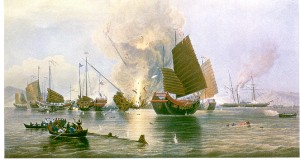
 lf as a “panther in the basement,” much like Tyrone Power in a favorite old film, Proffi, the 12-year-old son of activist parents in Jerusalem in 1947, is a member of an “underground cell” which he and two friends have formed. Their objective, like that of their parents, is the ouster of the British, who have been mandated by the UN to set up a Jewish homeland. Though the children enjoy “spying” and see themselves as glorious heroes, their plans of attack are distinctly childish. When Proffi finds himself drawn to Sgt. Stephen Dunlop, a gentle, shy British soldier from Canterbury, who wants to learn Hebrew and to teach Proffi English, Proffi justifies this friendship as his chance to probe for information for his own “secret DOD agency.”
 nstant curfews, the British are searching houses for weapons, his parents are involved in an underground movement, and he himself is beginning to become interested in girls–at least in Yardena, the nineteen-year-old sister of Ben Hur. As we come to know her, the people of the neighborhood, and the people important to Proffi, such as Mr. Gihon, his teacher, we see Proffi’s knowledge and insights to be those of a twelve-year-old child whose belief in a bright future is absolute.