“Why do you write? Why do you write the way you do? Are you trying to influence your readers, and, if so, how? What role do your books play? Do you constantly cross out and correct or do you write straight out of your head? What is it like to be a famous writer and what effect does it have on your family?…And by the way, how would you define yourself?”
When the Author, the ot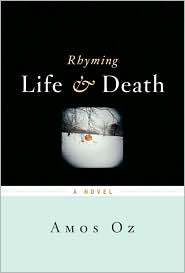 herwise unnamed main character of Amos Oz’s newest work, arrives at a literary evening at the Shunia Shor Community Center in Tel Aviv as the special guest, he expects the usual sorts of questions from his audience. What his audience never suspects is that the author, while answering their sometimes intrusive questions about himself, is secretly inventing names and imaginary lives for them, connecting them to each other, and even continuing his musings about them well into the night after the meeting is concluded. Approximately thirty-five characters, either in the audience or peripheral to the stories the Author is creating, dominate the Author’s interior life, even as the real humans behind these stories are talking with him about his work. When the audience leaves the community center, they are unaware of their continuing lives in the Author’s imagination.
Among these characters is Tsefania Beit-Halachmi (also known as Avraham “Bumek” Schuldenfrei), an elderly poet who is the author of a collection of poems called Rhyming Life and Death.” The poems themselves echo throughout the book—mostly doggerel—as both the narrator/Author and the book’s author, Amos Oz, explore serious questions of life and death, and eventually some less serious questions of sex and death.
Following the meeting at the community center, the Author escorts the unattractive and painfully shy Rochele Reznik, home after the meeting, hoping for an evening of passion. His failure leads him to explore of the ideas of another invented character, Arnold Bartok, a part-time philosopher who has noted that “It is not life and death that came into the world as a pair, but sex and death.” Death, Bartok believes, “appeared aeons later than life,” when sexual reproduction was created, and it is sex that has led to aging and death. “We simply have to find a way of eliminating sex,” he says, “so as to rid our world of the inevitability of death, and of so much suffering as well.
Taking a modernist approach to writing, Oz plays with the form of the book, creating a wide cast of characters who exemplify the themes which he (and, of course the Author) wishes to explore, issues both serious and tongue in cheek. The attractive waitress at the café where the Author has coffee becomes “Ricky,” whose football-playing boyfriend “Charlie” has also enjoyed the favors of “Lucy,” runner-up in the Queen of the Waves contest, who married the son of Ovadya Hazzam, who won a lottery and is now dying of cancer in a miserable hospital room. Miriam Nehorait, a middle-aged culture lover at the meeting, may have had a relationship with a sixteen-year-old, unhappy and hypersensitive young poet in the audience, who is anxious to have the Author read his poems, and they may have been observed by yet another woman, a neighborhood snoop. Arnold Bartok’s mother, age 86, and paralyzed from the waist down sleeps beside him at night, while Yerucham Shdemati is dying of a blood disease. The lecturer Bar-Orian, widowed twice and living alone, has been abandoned by his only daughter. Life is difficult and usually painful; death is inevitable—and also painful.
 Life and death and love and sex echo throughout the novella, as the Author wends his way through the city after his literary evening, thinking about his characters and not always willing or able to differentiate between his imaginative life and his real life. Twice divorced, he himself is returning to an empty apartment at four a.m. When he arrives, the alarm system of a car is screaming because it “can no longer bear its loneliness.” The man on the other side of the Author’s apartment wall is weeping, and a nightbird is shrieking. When the Author opens the local newspaper before going to bed, he discovers that Tsefania Beit-Halachmi, the author of Rhyming Life and Death, has just died. “Once in a while it is worth turning on the light to clarify what is going on,” he declares simply.
Though the “novel” blurs the boundaries of reality and imagination and leaves a number of loose ends and undeveloped ideas, Oz provides an unusual and creative meditation on his themes and on the transience of happiness, life, love, and fame. Often darkly humorous and ironic, the author offers few glimmers of hope for the future, however. Life is what it is, and though we can escape from reality through dreams and our imaginations, Oz lets us know that sooner or later we must all “turn on the light to clarify what is going on.” It is not much to look forward to. “Tomorrow,” he tells us, “will be warm and humid, too. And, in fact, tomorrow is today.”
Notes: Other novels by Amos Oz reviewed here: PANTHER IN THE BASEMENT, SOUMCHI, MY MICHAEL, A TALE OF LOVE AND DARKNESS , SCENES FROM VILLAGE LIFE, JUDAS
Photos, in order: The author’s photo accompanies a story (in Spanish) wondering about the chances of Amos Oz winning the Nobel Prize for Literature: http://www.justa.com
The street scene at night in Tel Aviv is from http://themusicunderground.wordpress.com
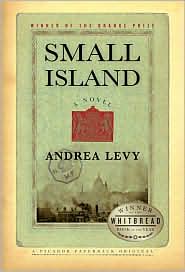 K’s Whitbread Prize for Best Novel, the Orange Prize, and the Commonwealth Writers’ Prize, Andrea Levy’s Small Island has just been released in the US, where it may win as many readers as it has “across the pond.” Set in London in 1948, it focuses on the diaspora of Jamaican immigrants, who, escaping economic hardship on their own “small island,” move to England, the Mother Country, for which the men have fought during World War II. Their reception is not the warm embrace that they have hoped for, nor are the opportunities for success as plentiful as they have dreamed.
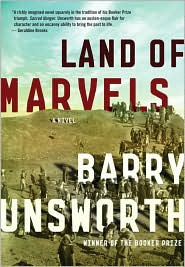 potamia, in the Tigris-Euphrates Valley, once boasted the Hanging Gardens of Babylon, among the Seven Wonders of the World. Highly developed ancient civilizations competed for power there four thousand years before Christ, leaving behind sites of immense archaeological importance as they defeated each other and formed new civilizations. In the modern era, Mesopotamia, now known as Iraq, fell under a succession of foreign rulers, and by 1914, when this novel opens, it was ruled from Constantinople by the Ottoman Empire, which was considered “the sick man of Europe” and ripe for overthrow. Iraq, a vast land of immense natural resources, is there for the picking–and it has no government of its own to interfere with potential exploitation by colonial powers.
 wenty kilometers on each side of the track as the railroad goes “coincidentally” through what appear to be vast oil fields. An American from Standard Oil is there, the French are trying to gain a foothold so that the railroad will not take shipping business from them, and the Russians and the Austro-Hungarian Empire may help finance the railroad in exchange for a piece of the action. With World War I about to break out, the need for oil and chrome ore (to make armor-piercing weapons) is pressing, and European countries are looking to Iraq as a source of materiel.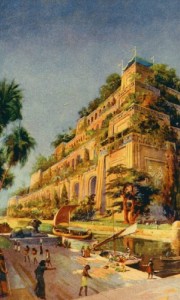
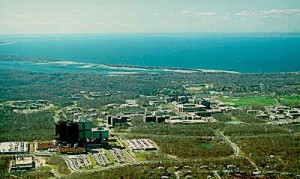
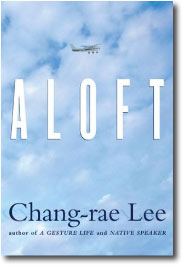 ome Battle, who describes himself as an “average American guido,” has managed to live most of his sixty years “above it all,” never quite engaging with those around him or becoming truly intimate. On weekends he is aloft in his small plane, his “private box seat in the world and completely outside of it, too,” flying alone around Long Island. From the air the island “looks pretty magnificent, the late-summer sun casting upon the macadam of the streets a soft, ebonized sheen” and all the trees appearing “ideally formed and arranged, as if fretted over by a persnickety florist god.” None of the “pedestrian sea-level flotsam” of fast-food throwaway containers, cigarette butts, and advertising circulars is visible from the air, and Jerry loves the “scarily, transcendentally life-affirming” thrill of flight.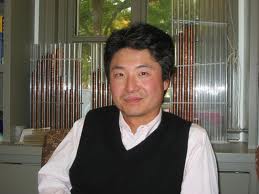
 Korean-born Chang-Rae Lee is a remarkable writer whose prodigious gifts hide in the background behind Jerry, a main character who is not likable, and who is not someone with whom the reader will feel much, if any, empathy. By placing the focus on character, not plot, and telling the story from Jerry’s point of view, Lee creates enormous challenges for himself. He must engage the reader’s interest in a man who is not really interested in much of anything. Now, at sixty, he has much to atone for very late in his life, and if he is to have any epiphany at all, it must be consistent with his personality at the same time that it is satisfying to the reader, who may be frustrated with his behavior. Yet Lee’s novel is successful, and beautifully written, full of felicitous turns of phrase and penetrating observations. His depictions of Jerry and his family strike chords of recognition as he explores the universal questions of how we become the people we are and how we affect the generations which follow. Subtle in its development, and rich in imagery and obvious symbolism, this quietly complex novel offers evidence that even a man as determined as Jerry Battle to remain above the fray must ultimately connect with the earth.
 de the cash registers of a large mall bookstore this week was an entire table of books, arranged attractively for Mother’s Day—all were “Jane Austen books.” Of the fifteen or so books, however, only one of these was actually a book written by Jane Austen. The others, all presumably “books Mother would love,” included: Jane Austen Ruined My Life by Beth Pattillo, What Would Jane Austen Do? by Laurie Brown, Confessions of a Jane Austen Addict by Laurie Viera Rigler, and the unforgettable Pride and Prejudice and Zombies: The Classic Regency Romance – Now with Ultraviolent Zombie Mayhem! by “Jane Austen” and Seth Grahame-Smith. Five or six other books focused on Mr. Darcy in various new adventures.
 Quarterly Review, praising Austen and indicating that “[She] gave away more about how women think and behave than any previous writer had cared or thought right to do.” An anonymous reviewer in Blackwoods was the most perceptive, commenting in 1818 that Austen “went against the grain of time,” which was “the love of historical and…romantic incident,” the subjects popularized by Sir Walter Scott, Lord Byron, and William Godwin. He went on to predict that “When tastes change, she will be one of the most popular of English novelists.”