“The insecurity in this country is enormous. People are afraid. Especially in farming communities like this one. You’ll soon find out that there’s a big hero right now at this end of the country. A man who is applauded behind drawn curtains. The man who saw to it that there was a municipal vote that said ‘no’ to accepting refugees.”
Set i n Sweden in 1990, Henning Mankell’s first Kurt Wallander mystery begins with a dramatic, Raymond Chandler-esque scene. An elderly farmer from Lannarp, an “insignificant farming village” in southern Sweden, awakens at 4:45 a.m. with a sense of unease: “Something is different. Something has changed.” As the farmer gazes at the farm next door, he begins to notice a series of homely, seemingly insignificant details, and he and the reader slowly conclude that he is not overreacting in his growing alarm. When he finally pulls on his clothes and hobbles next door to check on the occupants, he discovers a gruesome scene–his neighbor of forty years lying bludgeoned to death, his wife slowly strangling in a noose. Kurt Wallander, substituting for the absent police chief of Ystad, some distance away, answers the farmer’s panicked call for help and investigates the “methodical violence” of the bloody crime scene.
Wallander is something of a loner these days, his wife of many years having left him. His daughter is estranged. Lonely and depressed, he is drinking and smoking too much, not eating properly, and not taking care of his appearance or his house. He latches onto this case, working overtime, sleeping at the station, often staying up all night on surveillance as he tries to deal with his own issues and solve the case at the same time. He soon discovers that the victim, Johannes Lovgren, is not the innocent farmer he has appeared to be, and as he investigates and follows clues, he and the press quickly conclude that the crime may have been committed by foreigners. Public threats are made against the foreigners by extremists, and Wallander knows that “The [threats] had to be taken seriously. In the past year there had been too many incidents that confirmed that there were well-organised factions that would not hesitate to resort to open violence against foreigners living in Sweden or refugees seeking asylum.”
It is in the examination of these attitudes that this novel is different from the typical whodunit. The country is changing, the author notes, and “soon the entire Swedish countryside will be nothing but suburbs of the big cities…Today drugs are everywhere…Organised crime is widespread in Malmo. The open borders and all the ferries coming in are like candy for the underworld.” As the violence ratchets up, the author examines Sweden’s “open borders” immigration policy, concluding that part of the problem for the populace (and the police) is the haphazard record-keeping at Immigration. No one knows who is in the country, how they got there, in which camps they may be living, and where they go if they leave the camps. A few may be involved in crime, but no one knows who is who, and the entire immigrant population becomes an easy scapegoat for society’s frustrations with changes they do not understand and will not accept. These sociological observations broaden the scope and add immeasurably to what is already an exciting mystery, told in a straightforward narrative style. Comments and observations are included naturally within the context of the story, and they “fit” beautifully, explaining why Wallander thinks the way he does and why he pursues the directions he does.
Wallander works the Lovg ren case for eight months before tying it up, and the many false leads and false conclusions keep the reader involved and interested. Cases that seemed to be connected may not be; suspects who seem to be absolutely guilty prove to have air-tight alibis; and people who seem to be completely trustworthy prove not to be. Wallander himself makes some personal discoveries, but how much he himself can be trusted to remain on the straight and narrow remains to be seen. With the author’s focus on the “big picture” throughout the novel, this mystery has a much broader scope than most other crime thrillers, and with Wallander, the imperfect policeman, managing the case and not-quite-managing his life, it is no wonder that this novel has led to twelve additional novels so far and a popular BBC-Scotland series starring Kenneth Branagh.
Note: The author’s photo is on http://www.zimbio.com
The author’s website: www.henningmankell.com/
The Malmo Ferry, which brings “outsiders” into town—easy scapegoats for whatever goes wrong in society. http://www.travbuddy.com
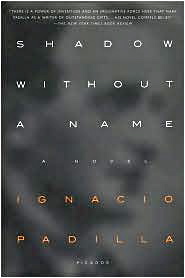 thor Ignacio Padilla creates characters who move like pawns, as if they were pieces in the chess games which are at the heart of the action here–they are often being overtaken by events and supplanted by other men as part of the grand, overall “game” of life. Padilla raises thought-provoking questions about the nature of selfhood here, as men appropriate each other’s names, accept or reject the past which is connected with those names, and hope, ultimately, to change their destinies by living someone else’s life. The reader must constantly question whether each character is who he says he is, and whether he really is who we think he is.
 peaker, is a seminarian in 1918, when he sees “Thadeus Dreyer,” whom he once knew in Vienna as Jakob Efrussi. Another chess game leads to another identity switch. A third speaker, Alikoska Goliadkin, is an associate of Dreyer during his rise to power in the Nazi era, and he connects Dreyer with Adolf Eichmann and with Kretzschmar’s son Franz, who may be part of a Nazi project to create look-alikes of powerful Nazi leaders. The fourth speaker, Daniel Sanderson, is an heir of Baron Blok-Cissewsky, who has left coded information in a chess manual in 1989, explaining some of the final projects of the Hitler era. The Baron, not surprisingly, is yet another of seven incarnations of Dreyer, and as Sanderson investigates the trial and execution of Eichmann and his connection to Dreyer, questions arise as to the true identity of the man executed as “Eichmann.”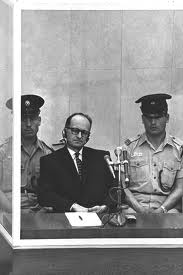
 May Flynn, the daughter of actor Errol Flynn and a beautiful Jamaican girl, has always wondered about her roots. Brought up by her mother and grandfather, and, for four years, a foster family, May is clever and tough from a young age. Always an outsider, she could pass for white, though she is not part of the white world of her father and maternal grandfather. Not part of the black world, either, though she considers herself “colored,” she is often mocked by her dark Jamaican peers. Frequently alone, she enjoys keeping journals, filling them with stories of pirates, inspired by the films she sees at the local cinema and starring Errol Flynn.
 hurricane, Eli is “Johnny-on-the-spot,” arriving in his taxi and becoming so helpful that Flynn regards him as his “long lost brother.” Soon Eli is acting as Flynn’s social secretary, driver, guide, confidant, and real estate broker. Flynn loves Jamaica and its easy way of life, finding it a welcome contrast to the pressures of Hollywood, where he faces legal charges related to his affairs with underage teenage girls. He soon buys a ranch and a hotel in Jamaica, along with Navy Island, a small island one mile off the coast. There he builds Bella Vista, the palatial home where he entertains Marilyn Monroe, Noel Coward, Tony Curtis, Peter Finch, Truman Capote, and a host of other Hollywood stars.

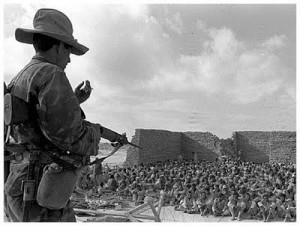
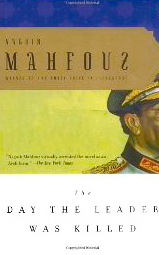 on aspects of Egyptian social and political history in his novels, Nobel Prize-winning author Naguib Mahfouz here depicts three generations of one family as they try to survive the socially tumultuous period between the Six Day War with Israel in 1967 and the assassination of Anwar Sadat in 1981. The loss of the Six Day War in 1967 was a national humiliation for Egypt, which lost the Sinai Peninsula and the Gaza Strip, as a result. Following the death of President Gamal Abdel Nasser in 1970, his successor President Anwar Sadat tried to regain the lost territories with a surprise attack that initiated the Yom Kippur War in 1973, but again Egypt failed to win a strong military victory. Sadat did express an interest in negotiating with the Israelis, however, and the Camp David Accords of 1978 resulted in the Egyptians regaining the Sinai Peninsula in exchange for Egypt’s recognition of Israel and the establishment of normal diplomatic relations, the first Arab country to do so.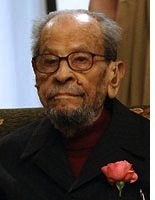
 iew among Muhtashimi Zayed, his grandson Elwan Fawwaz Muhtashimi, and Elwan’s fiancée Randa Sulayman Mubarak, Mahfouz creates a novel which shows the domestic difficulties faced by educated Egyptian city-dwellers as they try to live their lives under this unpopular, less structured new economic system, which has replaced the system with which they have long been familiar. Elwan and Randa have been engaged for eleven years, unable to marry because, though Elwan has attended college and has a job, his salary is too low for him to save enough “key money” to buy furniture and support a wife. Theirs would be a love marriage, but Elwan is making little progress toward their goal. “[Elwan] hurls himself against rocks and clutches at thin air,” Randa notes, miserably. She is angry about “those hollow slogans that the authorities hurl at us,” describing the times as “a nauseating age…Between the slogans and the truth is an abyss in which we have all fallen and lost ourselves.”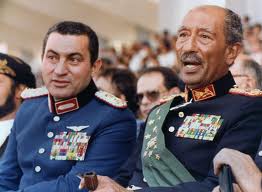
 ative so hard-hitting that the viewer actually feels battered by the time the book reaches its conclusion, a Maori family with five children must deal with urban violence, poverty, drugs, alcoholism, unemployment, gang warfare, rape, physical and mental abuse, suicide, and a host of other horrific family problems, all depicted graphically. Beth and Jake Heke and their five children, along with numerous other Maori families, live in an urban ghetto of government-supported housing, isolated from the rest of society and isolated, too, from their old rural culture, which once gave pride and a sense of identity to Maori families. Here in the city the prevailing “culture” centers around bars, rather than the ancient meeting houses.
 s bold, raw language helps to bring this powerful, absorbing, and overwhelming story of human misery to life. He stresses the differences between contemporary Maori urban life and traditional Maori culture, and shows the sweetness of Gracie against her grim living conditions and the even worse conditions of her best friend Toot. Throughout, Jake’s violence emphasizes how close to the edge the entire family lives.