A hymn of praise to celebrate Maori values and victory
I can’t recall 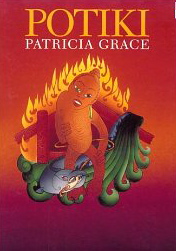 when I’ve ever felt so strongly the musical rhythm of an author’s style, or the extent to which it changes to suit the tempo of the action and themes. In the first third of this wonderful book by a very talented writer, conversations between the simple Mary and Granny Tamihana, the guardian of Maori traditions, echo and sound like chants; between Roimata and Hemi, a happily married couple, they resemble duets with complimentary themes. The scene in which Mary gives birth is a grand, complex chorus with the several family members singing over, around, and above each other as they fight for the narrative line. Toko’s story of his big fish is a soaring aria which ventures into a mystical realm, for Toko is a seer. And all this music seems totally appropriate to the lives of these Maori characters living in harmony with the land and their ancestors.
The middle third of the book changes, as Hemi, the father of the family, abruptly introduces the harsh notes of reality which occur when “the works” closes down, and he and his friends find themselves unemployed. In mournful tones he comments on the loss of tradition, language, and connection to the land which are coming about as education is imposed on their children by outside authorities, and people such as himself accept outside jobs. Their very existence as a group is also threatened by developers who want to buy their land to put up hotels, build seaside parks where visitors can play with the dolphins and whales, and commercialize the lifestyle these Maori have enjoyed all their lives.
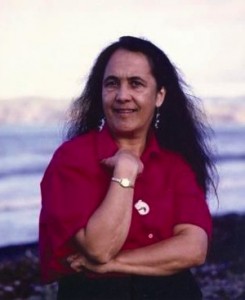
In the final third of the book, as the Maoris fight for their land, the staccato, simple language is like the harsh beat of a war drum, and the songs disappear from the language, not returning until the rebuilding of the sacred house and the funeral of a key character bring about harmony and poetry once again.
It is hard to imagine that Patricia Grace did not deliberately tailor her prose style to her subject matter, yet this seems so completely natural–so totally without artifice–that one wonders if this harmony of words and subject might be the ultimate, triumphant example of the unity of story and life which she so vividly celebrates in this memorable and touching novel.
Notes: The author’s photo comes from http://www.belletrista.com
 Combining moments of danger with moments of profound introspection, mountaineer/explorer Ridgeway details his journey from the top of Mount Kilimanjaro through the Tsavo game reserves to Mombasa, a month-long journey on foot, which allows him to experience man’s primal relationships with the environment. Traveling with an experienced guide, two members of the Kenya Park and Wildlife Service, and two sharpshooters (in case of life-threatening danger), Ridgeway follows dry riverbeds across the savanna, seeking “tactile knowledge of Africa’s wildlands and wild animals.”
 aying equal attention to all. Mourning the absence of once-plentiful animals from the bushlands near Kilimanjaro, and the decline of species elsewhere, Ridgeway contemplates the long-term effects of colonialism, big game hunting, poaching, traditional tribal values, climatic changes, and tourism, as well as man’s seemingly innate tendency to kill certain species into extinction.
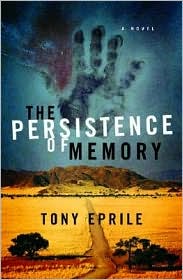 h Africa from 1968 – 2000 is revealed with all its cultural variety and internal stresses through the life story of Paul Sweetbread, an overweight Jewish boy who is an outsider to everyone. Neither a Boer nor an Englishman, he is also not really a Jew, either, since his family has never been observant, leaving him without any common roots that connect him to his Caucasian countrymen. A person with a photographic memory, he is, from the outset, a victim of his memory. Because he can quote from his schoolbooks exactly, teachers think he cheats; his fellow students torment him. From an early age he has been seeing a psychiatrist, though we do not know the specific circumstances which have made his therapy necessary.

 Thoughtful, challenging, moving, and filled with surprisingly wry humor, Eprile’s novel presents events from Paul Sweetbread’s life slowly, sometimes deliberately omitting important information in order to maintain suspense and let the reader come to know Paul through his life and actions, rather than through background information. Eprile creates a sympathetic picture of an extremely sensitive young man who finds himself in impossible situations which mark him for life. His philosophical musings about memory and metaphor near the end of the book raise important questions about society and national “memory,” how a country constructs its memories of the past in order to make it acceptable, and careful readers will savor the language and sheer intelligence of Eprile’s comments.
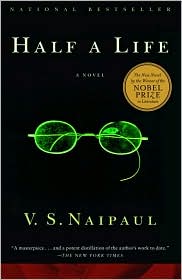 aul’s Nobel Prize for Literature celebrates the long and illustrious career of a writer of extraordinary narrative gifts, amply demonstrated in this novel. The reader can choose any page of the book at random and be stunned by a graceful turn of phrase, a unique observation, the pleasing alternation of starkly simple and elegantly complex sentences, or a perceptive comment presented with grace. Though it is relatively short, it is dense in its thematic development, tracing the peripatetic life of Willie Somerset Chandran across three continents, and from his teen years to his early 40’s, as he attempts to fit in, to be part of some mainstream.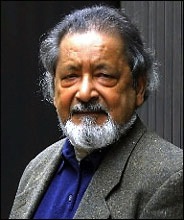
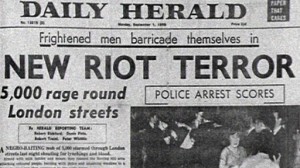 al tensions of the novel–the bloody independence movement in India, the Notting Hill race riots in London, and the guerrilla movement for independence in Mozambique–are vivid and dramatic, paralleling Willie’s personal conflicts. His early sexual encounters, which might have brought him some sense of belonging, are unfulfilling, however, laden with racial overtones and additional tensions, and described by Naipaul in startingly passionless and unerotic prose. And while the novel has a good deal of irony and some satire, it has no sense of lighthearted fun. Willie’s need to belong is so intense it overpowers everything else. Though the reader may feel sympathy for him, his self-centeredness and lack of feeling for other alienated people, especially Ana, ultimately keep him at a distance him from everyone, including this reader.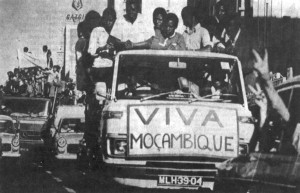
 n the entire Leakey family, from Louis and Mary Leakey, who were the paleontologist parents of Richard Leakey, also a paleontologist, to Richard’s paleontologist wife Maeve and their daughter Louise, the third generation of Leakey researchers into the origins of human life. Morell’s astounding level of research reveals the Leakeys individually, as a family, as dogged searchers for the truth about man’s origins–and as living, breathing humans.