“I give my father’s father the cat. My father’s father releases white butterflies into the space of the home, and the old cat chases them as though in a slow-motion movie. But when a butterfly rises in the air, my grandfather performs an act like that of the one who was crucified, and in his hand he lifts the cat toward the sky of the room, which is fashioned in the form of a ceiling.”
Lively images of the cat (shunra) and the butterfly (schmetterling) chase and play through the memories of a poetic child as Yoel Hoffmann, one of Israel’s most celebrated writers, takes us to another time and place and recreates childhood and the coming of age through poetry. More than sixty years have passed since the speaker first lived in Ramat Gan, and the passage of time has intensified some memories, eliminated the irrelevancies from others, and connected the fantasies of childhood with the perennial mysteries of adulthood.
As he begins t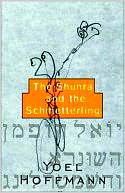 o recall images from his life, the veranda on which his father’s father sat rises from memory, “like that legendary bird rising from its ashes…The veranda of the world itself—whose heart is an electric lightbulb.” From this veranda his grandfather “sent out his hand like Napoleon” and in a voice “which exists on the right side of creation entirely,” pointed across old battlefields to distant villages, saying, “There is the land of the Arabs.” The veranda, seen in larger terms, becomes symbolic of the grandfather’s experience, the experiences of the family, and the history of the Jewish people. “How,” he asks, “does one draw a veranda after two thousand years of exile? A broken railing. Grillwork like Auschwitz. A floor laid with the tiles of pogroms, and the Nuremberg laws in the wall’s plaster…”
Yet this “memoir” is not a manifesto or catalogue of wrongs. Rather it is the vivid and poetic recreation of one boy’s life, the people he remembers from a seemingly ordinary Israeli village, and his discoveries about dreams and the passage of time. The speaker spends a great deal of time with his grandfather, and the reader recognizes the remarkable bond between them. In the image of the grandfather releasing butterflies, and then lifting his cat “toward the sky of the room” to bat at them, the reader also sees the grandfather as a loving mentor, and the boy as the cat, lifted by him to follow his dreams, though he may never catch them. “Butterflies [stand] at the edge of the eye” throughout this memoir, even when “the warning sirens (there were wars then) completed themselves like circles…”
Impressions from past and present flow through the speaker’s consciousness, unfiltered, with one idea reminding him of another from another place and time. Gradually, the reader discovers through the images and symbols that the speaker’s wife is named Nicola and that he himself once grew cannabis in his mother’s cemetery, that his father worked for an insurance company, and his uncle Ladislas was a doctor who was given a donkey, not a car, in order to serve his patients. We meet Mrs. Yoel, who hid raspberry syrup and drank it surreptitiously, and learn about his teacher, Aharon White-Sheep, who has an inflamed ear. We experience his early loves, his school days, his home life with stepmother Mathilda, and his daily life with friends, some of whom have come from different countries and speak a variety of languages. Words in Aramaic, Hebrew, German, Yiddish, and even Icelandic are sprinkled throughout the text and we see them as part of the speaker’s memory and the collective memory of his village and country, a country which has grown because of its immigrants. “Imagine, for a moment,” he says, “a life in which I am on deck calling out Albert, Albert, because Albert is passing by—for this after all is the meaning of civilization: this movement of people from place to place, opticians among them as well.”
Throughout this ultimatel y hopeful work, “A butterfly big as a volume of Talmud [stands] above our heads,” though the author reminds us that the adults in Ramat Gan have had more difficult lives. Mrs. Yoel lived in Hamburg during the 1930s, Lermontov lost his wife in the bombardment of Italy, the grocer Tsehayek “wandered like the cranes of Baghdad” to Israel, and refugees have arrived from Hungary, Germany, and Iraq. And when it is time for the speaker finally to serve in the army and go to war, his father takes him aside. “In a little while,” he says, “you will go to another place, and it’s good you should know that your mother loved you. This love…is like a white towel.” The war in which he fights is like “the movements of a great fish,” and leaves many dead. But now that he is old, his memories still return to thoughts of love, albeit memories tainted by “sounds of shots at [a] movie theater.”
Nature imagery—of birds, animals, clouds, and the sky—permeate this expressionistic painting of a poet’s life, giving depth and color to instants in time and to moments in history. As intense, compressed and sometimes elusive as the speaker’s memories are, the story—and our picture of the author—gradually emerge, insinuating themselves into our own consciousness and speaking directly to us. The effect is unforgettable, a powerful communication between author and reader, transcending time and place.
ALSO by Hoffmann: MOODS
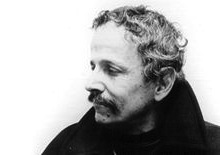
Photos, in order: The author’s photo is from his Wiki page: http://ro.wikipedia.org
The photo of hands releasing butterflies, as the speaker’s grandfather did, appears on http://www.memorialbutterfly.com
 s film of a Maori chieftain’s search for a successor who will keep the rural community’s culture alive is also an appraisal of the culture itself and the values it represents. The community is dying as its young people leave for the city and do not return, except briefly as visitors, and the chief, Koro (Rawiri Paratene) has no successor. His own firstborn son, Porourangi (Cliff Curtis), who would normally have succeeded him, has left the community after his wife died giving birth to twins–a son who died, and a daughter who lived.
 to learn the old ways so that she can win her grandfather’s love, she is, instead, constantly berated for trying to break the taboo of the marai by assuming a boy’s role.
 which conveys a message, it is not surprising that some of the characters here are two-dimensional, especially Koro, the grandfather, so consumed with the need to find a successor that he is unable to be a person. But Paikea and the other children in the film more than make up for some of the adults’ predictability with their palpable delight and pride in their culture and the fun they have learning the old ways. A fascinating glimpse at a vanishing culture, this magnificent and moving film will itself help preserve its history and traditions.
 racking India will expand and alter your view of India, Pakistan, and the British Raj. Using a child-narrator, a literary device over-employed and often unsuccessful, this author has found the perfect vehicle for conveying the heart-breaking story of the Partition of India in l947, without being coy and without descending into bathos.
 trian family, was a victim of polio at the age of two and has suffered from it all her life, and as she was nine when the partition took place, she lived through it firsthand, giving a kind special intimacy to her depiction of Lenny and her reactions.
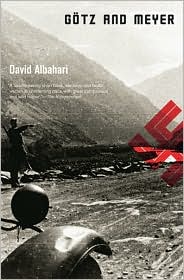 e speaker of this long monologue by Serbian author David Albahari is a teacher of Serbo-Croatian language and literature, a 50-year-old Jewish man who has been trying to fill in the spaces in his family tree after World War II in Yugoslavia. Of sixty-seven immediate relatives, only six have survived, all because they left Yugoslavia for other places—Argentina, Israel, America, Australia—or, like the speaker and his mother, escaped to rural areas where they could be hidden before the extermination of the Jews started. “I wanted to discover who I was and what I was, and where I had come from,” he says.
 Throughout the novel, as Albahari includes the terrible statistics, he also exhibits the ironies of the circumstances, setting the facts into sharp relief and increasing the shock. Gradually Götz and Meyer become more human (and even more horrifying because of it) for the reader, and when the speaker takes his class on a field trip to the site of the Fairgrounds camp, he asks them to imagine themselves as one of his relatives. One student remarks that she would not have gone to the camp if she had to leave her pets at home, deciding that this would have been “inhuman.” Another sees life at the Fairgrounds as “the greatest adventure of his lifetime.” As the horror of the events and the dissociation of the students from the magnitude of the crimes gradually sink in with the teacher, he comments that “Memory is the only way to conquer death, even when the body merely goes the way of all matter and spins in an endless circle of transformations.”
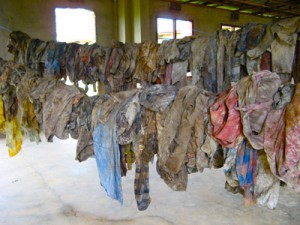
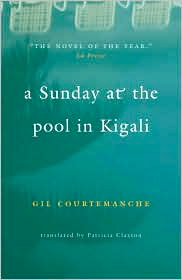 y afternoon, the pool at the Mille-Collines Hotel in Kigali, Rwanda, was a gathering spot for government workers, wealthy Rwandans engaged in various trades, aid workers, journalists, foreign visitors, and enterprising prostitutes, who gathered to drink, exchange news, gossip among themselves, and participate in the “vaguely surrealistic play being acted out at the pool.” The pool was, in many ways, a microcosm of life in Rwanda in the early, pre-war 1990s, illustrating the pressures and competing interests among various facets of society, all wanting to protect what they already had, at the very least, and, they hoped, to increase their power, influence, or wealth.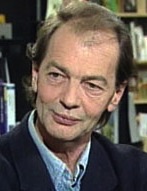
 che finds beauty in the countryside and a sense of family and honor among ordinary citizens, and it is within this recognition of beauty that the love story flourishes. Bernard Valcourt, in his forties, is a Radio Canada producer who accepts the job of setting up a TV station in Rwanda for a Canadian international development agency. Gentille, working as a waitress at the hotel after completing her social service studies, is a beautiful young woman in her twenties, “so embarrassed by her beauty she has never smiled or spoken an unnecessary word,” and Valcourt has long admired her from afar. As the Hutu violence against the Tutsi minority begins, Gentille makes her first approach to Valcourt, begging him for help. A Hutu by birth, she has an identity card to prove it, but the intermarriages between Tutsis and Hutus within her family have left her looking like a Tutsi-tall, pale, and fine-featured. Because of the plethora of forged identity papers, government officials will not believe that she is who she says she is, and even Valcourt is somewhat disbelieving. Their love, as it eventually develops, is particularly poignant because neither can believe the other could possibly be truly in love. When at last they visit with Gentille’s family outside of Kigali, the genocide has started, and many of their friends have already been hacked to death, yet Valcourt is “able to say, without ifs, ands or buts, ‘I’m happy.'”