“Once you let people know anything about what you think, that’s it, you’re dead. Then they’ll be jumping about in your mind, taking things out, holding them up to the light and killing them, because thoughts are supposed to stay and grow in quiet, dark places, like butterflies in cocoons.”
Eight-year-ol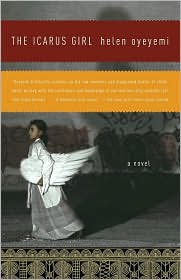 d Jessamy Harrison, the daughter of a Nigerian mother and a British father, has a particularly difficult time deciding who she is, and she seems to fit in nowhere. Significant emotional problems leave her unable to deal with the outside world, and she can spend five or more hours hiding in the family’s linen closet, attempting to find some sort of “fragile peace” in the tumult which she sees as her life. Given to uncontrollable screaming fits, both at home and at school, she also falls ill, sometimes with high fevers, has panic attacks, and often talks to herself. With no friends, a mother who spends most of her time writing, and a father who is solicitous but away from home most of the day, Jess is a bright but solitary child with difficulties she cannot solve alone.
When her mother takes her back to Nigeria during a school vacation, hoping that a change of scenery will help her, she sets in motion a series of events which leave Jess struggling to hold on to her selfhood. While visiting her Yoruban grandfather, who observes the traditions of his culture, Jess wanders into the abandoned “boys’ quarters,” which, she discovers, is occupied. A strange girl her own age, whose body seems to change shape and who mimics every aspect of Jess’s behavior, at first, becomes her first real friend. Titiola, called TillyTilly by Jess, hides from the rest of the world, but she and Jess manage to visit her grandfather’s study, always off-limits, and, by force of will alone, to get inside a closed amusement park so they can play.

When Jess and her family return to England, she is mocked and tormented by her schoolmates and even, in her own mind, by her teacher. The unexpected reappearance of TillyTilly delights Jess at first, though she still has her screaming fits and fevers. Before long, however, TillyTilly becomes more demanding of her attention and begins breaking household objects, “getting” the people who make Jess unhappy, and causing “accidents.” Jess’s parents become alarmed at the havoc, especially when Jess insists that it is caused by her mysterious, unseen friend. Then TillyTilly reveals a family secret, and the battle begins in earnest for possession of Jess’s soul.
Nigerian author Helen Oyeyemi, who wrote this book as an eighteen-year-old, incorporates Yoruban culture and tradition when Jess returns to Nigeria on her second trip. Jess’s closeness to her grandfather and his instinctive concern help her to recognize and confront TillyTilly’s increasing demands for power. Oyeymi keeps the action moving and creates considerable suspense as Jess, through TillyTilly, becomes more dangerous to those around her. Only her grandfather, who believes in magic and traditional ceremonies, seems to have the resources necessary to exorcize the demon within Jess.
The novel mov es along smartly, recreating many of the nightmares of childhood, though Oyeyemi’s uncomplicated prose style and simple approach to complex problems may reflect her youth. Jess, an eight-year-old, is far too sophisticated and articulate about her fears to inspire much reader empathy, and she never feels quite realistic, especially when she herself questions TillyTilly’s existence. The reader must accept that neither her parents nor her teacher fully appreciate the intensity of her emotional problems, despite her public screaming fits, her panic attacks and fevers, and her inability to make friends with children her own age. Her mother seems to think that a change of scenery, i.e., a trip to Nigeria, will “snap her out of it.”
A psychological horror story, the novel provides plenty of intense scenes, however, somewhat reminiscent of Thomas Tryon’s The Other, and the battle for Jess’s soul is dramatic and action-packed. The conclusion feels somewhat artificial, since it relies on accident and is not the inevitable outgrowth of the actions of a rounded character, but Oyeyemi has created a page-turner that dares to be different, incorporating a clash of cultures and parallels with the Icarus legend which broaden her focus. Exciting and fun to read, this debut novel begs to become a film.
Notes: The author’s photo appears here: http://book.co.za/, with a link to an interview on the (London) Sunday Times: http://entertainment.timesonline.co.uk/
The Osun-Osogbo Sacred Grove is a sacred forest that is the cradle of Yoruba cultural traditions. It is the domicile of Osun, the Yoruba goddess of fertility. See: http://www.localyte.com/places-to-visit/Nigeria–Ogun–Eshogbo
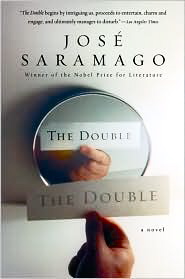 at may be Nobel Prize winner Jose Saramago’s most playful—and, perhaps, popular—novel, Tertuliano Maximo Afonso, a secondary school history teacher, views a film given to him by a colleague and discovers in the film an actor who looks exactly like him in every respect. Though the film was made five years before and the actor was wearing a mustache, the two men are identical otherwise. Tertuliano, a somewhat gloomy, divorced man, has always liked the routine of his solitary life, and though he is a daydreamer, he has never before acted on those dreams. When he sees his double, he is stunned. “One of us is a mistake,” he declares, and as he begins, typically, to overanalyze the situation and chat with himself about the fact that “never before in the history of humanity have two identical people existed in the same place and time,” he finds himself wondering what it would be like to find and meet this double.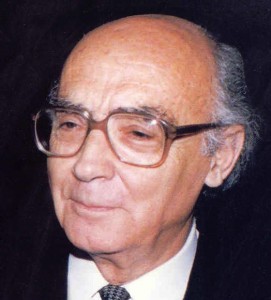
 , and then find their natural curiosity becoming transformed into resentment. “There is one too many of us in the world,” Tertuliano declares. The climax is shocking—quite different from what the reader expects—and just when you think that the surprises have ended, a final surprise awaits.
 In this warm and complex study of friendship, love, and roots, Kamila Shamsie focuses on the interrelationships of a group of vividly realized, upper-class residents of Karachi, particularly Raheen and Karim and their friends, only thirteen years old as the novel opens. Raheen has always regarded Karim, her one-time crib-companion and blood-brother, as her best friend, someone who knows her so well he can complete her sentences. Their parents, too, are close friends, and as the story evolves, we learn that Raheen’s father was once engaged to marry Karim’s mother, and that Raheen’s mother once pledged to marry Karim’s father.
 The emotional resonance of this novel is enhanced by strong subordinate characters. The parents of Raheen and Karim are insightfully drawn, and their story, as it unwinds, shows the fragility of relationships and the insidious prejudices that can creep into people’s lives. As the exchange of fiancées is revealed through the eyes of the participants, the reader observes parallel events in the lives of Raheen, Karim, and their friends. Major themes are illuminated in the small details of everyday life, rather than in great historical moments. Through unique observations and insights into human character, this rich, thought-provoking novel creates maps of the human heart, ultimately achieving a universality and depth one does not often find in novels of personal relationships. Warm and human, this is a novel that captures the heart.
 n the period between 1956 and 1958, Matthew Brzezinski recreates the Cold War atmosphere which began in the aftermath of World War II and culminated with the Russian launching of Sputnik in October, 1957. Both the United States and the Soviet Union, in their rush to occupy their post-war sectors of Germany, had wanted to acquire as much German technology as possible—rockets, missiles, and, of course, the German scientists who made it all possible. The US had all the advantages—finding a secret missile lab (hidden in a mountain with a concentration camp in front of it), removing dozens of advanced rockets and missiles to the US, and enticing key scientists to emigrate to the United States. Still, it was the Soviet Union, with far fewer spoils of war and much less developed missile programs, which succeeded in orbiting the first satellite.
 The roles of Sergei Korolev, chief architect of the Russian rocket program, and of Werner Von Braun and his fellow German émigrés, who guided the American program, are carefully delineated, and the struggles of both groups of scientists to convince politicians that their programs were crucial show the conflicts between innovative scientific research and political expediency. When the Soviets launched a second rocket containing a dog a month later, Russia’s beeping beacons in the sky secured its position at the top of the technology pyramid, at least in the public consciousness, with consequent implications regarding military superiority. It was another three months before the US succeeded in launching its own first rocket.
 With vibrant descriptions, specific details, and lively background information about the “players” in this drama, Brzezinski recreates the climate in the White House and the Kremlin, alternating the focus and providing contrasting portraits of the chief protagonists—President Eisenhower and Nikita Krushchev, First Secretary of the Communist Party in the Soviet Union. The alternating chapters allow the reader to feel as if s/he is watching both hands in a high stakes global poker match, with the key players practicing the bluff on an international scale–failed intelligence was as much a factor then as it has been in recent years. As exciting to read as the best fiction, this well-researched and compelling story will educate a new generation to the drama associated with the beginnings of satellite and missile technology.
 ith just can’t lose. Whether it be his nine enormously popular #1 Ladies Detective Agency novels, his three Dr. von Igelfeld Entertainments, the five Sunday Philosophy Club novels, his nineteen children’s books, or his four previous the 44 Scotland Street novels, he succeeds in charming his readers with warm and humorous tales of almost normal life, lived by people who care about each other and the values that make life worth living. Remarkably, he does this without resorting to obvious melodrama or sentimentality.
 The fact that little Bertie Pollock, six years old, says he “just wants to be normal,” shows how abnormal his life is, since even he recognizes how different his life is from the lives of other children. Forced to go to advanced music classes, yoga, and psychotherapy once a week, he never gets to be an active, rough-and-tumble boy, and the fact that his mother thinks that little girls, especially the dreaded Olive, are better playmates for him than the boys makes him embarrassed to go to school.
 McCall Smith’s seemingly ordinary characters and their problems “work” because they are just absurd enough to keep the reader interested in their lives while remaining just “normal” enough that the reader can smile in recognition at their folly. Far too gentle to be considered a satirist, McCall Smith nevertheless pokes fun at Edinburgh life—the clubs, intellectual pretensions, and social activities—placing his characters in the context of the city and using irony to give their problems a perspective and humor that keeps the reader involved. He obviously loves these characters, never holding any of them up to ridicule, though the conceited Bruce deserves whatever comeuppance McCall Smith may eventually send his way.