“In spite of all the wrong turns, [the country] was growing in power and prestige, always expanding and getting bigger. It was making goods of all kinds, from needles to rockets, and broadcasting a wonderful new and humane trend in the life of humanity. But what was the point of all that if people were so feeble and downtrodden that they were not worth a fly, if they had no personal rights, no honor, no security, and if they were being crushed by cowardice, hypocrisy, and desolation?”
In this pow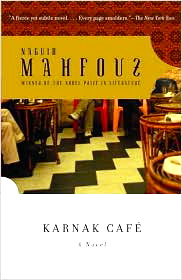 erful novella by Naguib Mafouz, winner of the Nobel Prize for Literature in 1988, a narrator stops in at the Karnak Café, an off-the-beaten-path café in Cairo run by Qurunfula, a former belly dancer, famous because she raised her craft to the level of true art. Recognizing her immediately, despite the passage of time since her prime, the narrator, a great admirer, stays and visits. He is soon seduced by the atmosphere in the café and by the charm of a small group of regulars–three old men, three young people, and the PR director of a company—who, along with the steward behind the bar, a waiter, and the bootblack, visit each other every day at the café and create their own urban “family.”
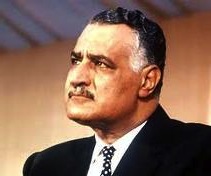
Written in 1974 and newly translated by Roger Allen, the novel takes place in the mid-1960s and focuses on the Karnak Café regulars as they respond to some key moments in contemporary Egyptian history. For the young people, “history began with the 1952 Revolution,” in which the army, led by a young officer named Gamal Abdel Nasser, overthrew King Farouk, abolished the pro-British monarchy, and established a republic, inspiring other Middle Eastern and north African countries in an Arab sovereignty movement. In 1954, Nasser became President of Egypt. Hopes were high then and continue to be high for the young at the café in the early 1960s, despite the acknowledged (and continuing) problems with civil rights, poverty, and abuses by the police.
The three young people and their fates become the focus of the narrator when the young people inexplicably disappear for several months. One of them, Hilmi Hamada, has been the lover of Qurunfula, a love relationship which has given her life new meaning. Hilmi, his friend Isma’il al-Shaykh, and Isma’il’s love, Zaynab Diyab, have all been arrested, supposedly because they are involved with the fedayeen movement, a militant Islamic movement which might threaten the current government. After several months of incarceration under deplorable conditions, which they describe after their release, they are found innocent, and they try to continue their previous lives—until they are arrested and imprisoned again, this time on the suspicion that they are Communists.
Gamal Abdel Nasser, their President, has been involved in the formation of the Palestine Liberation Organization, and when the PLO begins to challenge Israel militarily, and the problems escalate, the scene is set for an Egyptian incursion to protect the Sinai, resulting in the Six Day War in 1967 with Israel. The three young people from the Karnak Café are imprisoned during this time, and when they are released, following Egypt’s defeat, they are devastated, their hopes for their future dashed. “All of us need time so we can bandage our wounds and purify the collective national soul,” Zaynab says.
Mahfouz develops treme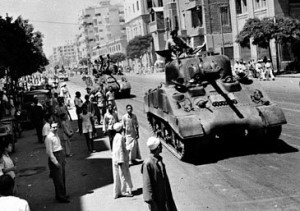 ndous suspense about the eventual outcomes of the regulars of the Karnak Café, at the same time that he creates an intense look at the pressures placed upon them as they try to live their lives and do what they think is right. As the forms of torture the young people undergo are revealed, the taboos of the society become obvious, and the faith of the young people in the future of the revolution of 1952 is put to the test. The progress of the country is obvious through their comments, at the same time that the limitations of the country, obvious through their treatment by the military and police, are even more obvious. The desire for “freedom” never flags, at the same time that the powers that be consider “freedom” to be dangerous because of the potential for growth of the fedayeen, the communist movement, and socialism, which would threaten national security.
Ultimately, they must consider whether “peace is more risky than war.” As they and others investigate religion as the answer, then communism, democracy, socialism, and war as the “answer,” they must also consider whether negotiation with the great powers, especially America, might lead to peace. Their individual lives, shattered by their arrests and imprisonments, cease to exist in the aftermath of the trauma, and their ability to trust is gone forever.
Mafouz recreates in a mere one hundred pages the historical record of a country yearning to be free at the same time that he depicts the movements against individual freedom which are at their peak. The young people he creates here are ordinary college students, despite the fact that all of them have overcome far more than the average western college stu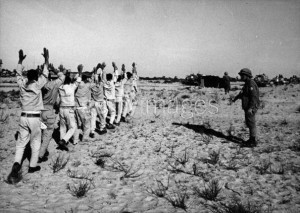 dent will ever dream of, and though they insist that they still believe in the future of the revolution of 1952, their experience less than fifteen years later, shows them and the reader just how far they have left to go. Dynamic, powerful, and thought-provoking, this novella carries a punch—and modern relevance–that the reader will not soon forget. (On the Favorites List for 2008)
ALSO: THE DAY THE LEADER WAS KILLED, THE MIRAGE,
CAIRO MODERN, IN THE TIME OF LOVE
Notes: Many other novels by Naguib Mahfouz are reviewed on this site. See Authors tab at the top of the Home page. https://marywhipplereviews.com/authors/
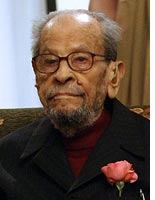
The author’s photo appears on http://www.slate.com
The photo of tanks, under Gamal Abdel Nasser, overthrowing King Farouk in 1952 appear on http://mbouffant.blogspot.com
Nasser’s photo appears on http://www.thefamouspeople.com
The photo of Egyptian POWs, captured by the Israelis during the Six Day War, appears on http://egyptianpows.net
 he excavation of a junk which sank off the north coast of Viet Nam in the mid-fifteenth century, Frank Pope focuses on the people who engage in excavation work–the maritime archaeologist vs. the treasure hunter, the financiers who supply the funds that make underwater excavation possible, the looters (often fishermen) who damage sites, the academics who engage in fierce competition for recognition within the field, and the divers, who have to live underwater in small, pressurized containers for over a month at a time. He also includes the history of maritime archaeology, detailed descriptions of the equipment which has evolved to make deep dives possible, the status of current technology in the field, and the complex systems which support “saturation divers,” who may be working at eight atmospheres of pressure.
 and record and label every object, and the plundering done by treasure hunters whose sole objective is to take out and sell as many valuable artifacts as possible. The tense relationship between the financier of the project, who wants to recoup his investment, and those managing the project, who want to discover as much new information as possible, plagues the endeavor from start to finish.
 The excavation itself is fascinating and filled with danger as a result of the financier’s refusal to use the safest (more expensive) equipment. A complete account sure to interest serious marine archaeologists, art historians, and those seeking the inside story of how one plans and conducts major maritime archaeological projects, the book is longer on detail than action. With its focus on the conflicting views within the field of preservation, however, Pope raises serious questions which the ironic conclusion intensifies.
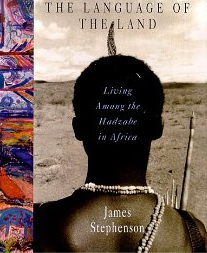 Stephenson’s memoir about the Hadzabe in Tanzania, one of the last tribes of hunter-gatherers, is fascinating, though not always in ways the author probably intended. As much about the 27-year-old author and the casual romanticism with which he plunges into life in another culture as it is about the death throes of a Stone Age tribe being overtaken by “progress,” the author announces at the outset that this is “a journey greater than [him]self, a journey that has chosen [him].”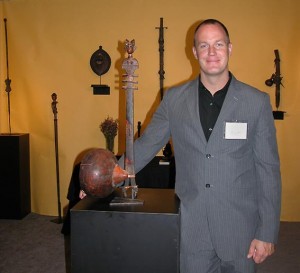
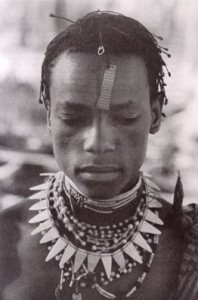 that he “came to understand the importance of exaggeration…to create a more universal truth for the listening party,” the author conveys his excitement in a skillful narrative, which often includes striking imagery: of elderly people entering the camp “like slow wakes in still water,” and of walking “through the oracles of singing red birds.” His visions, dreams, and psychic premonitions, however, may cause the reader to pause, wondering if they are part of the exaggeration he finds so important here. And there is unintended irony, with Nubea, an old Hadzabe, mournfully asking, “Why are the forests eaten by the corn and bean?” [p. 176] , while the author, just a few pages later [p. 185], admires the life of a friend in Zanzibar, stating, “One could definitely envy the family’s way of life. They ‘lived’ life on a farm…” In this fascinating story about a modern young man’s attempts to share an endangered life style, Stephenson may raise more questions than he answers.
 his engrossing story of love and war in Berlin and Mostar, Yugoslavia, from 1989 to 1992, John Marks considers the subject of divided cities-and the damaging effects on the people who live in them. The Wall dividing East and West Berlin has just come down, and Germany is in the process of reunification, attempting to erase the invisible walls still dividing the people of Berlin and of Germany as a whole. Arthur Cape, an American reporter for Sense magazine, has been in Berlin since 1989, when he arrived there from India at the age of thirty. He and Eric Hampton, the senior editor, have been filing reports from Berlin, documenting the story of the reunification and the surprises which have accompanied it.
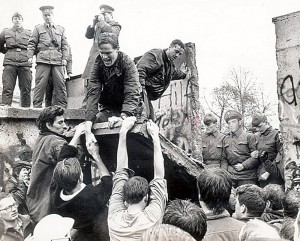 c groups are all competing for their own influence and power, with unprincipled criminals pushing to establish separate ethnic states and willing to fight to achieve these goals. As the story alternates between Berlin and Mostar, and between Arthur and Marta, the reader observes the growing brutality among the various groups, and when Marta’s brother, a partisan, comments to Marta on the state of civilization there, the effect is chilling: “The United Nations says that there are two kinds of people left in this valley. Catholics and Muslims. But the United Nations doesn’t know shit. There are only two kinds of people, ever, anywhere, at any given moment, in this world; those who have slit the throat of another human being and those who who haven’t. Branko is in the first category. You are in the second.”
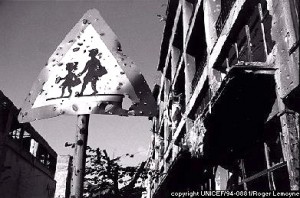 t in the neighborhoods of eastern Berlin, the ugliness verged on beauty, the survival of a city [which had been] annihilated.” As Arthur muses on the philosophical implications of division and reunification in Berlin, he is also aware, through Marta’s story, that simultaneous events occurring in Mostar may lead an inevitable and terrible division.
 er in which the action and blood never stop, this strong debut by Spanish author Juan Gomez-Jurado will keep many readers going until well into the night. Set in Vatican City during the conclave to elect a new pope following the death of Pope John Paul II in 2005, the action begins with the grisly deaths of two cardinals planning to participate in the conclave, their bodies tortured and mutilated almost beyond recognition by a serial killer on the loose. That serial killer is Victor Karosky, a priest.
 Catholic church and the policy of simply reassigning priests to other parishes is a major subplot here, as is the lack of success which the St. Matthew Institute apparently had in “retraining” pedophile priests. The conflict between church conservatives and liberals regarding sexual abuse, its treatment, and its penalties has theological implications here, as Karosky believes that he is acting appropriately within the context of his own theology. The Survivors Network of those Abused by Priests (SNAP) is actively monitoring the proceedings because they believe that certain cardinals who have contributed to that abuse are being considered for the position of pope.