“To be old is one thing, to be old and a victim is another. An entirely new category of person—someone vulnerable, helpless, unable to cope. Little more than a baby. What worried Aldous most was how eager people were to see him in this way. What, apart from the numerical accumulation of years, had happened to him to bring about this change?”
 Aldous Rex Llewellyn Jones, an elderly widower living alone, has nothing to look forward to. A former art teacher now living an isolated life inside a house for which he takes as little care as he does for his personal hygiene, Aldous avoids contact with the outside world, even with his own children. One son lives in Belgium, another lives in the Venezuelan jungle with his Icabaru wife and child, and a daughter Juliette, a reporter for the London Evening News, has her own life. It is not until he opens a cupboard and discovers that a forgotten bag of potatoes has sprouted and taken over the entire inside of one drawer that he has his epiphany—”Some old potatoes in his cupboard were more actively interested in life than he was.”
His garden is in the same state of wild neglect, and it is only a short step for Aldous to imagine that the garden might one day soar over the rooftop and embrace all four walls of his house, while the potato tubers fill his rooms. He envisions expiring and the firemen having to saw through tree roots and thickets of plum trees to find the door, then opening it to find a skeleton with potato tubers growing out of his eye sockets.

Sardonic and filled with darkly humorous imagery, A Curious Earth, by Man Booker finalist Gerard Woodward, is an old-fashioned novel, more an extended character study and meditation on aging than a traditional plot-based novel. Very much in the style of British authors Elizabeth Taylor (Mrs. Palfrey at the Claremont), Molly Keane (Time after Time), and Alice Thomas Ellis (Pillars of Gold), whose sly humor and pointed observations about people and society make their novels such wry delights to read, Woodward also creates in Aldous a character who is so universal in his concerns and needs that the reader cannot help but empathize with him, even when he is being impossibly self-absorbed.
When Aldous goes to see The Winter’s Tale, he befriends some of the young people there, and soon he begins visiting the National Gallery, where he is fascinated by Rembrandt’s painting of Hendrickje Stoffels, his young mistress. The possibilities of an old man enjoying life with young people, and especially a young woman, offer Aldous new hope, and when his son Julian, living in Ostend, Belgium, invites him to come for a visit, Aldous, looking forward to new scenery and new opportunities, goes with his eyes open. Unfortunately, he forgets to keep his mouth closed. On the ferry, the ferocious gale winds blow his teeth overboard just as he is about to start his new adventure.
 In Ostend Aldous meets “the most beautiful woman he has ever seen,” who turns out to be a fellow artist, and his dalliance with her proves that “true love” can conquer all, even for a toothless old man–at least temporarily. Before long he is also befriended by Herman Lorre, “the greatest sexologist of the twentieth century” and begins partying with Julian and his friends. Rejuvenated, he begins night classes upon his return to England, and is soon drawn to another younger woman with whom he can share his interest in galleries, plays, and music.
Throughout the novel, Aldous misreads signals and invests far more emotionally in his relationships than do his new friends. Life starts to become interesting for him,  and then becomes devastating, over and over again, as Aldous learns the hard way that life takes work, just as the potato tuber must work to keep on growing in the darkness of a closed drawer, feeding on itself. As the novel develops and Aldous continues to see “human contact as the only thing keeping him from death,” he seeks new friends and reconnects with old ones. Always, however, he is surprised at how incomprehensible the lives of other people seem to be, even more so when he views them through the bottom of a bottle.
As Aldous deals with the minutiae of life, turning each step and each decision into a major event, the reader sees that for an elderly man like Aldous the minutiae of life often are his whole life, and that a man who has let life happen to him is like the baby he fears he has become—”vulnerable, helpless, and unable to cope”—though his hopes and dreams may be the same as they were in middle age.
W ith his unique imagery and eye for the ironic or bizarre detail, Woodward makes Aldous, his friends, and his daily life come vividly to life in this quiet, unpretentious novel. He uses dark humor to make observations about age which are sharp and memorable. Though there are moments of profound sadness, there are also moments of hope for Aldous’s belated self-awareness and enlightenment. Woodward never descends into pathos or sentimentality, reminding the reader that life is often absurd and that ironies can be found and appreciated even in the most difficult situations. Readers who enjoy character studies—especially older readers who may identify with Aldous or see their friends in some of his behavior—and those who appreciate black humor—will delight in the irreverence with which Woodward approaches the subject of old age. (This novel is the top of my Favorites List for 2008.)
ALSO by Woodward: LETTERS FROM AN UNKNOWN WOMAN (NOURISHMENT), A CURIOUS EARTH, VANISHING, and AUGUST (link to Amazon review).
Notes: The author’s photo is from http://www.dailymail.co.uk
The overgrown and neglected garden, which Aldous imagines might “one day soar over the rooftop and embrace all four walls of his house,” is seen on http://mowersgarden.blogspot.com
When Aldous visits the National Gallery, fascinated by Rembrandt’s painting of Hendrickje Stoffels, his young mistress. This Rembrandt painting is shown on http://www.wikigallery.org
The photo of Ostend, Belgium, is on http://europeforvisitors.com
 The Girl Who Kicked the Hornets’ Nest is a fine conclusion to the Millenium Trilogy, tying up the loose ends that have carried over for three novels and kept viewers around the world panting for the next installment. Though the novel is complex, it is the best and most exciting of the three–and highly rewarding since it builds on all the action that has gone before, further developing the characters we have come to love. Lisbeth Salander, the focus of all three novels, is hospitalized and kept in isolation for virtually the entire six hundred pages here, but she is a looming presence throughout, and when it becomes clear that she will have to face trial for some of the murders in
  ow why she will not speak to him, though he is still fond of her and still keeps all her secrets, even from his sister, Annika Giannini, the advocate who will be defending her against murder charges. She has formidable problems with anger as a result of her confinement to a mental institution from the age of twelve to fourteen on the recommendation and evaluation of famed psychiatrist Dr. Peter Treborian. He is actively working to have her recommitted, this time because of the violence with which she has been recently involved. Her father, Alexander Zalachenko, aka Karl Alex Bodin, a Russian defector during the Cold War who is also a vicious sadist, is recovering from wounds just two rooms down from Lisbeth at Sahlgrenska Hospital in Goteborg. Lisbeth has already tried to kill him once, and she still hopes to have her revenge for his crimes against her and her mother.
 lomqvist investigates the circumstances surrounding the crimes in which Lisbeth has been involved, he is absolutely certain that she should never have been committed to the mental institution at all, and the persistent efforts of the “establishment” to have her recommitted are red flags to him. Why, he wonders, do they care so much about her, and why was it so important that she be committed to a secure psychiatric facility at the age of twelve? He is hoping to find the answers so that he can publish a book about the crimes against her.
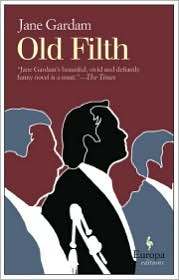 nown as “Old Filth,” is, ironically, “spectacularly …ostentatiously clean.” His nickname derives from the fact that as a lawyer, he “Failed In London, Tried Hongkong.” A “Raj Orphan,” Filth is a child of British civil servants of the Empire in Malaya. Like other Raj children, he is sent back to England, alone, at the age of five or six, to begin school in a country he’s never seen among people he does not know. For Filth, the alienation is tripled–his mother died when he was born; his father, suffering from shellshock and alcoholism, ignored him; and, living in the longhouse with the servants, he saw himself as Malay, more familiar with that language and culture than his own.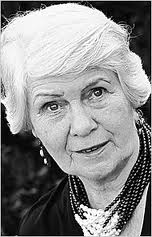
 btle, this novel, shortlisted for the Orange Prize in 2005, is also compulsively readable with its poignant scenes and ironic humor. Filth, for all his class-consciousness, is likeable and often earnest, and he engages the reader’s emotions from the outset. His late-in-life questions about whether his life has had meaning are especially moving—and universal. (On my
 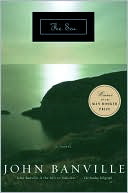 ker Prize-winning author John Banville presents a sensitive and remarkably complete character study of Max Morden, an art critic/writer from Ireland whose wife has just died from a lingering illness. Seeking solace, Max has checked into the Cedars, a now dilapidated guest-house in the seaside village of Ballyless, where he and his family had spent summers when he was a child. In those days Max had spent hours in the company of the Graces, a wealthy family whose children, twins Chloe and Myles, became his constant companions. Images of foreboding suggest that some tragedy occurred while he was there, though the reader discovers only gradually what it might have been. Now renting a room at the Cedars for an indefinite stay, Max broods about the nature of life, love, and death, relives earlier times, and tries to reconcile his memories, some of which are incomplete and imperfect, with the reality of his present, sad life.
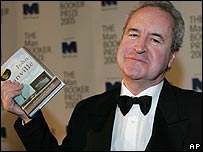 treatments begun. Through flashbacks, he also introduces us to his earlier married life with Anna and his fervent hopes that through her he could become someone more interesting. “I was always a distinct no-one, whose fiercest wish was to be an indistinct someone,” he says, confessing that he saw her as “the fairground mirror in which all my distortions would be made straight.”
 e reader from the suspenseful opening pages, Kate Atkinson’s third Jackson Brodie novel is not a traditional mystery. Instead, it is a novel which grows out of the terrible traumas that children and young people must endure when people they love die violently. So marked are they by their sudden tragedies, that they never really escape their pasts, and may spend the rest of their lives wondering “when will there be good news.”
 rrative speeds along, enhanced by her skillful pacing as she introduces new elements and surprises to her myriad plot lines, and she is especially adept at creating understanding and empathy for her characters, each of whom is individualized. By recreating the early lives of each of them through flashbacks, and comparing and contrasting those past lives with their present lives, the reader comes to “know” the characters, and despite the huge cast, will have little trouble keeping them all straight. The characters, though superficially quite different from each other, are connected thematically by their neediness and by their yearning for loving relationships. Eventually, they are also all connected through the plot’s complications and mysteries. Ironies abound, and mistaken identities create some bizarre and sometimes darkly humorous scenes.