“Ariel: a spirit of poetry, lioness of god, sacrificial altar, birth of the immaculate soul-it was all coming together, now and now and now, hoofbeats pounding…..The muse hangs over [Sylvia’s] life like a moon. She will ride this fate right through to a fiery ecstasy, to a resurrection on a hill, a self that was naked and real.” -from Wintering, by Kate Moses.
Most reader s who come to this book will already be familiar with the basic story of poet Sylvia Plath and her doomed marriage to author Ted Hughes. In her final collection of poems, the Ariel poems, of which the poem “Wintering” is a part, Plath depicts the “real and bloody sacrifice” of this marriage, “not bodies piled in a mountain pass but her life…the truths fanning out a page at a time.”
Married six years by the spring of 1962, Sylvia Plath and Ted Hughes were restoring Court Green, a thatched-roof manor house in Devon, where they lived with their two babies. Sylvia, not quite thirty, was gardening and making the near-ruin of their house into a home, plunging her gloveless hands into the soil, keeping bees, gathering honey, growing apples, and reveling in the sight and smell of fields of wild daffodils, daisies, roses, honeysuckle, Asiatic poppies, and jasmine. By alternating child care duties, both writers had some free time to continue writing, with Sylvia “cultivating her words like fragile cuttings, nursing them to root in their windowsill jam jars.” But even then, when she thought that things were perfect and that the summer of her own creative flowering had arrived, she was uneasy, not because of her life’s abundance, but because of “the idea of loss that exists alongside [the abundance], like some terrible hibernating animal nested within her walls.”

That summer Ted’s affair with Assia Wevill became public, by the fall the marriage was emphatically over, and by December, Sylvia had moved the family from Devon to London to a flat once occupied by William Butler Yeats. In a frenzy of writing in the late fall, she produced thirty finished poems in thirty days, her poems coming to her “like truths, every word taut and hard.” With one book of poetry already published, a potboiler novel, The Bell Jar, about to come out, and a second book of poetry now nearly finished, Sylvia was creatively on fire, writing the poems which became the collection known as Ariel. Six weeks later, she turned on the gas in the kitchen stove and committed suicide, at age thirty.
***
In Wintering, her debut novel, Kate Moses recreates the heart, soul, and psyche of Sylvia Plath, a feat that is so extraordinary and so realistic in its execution that it is difficult to know where to start in describing it. In preparation for this novel, Moses did as much research as many doctoral candidates do, reading virtually every piece of Plath’s writing, both public and private, and most, if not all, of the resource material about Plath — her journals and letters, comments by contemporaries, letters to and from her mother, her daily calendars, audio recordings, biographies, manuscripts, notes by Ted Hughes, and even her baby book. So completely did she distill this material that the reader of the novel feels as if she or he is actually entering the mind of Plath, a Plath who is speaking and reminiscing, conjuring up events, aching, dreaming, and hoping. Astonishingly, Moses achieves this without ever deviating from a third person narrative and without ever speaking as Plath herself.
Organizing the novel around the poems which make up the Ariel collection, all written in the last four months of Plath’s life, Moses creates a fictional narrative using as chapter titles the names of poems from Ariel, each chapter including some of the imagery from these poems and the subject matter from Plath’s life which parallels them. Moses does this naturally, simply letting the narrative unfold in parallel with the essence and imagery of the poems, a process which feels, remarkably, as if it’s unfolding of its own accord. The poems which serve as the impetus to each chapter live on after forty years, continuing to speak to the reader across time and space, and Moses wisely keeps her own narrative in the present tense, suiting her style to that of Plath’s poetry. Like the poems, the chapters sieze on images and events in random order, making Moses’s achievement in creating a real and memorable narrative out of the creative chaos truly daunting.
 This is not really a novel about Plath, so much as it is a novel in which Plath reveals herself, something she does to even greater effect in her poetry. Because of this, I would strongly urge the reader to find a copy of Plath’s Ariel to read in concert with Moses’s Wintering. Images from the poems take on added significance when they are repeated and expanded in Moses’s narrative.
Although Ted Hughes edited Plath’s poems and changed the order in which they appeared in the final published edition of Ariel, Moses restores them to their original order in her novel. In an irony not lost on the reader, Moses notes that “When [Plath] was ready to type the final version [of the poem “Wintering”]…she put away the [early draft] chapters of The Bell Jar, which she was using as scrap paper for typing the poems. She reached, instead, for pages from Ted’s play, The Calm…his answer to Shakespeare’s The Tempest… She wants her fingerprints all over his page: her page, her words, her survival.” Ultimately, she achieves her goal. Her story, even with its sad ending, is a woman’s story, and her poems–her words–do survive. She even succeeds in having “her fingerprints all over his page” — no one will ever think of Ted Hughes or his writing without also thinking of Sylvia Plath. (On my Favorites list for 2003)
Notes: The author’s photo by Ramona Pederson appears with a brief bio on http://www.narrativemagazine.com
The photo of Ted Hughes as a young man appears on http://www.poems.net.au
The image of Plath typing appears on http://pistolpete.wordpress.com
 rful opening scene, fourteen-year-old Carson Fielding, of Twisted Tree, South Dakota, approaches Magnus Yarborough, the slickest and wealthiest man in town, and negotiates to buy a horse. He is already an accomplished horse trainer, but he has a limited budget. Nevertheless, he picks out the best of the horses in his price range and refuses to budge on his offering price until he succeeds in getting the horse. Twelve years later, when Carson is broke and the family ranch is in trouble, he takes a job training some of Yarborough’s horses and teaching his wife to ride. Though he succeeds in accomplishing both of these goals, too, he makes a permanent enemy of Yarborough this time.
 Knowing that Carson is an expert on horses, Earl has contacted him with questions, and when Earl, Carson, and Willi investigate the mysterious horses, Carson is stunned. He knows, as the others do not, that these horses belong to Magnus Yarborough, and he suddenly understands also why these animals are being tortured. Along with Ted Kills Many, an alcoholic Lakota in his late twenties, the four decide to rescue the horses and to do it in the spirit of Iktomi, the trickster of Indian lore. “A good thief creates disbelief,” Earl’s uncle Norm tells him. “A good thief makes a man believe—just for a moment—that horses can fly.”
 belonged to an “Indianer Club” in Germany, where during the previous summer he camped in tipis and tried to live an Indian life, has discovered that not only was his grandfather a Nazi responsible for sending Jews to their deaths, but that his grandmother still believes in Hitler’s goals. Ted Kills Many leads a subsistence life on the reservation, where he does nothing, simply living and letting live, and drinking when he wants to. In their mission to save the horses, all come to important understandings about themselves and their connection to each other, to nature, to their families, and to the wider world.
 emanating from higher powers and some coming from within. Featuring characters with whom the reader identifies, and filled with realistic details about farming, ranching, and everyday life, past and present, this rich novel stretches our imagination, challenges our thinking, and keeps us totally entertained every step of the way. (The top of my
  perception, Kiran Desai creates an elegant and thoughtful study of families, the losses each member must confront alone, and the lies each tells to make memories of the past more palatable. Sai Mistry is a young girl whose education at an Indian convent school comes to an end in the mid-1980s, when she is orphaned and sent to live with her grandfather, a judge who does not want her and who offers no solace. Living in a large, decaying house, her grandfather considers himself more British than Indian, far superior to hard-working but poverty-stricken people like his cook, Nandu, whose hopes for a better life for his son are the driving force in his life.
 ew York. Biju, working in a series of deadend jobs, epitomizes the plight of the illegal immigrant who has no future in his own country and who endures deplorable conditions and semi-servitude working illegally in the US. As Desai explores the aspirations of Sai and Biju, the hopes and expectations of their families, and their disconnections with their roots, she also creates vivid pictures of the friends and relatives who surround them, evoking vibrant images of a broad cross-section of society and revealing the social and political history of India.
 havior, with a fine eye for revealing details, Desai brings her narrative and characters to life, illustrating her themes without making moral judgments about her characters–creating neither saints nor villains, just ordinary people leading the best lives they can, using whatever resources are available. Her characters, like people from all cultures, make sacrifices for their children, behave cruelly toward people they love, reject traditional ways of life and old values, rediscover what is important to them, suffer at the hands of faceless government officials, and learn, and grow, and make decisions, sometimes ill-considered, about their lives. Dealing with all levels of society and many different cultures, Desai shows life’s humor and brutality, its whimsy and harshness, and its delicate emotions and passionate commitments in a novel that is both beautiful and wise. (On my
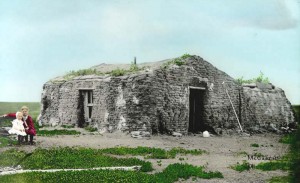
 homesteader Leo Biedermann arrives in the plains of South Dakota in January,1882, during the most severe weather the area has seen in years, he immediately sets about building his house and barn, stocking the farm with cattle and horses, and planning his crops. The other homesteaders are astonished at his fortitude in the face of blizzards and bitterly cold weather, and though he is not friendly, they help him out when he needs machinery or a helping hand, and wish him well. When the first crops are harvested at the end of Biedermann’s first summer, Biedermann has managed to bring in the largest crop of all.
 dermann is particularly bitter, since Praeger has helped Biedermann, has allowed his young twins to work for him, has provided him with needed equipment, and has been a good neighbor, and he must constantly remind himself to have faith, even when Biedermann’s success seems undeserved.
 “overheated wind” and drought, during which Biedermann “does more than well,” while everyone else loses nearly everything. Harris Praeger is short-tempered and surly, and his strawberry birthmark is often regarded as the touch of the devil. Even his father is powerless to prevent Harris’s ultimate actions against Biedermann.
 ravers, an estate agent in New Hampshire, inventories the home of John Jewett Tatro at the behest of his niece and heirs, she is aware that Tatro’s grandfather was once an Indian agent on an Ojibwe reservation and that his grandmother was Indian. Faye, of Indian heritage herself, is hoping to find some Indian artifacts that can be sold or donated to a museum on behalf of the estate. Sarah Tatro, the niece, is not much interested in “old beadwork and stuff,” and she has almost forgotten the old storage room in the attic, but when she opens it, Faye finds a room packed with suitcases containing beadwork, baskets, moccasins and other handwork, a cradleboard, and a beaded footstool—a collection of enormous value.
 e third part of the novel, Shawnee, a young girl living in a remote area of the reservation, is left babysitting for her younger brother and baby sister on a bitterly cold night in which they have not enough fuel and no food. Their mother has gone to town for help, but she gets sidetracked drinking, leaving the children alone for several days. The depiction of the lives of the children is heart-rending, and their connection to the “Little Girl Drum” adds another layer of mystery to the drum’s “life.”