When his brother William asks novelist Henry James what is the “moral” of his stories, James replies, “The moral? The moral is the most pragmatic we can imagine, that life is a mystery and that only sentences are beautiful, and that we must be ready for change, especially when we go to Paris, and that no one who has known the sweetness of Paris can properly return to the sweetness of the United States.”
Focusing on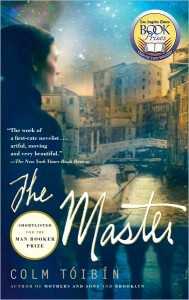 the life of Henry James, Colm Toibin’s The Master goes way beyond the usual “novelization” of someone’s biography. Toibin has done a tremendous amount of research and has obviously read everything James has written, but he has so completely distilled all of this information, that in writing this book, he actually recreates Henry James. Most remarkably, he does this while using the third person point of view to tell the story, preserving the objective tone but bringing forth characters and events so vibrant with life that Toibin’s Henry James is the same man that we know from his letters and journals—and from the insights we glean from James’s novels.
The novel opens in 1895, when James’s play, Guy Domville, is booed on opening night. James, now fifty-two, has had high hopes for this play and for a career as a playwright, believing success on stage will put an end to “his long solitary days” and allow him to spend more time among actors, whom he finds fascinating. Described as “a great stranger, with nothing to match his own longings, a man away from his own country, observing the world as a mere watcher from the window,” James, an American by birth, is a lonely and solitary figure throughout the novel, a man unable to form a committed relationship with anyone, either male or female, sometimes wanting companionship but not closeness, and always needing solitude to work.
Through flashbacks, Toibin shows how James’s early upbringing may have been partly responsible for his feelings of isolation, since he and his three brothers and sister moved with their parents around Europe for years. Lacking a sense of security, dependent almost  completely on each other for companionship, and always feeling like outsiders with little or no contact with contemporaries at home or abroad, the James siblings formed close attachments with each other and often mere acquaintanceships with others of their social and intellectual level.
When James begins to write, first stories, and then novels, he draws for inspiration on the people he knows best and the events which have affected their lives and his own. His sister Alice is the model for the little girl in The Turn of the Screw, a story idea James receives from the Archbishop of Canterbury. His sympathy for the children of Oscar Wilde, after Wilde’s conviction for lewdness, and the writings of another friend, John Addington Symonds, about the love between two men, evolve into the story of a child whose father is a writer visited by an American who admires his work. His cousin Minny Temple becomes the inspiration for several of his most important female characters—in “Poor Richard,” Daisy Miller, and Portrait of a Lady–and when she dies, after James has refused to bring her to Europe because of her poor health, he guiltily gives her a posthumous trip through Wings of the Dove. His brother Wilky’s serious wounds in the Civil War, from which he recovered at home, provide James with details he includes in other stories. Virtually every aspect of his life works its way into a James story in some form or other, and as he gets inside the psyches of his characters through his fiction, he reveals his own psyche, his sympathies, and his personal conflicts.
Toibin’s dual focus on James’s life and how i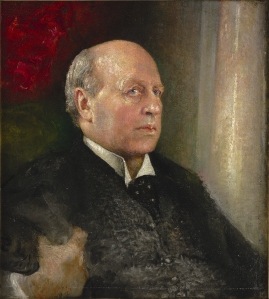 t is embodied in his fiction, give a powerful immediacy and sense of verisimilitude to this novel, so strong that one cannot help but feel an emotional connection to James, no matter how remote he may seem otherwise. His connections to great families, to writers whose names are well known, and to people who are willing to accept him completely on his own terms provide Toibin with unlimited source material. It is Toibin’s own talents in ordering this information, bringing it to life, and showing its importance in James’s writings, however, which make this novel so important. On the longlist for the Man Booker Prize for the best novel of the year, The Master is a masterful novel which honors Henry James through its careful scholarship and the vibrant recreation of James and the events in his life. A “Must Read” for lovers of Henry James. (On my Favorites List for 2004)
Notes: Colm Toibin does not usually name the stories and novels for which Henry James finds inspiration in his own life. The reader who is familiar with James’s novels and stories will immediately recognize the similarities between real events and the plots and characters of the novels that James is shown to be creating. Though the reader who is unfamiliar with James’s work may find the novel to be fascinating without that literary background, his/her pleasure will increase immeasurably if s/he reads some summaries of the novels or views some of the excellent adaptations available on video.
The author’s photo appears with an interview on this South African site: http://book.co.za
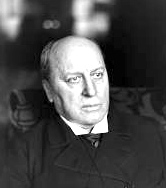
The photo of Henry James is from http://dannarhitect.wordpress.com
 read and admired Irish author Colum McCann’s earlier novel, This Side of Brightness, a powerfully imagined novel of homeless people and the bleak society they create in the subway tunnels of New York City, I approached this novel initially out of curiosity. McCann’s writing style–very bold, masculine, urgent, and sometimes raw–was the perfect vehicle for that street-smart and inspired novel. I could not imagine an author with such a style succeeding in this novel, a fictionalized account of the life of Rudolf Nureyev and the rarefied world of ballet.
 s) in this novel introduces Victor Pareci, Nureyev’s only real friend, a character with whom Nureyev shares a flambuoyantly gay, often cocaine-enhanced social life and with whom he haunts the baths in New York City. Some readers may find the point of view, the language, and the graphic descriptions offensive, but McCann is presenting this star and his lifestyle as they really were, and he is too direct and uncompromising a writer to pull any punches here. The description of Victor’s ostentatious walk through the neighborhood at the beginning of this section is one of the most intense and fully realized pieces of descriptive writing in the novel, a brilliant interlude and change of focus, which, though vulgar, perhaps, epitomizes Victor’s attitude, complements that of Rudi, and ultimately makes the ending of the novel particularly poignant.
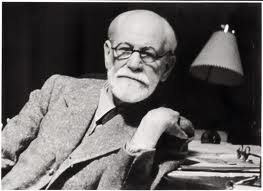
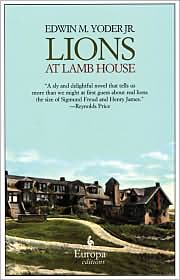 ined meeting of Sigmund Freud and Henry James at James’s residence, Lamb House, is the focus of this surprising novel of ideas, which conveys the intellectual ferment in Europe just prior to World War I in a style which is filled with warmth and good humor. Henry James and Sigmund Freud seem human and even fun-loving here, but the novel is no farce. Serious issues involving James’s writing, his style, his subjects, and his repressions all come into play, even as Freud admits to having his own problems trying to reconcile James’s creativity with the “scientific knowledge” which forms the basis of his psychoanalytical principles. Freud’s questions about his research become more acute when James agrees to undergo “short term analysis” during Freud’s stay at Lamb House.
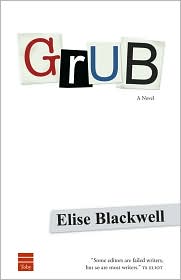 satiric eye on the publishing business, author Elise Blackwell shows the agonies and excitements of several young authors as each tries to find the magic formula for getting a book published, publicized, and sold to the public. Most have been successful with a first novel—at least to the extent that it has been published—and all now have second novels which they are trying to “place” with a publisher. Trying to support themselves with contributions to small literary journals while looking for the “right” connection for their next novel, they must negotiate literary minefields filled with agents, editors, publicists, manuscript “fixers,” sponsors of writing conferences, and influential bookstore chains, all of which affect their sense of mission and, ultimately, their self-worth.
 ffler, a believer in the New Realism, which he has not completely defined, spends his time watching a man in the park, a court bailiff, recording every aspect of his life. Plotless but “literary,” his newest novel is having a difficult time finding either an agent or a publisher, and he is not even sure he believes in the New Realism anymore. “If it’s a book you really want to write,” he asks, “does it matter if anyone wants to read it?”
 Jeanette Winterson’s beautiful and magnificently descriptive, impressionistic novel tells two interconnected stories from two different periods over a hundred years apart, each of them asking who we are as humans, what is our connection to the past, and what makes our lives worth living. On its most modern level, it is the story of Silver, born in 1959, “part precious metal, part pirate.” A young girl without a father, Silver and her mother live in a house perched precariously on the edge of a cliff in northwest Scotland—until her mother, strapped to ten-year-old Silver, one day falls in her climb back to the house, releasing her harness so that Silver, who becomes instantly an orphan, will live.
 wever, Robert Louis Stevenson visited the light and was fascinated by the story of Babel Dark, a local preacher, who became the inspiration for Mr. Hyde in Dr. Jekyll and Mr. Hyde and whose story represents the second of the story lines.
 er and Babel Dark develop in parallel, the novel takes on operatic qualities, with the two stories often sounding like duets sung in counterpoint to each other, one voice light and the other dark. As Silver and Dark seek love and fulfillment, the primary human quality which separates man from Darwin’s animals, the cadence of Winterson’s writing rises and falls, swirls, and turns in upon itself, with the same motifs echoing throughout. Winterson creates deliberate parallels when she incorporates the story of Tristan and Isolde, along with a visit from Charles Darwin, into the narrative for emphasis.
 Winterson chooses to tell the story on her own terms, juxtaposing scenes from different time periods to show similarities and contrasts between two sets of lives, all of which come together thematically by the end of the book. The conclusion completes a circle by harking back to the beginning, and the reader who goes back to the first few pages will be richly rewarded with greater insights into her meanings. A rich novel which the reader will want to read slowly to savor, Lighthousekeeping marks a welcome return of Winterson to the compressed, poetic style of her earlier novels. (On my