“Now I know what my price is.”
One of the hottest writers of mystery/thrillers in Europe these days is Stieg Larsson, a Swedish journalist, photographer, and political activist in socialist causes, who worked tirelessly to expose the history of the extreme right and its crimes, including neo-Nazi crimes. When he died suddenly in 2004, at age fifty, Larsson left a completed trilogy of novels in a vault, written for fun during his career but never published. Two of these novels have now been released in Europe to enormous critical and popular acclaim, and the first one, The Girl with the Dragon Tattoo is receiving the same kind of treatment in the US, where it was published this past fall.
The Girl with the Dragon Tattoo, begins with the arrival of Mikael Blomqvist on remote Hedeby Island. Blomqvist has been hired to do research for the biography of prominent Swedish industrialist Henrik Vanger and his large family, and he is looking for a place to stay where he can avoid attention. Blomqvist, a financial journalist for Millenium magazine, is due to serve a three-month prison sentence soon for libeling a man he accused of criminal activity. For private reasons, he did not challenge the charge and offered no defense, preferring to serve the sentence and get it over with to avoid the unrelenting publicity of the case.

The temporary job he accepts on this remote island involves the search for Harriet Vanger, Henrik’s niece who disappeared from the island when she was sixteen–thirty-seven years ago. Despite searches that continued for many years, no trace of her has ever been found.
Hired to help Blomqvist in his research is an assistant, Lizbeth Salander, a disturbed young woman who is under the guardianship of the state. Salander has suffered enormous sexual and emotional abuse and has withdrawn to the point that she trusts no one and can make no emotional connections. Marking events in her life through tattoos and body piercings, she lives as solitary a life as possible, making limited contact with the outside world through the internet where she has “met” several fellow computer hackers. Her desire to be alone, and her skills with the computer, make her a formidable researcher for Blomqvist. Gradually, Salander begins to respond to Blomqvist’s honesty and respect for her talents as she discovers important new information about the Vanger family.
 Though the novel starts slowly as the characters are introduced and the genealogy of the Vanger family is explored, author Stieg Larsson succeeds in creating a sense of Sweden’s social culture and atmosphere as he uses the remote island location to set up the equivalent of a “closed room” mystery.
Vibrant characters carry the developing action. The reader cares about Blomqvist and Salander from the beginning, as both are vulnerable and have suffered unjustly, and as the novel develops, the reader also gains sympathy for the elderly Henrik Vanger. The author, however, uses his reputation as an ardent anti-fascist and anti-racist reformer to give authenticity to his depictions of dangerous Vanger relatives, some of whom have been ardent adherents of ultra-conservative Swedish and Nazi movements, and proponents of despicable crimes.
The suspense builds as family secrets unfold dramatically—murder, rape, torture, and long-term sexual abuse, for starters. The novel becomes an utterly compelling can’t-put-it-downer, as the reader “travels” with Blomqvist and Salander, sharing their frustrations and their physical danger as they investigate Harriet’s decades-old disappearance.

Developed in minute detail, this rich novel is especially satisfying because it leaves no loose threads, connecting every detail to produce a blockbuster conclusion which satisfies in every way. Only the characters—Salander and Blomqvist—remain “unfinished,” to be further developed in The Girl Who Played with Fire. This second novel in the trilogy will be published in the US in July.
Photo: The author’s photo appears on http://www.theglobeandmail.com
ALSO by Stieg Larsson: THE GIRL WHO PLAYED WITH FIRE, THE GIRL WHO KICKED THE HORNET’S NEST
By David Lagercrantz: THE GIRL IN THE SPIDER’S WEB THE GIRL WHO TAKES AN EYE FOR AN EYE, THE GIRL WHO LIVED TWICE
The Swedish films made from these books are also reviewed here: THE GIRL WITH THE DRAGON TATTOO (FILM), THE GIRL WHO PLAYED WITH FIRE (FILM), THE GIRL WHO KICKED THE HORNET’S NEST (FILM)
 hor Toni Morrison continues her powerful examination of slavery’s evil legacy, a focus of her long career, by creating an intense and involving novel set in the Atlantic colonies between 1682 and 1690, when the slave trade from the Portuguese colonies in Africa was a lucrative business for many colonists. Here Morrison examines slavery from its earliest days, concentrating on its short term and long-term effects on society as a whole and the people, especially the women, who were it greatest victims. Slaves were a valuable commodity in the southern colonies; even in New York, where most of this action takes place, slaves were owned, and property laws governing their ownership were respected.
 el, women are victimized by the social expectations of the day and, often, by the fact that they have no standing either in the law or in religion. Those who do not follow a set creed, held in common by society, such as the slaves and the practical Rebekkah, are doubly alienated, at the mercy of the legal and ecclesiastical world in which they live. They have all learned that women are “of and for men,” that they are people who “never shape the world, The world shapes us.” An intense and thought-provoking look at slavery from its beginnings, this is a novel of epic scope, filled with complex philosophical, Biblical, and feminist issues and symbols. Morrison’s themes are clear and unambiguous, and her many admirers will celebrate this novel for its message, even as they may regret its sacrifice of full character development to that message.
 guage that sometimes takes on the cadences of the psalms, the soaring intensity of opera, and the beautifully repeated phrases of canons, author Veza Canetti tells the semi-autobiographical story of an artistic couple trapped just outside Vienna at the time of Kristallnacht, November, 1938, a terror she and her husband had also endured. The Canettis managed to escape from Austria just ten days after Kristallnacht, and immediately upon their arrival in England, Veza Canetti began to write this book. Using fictional characters, she fills the narrative with vibrant details from her own recent experiences, completing the “novel” in the spring of 1939.
 nges in her Austrian neighborhood as terrifying, while Kain sees nothing of the violence and death. A poet who believes that if you like someone, that person will like you back, Kain’s naivete is partly responsible for the delay in their plans to leave. In the face of swastika flags appearing even on their own balcony, and their landlady’s announcement that they must vacate their apartment because a German couple plans to move in, Kain still goes to a local coffeehouse to read the paper, surprised when another patron points him out to the waiter, who requires him to leave.
 Two Nazis manage to control nearly all aspects of their neighborhood life. The first is a German SS officer, who moves into the large villa where the Kains live to supervise the occupation and control the population, primarily through intimidation. The other Nazi is Baldur Pilz, an Austrian who is particularly proud of his “low number,” proof that he was among the first Austrians to join the Nazi movement. Both men are venal and ignorant, representative of a level of society that people like Eva and Kain have never known.
 hing, off air, off leaves, needing only warmth,” and though vulnerable to vultures or wild animals, it can survive because of its “inner shell.” It is man who is the most sadistic towards the tortoise, cutting flesh off its living body to get tasty, fresh meat, cutting its heart out, or detaching its brain. Even then the tortoise can still go on creeping. It does not die quickly—unless it is deprived of warmth.
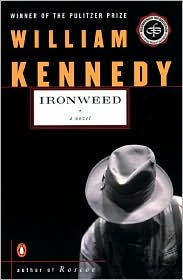 With Ironweed, William Kennedy completes his three novels of Depression-era Albany, wrapping up this study of time, place, and people with an emotionally gripping Pulitzer Prize-winner (1984) that focuses on those who call themselves “bums,” all of them living apart from society because their dreams have died. Francis Phelan, long-absent father of Billy Phelan, the main character in the previous novel, Billy Phelan’s Greatest Game, returns to Albany for the first time in twenty-two years. In the previous novel, which concludes a week before Ironweed begins, Francis reconnects with his son Billy, who, stunned by Francis’s reappearance, gets him out of jail, gives him money, and begs him to visit his mother and the family.
 ct for which he still atones. Francis, however, now discovers from Billy that Annie has never revealed to anyone how Gerald died, a proof of forgiveness that Francis finds astounding.
 ts in his life, his inner world takes shape. The opening scene, a trip to the cemetery, where Francis visits his parents’ graves and that of baby Gerald for the first time, is one of the most dramatic openings ever written, and as Francis converses with his lost family, he establishes the contrasts with his present life. Scenes in which Francis, cursed with a hair-trigger temper, literally fights to the death alternate with scenes involving Annie and his family; scenes of his childhood and adolescence alternate with sad scenes involving the deaths of his homeless friends.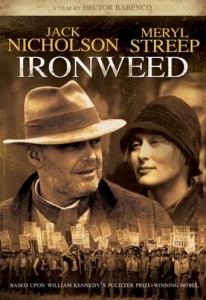
 sing after her rowdy dog-pack one day, the Queen discovers them barking at a “removal-like van,” a bookmobile, parked outside the kitchen at Windsor. Entering the mobile library to apologize for the din, the Queen meets Norman Seakins, a young man from the kitchen whose primary interest is in gay books and photography. Feeling obligated to take a book, the Queen borrows a novel by Ivy Compton-Burnett, intending to return it the following week when the bookmobile returns.
 ted by her reading—she leaves them alone and gives them more freedom than ever before—but the press notes that she is less careful of her dress, sometimes wearing the same outfit to two events in the same month. Her equerries worry that she has Alzheimer’s because she’s constantly writing things down. Eventually, the Prime Minister becomes alarmed, after being ignored during an interminable weekend at Balmoral because the Queen was reading. He determines to stop this activity.