“Visions are the creators and feeders of the world. I see. I measure the world as it is, which the vision will create anew.“
 In what may be her most exciting and original novel, George Eliot weaves two completely different plots, one of which is a uniquely sympathetic and fully developed story with Jewish protagonists. Presenting no Jewish stereotypes, as we see in Dickens (in Oliver Twist and other novels) and even Trollope (with The Way We Live Now (Barnes & Noble Classics)), she depicts characters who have, in one case, tried to avoid their heritage and in another have been drawn irrevocably to a religion and culture with which they have had no previous contact.
Daniel Deronda, a young man who has been brought up as an English gentleman by Sir Hugo Mallinger, has never known his real parents, secretly fearing that he is illegitimate. As time passes, he longs to understand the circumstances of his birth, especially after Sir Hugo marries and produces heirs of his own. Beautiful Gwendolen Harleth, selfish and manipulative, is romantically attracted to Daniel, but a sudden change in her family’s financial status leads her into a precipitous but financially advantageous marriage to the arrogant Henleigh Grandcourt. Meanwhile, Daniel saves a young woman from drowning herself, a singer named Mirah Lapidoth who is in despair. Mirah, a Jew, has been stolen from her family by her father, whom she suspects planned to sell her into white slavery, and she desperately misses her mother and brother, whom she can no longer find. As she progresses with her singing career, she never forgets her heritage, of which she is inordinately proud.
As Eliot develops the various social settings of this fascinating novel, written in 1876, a full picture of British society evolves. To protect Mirah from her father and her own despair, Daniel places her in the home of friends and resolves to try to find her family. When Daniel discovers her brother Mordecai, a Jewish mystic and seer, Mordecai is convinced, against all odds, that Daniel is Jewish–and is the person who will carry his visions for a Jewish nation to fruition. As the novel develops further, Eliot explores Jewish mysticism, religious traditions, and cultural heritage, even as she also uses the shallow, aristocratic life of Gwendolen Harleth Grandcourt as a contrast to that of Mirah.
The novel is uniqu e in its favorable and lengthy depiction of Judaism and in its illustration of Judaism’s cultural superiority to superficial, aristocratic British life. Mirah and her family take center stage in terms of sympathy, despite the fact the Gwendolen, who in other novels might have been the heroine, suffers terribly in her miserable marriage to Grandcourt. Daring to do something completely different with this complex novel, which was her last, Eliot’s vision and seriousness of purpose here created enormous controversy in its time and presaged a new direction for the novel.
Notes: The BBC has produced a dramatization of this novel in five episodes.
Also reviewed here: MIDDLEMARCH and MILL ON THE FLOSS
 c novel MIDDLEMARCH, often considered her masterwork, portrays life in an English Midlands community from the point of view of several main characters and the people with whom they interact. While developing characters and plots, however, she also illustrates a variety of themes related to the social milieu of the early 1830s. Dorothea Brooke, the main character, is a bit rebellious, in the sense that she wants to do something with her life, not just be the typical upper-class wife of her period. For this reason, she rejects an early suitor in favor of Edward Casaubon, a man more that twenty years her senior, who has devoted his life to arcane scholarship.
 aracters add to the portrait Eliot creates of several levels of provincial society and their lives. All are consumed with money (or imprisoned by it), since the society is based on class and the ability to live up to class standards. The poor are just trying to earn enough to stay alive. Truly good people, those who “love their neighbors as themselves” and are willing to sacrifice for them, are rare here, and they are even more rarely involved with the church, which was often considered an appropriate profession for the sons of upperclass families who would not inherit enough to live up to their class. None of the marriages here are ideal, and most are much less than that–seeming more like mergers, than real marriages. Few men or women are concerned with the education of women or envision any role they might play other than as keepers of the hearth. Most of the characters, in fact, have so little focus beyond themselves that they do not even seem to realize that other characters, including their spouses may have dreams and desires, too. People are judged by the degree to which they adhere to the social norms, rather than by any insight into their characters. Psychology was not yet a concern, and Freud’s research was still thirty years away from fruition.
 ving openly for many years with a married man, George Henry Lewes. Before her death, she shocked again by marrying a man twenty years her junior. She found it necessary to use a man’s name throughout her career as a novelist, not her real name of Mary Anne Evans, to promote the publication and sale of her work as “serious” novels.
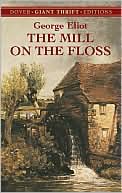 loss, published in 1860, traces the turmoil in the life of Maggie Tulliver, a young woman who has a streak of independence but who also feels close to her father and her brother and believes that she must always honor their feelings and wishes. Maggie’s father is the owner of the Dorlcote Mill on the Floss River, a failing business drawing him into increasing debt to his relatives and creditors. Her brother Tom, with no interest in the mill, is encouraged to learn other skills which may suit him for a higher level of society. When the mill fails and is sold at auction to Lawyer Wakem, the Tullivers become social outcasts, at the mercy of creditors and dependent on their extended family.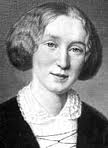
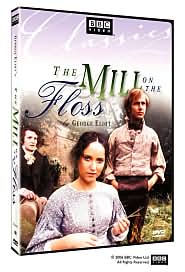 Psychologically astute in the exploration of themes as they affect Maggie, Eliot amplifies these themes through imagery from nature, legend, and even religion. Often melodramatic in plot, the novel remains realistic, even autobiographical, in its attention to character. Though it is not as fully developed as her later novel Middlemarch, Mill on the Floss is still a well developed, thoughtful novel which goes far beyond the pulp fiction being serialized in newspapers and magazines during that time.
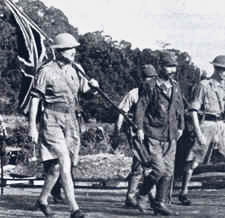
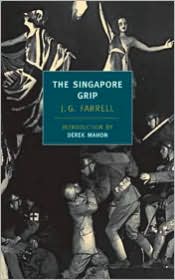 anese invaded China in 1937 and French Indo-China in 1941, all part of Japan’s expansive efforts to establish the Greater East Asia Prosperity Sphere, the handwriting should have been on the wall for the colony of Singapore, one of Great Britain’s most important military and economic centers, located as it is between India and China. Hubris, and the sense that their military power could not be realistically challenged, however, led to Britain’s lack of military preparedness and the astonishingly quick takeover of Malaya and Singapore by the Japanese in 1942, handing the British what Winston Churchill called “the worst disaster and largest capitulation in British history.” Author J. G. Farrell recreates these traumatic days in Singapore as the final novel in his “Empire Trilogy,” which, like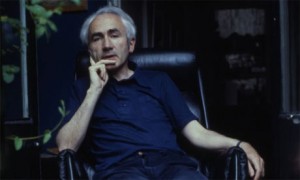
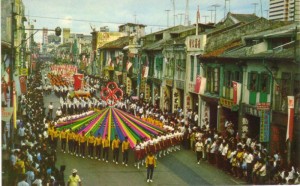
 apur in 1857 is the pivot around which the action revolves in this Booker Prize-winning novel by J. G. Farrell, but Farrell’s focus is less on Krishnapur and the siege than it is on the attitudes and beliefs of the English colonizers who made that siege an inevitability. He puts these empire-builders under the microscope, then skewers their arrogant and superior attitudes with the rapier of his wit, subjecting them to satire and juxtaposing them and their narrowly focused lives against the realities of the world around them. Remarkably, he does this with enough subtlety that we can recognize his characters as individuals, rather than total stereotypes, at the same time that we see their absurdity and recognize the damage they have done in their zeal to spread their “superior” culture.