Note: This novel was the WINNER of the Lost Man Booker Prize for 1970, a year in which the requirements changed and no Booker Prize was awarded. The Lost Man Booker prize was awarded in May, 2010.
“A situation which defied comprehension, a war without battles or trenches. Why should one bother with the details: the raids for arms, the shootings of policemen, the intimidations? What could one learn from the details of chaos?”
Originally publish ed in 1970 and newly reprinted by The New York Review of Books, J. G. Farrell’s Troubles, the story of Ireland’s fight for its independence from England, from the close of World War I through 1922, illuminates the attitudes and insensitivities that made revolution a necessity for the Irish people. Farrell also, however, focuses on the personal costs to the residential Anglo-Irish aristocracy as they find themselves being driven out of their “homes.”
Life in this novel takes place within the microcosm of a 300-room hotel on the coast of County Wexford run by Edward Spencer, a conservative Protestant loyalist who, regarding himself as a benevolent landowner, demands total submission of his tenants and the signing of a loyalty oath to the King, something they refuse to do. The hotel, lacking maintenance during the war and its aftermath, is now too costly to repair, and it is rapidly becoming a ruin, as the number of British tourists and summer guests dwindles during the early stages of the Irish rebellion, and the number of elderly permanent guests, unable to pay their rent, remains the same. Sinn Fein attacks occur in and around the property, but they are, at first, merely minor inconveniences and annoyances.
Major Brendan Archer, newly released from hospital where he has been recovering from the long-term emotional effects of his wartime experience, arrives at the ironically named Majestic Hotel on a bleak and rainy day to reintroduce himself to his fiancée Angela, daughter of the proprietor, and, if they agree to marry, to return wit h her to a home in England. The Major, however, is greeted by no one upon his arrival at the hotel desk, and he must find his own way to the Palm Court, “a vast, shadowy cavern in which…beds of oozing mould supported banana and rubber plants, hairy ferns, elephant grass and creepers that dangled from above like emerald intestines.” Despite the claustrophobic and depressing atmosphere, and the lack of an immediate betrothal, the Major remains at the hotel, off and on, for three years, as it begins, literally, to fall around the ears of the inhabitants, and the rebellions and incursions by local farmers and “Shinners” become more ominous.

Ocean View Hotel, Block Island, RI, used as model for this novel.
The Majestic Hotel, with its echoes of His Majesty, is an obvious symbol of British rule in Ireland. Perched on the coast of southeast Ireland, it faces England and Wales, but the storms, tides, and destructive winds off the Irish Sea have scoured its façade and undermined its structure. Windows are broken, the roof leaks, and decorative gewgaws and balconies hang loosely, threatening to crash. Roots from the plants have worked their way inside walls, floors, and even ceilings. The hotel’s ironically named Imperial Bar is “boiling with cats,” some of which live inside upholstered chairs and all of which subsist on a diet of rats and mice. The handful of mostly female tenants who remain at the hotel are aged, clinging to the faded elegance of the Majestic because they have no place else to call home.

The decrepitude of the Majestic offers Farrell unlimited opportunities to indulge his formidable gifts of description and wry humor. Conjuring up images from our own nightmares, he selects small, vivid details to make the larger thematic picture more real. Edward’s introduction of peacocks to the menagerie, the Major’s need to change rooms constantly as he is driven out by the weather or decay, and the eventual takeover of the hotel’s top floor by the cats are homely details which enlarge his canvas and bring his symbolism home to the reader. When two Irish policemen are killed by Sinn Fein in a distant town, the event has little effect on the inhabitants of the Majestic, and they continue to see themselves as part of the British “moral authority” over the more primitive, uncivilized Irish. But as the reader learns about the earlier Easter Rebellion of 1916 and the number of quick executions by the British administration, along with disturbances at the Peace Day Parade in Dublin, the killing of innocents by Sinn Fein, and, the continued burnings and raids, the danger becomes more immediate and more obvious.

Injecting small news stories throughout the narrative, Farrell sets up global parallels to the rebellion in Ireland, widening his scope by illuminating that time in postwar British history when virtually all the colonies of the empire were simultaneously agitating for independence. Newspaper stories about the British army’s firing on the populace in Amritsar, the laying down of arms by the Connaught Rangers in India in sympathy with the Irish people and a “native” uprising in South Africa, give wider scope to the Irish rebellion and its attendant violence. When Edward and the Major finally begin to shoot the Majestic’s cats, the reader is prepared for a final round of violence at the Majestic.
Though Farrell won the Booker Prize in 1973 for The Siege of Krishnapur, Troubles may be his best-known and most memorable novel, and this new reprinting will make it accessible to a new readership previously unfamiliar with his work. Few readers will be able to forget the humor (and even satire) that is injected here at some of the most emotional moments. Clearly delineating the emotional issues behind the drive for Irish independence, he makes the reader see both sides with empathy. From the outset we know, however, that Farrell believes that independence from British rule is both necessary and inescapable. As violence comes to the Majestic, we see that Farrell has prepared us to recognize that violence is random, its events “inevitable, without malice, part of history.”
Notes: The photo of the author appears on http://www.theindiaphile.com
The Cork University Press (http://corkuniversitypress.typepad.com) suggests from letters written by Farrell that the inspiration for the Majestic was the ruin of the Ocean View Hotel on Block Island, Rhode Island, in the US. (The photos on the Cork University site are not correct, however, showing [first] Woonsocket House, a small guest house on the Massachusetts border, and not on Block Island, Rhode Island, and (second) the Ocean View Hotel on Pablo Beach, Florida, near Jacksonville, neither of which is appropriate.)
The Ocean View Hotel on Block Island, Rhode Island, actually had 500 rooms in 1902: see this PDF file by scrolling down on the link that opens: http://query.nytimes.com
A view of the actual Ocean View Hotel with sailboat is available as framed art print here: http://www.allposters.com
Parts of the interior of this hotel may have resembled the photos from the decrepit Grande Hotel in Mozambique, once a showpiece.
Also reviewed here: THE SINGAPORE GRIP and THE SIEGE OF KRISHNAPUR
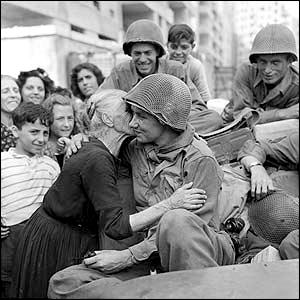
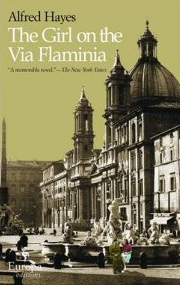 me during World War II was not a “liberation” to many of its inhabitants after the occupying American and British armies took up residence. The initial joy at the Germans’ departure had faded, six months later, as many Italians began to resent what they regarded as the occupiers’ sense of entitlement and superiority. Perfectly capturing the atmosphere and changing moods of the times, author Alfred Hayes creates a microcosm of Roman life in the home of the Pulcini family on the Via Flaminia. Adele, the mother, needing funds and food, uses her dining room as a small café for a handful of American and British soldiers in the evening, and, if they need “company,” she arranges for them to meet Italian women.
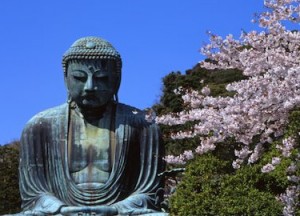
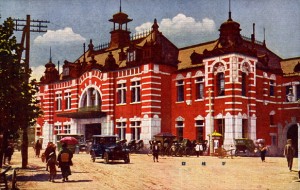
 thor Yukio Mishima finished the final novel in his “Sea of Fertility” tetralogy on November 25, 1970, he disemboweled himself in a ritual suicide—seppuku—committed in the presence of four members of his private army. He was then beheaded, in accordance with ritual. Mishima, aged forty-five, believed whole-heartedly in the strengths of the old Japanese emperors and in the strong, aristocratic culture that had evolved from the samurai. He never forgave Emperor Hirohito for denying his godliness at the end of World War II, and he despaired of the political wrong-headedness he saw on both the right and the left a generation after the war. Spring Snow, written in 1966, is the first of the four novels of what is generally regarded as his masterpiece, a series which explores the essence of life, the spiritual beliefs which make that life meaningful, the obligations of man to a wider society, the relationship of chance to free will, and the glory of dying for one’s beliefs. By using a historical approach, with each of these novels taking place later than the previous one, and by repeating his characters, Mishima allows the reader to see Japanese cultural and social history change over a fifty-year period.
 s 1910 story of Edwardian England, Forster illustrates the conflicts between the superior attitudes of the aristocracy and a developing feeling of obligation toward the “lower” classes which World War I will soon bring into sharp relief. Margaret and Helen Schlegel are intellectual and sensitive to the arts, with compassionate hearts for those less fortunate.
 observations and great wit, the novel follows the narrative pattern of a melodrama, but Forster’s sensitivity to both sides–the practical and conservative values of Henry vs. the emotional and idealistic sides of Margaret and Helen–elevates the novel above the tawdry. Henry is a product of his time and his class, but though times are changing, he is too dense to realize it. The Wilcox home at Howard’s End is a microcosm, and its conflicts are those of the nation at that time. Thoughtful and entertaining, Howard’s End still draws in readers after almost a hundred years.
 Gleefully combining the raucous humor of absurdity with slyly subtle wordplay and caustic satire, Greene entertains on every level, poking fun at British intelligence-gathering services during the Cold War. Setting the novel in the flamboyant atmosphere of pre-revolutionary Havana, where virtually anything can be had at a price, Greene establishes his contrasts and ironies early, creating a hilarious set piece which satirizes both the British government’s never-satisfied desire for secrets about foreign political movements and their belief that the most banal of activities constitute threats to national security.
 lligence for being such willing dupes of a vacuum cleaner salesman who never wanted to be an agent in the first place, Greene betrays both his familiarity with the inner workings of the intelligence service, of which he was once a member, and his rejection of Cold War politics. In a conclusion which will satisfy everyone who has ever become impatient with political maneuvering, Greene carries the absurdities of power to their limits, orchestrating a grand finale which shows British politicians at their most venal–and most ridiculous. Acerbic in its humor and delightfully refreshing in its choice of “hero,” this novel is Greene at his very best.