“In the secret grassy quadrangle of the Gardens, I crawled before I could walk, I walked before I could run, I ran before I could dance, I danced before I could sing, and I danced and sang until I learned stillness and silence and stood motionless and listening at the Gardens’ heart, on summer evenings sparkling with fireflies, and became, at least in my own opinion, an artist…a would-be writer of films.”
 Set in the Greenwich Village enclave of the Macdougal-Sullivan Historic District, Salman Rushdie’s latest novel is pure Rushdie, while also being pure New York. His young narrator, Rene Unterlinden, the son of Belgian academics, has lived in the Macdougal-Sullivan Gardens all his short life while working to become a filmmaker. The spacious house beside him, owned for over twenty years by a mystery man who has never been seen on the property, has been in the care of professionals – despite its highly desirable address. On the day of President Obama’s inauguration, an “uncrowned seventy-something king from a foreign country and his three sons take over their castle…exuding a heavy cheap odor, the unmistakable smell of crass, despotic danger, the kind of scent that warned us, look out for this guy, because he could order your execution at any moment, if you’re wearing a displeasing shirt, for example.” Nothing hints at the family’s place of origin, and the head of the household has no wife or even any photos of a wife. Though “he made huge, clumsy efforts to be sociable and neighborly,” he was found to be “a man deeply in love with the idea of himself as powerful.”
 Rene confesses that when looking at this man, he “thought of Dr. Frankenstein’s monster,” but before long, Rene begins thinking that this man might, at last, be the unique film subject he has been searching for. Fewer than twenty pages later, the reader learns that the new residents are from Mumbai and that they have survived a terrorist attack which took place there in November, 2008. About a month after that, the family vanished from India for New York, their escape to their “safe” address in New York City having been planned for many years. Now calling himself Nero Julius Golden, with sons named Petronius (Petya), Lucius Apuleius (Apu), and Dionysus (D), the new resident of the Gardens reminds Rene of the wicked king in a fairy tale who kept his sons prisoners in a house of gold. He admits, however, that “in our age of bitterly contested realities, it is not easy to agree upon what is actually happening or has happened, or what is the case, let alone upon the moral or meaning of this or any other tale.” What is known about the sons is that Petya is high on the autism spectrum and loves computer games and martinis. Apu is a gifted painter of portraits who has learned sorcery, Practical Kabbalah, Buddhist Judaism, and Mysore yoga. Their half-brother Dionysus is uncertain about whether he is transgender, transsexual transvestite, or cross-dresser, though one person suggests that “if you don’t identify with woman-ness or man-ness, maybe you’re nonbinary.”

Looking across the Macdougal-Sullivan Gardens Historic Disrtrict in Greenwich Village. Photo by Douglas Elliman
Rushdie is obviously having the time of his life as he creates and develops these characters, and he certainly enjoys the opportunity to set his story in New York in the heady days immediately after the Obama election. With his immense intelligence, his wild, non-stop imagination, and his ability to see current events as the basis of satiric commentary, he includes music, films, novels, folk tales, and classical references to expand his scope, and as he develops his story, behind the mask of Rene, the focus falls more firmly on Nero Golden, even as Nero begins to age. When Nero falls for the machinations of a young and practiced Russian flirt, the action begins to become more personal, even as Rene begins to uncover the source of the immense wealth which is supporting the family. By 2012, Nero is regarded as a new power player in the construction and development business, and he has had business dealings with the Mafia in major cities throughout the country. When Rene becomes the tragic victim of fate, Nero invites him to live in his house, and event that Rene siezes as an opportunity to be “the wooden horse inside the gates of Troy.”

Another view of the Macdougal-Sullivan Gardens Historic District.
As Rene observes major changes in the lives of the Golden family, however, he is still in his twenties, and he has had little experience dealing with high-level, world-class manipulators. The time frame speeds up in the middle of the novel, as death begins to stalk the Goldens. Nero’s family gets smaller and smaller, and Rene becomes more important as the focus of the story. He is aware that there are gaps in the Golden family narrative and some skeletons in the closet. Eventually, Rene’s girlfriend suggests that he write a “mockumentary,” instead of a documentary, making up what he does not know. “You have an imagination,” she said. “Imagine it.” And Rene suddenly remembers “A golden story…For the Romans, a tall tale, a wild conceit. A lie.”

A Mondrian-like house within the district is the source of some complaints.
When US elections roll around in 2012, Nero is furious about the choice of Romney for Presidential candidate against Obama, and by 2015, he is at his wits’ end: “The Joker was on TV, announcing a run for president, along with the rest of the Suicide Squad….Unable to watch the green-haired cackler make his improbable declaration, I turned to the crime pages and read about killings.” New and ominous characters make their appearance and become threats to Nero and his family, even as two women, girlfriends or former girlfriends of the Golden boys and Rene, become influential players in the action. When the 2016 elections occur, Rushdie is in his element.
As he concludes his novel and ties up the loose ends, he offers this: “Let my little story have its final moments in the midst of whatever macro garbage is around as you read this, whatever manufactroversy, whatever horror or stupidity or ugliness or disgrace. Let me invite the giant victorious green-haired cartoon king and his billion-dollar movie franchise to take a back seat and let real people drive the bus….For eight years we persuaded ourselves that the progressive, tolerant, adult America embodied by the president was what America had become, that it would just go on being like that….[But] America’s secret identity wasn’t a superhero. Turns out it was a supervillain.” While this novel is more contemporary in its focus than many of Rushdie’s others, it is brilliant, thoughtful, literary, and often very funny, one of Rushdie’s most easily enjoyable.

Some autistic people have been helped by their relationships with felines. Petya Golden’s “cat” was an Alpine lynx.
Photos. The author’s photo appears on https://commons.wikimedia.org/
The garden picture of the Macdougal-Sullivan Historic District may be found on https://www.dnainfo.com Photo by Douglas Elliman.
The aerial view of the Macdougal-Sullivan Historic District is found on https://www.foodsofny.com/
A Mondrian-like house in the historic district was the source of some controversy. http://spgarchitects.com
Some people on the autism spectrum were helped by their relationship with felines. Petya Golden decided to befriend an Alpine Lynx. https://en.wikipedia.org/wiki/Lynx
 If this description of family relationships sounds different from anything you have ever read before, be prepared for even more surprises. This novel, a modern epic of the Faroe Islands, closely resembles a tell-all “confidential” over several generations while also presenting a vibrant panorama of island history. In this, The Brahmadells may be unique – at least among books in recent English translation. Written in Faroese by Joanes Nielsen, a native of the Faroe Islands, and translated by Kerri A. Pierce, the novel is pure Faroese in setting, atmosphere, and character. Eigil Tvibor, around whom the novel revolves, is a Faroese author who starts out working on a book containing the cultural history of the islands and then decides to “work some of his own family history into the book.” Of particular interest to him is his great-great-grandfather, Nils Tvibur, who survived the measles epidemic which killed fifty of the 800 inhabitants of the island in the mid-nineteenth century. Though Eigil Tibor asserts that Nils, a violent man, did exhibit some praiseworthy traits during his lifetime, Eigil also admits that Nils “had not been a good person, and truth be told, he sometimes suspected he [himself] was more like his great-great-grandfather than he knew.”


 Born in the Ottoman Empire in 1907 in what is now Bulgaria, author Sabahattin Ali worked as a writer, poet, teacher, and journalist, and he served his country multiple times as a soldier, but he was also a man who believed that women had as much right to be leaders in life as men did, an idea at odds with the militaristic leaders of the Turkish Republic, which was formed in the aftermath of World War I. Writing in his own weekly newpaper, Sabahattin Ali was twice jailed for criticizing the country’s leaders, and mysteries still surround his death by gunshots at the border of Bulgaria and Turkey in 1948, though the nation’s security services are believed to have been responsible. His novel Madonna in a Fur Coat, published in 1943, remains an enduring legacy, reflecting many of his beliefs regarding the role of women within an unusual love story. A new 2013 edition of this book, seventy years after its original printing, has been “Turkey’s best-selling novel for the past three years,” according to the New York Journal of Books, this despite (or perhaps because of) current Turkish President Recep Tayyip Erdogan’s push to reestablish traditional gender roles within the country.

_-_WGA00371.jpg)


 Swiss author Peter Stamm has made a career out of writing short novels in which characters who seem ordinary on the surface become more intriguing – and sometimes more self-aware – as they try to control change or learn to live with it. Some of his characters are damaged while others are simply out of tune with themselves – lacking self-awareness and often oblivious to what is happening around them. Most of these characters must learn to deal with relationships, especially those involving romance, and Stamm often uses dual points of view to convey two different opinions about a relationship and the characters involved in it. This novel is no exception, except in the nature of the couple which is the focus. Here the two main characters, Thomas and Astrid, are older than the characters in the earlier novels – in their thirties as the novel opens and in their sixties when it closes. At the outset, they have been married for a decade or so and have two young school-age children. Having just returned from a five-week family vacation in Spain, they are tired from all the traveling and the need to open up the house and get settled again. They have quieted the children in bed and have begun the usual domestic activities, with Astrid sorting and washing laundry, and Thomas sitting outside on a bench with Astrid’s empty wine glass sitting beside his full one, as he contemplates getting up the next morning to go to work.


.jpg)
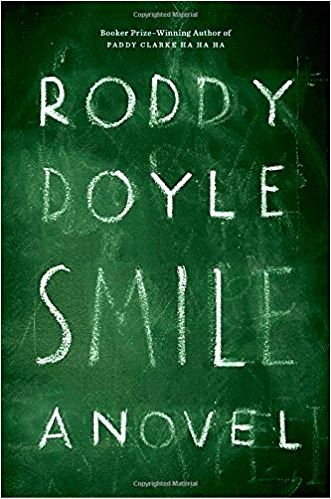 Author of eleven novels for adults, several collections of short stories, many novels for children, and numerous screenplays, including the BAFTA Award-winning screenplay for the film of The Commitments, Irish author Roddy Doyle writes what is arguably his most serious novel, the ironically titled Smile. His characteristic light touch and his humor, even during times of financial difficulties for his working-class Dublin characters, are almost totally missing from this novel, a first-person story of Victor Forde, a man who once wrote radio and newspaper stories about entertainment but gradually found himself unable to write anymore. Like his other novels, this one maintains a conversational tone, but here Victor is talking to himself most of the time, as he tries to figure out how he came to be in the circumstances in which he now finds himself – separated from his wife, living in a flat new to him, not far from where he grew up, essentially unemployed and lacking the ability to see his writing projects through to completion. Were it not for the fact that he has deliberately chosen Donnelly’s pub for his evening entertainment each night, he would have few, if any daily contacts with the outside world.
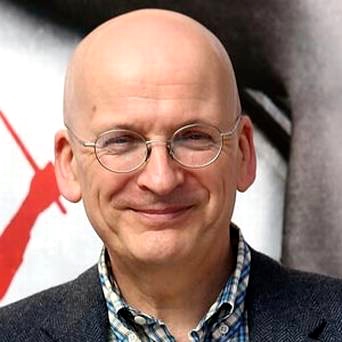 By alternating Victor’s thoughts as he deals with his current lifestyle changes in one set of chapters, and flashbacks to his childhood and earlier years in others, Doyle is able to create a broad picture of Victor’s background and how he became the man he is at present. When a stranger named Edward Fitzpatrick approaches him at the bar and claims to remember him from his childhood, Victor has no idea who he is or was, and it is only through strong hints from Fitzpatrick that he begins to think he might actually have known him. Before long, Victor is sorry that that he didn’t just walk out and keep walking, but even that would not have protected him from Fitzpatrick, who already knows where he lives. What’s more – he says he remembers him from his days at the Christian Brothers School which they both attended. Fitzpatrick’s references to Brother Murphy and his attraction to Victor and his smile upends Victor’s life, reminding him of some of the details of childhood he’d been happy to forget – along with the teasing he had to endure while dealing with his abuse.