“If someone were to ask me what love is, I would say, The knowledge that, in a world of lies there is one person who is totally honest with you and with whom you are totally honest, and there is truth between you, even if it isn’t always spoken.” – Judge Devora Edelman
 Set in an upscale apartment building on the outskirts of Tel Aviv, Three Floors Up might well have been called “Three Stories Up,” as each of the three floors in this building features a resident who has a story to tell in novella form. Dramatic and intensely personal, these stories have few overlaps among them, but as the author focuses on how each person manages his/her life within an Israeli society which is still growing and evolving, the reader becomes involved in the action, especially the psychological action, in ways quite different from most other fiction. Here the apartment building itself becomes overtly symbolic, a microcosm of the human psyche in general, which author Eshkol Nevo will describe in detail later in the book to tie together his themes. Whether this symbolism allows the author to depict a unique Israeli society and its turmoil more effectively, as some critics claim, or whether it simply provides a vehicle through which the author can emphasize how much these often damaged characters reflect human nature in general, will be up to the reader to decide. Powerful and absorbing, both in literary and emotional terms, these stories offer plenty of excitement, entertainment, and, ultimately, food for thought.

Author photo by Dan Porges
The first story, taking place on the first floor, focuses on Arnon, an aggressive, self-serving head of the household, a designer of successful restaurants, husband of Ayelet, and father of two young daughters, Ofri and Yaeli. Always looking for an advantage, Arnon has enlisted the couple across the hall, elderly German Jews, to act as babysitters for Ofri when he or his wife wants to go out. He reveals his character on the first page when he says, “A couple of pensioners like them have no idea what the going price for a babysitter is in the free market…which means that you can tell them any price you want. So we did. Twenty shekels an hour…The average price in our area climbed to forty, but we stayed at twenty.” Their daughter loves her caregivers, Herman and Ruth Wolf, and though Herman is getting old and a bit forgetful, they continue babysitting, as their pension is not enough to support them. Arnon’s true character, if any reader needs more examples, comes to the fore when Herman and Ofri go out for a walk and get lost one day. Arnon’s accusations against Herman when he eventually finds them – and later against a schoolchild who has bullied Ofri at school – lead to a major loss of control by Arnon.
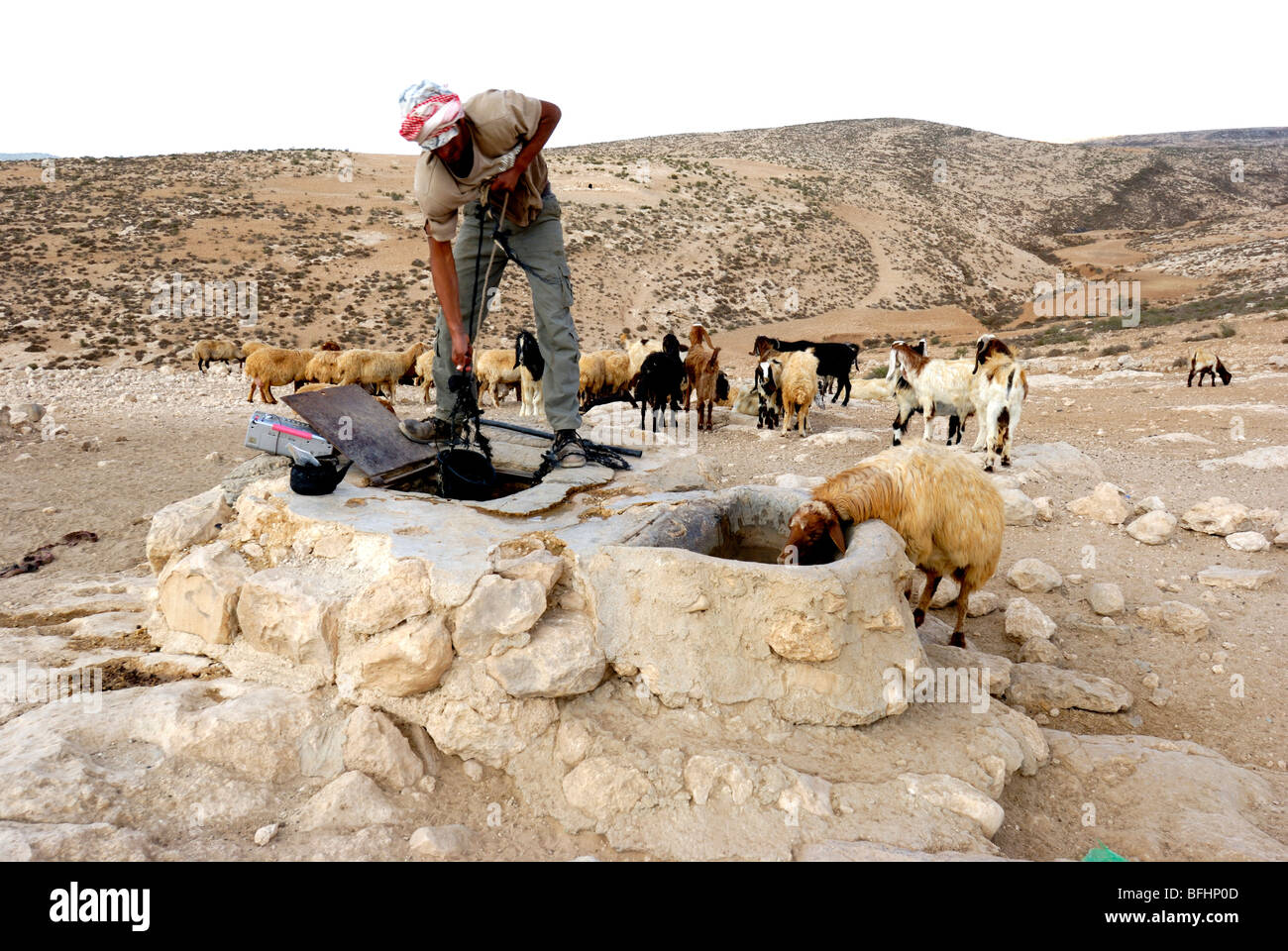
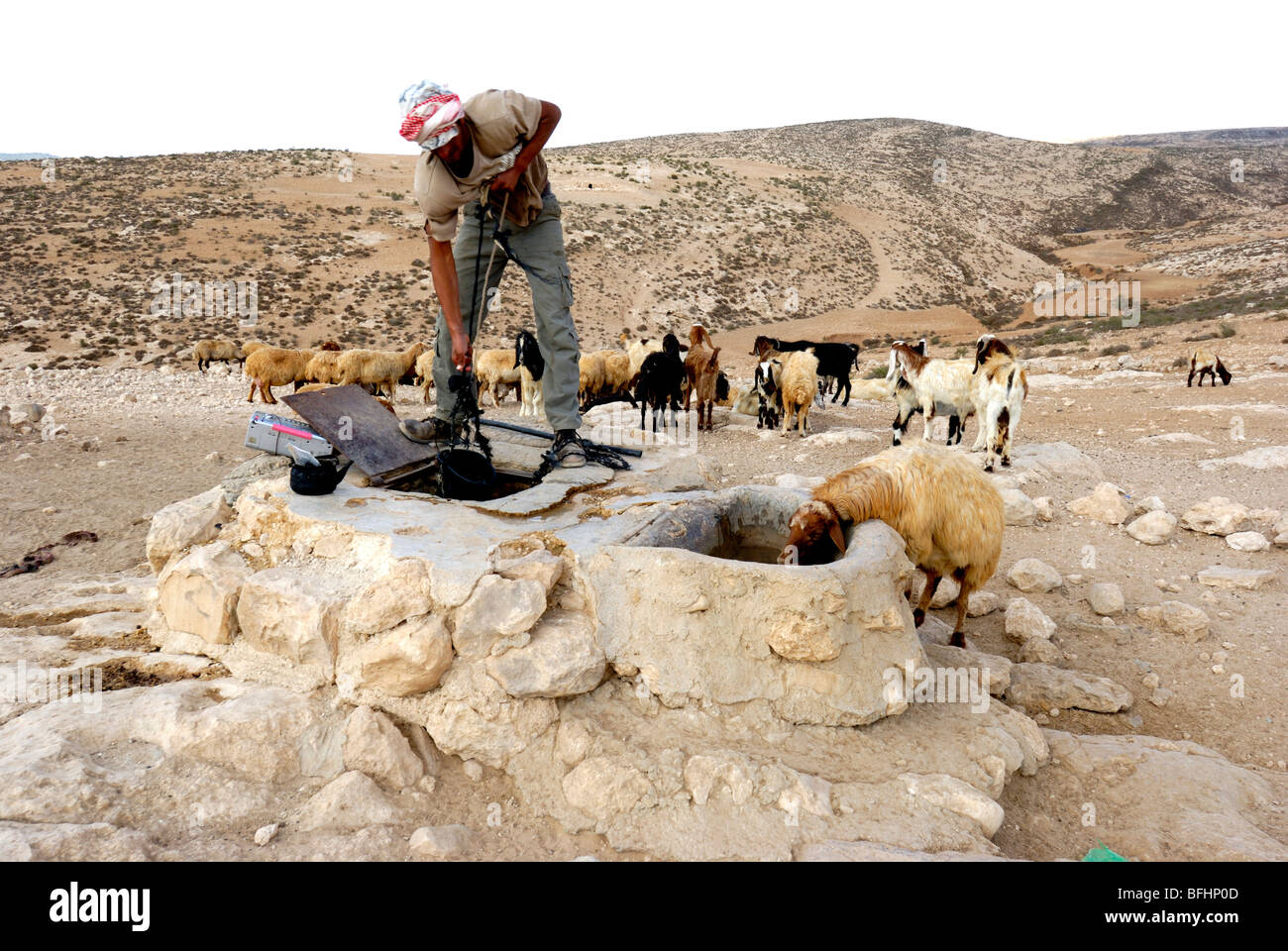
Riding with a friend into the Goral Hills, Devora learns that as desolate as this area may appear, people live in the crevices of the hills. There are even nine wells for the people and their sheep.
The second story, taking place on the second floor, involves Hani, who is writing to an old friend, Netta, now living in the US. Netta helped Hani survive a breakdown eighteen years ago, and as Hani worries about her current state of mind, she is hoping to hear from her friend again so that she can regain some control of her life. She had previously tried to contact her former psychologist, only to learn that the woman had died two years previously. “Something is happening, Netta, and I can’t tell anybody. But I have to. I just have to tell someone…I’m scared now that if I don’t tell someone, I’ll just go crazy.” Married to Assaf, whose job takes him away from home for much of the year, she has two children, and she confesses to being jealous of Netta’s wonderful relationship with her children and with her husband. Suddenly, she is surprised by the arrival of Eviatar, her husband’s brother, at her door, a desperate man escaping his creditors, loan sharks, and soon, he knows, the police. His one night in Hani’s apartment becomes longer, as she hides him from the police and promises to find some money so he can escape the country.

As Devora and her friend continue to drive, Devora remembers spending time with her husband at remote Sde Boker, where they also saw an ibex and talked about having children, the son who no longer speaks to her.
The last and best developed story, tells the story of Devora Edelman, a widow and retired judge who writes messages to her deceased husband telling him the local news, including an experience she has had with Hani from the second floor, and some new information about the residents on the first floor. When she decides to go to a public demonstration to escape the apartment house, she passes out, waking up in a tent staffed by psychologists. Resting there, she overhears many conversations and is astonished that “not even once did any of those professional psychologists offer a moral opinion about the aberrant behavior being described to them,” even when one girl admits that she is on the verge of committing incest. The judge believes that the girl needed “to be told what’s good and what’s bad.” Ultimately, Devora helps the psychologists draft a bill, two administrative decisions, and an organized list for improving their working conditions. Other tents follow the lead of the psychologists in asking for Devora’s volunteered legal services. Gradually, she decides she needs to live her own life, instead of recording it for her husband, traveling instead to see new parts of Israel and expanding her view of the world and its choices. Her biggest challenge is the fate of her estranged son, with whom she has had no contact for over three years.

The Million Person March, a rally in Tel Aviv on March 3, 2011, which marked a change in Devora’s life.
By now, many who read this will be aware that the three floors of the apartment house represent the three aspects of Freud’s vision of man – the id (Arnon, on the first floor), the ego (Hani, on the second floor), and the superego (Devora, on the third floor) – a point that author Nevo also emphasizes about two-thirds of the way through the book, as he addresses the reader about what he is doing with the book, structurally. Devora questions whether this emphasis on Freud is valid and necessary, a question which I, too, have: For me, imposing this structure and floor-by-floor symbolism on a book which really does not need it, makes it feel artificial, its characters developed for the express purpose of illustrating a point, instead of letting the reader see them as somehow “real.” When, in the final three pages of the book, Devora has an epiphany, she throws the whole organization of the book into irrelevance. “Alone, a person has no idea which of the three floors he is on and he is doomed to grope in the dark for the light switch” – an odd conclusion after the author’s active promotion of the symbolism of the floors throughout the novel.
Photos: The author’s photo appears on http://www.ithl.org. Photo by Dan Porges.
Bedouins and their sheep at a well in the Goral Hills: http://c8.alamy.com
A vacation cottage at Sde Boker, where Devora and her husband talked, years ago, of having children, the son who no longer speaks to her. https://www.tripadvisor.com/
March 3, 2011, the Million Person March in Tel Aviv, an event with great meaning for Devora. https://www.haaretz.com
 Marcus Conway, a sensitive man in his early fifties, hears the Angelus bell, a call to prayer, upon returning to his house in the Mayo village of Louisburgh, where his family has lived for unnumbered generations. He is “pale and breathless” – confused, even – and notes that “There is something strange about all this, some twitchy energy in the ether which has affected me from the moment those bells began to toll, something flitting through me, a giddiness drawing me.” He has had a busy morning, with meetings and his job as a civil engineer, but he is home alone at last, his wife at work as a teacher, his artist daughter Agnes happy with her first art show, controversial as it was, and his son Darragh in Australia, exploring new worlds. Standing in his kitchen, he feels as if “there are thresholds to cross, things to be settled, checks to be run,” and as he picks up and reads the local newspaper left for him by his wife, he sees front-page stories telling that “the world is going about its relentless business of rising up in splendour and falling down in ruins with wars still ongoing in foreign parts… while closer to home, the drama is in a lower key but real nonetheless…you can feel the flesh and blood element twitching in them.”




 On a New Year’s Eve in rural England, one would expect the cold to keep most people inside doing their celebrating, but Becky Shaw, a thirteen-year-old whose family has come to town for the holiday, has decided to go out. Leaving one of the “barn conversions” in the village, where she is staying, she suddenly vanishes. At dusk, her family comes running into town, shouting for help, and by the time the New Year is ushered in, a helicopter has been out searching for hours. The mountain-rescue teams, the cave teams, much of the village, and the police have found nothing, and a “thick band of rain [i]s coming in.” No one stands outside to watch the fireworks going up from nearby towns, and on the moor “there are flags [already] marking where the parents said they’d walked.” Divers are already searching the nearby reservoirs, and journalists and television crews have arrived. Within a week “the first snowdrops emerged along the verges past the cricket ground, though it seemed winter yet had a way to go.” No trace of Becky Shaw has been found.


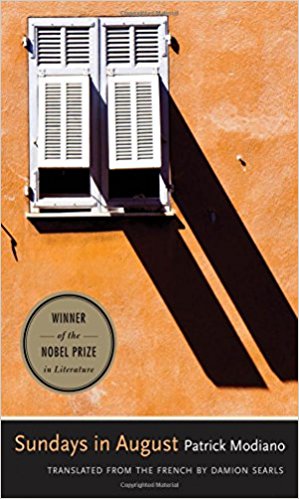 Most of Nobel Prize winner Patrick Modiano’s novels echo with memories of his own early life and his efforts to come to terms with his parents’ abandonment of him before he was even in his teens. This novel is different, however, unique, a stand-alone. Main character Jean is sensitive, observant, and emotionally free to love, as the main characters appear to be in most of Modiano’s other novels, but in this novel, the main character does not feel like a substitute for the author. Instead, Jean is a young, rather naïve young man, caught in circumstances that he regards as more of a mystery than the serious crime that readers may conclude it to be, a conundrum which he does not fully grasp. Jean is almost certainly a pawn in the hands of clever criminals, rather than the victim of childhood traumas which typify Modiano’s main characters in his other novels. The mystery here, which may even include murder, begins after the novel’s action has concluded offstage, as the opening lines of the novel set the scene seven years after the action has taken place. Flashbacks, reminiscences, and overlaps between the events from the past and events in the present take place as Jean and the reader are forced to consider what really happened, especially when some of the earlier characters suddenly reappear in the present.