“I can’t believe it, that I actually did it. But it’s true, I really did. I didn’t want to, I wasn’t planning it. I thought we’d talk…and that you’d come around. That you’d say all right, I understand…you’re right, you win. We’ll end this, and then I’ll leave…I thought that maybe it wouldn’t even be that hard to make you see reason. But instead, instead: no. You’re a stubborn woman. Or you were.” –the murderer of Cecilia de Santis Festa.
 Maurizio de Giovanni, whose Neapolitan noir novels have sold almost a million copies, may be the only author who has ever featured a murder committed with a “snow globe” containing a hula dancer playing an ukulele. Famous primarily for his series of seven noir mysteries set in Naples during the rule of Benito Mussolini and featuring Inspector Luigi Alfredo Ricciardi, de Giovanni has also developed a second series, this one set in contemporary Naples. Following the The Crocodile, the most violent and horror-filled of all de Giovanni’s novels, The Bastards of Pizzofalcone (#2), the second in the Lojacono series, includes some of the author’s trademark elements of dark humor and irony, missing from The Crocodile. Returning to the character-based novels which made the Ricciardi series so popular, de Giovanni develops a large cast of characters, who may become “regulars” in future novels. These include four “damaged” police officers, the “bastards,” who have been assigned to work in Pizzofalcone, a steep, hilly area to the southwest of central Naples. All have had career problems and must now prove themselves in Pizzofalcone, where a widespread scandal involving police corruption and connections to the Neapolitan Mafia, known as the Camorra, has led to massive dismissals. These new officers will have only a short period of time to prove their worth or they will be dismissed and the Pizzofalcone precinct closed.
 Giuseppi Lojacono, the most experienced of the four “bastards,” was sent to Naples from Sicily after a low level member of the Sicilian Mafia turned state’s witness and testified that the innocent Lojacono, who had been particularly effective in rooting out crime, was, in fact a Mafia informant. With no evidence against him, Lojacono could not be tried and was shipped to Naples to work at the San Gaetano precinct, languishing with nothing to do until he began investigating the case of “the Crocodile” on his own, eventually solving it and gaining, on some level, a little respect. Because he was not part of the investigative team assigned to the case, however, he angered many long-time officers at the precinct, jealous of his success, and when someone with his skills was needed in the Pizzofalcone precinct in Naples, he was shipped out. Lonely and isolated, with his family, including an ex-wife and daughter, back in Sicily, Lojacono is the most experienced – and most mature – of the four new hires at the Pizzofalcone station. When a much-admired woman is murdered with a “snow globe,” he and his group of three other “failures” become the investigative team.

Hula dancer with ukulele, an unlikely murder weapon.
Partnering with Lojacono is an “overgrown kid,” Corporal Marco Aragona, whose skin was “a vaguely orange hue,” someone who “spends a lot of time in a tanning bed and dresses like a TV detective.” A maniac behind the wheel of a car, Aragona has been kicked off two bodyguard details, and has already been rejected by everyone at headquarters, but as he is the grandson of a prefect, no one can fire him. Alessandra Di Nardo, an officer first class who has just been transferred to Pizzofalcone, excels at marksmanship, but that skill is her undoing when a shot is discharged from her pistol in the precinct station “in circumstances that remained murky.” She will be working directly with Francisco Romano, known as “Hulk,” someone who cannot control his own strength, much less his anger. “The third time he grabbed a suspect by the throat, they suspended him. When he went back on duty they sent him straight [to Pizzofalcone].” Two long-term officers – Giorgio Pisanelli, who, on his own, investigates suicides he thinks may be murders, and Ottavia Calabrese, who works long hours to escape family problems, are “desk jockeys” with little experience in the field, but they know the area and will serve as local resources for the two-person teams who will be actively investigating crimes.

The ramps of Pizzofalcone, a precinct with a 45% grade in many places. Photo by Frank Gilbreath.
Lojacono and Aragona soon become involved in the “snow globe murder” of Cecilia de Santis Festa, the highly respected, wealthy wife of Arturo Festa, whom she met when they were both in college many years ago. Without any financial resources of his own, Festa was able, through his wife’s contacts, to become the most prominent notary in the area. In recent years, he has had a series of mistresses, one of whom gives him an alibi for the night in which his wife was murdered. While they are investigating this murder, Alessandra Di Nardo and Francisco Romano take a call from a crippled, old woman, Donna Amalia, who spends all day looking out her window at an apartment across the way. She has become convinced that the pretty, young woman living there is being held captive, as the shades are always closed, no one comes to answer the doorbell, the woman never goes out, and none of the local shopkeepers make any deliveries of food or other goods to the apartment. De Giovanni’s description of this old woman explodes with dark humor, and her hilarious descriptions and commentary will keep readers amused, even as they recognize her insights into personality. When Alessandra and Francisco investigate the plight of the young woman, their shared activities help them both develop important new understandings.

The funicular at Pizzofalcone, used by 28,000 people a day, and over 10 million people a year. The diagonal car is built with stepped platforms for safety.
Throughout the novel, various unidentified characters, including the murderer, comment on their lives in italicized passages. As readers come to know more about the police and others involved in these cases, the specific descriptive details in these sections eventually allow the reader to identify the speakers and provide more intimate understanding of their thoughts and motivations. Dense with characters, the novel is light on action, but if one goal of this novel is to provide an introduction to characters who will repeat in new novels in this series, it is completely successful. While the novel is great fun to read, the conclusion may disappoint some readers, with many red herrings involving many characters. Surprises are always expected in mysteries, but the events leading up to the big revelation regarding the murder here may be too out-of-the-blue to ring true to many readers. Ultimately, the quotation used to introduce this review takes on new and ironic meanings when the murderer claims that “I can’t believe it, that I actually did it.” Frankly, I couldn’t, either.
ALSO by de Giovanni, Lojacono series: THE CROCODILE (#1), THE BASTARDS OF PIZZOFALCONE (#2), DARKNESS FOR THE BASTARDS OF PIZZOFALCONE (#3), COLD FOR THE BASTARDS OF PIZZOFALCONE (#4), THE BASTARDS OF PIZZOFALCONE (LOJACONO #5)
Insp. Ricciardi series: I WILL HAVE VENGEANCE (#1), BLOOD CURSE (#2), EVERYONE IN THEIR PLACE (#3), DAY OF THE DEAD (#4), BY MY HAND (#5), VIPER (#6), THE BOTTOM OF YOUR HEART (#7), GLASS SOULS: MOTHS FOR COMMISSARIO RICCIARDI (#8), NAMELESS SERENADE (#9)
Photos, in order: The author’s photo appears on http://tuttiicoloridelgiallo.ch/
The snow globe, which becomes a murder weapon here, is from http://www.ebay.tv
The steep ramps of Pizzofalcone, seen on http://www.panoramio.com, is a photo by Frank Gilbreath on http://www.panoramio.com/user/
The funicular, with its diagonal cars and stepped platforms, allow patrons to enter on a level. http://onthegrandtour.blogspot.com/ Over ten million people a year use this ride to deal with the steep hills in Naples.
ARC: Europa Editions
 Both a journalist and a novelist, British author John Prescott puts all his writing talents to use in this stimulating work which straddles the line between reality and fiction. Set in June, 1939, near Woodbridge, on a North Sea estuary about a hundred miles northeast of London, The Dig engages the reader from the opening Prologue. Basil Browne, a local resident with great sensitivity to the both geology and archaeology, has returned at night to the site where he has been digging for several weeks and where he has already found evidence of a ship, its outline preserved by elements from the local soil which have replaced the material from which the ship was originally constructed. No longer digging but carefully brushing away dirt with a pastry brush to avoid causing any damage, Browne has now unearthed a piece of ancient wood, which he believes may be part of a burial chamber inside the ship and which may date back to the Vikings. Browne has been leading a few local workers hired by Mrs. Edith Pretty, the widowed owner of an estate called Sutton Hoo, to excavate some of the strange mounds which dot her agricultural land. Her deceased husband had always wondered what was inside these mounds – almost two dozen of them – and as they seem to have been remote enough to have escaped the depredations of looters who have ruined other sites, Mrs. Pretty now hopes to honor his memory by unearthing something of historical importance. When Browne, in his excitement, rushes back to the estate to tell Mrs. Pretty what he has just discovered, he is put in his place by the butler; Mrs. Pretty is preparing for bed and the butler will not disturb her.


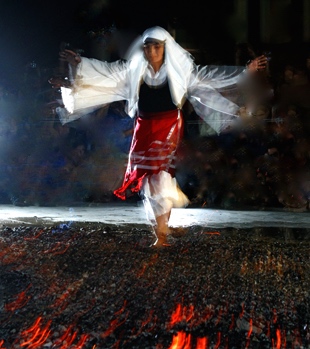
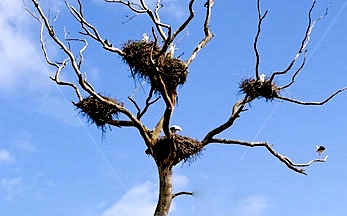
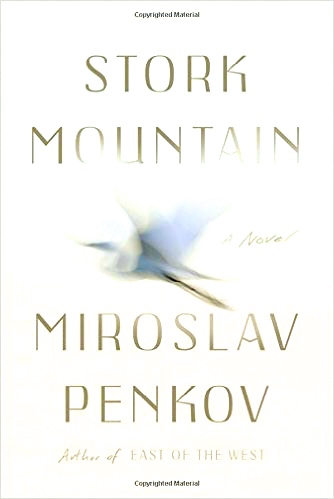 In the Strandja Mountains, where Bulgaria, Turkey, and Greece come together, a young graduate student who left Bulgaria for the United States as a boy, reconnects with his grandfather, from whom the family has heard nothing for the past three years. Unsuccessful in his college studies and desperately in need of funds to pay off some loans, the youth has come to Klisura in southeast Bulgaria hoping to sell some family land but also to spend time with the grandfather he has not seen in fifteen years. The narrative which follows, written by debut novelist Miroslav Penkov, who lived in Bulgaria until he was nineteen, breathes with the kind of exuberant realism which distinguishes the writing of someone who has actually lived through certain events, as opposed to the writing of someone who is “writing about” events which he may have observed but not fully lived. The “milk-washed” bell, a unique image for the grandfather’s memory, quoted in the introductory passage to this review, refers to a traditional practice in Klisura of washing sheep’s bells in milk “so the bells might sing more sweetly.”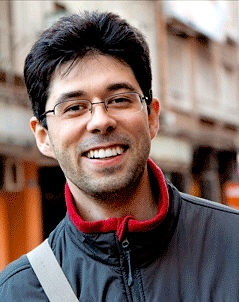

 Always focused on questions of identity and loss, and of one’s vulnerability or resilience in facing these issues, Patrick Modiano’s work always feels autobiographical, and though he insists that each book is fiction, he also recognizes that his own reality is formed by his own past as described in detail in many of his novels. As his characters deal with whatever issues they face on a daily basis in his novels, they cannot help interpreting life through their memories, wondering if they have misunderstood events, and if they could have changed outcomes, “if only…” After time passes, those memories become more selective as people make judgments about their acquaintances and their experiences and sometimes “revise” or forget their recollections: “We live at the mercy of certain silences. We have all known things about each other for a long time, so we try to avoid each other. It would be best [sometimes] if none of us were ever to see each other again,” a way to preserve memories of the past as we think of them years later.


 “What man, however hard of heart or jealous, would not praise Pippo the architect when he sees here such an enormous construction towering above the heavens vast enough to cover the entire Tuscan population with its shadow, and done without the aid of beams or elaborate wooden supports?” – Architect/philosopher Leon Battista Alberti, describing the half-built cupola of Santa Maria del Fiore, the Duomo, when he saw it for the first time in 1428, following his return to Florence from exile.
 Author Ross King has, from the beginning of his career, met with huge success for the publication of each of his biographical and cultural narratives about the geniuses responsible for some of the world’s greatest art works: Filippo “Pippo” Brunelleschi, for the dome on the Duomo in Florence; Michelangelo for his work on the Sistine Chapel ceiling; Edouard Manet for his revolutionary Impressionistic style and its contrasts with the style of traditional French classicist Ernest Meissonier; and Leonardo da Vinci for The Last Supper fresco at the Convent of Santa Maria delle Grazie in Milan. Each of King’s books, for all the scrupulous background research, is also filled with the kind of excitement which can only come from the author’s vivid recreation of the agonizing trials and eventual successes of an artist who manages to conquer his own limitations and the doubts of society and/or his patrons, along with the unexpected twists of fate which complicate his life during the creation of a masterpiece. King is an artist in his own writing, clearly understanding what the painter or architect goes through to produce his work, and it is easy for a reader to see parallels and to imagine King living a similar life as he follows his own inspiration to a successful conclusion in his own narrative creations.