Note: This novel was SHORTLISTED for the Booker Prize in 1979.
“War means fighting. The business of the soldier is to fight. Armies are not called out to dig trenches, to throw up breastworks, to live in camps, but to find the enemy and strike him; to invade his country, and do him all possible damage in the shortest possible time. This will involve great destruction of life and property while it lasts; but such a war will of necessity be of brief continuance, and so would be an economy of life and property in the end.”–Gen. Thomas Jonathan “Stonewall” Jackson
 Thomas Keneally, an Australian National Treasure, winner of the Booker Prize for Schindler’s Ark in 1982, and the author of thirty-one novels and seventeen non-fiction books, has never limited himself to subject matter from Australia, however rich and compelling that might be. Only about a dozen of his novels are actually set in Australia. His other novels, many of them prize winners, have been set in places ranging from Antarctica to Yugoslavia, Eritrea, and the Middle East, so it should be no surprise that Keneally became fascinated enough by the issues involved in the American Civil War that he wrote Confederates in 1979, a dense, epic novel of American history written on a scale reminiscent of Tolstoy’s War and Peace and filled with similar themes, though it is only half as long.

Unlike War and Peace, Confederates spurns romanticism, employing instead the innate dignity of ordinary men and women and the mundane details of real life lived close to the soil to convey the horrors of warfare with a realism almost unmatched in Civil War literature. With no comic relief, no hints at happy endings, and no escape from the inevitability of this nightmare, the cumulative effect of Keneally’s novel is staggering.
The Confederate army we meet here consists of ragged and hungry teachers, musicians, small farmers, orphaned children, men in their 60’s, conscripts, and even the sorely ill and walking wounded, all people the reader comes to know well through the stories they share and the simple dreams they reveal as they trudge resignedly and painfully across Virginia toward their destiny – the Battle of Harper’s Ferry/Antietam. Despite the tactical brilliance of General Tom “Stonewall” Jackson, the battle itself eventuates in one of the most horrific blood-letting and soul-wrenching traumas in history, and Keneally records it all.

Portrait of Stonewall Jackson by William Garl Brown, from the Virginia Historical Society
Homely details, described in a plain, almost offhanded manner, lend great irony and bring the enormity of the carnage into focus: split-rail fences with their “crops of dead,” cornfields with human remnants “lying in heaps that must be climbed,” young soldiers forced to tread on “a mat of Christian boys,” and the very air above the cornfield “flying with bits of the corn crop and with limbs, naked and clothed, and with haversacks and heads and hands.”
The male characters, so pre-occupied with the war and its effects on their families, their fellow soldiers, and ultimately on their own psyches, draw in the reader because they are vividly and realistically drawn, but it is the female characters, who are not on the battlefield, who truly come alive here. I cannot imagine another Civil War novel which will affect the reader more profoundly than this one. Exhaustively researched, historically accurate, brilliantly depicted, and absolutely unforgettable, it pulses with the lives of our forebears and makes gratitude seem inadequate for their sacrifices.
Note: Though CONFEDERATES is currently out-of-print, there are copies of this book available, Used, on the Amazon MarketPlace (some of them for only a penny plus postage), and on other Used book sites.
ALSO by Thomas Keneally: SCHINDLER’S LIST (ARK), VICTIM OF THE AURORA, THE TYRANT’S NOVEL, DAUGHTERS OF MARS, NAPOLEON’S LAST ISLAND

Alexander Gardner’s photo of Confederate casualties at Antietam, with the Dunker Church in the background. Note the poignant detail of empty shoes, bottom right. Double click to to go to National Park Service photos from the period.
Photos, in order: The author’s photo was taken from a video, here: http://www.theage.com.au
According to an article in the Times Dispatch, this oil portrait of General Stonewall Jackson was painted beteeen 1863 and 1864 by William Garl Brown, and was completed from a photograph after the General’s death. Gen. Thomas Jonathan “Stonewall” Jackson was fatally wounded at Chancellorsville and died at Guinea’s Station, VA on May 19, 1863. http://www.timesdispatch.com
Historic photo of Confederate casualties at Antietam, with the Dunker Church in the background. The National Park Service has a series of photos by Alexander Gardner, here: http://www.nps.gov
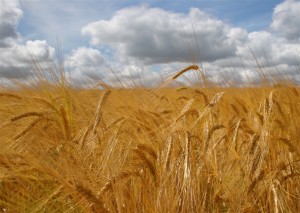
 Jim Crace’s powerful and dramatic new novel, set in an unnamed rural farm community in England in an unstated year, wastes no time in shifting the atmosphere from the “jollity” and feeling of community resulting from the hard work of the harvest to the kind of mindless hysteria, based on fear, which American readers will instantly recognize as similar to that which existed during the Salem witch trials (as is seen in Arthur Miller’s The Crucible). Working for Master Kent, whose wife inherited a large portion of land from her family, the farmers on the land are all too aware that theirs is a tenuous life, one in which they have a small cottage for their families and a small portion of the harvest for their own use in exchange for back-breaking work under uncertain weather conditions, with most of the harvest going to Master Kent. Bad weather or a bad harvest means hungry winters and less seed for the next season’s planting.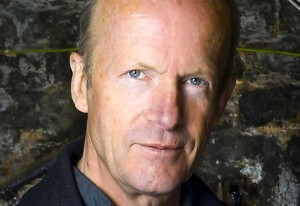

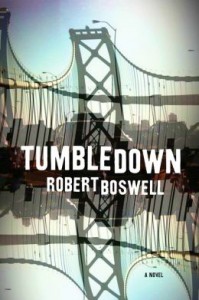 The theme contained in this quotation – that every day a sane person must figure out ways to deal with the impossible – permeates every aspect of this novel by prize-winning author Robert Boswell, whose recent collection of stories,




 Dr. Raj Kumar, the speaker of this ambitious and often exhilarating novel, decides, ultimately, that “What holds things together is more important than what separates them,” but by the time he discovers this, he has explored the world on more levels and examined life in more detail than one finds in ten novels by many other authors. I cannot recall a novel which has kept me reading so slowly and so happily for so long. Brimming with unusual insights, the novel remains firmly focused on life itself, not just on the speaker’s life, but on the grandest and sometimes most horrific aspects of all life—socially, historically, artistically, scientifically, and even cosmically. As I read this, I was constantly in awe of author Jaspreet Singh’s creativity, vision, and literary execution, and I am still recalling some of the novel’s finest moments, while at the same time wishing my non-scientific background had not limited my insights into some of the author’s other, more arcane imagery.


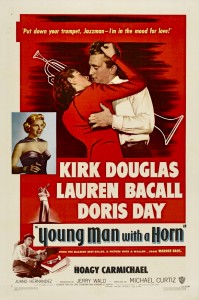
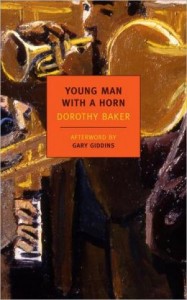 In this newly reprinted, remarkably “fresh” novel from 1938, considered the “first jazz novel” ever written, author Dorothy Baker takes the reader into the mind and heart of a young white boy whose desire to excel as a creative jazz musician in the 1920s is so overwhelming that he lets nothing get in his way – not the fact that he is only a child when he begins to pursue his interest, not the fact that he is an orphan living virtually alone with a young aunt and uncle who are home only once or twice a week, not the fact that he is supposed to be in school, and not the fact that he has no instrument at all that he can play. Born in Georgia, Rick Martin has recently moved to a poor section of Los Angeles where his guardians have found work. Though he is not a good student in his school’s assigned subjects (and cannot remember how much seven times seven is), he has learned to read music and “could memorize like a flash anything that had any swing to it, anything that he could take hold of rhythmically.”