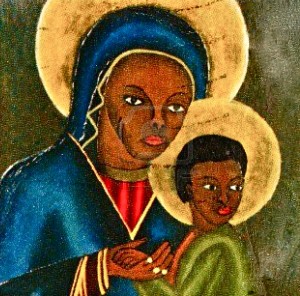
“Foreseeing everything creates such boundless disquiet that things pass me by like a breath of air and I enjoy nothing. I only enjoy a kiss when it is over and done with; then I remember it with pleasure. I don’t enjoy it at the time because, beyond the tenderness, I see the darkness, the horrific possibilities lurking behind all that is pleasant.” Speaker, from “Looking Out the Window.”
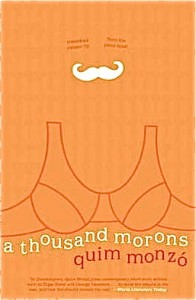 Catalan author Quim Monzo’s new collection of short stories captures the reader’s attention with its surprises, tickles with its humor, bewilders with its disturbed, often absurd characters, and ultimately arouses deep sadness with some of its portraits of the elderly and those close to them. Included are seven full-length stories in Part I, and twelve, very clever one- or two-page mini-stories in Part II, all of these stories playing with reality, especially the reality of love, as Monzo’s characters and his readers understand it. These characters often experience and react to a very different reality from that of the reader, however, and, therein lies the stories’ tension as the characters make unexpected or bizarre decisions and move in unique directions. These sudden twists lead to innumerable surprises even for the most jaded reader, and no one can dismiss these stories as “too weird” (even if one were ungracious enough to want to do so) because the characters and their stories share so many details with our own everyday realities. As absurd as the characters and their lives may be, we can see that there are always strong and familiar truths embedded within even the strangest realities here, and we are always able to empathize with some aspect of the characters’ lives.

Much of the reader’s recognition of what s/he and the characters share evolves through Monzo’s careful selection of important and recognizable details which pervade our mutual realities. Sometimes he reveals these details through the main character’s point of view, sometimes through specifics of the settings, sometimes through the author’s subtle appeal to the commonsense reality of his readers, and sometimes through the observations of an additional character within a story. No matter how strangely a main character may act, the reader is able to see him/her as just one twist beyond normal, someone who still seems familiar in spite of his/her behavior, living a life not so very different from our own – at least on the surface.
 The first story, “Mr. Beneset,” features a son who visits his very deaf father who is living in a home for the elderly. He is his father’s only visitor. When he enters his father’s room, he finds his father putting on women’s clothing. The father argues with him about respecting privacy and reminisces about their past history, as they kiss each other and share memories of the family. The father wants to be independent, “I’m not like these old guys around here – yet.” The father talks about his own mother, father, brothers, and sisters, and walks outside with his son. Clearly the father loves the son and vice versa, and they are doing the best they can under the circumstances. When the son leaves, the father goes back to his toilette. He is alone, doing what he can to change his reality.
In “Love is Eternal” a man runs into a woman he has known in the past and they go to dinner. Eventually he discovers that she is terminally ill, and he decides to do everything he can to make her last days happy, with surprising results. “Saturday” focuses on an old woman who is now alone, having been married for thirty-five years. Something has obviously happened, however, since she is busy cutting up family photos, removing her husband from the pictures. Then she moves on to everything he has worn, taking it to the dumpster, then decides to remove everything he has ever touched in the apartment. As she becomes more and more obviously unhinged, the reader is almost hypnotized, wondering where, if anywhere, she plans to stop.
 “I’m Looking Out of the Window” features a super-conscientious man tired of trying to be prepared for every eventuality in order to avoid unpleasant surprises. He decides to stare out the window for a whole day, never taking his eyes off what is out there, not even to answer the phone, trying to stay in the moment. He even imagines cutting off a part of his ear so that in the hospital he can avoid trying to solve tomorrow’s problems ahead of time. “Praise” is a very funny story about a successful author who, when asked about any new books that he has liked, mentions a book by a debut author. He does not say he loved it, but suddenly his mention of the book takes on a life of its own, bringing the book’s author into his life. The very funny ending is not unexpected in this era of the intrusive press making its own news.
 My favorite story, and the saddest, is “The Coming of Spring” in which a young man tells about his parents who are confined to a nursing home. Alternating his visits to the nursing home with his visits to the family home to sort out the contents, the author reveals the man’s feelings toward his parents and theirs toward him and toward their life in the home. His mother spent much of her life collecting and storing away plastic bags, and, in fact, “their [whole] world was built on the basis of broken items they never threw out ‘just in case.’ ” They are now old and in a nursing home, and they feel they have lived their lives – they are tired of living. The weather is winter, the situation is bleak, and the only thing the son has to look forward to is “The Coming of Spring.” Sad and filled with poignant moments, Monzo seems to “nail” the feelings of his characters as they contemplate the absurdities of living beyond their “time.”
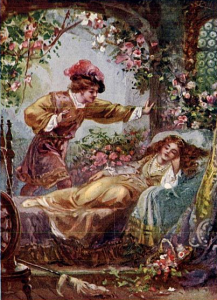 The mini-stories are all memorable and often very funny. “Next Month’s Blood,” in which the Angel Gabriel tells Mary that she has been graced by God to have a son named Jesus, takes a turn when Mary announces that no, she will not agree. “A Cut,” the tale of a young child who has been attacked with a broken bottle, shows a boy running, bleeding profusely, into his school for help, where he is berated for bursting into the classroom rudely and not observing etiquette. “One Night” tells the story of the prince trying to awaken Sleeping Beauty, with unexpected results.
Filled with wonderful stories which are full of surprises, A Thousand Morons reflects life’s absurdities at the same time that it also reflects the many realities of life and love, an intriguing collection of stories told with wit and panache.
Photos, in order: The author’s photo is from http://www.periodistasanonimos.com
“Mr. Beneset,” illustration: http://olevision.com/
“I’m Looking Out of the Window,” from http://christcm.com
“The Coming of Spring,” illustration from http://www.123rf.com
“One Night,” Monzo’s take on Sleeping Beauty: http://blogs.scientificamerican.com
ARC: Open Letter
 Deola Bello, a thirty-nine-year-old Nigerian expatriate who has been living in London since the 1980s, is now working for LINK, a non-profit charity which funds projects in Third World countries. Her London office is charged specifically with financing programs in Kenya, South Africa, and other African countries, and she, an auditor, travels back and forth investigating programs. She is about to travel “home” to Lagos on business for a week to report on two projects there, one of which is now applying for funding for the first time to help deal with the malaria problem, while the other, Widows in Need, is a program already in place, providing support for widows whose average age is, ironically, the same as her own. Her brief return to Lagos will coincide with the fifth anniversary of her father’s death, however, and the family memorial service and elaborate, long dinners commemorating his life will draw large numbers of family and friends.
 Deola is already prepared to deal with her mother and aunties regarding when she is going to return home permanently, when she is going to get married, and when she will be having children. They, of course, are more than ready to offer help, and she, of course, is just as ready to avoid it, believing that “marriage may be as banal and unsatisfying as her career.” The memorial dinner will bring her in touch with many people she has not seen for years, providing her an opportunity to see how much and in what ways they may have changed. Deola’s father was the founder and chairman of the Trust Bank in Lagos, and her brother is the deputy managing director. Her sister is a physician who has a retainership at the bank, and the family is well off, though not astoundingly wealthy. They vacation at Victoria Island, a beautiful beachfront area to which others of their class also go for the summer, and they can send their children to London for advanced schooling if they want.



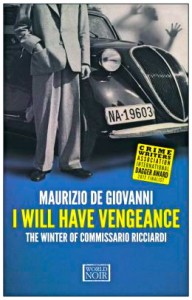 Those who have been fans of Stieg Larsson’s Mikael Blomqvist and Jo Nesbo’s Harry Hole will find Maurizio De Giovanni’s Baron Luigi Alfredo Ricciardi, the Neapolitan police hero of the first of a projected tetralogy of mysteries, a completely different kind of character. Commissario Ricciardi is neither as hard-boiled as Blomqvist nor as damaged by alcohol and its side effects as Hole. In this novel, which is far more operatic in its structure than the Nordic novels, Maurizio De Giovanni creates a main character who feels far more sympathetic than those other two heroes. Now thirty and orphaned, Ricciari has no woman and no family life, though he enjoys the undying support of his tata, Rosa Vaglio, a seventy-year-old woman who has been a family employee since she was fourteen. He works at least twelve hours a day investigating the most challenging murders in Naples, and he is obviously still suffering from a trauma which occurred when he was a child and led to the first of his “Incidents.”


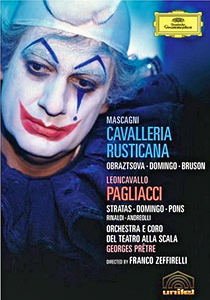
 Consummately romantic at heart, with exaggerated but likable characters and heart-breaking situations more akin to opera than to real life, Maurizio De Giovanni’s surprising mystery is both dramatic and compassionate, filled with a kind of resonance rare among dark mysteries. Lovers of opera, and I am one, will be intrigued with all the references to love, vengeance, murder, sorrow, pride, envy, and jealousy which seem to motivate most operas, and, Ricciardi would have us believe, most murders. As is also the case with opera, the characters are sometimes stereotyped, their actions pre-ordained by the traditions of operatic plot. Having established Ricciardi’s occult talents in the opening pages, the reader understands that a significant amount of “willing suspension of disbelief” is necessary here, and as Ricciardi’s own life, like those of the other main characters, is also its own romantic opera, there is no pretense of realism. I will be interested to see how the romanticism holds up in Blood Curse: The Springtime of Commissario Ricciardi, the second in the series, scheduled for release on May 7, 2013 (Europa). I thoroughly enjoyed the over-the-top style of this one.
 With three of his novels now available in English as New Directions translations, Salvadoran journalist and author-in-exile Horacio Castellanos Moya is finally enjoying some of the attention he richly deserves for his focus on human rights abuses under tyrannical governments in Central America. Using different genres for each of these three novels, Castellanos Moya creates dramatically different tones, despite their common settings in Central America, and translator Katherine Silver’s own versatility is obvious as she recreates the different moods.
  Throughout this monologue, Laura confides to an unnamed friend, referred to as “my dear,” quickly grabbing the reader’s attention with her stunned reaction to the news that Olga Maria de Trabanino, her best friend since elementary school, has been murdered. Laura had spent the day with Olga Maria until Olga Maria had to pick up her children at school. Now, only hours later, Olga Maria is dead and Laura is at Olga Maria’s house, where the body remains, covered with a white sheet. In what was apparently a robbery gone wrong, Olga Maria has been murdered in front of her young daughters, one of whom says the killer looked like ROBOCOP.
 Taking charge, Laura helps pick out a black satin dress for Olga Maria to wear for the wake and funeral, “very elegant…her prettiest dress,” along with her jewelry and “the right makeup,” then arranges for her hairdresser to do Olga Maria’s hair in her favorite style. Later, at the wake, she asks her companion, “Don’t you think she looks gorgeous, they did a good job on her, you can barely even see the hole in her head.” Making herself indispensible, Laura tries to protect Olga Maria’s children, has advice for the police, provides information for the person she is addressing (including the reader) about Olga Maria’s marriage, and suggests that Olga Maria may have been attracted to one of her husband’s new employees, a handsome photographer she refers to as “Julio Iglesias.” Throughout, Laura provides snide commentary about all the members of the social set to which she and Olga Maria belong.
 As Laura continues to comment on her best friend’s murder and its aftermath, she blames the lack of progress in the investigation on the ineffective police, the tainted legal system, and the hypocritical clergy, among others, while also providing motives for half a dozen people in her social set to have committed the murder – involvement in a drug cartel, financial misappropriations, unexpected bankruptcy, thwarted love, and political rivalries, to name a few. Castellanos Moya’s pacing is flawless as he suggests but does not always confirm the reader’s conclusions about these characters as described by Laura, and the novel’s finale is memorable, perfectly in keeping with tone and character. The details and subject matter are universal, rather than specific to El Salvador, and readers from around the world will be entertained and often amused by Castellanos Moya’s foray into noir fiction.
 Niki, the mother in the painting described above and the main character in this novel, poses often for Father Frans Claerhout, an artist whose expressionistic paintings in bright colors feature native South Africans as the models for religious paintings. Niki, who posed originally because she desperately needed the money and was willing to travel thirty-five kilometers to Fr. Claerhout’s studio, often on foot, is a favorite model, along with her daughter Popi, a five-year-old, light-skinned child with blue eyes and softly waving hair.