“I do not like the spring, its antics and agitations; I fear that anguished seething in the heart, what it might make me do. What it might have made me do: one has to be scrupulous with tenses at my age.”
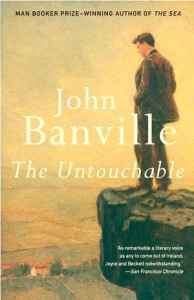
In this fascinating and beautifully developed novel, Victor Maskell takes us step by (often debauched) step through what passes for his life. He is seventy-two and has just been unmasked as a spy. “Public disgrace is a strange thing,” he muses as he begins a journal. Maskell, a thinly disguised substitute for Anthony Blunt, is one of several by now well-known young British intellectuals who became spies for the Soviet Union during the thirties and forties, providing them with secret information during World War II and into the 1950s.
Guy Burgess, Kim Philby, and Donald Maclean, who became members of the Communist Party while at University, were thought to have been recruited by Blunt. Much later, a Russian KGB colonel testified that a fifth member, John Cairncross, also participated in the spy ring.
Booker Prize-winning author John Banville vividly recreates not only the political and social turmoil of the 1930s and 1940s but also the intellectual experimentation and the search for values spawned by these turbulent times. The atmosphere of decadence, drunkenness, sexual depravity, and social snobbery, combined with the characters’ intellectual arrogance and political naivete, all show the reader how a young person could have been seduced into becoming a willing spy under the “right” set of circumstances, though the issue of why Maskell was not publicly unmasked till 1979 (judging from his stated age at the time he begins his narrative) remains a larger question.
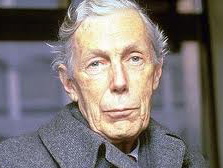
Though it is difficult to feel any real sympathy for Maskell, one can understand his need for significance–for something bigger in his life—both as a student and as a young man. One can also understand his regret for his actions, though that it is more than a little self-serving, tinged, as it is, by the obvious fact of his being caught. In prose that is astonishing in its facility and virtuosity, Booker Prize-winning author John Banville sweeps away the fustiness of previous journalistic accounts of the Cambridge spies and creates flawed, breathing humans in a vibrantly decadent atmosphere.
“I have written more than twenty novels, and usually the writing of a novel requires a year or more of thought, but I did not think much about this novel. The idea came to me like a meteor shining in the sky. Last year [around 2005] I went to Tijuana, Mexico…and there in Tijuana I saw things that reminded me of Mosul in the summer…I began to write this book in Mexico and finished writing it in Chicago, to serve as a living witness to a people fated to walk in bitter darkness.” –Mahmoud Saeed
If ever there were someone who had a right to be angry and bitter about the fate of Iraq and its intellectuals, Mahmoud Saeed has that right. Arrested and jailed for a year and a day in 1963, when he was twenty-four, and again five more times after that, through 1980, he was never again to see any of his books published in Iraq, and two of his manuscripts were burned by authorities. Yet even through his imprisonment, described in Saddam City, he retained his ability to see humanity and hope, saying, “Despite the exhaustion, restraints, and reduction of my humanity to the banality of a mere number, I found myself [sharing a cell that was] suffused with human warmth. These men might have violated the laws of society or they might have been criminals from the point of view of the state, but I believed in their innocence partly because I knew my own and partly because they received me with open arms; I felt I was one of them.” The author seems to have no agenda, other than the desire to share what he has discovered about the abiding humanity of the people he has known, and the reader responds to him with the same kind of warmth.
Even stronger feelings are evoked in The World Through the Eyes of Angels. Obviously autobiographical, at least in part, the novel examines the various kinds of love which a young boy from Mosul discovers as a youth, sweeping the reader along on a tide of empathy and making him/her feel at one with the main character. Providing wonderful insights into the lives and cultures of the main characters – Muslim, Christian, and Jewish – many of whom are friends of the young boy and his family, The World Through the Eyes of Angels is aimed directly at the heart without a shred of easy sentimentality. The interactions and emotions the characters share are so universal that the novel feels as if the characters are people we know, or would like to know, despite the differences of time, culture, and tragic history. Politics plays no role here. Best of all, the novel possesses that rare ability to connect with the reader so directly that it provides insights into the heart and mind of the author, too, and when one reaches the end of the novel, it is impossible not to want to offer comfort.
Divided into twelve parts, the novel is set in Mosul in the 1940s and 1950s, “when the people lived as brothers in total harmony as if they were one family,” despite their varied cultures. The boy, named once in the novel as “Saleh,” lives in poverty but, from the age of four, does errands for his much older brother, a sadistic egotist whom the boy privately calls Ahmad the Mad Dog. Often beaten and tormented by this brother, he runs barefoot all day long throughout the city, even when the temperatures reach 120 degrees Fahrenheit. Gradually, the reader comes to know the boy, his family, and his friends, especially Sami, a Jewish boy, who loves to tell the boy stories from the movies which the boy does not see.
The best stories the boy hears, however, come from Sheikh Ahmad Al-Shadi, who claims to be one hundred twenty-seven years old and who tells stories about the sheikh and the wolves, about the sheikh and the thief, about history, including the training of women to use bows and arrows so they can fight against 450,000 Persians, and about the Siege of Mosul. The speaker does not know whatever became of this beloved sheikh – he lost track of him when he went to school, where he was mentored by a teacher who discovered that he seemed to be able to read without ever having been taught.
The first love story takes place when the boy discovers Selam, a little girl whose mother is dying, and who is so poor they have absolutely nothing in the “house” where they live. Though poor himself, the boy surprises her with little presents from the tiny amounts he earns and teaches her reading and numbers in his spare time. Later, the older Madeleine, “a treasure that enriched my spirit,” teases him outrageously, teaching him about sexuality, though he is not sure what it all means. Through Mary, he enters a church for the first time, and later still, Sami’s sister Sumaya shows him a new side of family life and love.
Throughout, the author artfully recreates the real lives of real children, and as the time frame moves back and forth, up to 1964, when the speaker is released from prison and decides to go to Morocco to teach, the stories and their aftermaths continue. The love stories involve a young boy, but they are real love stories, complicated by the times and circumstances in which they all live. Some have no endings, something the speaker (and, one cannot help thinking, the author) mourns at the end of the book, and some have endings that are not happy.
This is a difficult book to summarize, since parts of it, taken out of the overall context may sound as if they are romanticized or sensationalized. They are not – the novel is intimate and honest, the story earnest in its appeal. The author never gives any details at all about the speaker’s arrest and imprisonment, something that the reader cannot help wondering about but which would have changed the focus of the novel. The girls/women with whom the speaker learns about love seem, generally, as innocent as he is, all of them part of the well-described cultures in which they live. And the sense of loss, as people from various groups, once integrated into the city, move out of Mosul, leaves the reader with a feeling of gratitude to the author for preserving, historically, everything he remembers of the past through his characters here. Though the author/speaker expresses regrets for some aspects of his life, those of us of a similar age will understand and empathize with these all-too-human regrets.
“Listen, if you choose to believe nothing else that transpires here, believe this: your body does not have a soul; your soul has a body, and souls never, ever die.”
Mixing the supernatural with dramatic and horrifying realism, this generational novel contains all the ingredients necessary to become a huge popular success. Spanning the years between the 1920s and the present, author Bernice L. McFadden focuses on three generations of the Hilson family as they interact with each other, with others in their segregated neighborhood, and with the white world beyond. Using the town of Money, Mississippi, itself as the “narrator,” the author creates lively scenes involving Reverend August Hilson, new pastor of the only black church, and his family, who have escaped the violence of Tulsa to settle in this small town near Greenwood, Mississippi, along the Tallahatchee River.
With the beautiful Doll as his wife, however, Rev. Hilson will never be able to feel very settled anywhere. Doll has a “history,” the recreation of which will keep even a jaded reader involved in her story, and she has accompanied him to Money “draped in crinoline and silk; carrying a pink parasol in one hand and a Bible in the other.” Those who knew her in Tulsa always believed that the evil spirit of her mother, a murdered prostitute named Esther Gold, had taken over Doll’s body, and though, as a child, Doll was duly exorcised by a local witch, that expert in herbs and potions proved to be no match for the voracious, single-minded Doll. By the time she arrives in Money, she and August have been married six years and are the parents of a daughter, Hemmingway, and a son, Paris. In Money, Doll continues to do just what she wants, and everyone else better watch out.
The novel is not linear, with the action swirling around in time and among characters. A new set of characters is introduced with Cole Robert Payne, son of a white sharecropper, and married to Melinda, the shy and sickly daughter of one of the town’s landowners. As Cole’s history unwinds, the first interracial relationship of the novel comes alive. Cole and Sissy, a childhood friend, had been bloodbrother/-sister before puberty complicated their lives. Doll enters the picture when she arrives to cure Cole’s wife Melinda of a fever and help her deal with five miscarriages.
Levee breaks, 1927 Flood
By 1927, a historic storm is on its way through Money. The white leaders of the community forcibly round up all the black men in town, requiring them to pack and stack sandbags in preparation for a flood, the results of which change the lives of most of the characters. The spirit of Doll’s mother Esther enters yet another character, and then still another, as some major characters disappear, only to have their evil spirits reappear in new guises. So strong is this spirit that even the dead come alive when seized by Esther.
The novel takes a new turn when Cole Payne decides to pursue his interest in native American culture and travel to the west coast. Upon his return he finds Charlotte Custer, purportedly the granddaughter of Gen. George Armstrong Custer and a native woman, waiting to meet him, a convenient digression which is fun to read but which seems gratuitous, rather than essential to the overall themes and direction of the novel.
When the action reaches the 1950s, the author concentrates on the biggest event in the history of Money, Mississippi, the death of fourteen-year-old Emmett Till, visiting from Chicago and tortured to death by whites because he supposedly whistled at a white woman. An event which some believe to be the most significant event in the lead-up to the civil rights movement in the United States, the death of Emmett Till is treated as just one event among many in this novel, important but not the only important event occurring in Money, Mississsippi, at the time. The spirit of Esther continues up to the present as Hurricane Katrina arrives.
Emmet Till, 1955
Author Bernice McFadden’s voice – or, rather, the voice of the town of Money, Mississippi – never wavers from the casual, down-to-earth story-telling of someone/something anxious to enlighten and entertain the reader with a good story. Each monumental event is treated in a relaxed, almost casual way – as just one more element in the history of a multi-racial town, regardless of how unusual or horrific it may be, thereby increasing the shock and horror for the reader. The dialogue is so realistic it is easy to imagine the characters, some of whom are more fully realized as examples than as individuals, though some readers may feel the use of the town itself as the speaker is artificial and distracting. Water is a major image throughout the novel, even extending to its title, and the way the author ultimately brings all elements of the novel together in the conclusion as Hurricane Katrina looms, is satisfying.
Roy Bryant and his half-brother J. W. Milam confer with their lawyer during their trial for murder
Filled with action, unusual characters, and a combination of reality and the supernatural, the novel never loses its focus on telling a good story. McFadden makes even the death of Emmett Till, however horrifying, seem “normal” within the overwhelming prejudices of Money, Mississippi, and she matches her seemingly simple style with her relatively simple characters. What is not simple about this novel, however, is its single-minded devotion to a thematic unity, the belief that racial harmony is possible if one ignores the differences and concentrates on the common values. “Whether you have embraced this tale as truth or fantasy, I hope you will take something away from having read it,” the narrator says in the conclusion. “I pray that you will become more sensitive to the world around you, the seen and the unseen. As you go about your lives, keep in mind that an evil act can ruin generations, and gestures of love andkindness will survive and thrive forever.”
In one of the great ironies, the only book I was able to find detailing the relationship of Gen. Custer and the Native American Monahseetah is on an Italian site devoted to the American Far West: http://www.farwest.it
Emmett Till’s photo from 1955, showing him as the young naive boy he appears to be in this novel: from http://abagond.wordpress.com
The Life magazine cover shows Roy Bryant and his half-brother J. W. Milam, accused of murdering Emmett Till, conferring with their lawyer. http://usslave.blogspot.com
Note: This novel has been shortlisted for the Victorian Premier’s Award for Fiction and the Adelaide Festival Award for Literature.
“Circular Quay. [Ellie] loved even the sound of it. Before she saw the bowl of bright water, swelling like something sexual, before she saw the blue, unprecedented, and the clear sky sloping upwards, she knew from the lilted words it would be a circle like no other, key to a new world.”—Ellie, at the Opera House in Sydney
In lush and often lyrical language, author Gail Jones creates a consummately literary novel which takes place on Circular Quay, surrounding the Opera House, during one hot summer day in Sydney. Four major characters are dealing with personal losses and memories of the past which make it difficult, if not impossible, for them to participate fully in the present. Deaths haunt them all, and as they gravitate individually towards the Opera House, they relive events from their lives. Time is relative as the novel moves forward and then swirls backward during each character’s reminiscences. Only Ellie and James know each other. The other characters lead independent lives, and any connection among them will be just a glancing blow, a random event – one of the minor acts of fate. A mysterious fifth character, who materializes without warning in the conclusion, serves as a catalyst to bring the novel to its thematic conclusion.
Ellie, the first of the characters, is a small town girl who has lived in the countryside for all of her thirty-four years. She has come into the city to reconnect with James DeMello, the love of her life, who has contacted her recently after a twenty year hiatus. Ellie, who has been living in the Sydney area for only six weeks, is taking advantage of new opportunities, having returned to university, where she studies during the day and works as a waitress at night. Her “trampoline heart” reacts to all the new sights and sounds around her, and she sees the Opera House as “moon-white and [holding] within it a great, serious stillness. The fan of its chambers leant together, inclining to the water. An unfolding thing, shutters, a sequence of sorts…And that shape of supplication, like a body bending into the abstraction of a low bow or a theological gesture.” She and James had been innocent teenagers exploring their bodies in a secret hideout for an entire year, until James went away to school, and she is excited about seeing him again. As Ellie remembers the past, she also remembers being a kind of anchor for James, whose family life was a disaster.
James DeMello, who became her lover when they were both fourteen, will be meeting her later that day. James abandoned his medical school studies after just one year, and he secretly dreams of the artistic life, especially that of Rene Magritte, who also suffered from the loss of his mother. James believing himself “destined for mediocrity,” however, goes on to become, not an artist, but a much-respected teacher – until a terrible accident occurs, for which he still blames himself. His life has been hard and his grip on reality is precarious.
Catherine Healy, from Ballymun, Ireland, has been in Sydney only two weeks. A journalist who has come to Sydney from Paris to find work, Catherine has left her lover Luc behind in Paris. The ghost of her much-loved brother Brendan has prevented her from fully participating in life since his death in an accident several years ago. Veronica Guerin, the iconic Irish reporter who was gunned down by drug lords in Dublin in 1996, has always been her idol, and it was Guerin’s death which led Catherine to leave Ireland for Paris. There, she met Luc, a translator from Russian to French, whose love she cannot fully return because of her obsessive love of family, especially of her brother. Her trip to Australia is a test of her independence.
The fourth character, Pei Xing, a widow in her sixties, has come to Australia from mainland China, having survived the Cultural Revolution which killed her parents and forced her to endure torture and a terrible prison term. Every Saturday she comes into Sydney to pay a visit to a stroke victim. The most selfless of the characters, Pei Xing suggests that we are all imprisoned primarily within ourselves. Her memories of her father, a scholar/translator of Russian literature, has imbued her with a love of literature, and her marriage to Wang Xun and his loss has left her with an understanding of the fragility of life and love.
Literary and artistic references pepper the narrative, adding depth to the themes of love, loss, and death. Artist Rene Magritte, James DeMello’s favorite artist, has painted “The Lovers,” which James particularly likes, and Man Ray and Lee Miller, have created a surrealistic painting also called “The Lovers,” which springs to mind when James thinks of Ellie. James’s father, upon his death, resembles a Giacometti sculpture to James; James Joyce’s “The Dead,” is read at Catherine’s brother Brendan’s funeral; Gogol’s story of “The Overcoat” parallels in some ways the new red coat that Pei Xing has received from her family; and Pei Xing’s father’s translation of Dr. Zhivago, a book she reads aloud to someone she visits, echoes throughout the action. Ezra Pound and the Australian poet Kenneth Slessor, whose poem “Five Bells” introduces the action, add to the literary density. Images of snow, which are called to mind by Catherine, Pei Xing, and James; along with images of the stars, bridges, birds, water, and the clepsydra, a water clock in which time is measured by the passage of liquid from one vessel to another, add to the thematic density.
Though some will find this novel a literary treat, others may question its structure. With four separate characters, three of whose lives do not intersect in any significant way, the novel is somewhat fragmented, and all the characters are not equally well developed. Ellie and Catherine are not very thoughtful, and we learn little about life from spending time with them. Why Catherine is in Sydney at all is an open question, and how much Ellie will learn about life remains in doubt. Sometimes the prose is weighed down by the elaborate imagery. Still the novel offers much of interest to those who enjoy highly literary novels, and the thematic focus and the setting are unusual and intriguing.
On a later occasion, James DeMello refers to “The Lovers” by Man Ray and Lee Miller, a combination of photography and painting. http://www.pem.org/exhibitions
The role of Omar Sharif in Dr. Zhivago is considered by Pei Xing. http://www.amazon.com
“This is a story that can only be told in a whisper. There is a hush to difficult forms of knowing, an abashment, a sorrow, an inclination towards silence. My throat is misshapen with all it now carries. My heart is a sour, indolent fruit. I think the muzzle of time has made me thus, has deformed my mouth.”
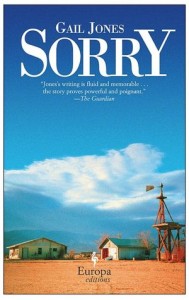
Australian author Gail Jones, who has won major recognition and prizes in Australia for every book she has written over the past twenty years, achieved another notable milestone with Sorry, which was shortlisted for no fewer than six major prizes in the UK and Australia in 2008. Set in remote and sparsely populated Western Australia in the early 1940s, the novel recreates the life of Perdita Keene, a ten-year-old child not wanted by her British expatriate parents, who had hoped she would die at birth. Perdita, whose childhood is formed by the aborigine women who nursed her in infancy, develops a strong friendship with Mary, an aborigine girl five years older, and Billy, the deaf-mute son of the Trevors, white people who run a local cattle station. All three children are outcasts for various reasons, and their bonds with each other are total and life-affirming.
The murder of Perdita’s father, described in the opening pages, is at the core of the novel, and the circumstances surrounding the case are not clear. All three children witness the crime, but Perdita, the narrator for most of the novel, is so traumatized that she cannot remember any of the details except a blood-spattered blue dress, made from a fabric used to make several dresses for several different wearers.
If there is such a genre as “Australian Gothic,” this novel would be one of its best-written examples. The sights, sounds, and smells of the bush, filled with storms, heat, dust, and exotic birds and animals, vibrate with life—and death—both physical and spiritual. Perdita’s father, as the reader comes to know him, has long lost his academic interest in research on aborigine myths and leads a mean-spirited and abusive life. He compulsively maps the progress of World War II battles, posting photographs of gory battle scenes, which he cuts from the newspaper. He has little time or emotion left over for his wife or child. Perdita’s mother, who seeks life lessons and values in the plays and sonnets of Shakespeare, which she has memorized almost in their entirety, is hospitalized periodically because she loses touch with reality. She scorns her husband, hates motherhood, and despises her life in their tiny, shack, crowded with pillars of books and papers, and invaded by mice and snakes.
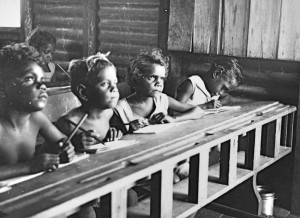
Perdita, “the lost one,” appropriately named for a character in Shakespeare’s The Tempest, finds a sense of self with the aborigines, who value the continuum of life, not merely a set of static principles, like the whites who have driven them from their ancestral lands and forcibly removed their children. Aborigine children, warehoused in dormitories and schooled to remove all traces of their own culture, learn trades so that they can wait on those “civilized” inhabitants who have taken their lands. Perdita is, on some level, aware of the injustices, having observed the rape of young aborigine girls (which she does not comprehend), and she finds solace and a sense of order in aborigine culture which she does not see in her own. She understands and loves the sense of kinship and sharing which govern their lives, as opposed to the cult of the individual which she sees in her own society.
As Jones develops her story, she uses the battles of World War II, studied by Perdita’s father, to parallel Perdita’s own troubles and to illuminate the contrasts within Perdita’s life, emphasizing the novel’s major themes of war and peace, oppression and liberation, and order and chaos, both in society and within the individual. Entitled “Sorry” to honor the abused aborigine population, Jones notes that the long-time federal policy of “removing” children continued until 1977, and that as recently as 1997, Prime Minister John Howard refused to acknowledge that the nation was “sorry” for its injustices against the aborigines, despite the national desire for reconciliation. Because of John Howard’s refusal to apologize, a group of citizens established their own “National Sorry Day” in 1998, and initiated attempts at reconciliation with the indigenous community. National Sorry Day has continued to the present, now as a National Holiday.
Jones’s novel is not a political screed, nor is it a story about a national shame, except peripherally. It is a story about a child, Perdita, who finds herself caught between two worlds—and learns the worst and the best about both. Lyrical, sensual, and full of passion, Sorry is a novel that makes no apologies for its emotion or its dramatic intensity. For the author, they are all part of being “sorry.”
A picture from 1950 of aborigine children at the schools to which the government sent them unwillingly appears on http://www.hreoc.gov.au
The Aborigine flag is one of several “official flags” of Australia, though it is not the Australian National Flag. It was designed by Aboriginal artist Harold Thomas: http://en.wikipedia.org
The poster designed for National Sorry Day in 2008, uses elements from the Aborigine flag in its design. The holiday is now celebrated each year on May 26. http://batchelorpress.com
 n this fascinating and beautifully developed novel, Victor Maskell takes us step by (often debauched) step through what passes for his life. He is seventy-two and has just been unmasked as a spy. “Public disgrace is a strange thing,” he muses as he begins a journal. Maskell, a thinly disguised substitute for Anthony Blunt, is one of several by now well-known young British intellectuals who became spies for the Soviet Union during the thirties and forties, providing them with secret information during World War II and into the 1950s.
 Though it is difficult to feel any real sympathy for Maskell, one can understand his need for significance–for something bigger in his life—both as a student and as a young man. One can also understand his regret for his actions, though that it is more than a little self-serving, tinged, as it is, by the obvious fact of his being caught. In prose that is astonishing in its facility and virtuosity, Booker Prize-winning author John Banville sweeps away the fustiness of previous journalistic accounts of the Cambridge spies and creates flawed, breathing humans in a vibrantly decadent atmosphere.
 .
. If ever there were someone who had a right to be angry and bitter about the fate of Iraq and its intellectuals, Mahmoud Saeed has that right. Arrested and jailed for a year and a day in 1963, when he was twenty-four, and again five more times after that, through 1980, he was never again to see any of his books published in Iraq, and two of his manuscripts were burned by authorities. Yet even through his imprisonment, described in
  Even stronger feelings are evoked in The World Through the Eyes of Angels. Obviously autobiographical, at least in part, the novel examines the various kinds of love which a young boy from Mosul discovers as a youth, sweeping the reader along on a tide of empathy and making him/her feel at one with the main character. Providing wonderful insights into the lives and cultures of the main characters – Muslim, Christian, and Jewish – many of whom are friends of the young boy and his family, The World Through the Eyes of Angels is aimed directly at the heart without a shred of easy sentimentality. The interactions and emotions the characters share are so universal that the novel feels as if the characters are people we know, or would like to know, despite the differences of time, culture, and tragic history. Politics plays no role here. Best of all, the novel possesses that rare ability to connect with the reader so directly that it provides insights into the heart and mind of the author, too, and when one reaches the end of the novel, it is impossible not to want to offer comfort.
 Divided into twelve parts, the novel is set in Mosul in the 1940s and 1950s, “when the people lived as brothers in total harmony as if they were one family,” despite their varied cultures. The boy, named once in the novel as “Saleh,” lives in poverty but, from the age of four, does errands for his much older brother, a sadistic egotist whom the boy privately calls Ahmad the Mad Dog. Often beaten and tormented by this brother, he runs barefoot all day long throughout the city, even when the temperatures reach 120 degrees Fahrenheit. Gradually, the reader comes to know the boy, his family, and his friends, especially Sami, a Jewish boy, who loves to tell the boy stories from the movies which the boy does not see.
 The first love story takes place when the boy discovers Selam, a little girl whose mother is dying, and who is so poor they have absolutely nothing in the “house” where they live. Though poor himself, the boy surprises her with little presents from the tiny amounts he earns and teaches her reading and numbers in his spare time. Later, the older Madeleine, “a treasure that enriched my spirit,” teases him outrageously, teaching him about sexuality, though he is not sure what it all means. Through Mary, he enters a church for the first time, and later still, Sami’s sister Sumaya shows him a new side of family life and love.
 he stories and their aftermaths continue. The love stories involve a young boy, but they are real love stories, complicated by the times and circumstances in which they all live. Some have no endings, something the speaker (and, one cannot help thinking, the author) mourns at the end of the book, and some have endings that are not happy.
 nd the sense of loss, as people from various groups, once integrated into the city, move out of Mosul, leaves the reader with a feeling of gratitude to the author for preserving, historically, everything he remembers of the past through his characters here. Though the author/speaker expresses regrets for some aspects of his life, those of us of a similar age will understand and empathize with these all-too-human regrets.
 Mixing the supernatural with dramatic and horrifying realism, this generational novel contains all the ingredients necessary to become a huge popular success. Spanning the years between the 1920s and the present, author Bernice L. McFadden focuses on three generations of the Hilson family as they interact with each other, with others in their segregated neighborhood, and with the white world beyond. Using the town of Money, Mississippi, itself as the “narrator,” the author creates lively scenes involving Reverend August Hilson, new pastor of the only black church, and his family, who have escaped the violence of Tulsa to settle in this small town near Greenwood, Mississippi, along the Tallahatchee River.
 ways believed that the evil spirit of her mother, a murdered prostitute named Esther Gold, had taken over Doll’s body, and though, as a child, Doll was duly exorcised by a local witch, that expert in herbs and potions proved to be no match for the voracious, single-minded Doll. By the time she arrives in Money, she and August have been married six years and are the parents of a daughter, Hemmingway, and a son, Paris. In Money, Doll continues to do just what she wants, and everyone else better watch out.


 n lush and often lyrical language, author Gail Jones creates a consummately literary novel which takes place on Circular Quay, surrounding the Opera House, during one hot summer day in Sydney. Four major characters are dealing with personal losses and memories of the past which make it difficult, if not impossible, for them to participate fully in the present. Deaths haunt them all, and as they gravitate individually towards the Opera House, they relive events from their lives. Time is relative as the novel moves forward and then swirls backward during each character’s reminiscences. Only Ellie and James know each other. The other characters lead independent lives, and any connection among them will be just a glancing blow, a random event – one of the minor acts of fate. A mysterious fifth character, who materializes without warning in the conclusion, serves as a catalyst to bring the novel to its thematic conclusion.
 ound her, and she sees the Opera House as “moon-white and [holding] within it a great, serious stillness. The fan of its chambers leant together, inclining to the water. An unfolding thing, shutters, a sequence of sorts…And that shape of supplication, like a body bending into the abstraction of a low bow or a theological gesture.” She and James had been innocent teenagers exploring their bodies in a secret hideout for an entire year, until James went away to school, and she is excited about seeing him again. As Ellie remembers the past, she also remembers being a kind of anchor for James, whose family life was a disaster.
 Catherine Healy, from Ballymun, Ireland, has been in Sydney only two weeks. A journalist who has come to Sydney from Paris to find work, Catherine has left her lover Luc behind in Paris. The ghost of her much-loved brother Brendan has prevented her from fully participating in life since his death in an accident several years ago. Veronica Guerin, the iconic Irish reporter who was gunned down by drug lords in Dublin in 1996, has always been her idol, and it was Guerin’s death which led Catherine to leave Ireland for Paris. There, she met Luc, a translator from Russian to French, whose love she cannot fully return because of her obsessive love of family, especially of her brother. Her trip to Australia is a test of her independence.
 Though some will find this novel a literary treat, others may question its structure. With four separate characters, three of whose lives do not intersect in any significant way, the novel is somewhat fragmented, and all the characters are not equally well developed. Ellie and Catherine are not very thoughtful, and we learn little about life from spending time with them. Why Catherine is in Sydney at all is an open question, and how much Ellie will learn about life remains in doubt. Sometimes the prose is weighed down by the elaborate imagery. Still the novel offers much of interest to those who enjoy highly literary novels, and the thematic focus and the setting are unusual and intriguing.
 Australian author Gail Jones, who has won major recognition and prizes in Australia for every book she has written over the past twenty years, achieved another notable milestone with Sorry, which was shortlisted for no fewer than six major prizes in the UK and Australia in 2008. Set in remote and sparsely populated Western Australia in the early 1940s, the novel recreates the life of Perdita Keene, a ten-year-old child not wanted by her British expatriate parents, who had hoped she would die at birth. Perdita, whose childhood is formed by the aborigine women who nursed her in infancy, develops a strong friendship with Mary, an aborigine girl five years older, and Billy, the deaf-mute son of the Trevors, white people who run a local cattle station. All three children are outcasts for various reasons, and their bonds with each other are total and life-affirming.
 Perdita, “the lost one,” appropriately named for a character in Shakespeare’s The Tempest, finds a sense of self with the aborigines, who value the continuum of life, not merely a set of static principles, like the whites who have driven them from their ancestral lands and forcibly removed their children. Aborigine children, warehoused in dormitories and schooled to remove all traces of their own culture, learn trades so that they can wait on those “civilized” inhabitants who have taken their lands. Perdita is, on some level, aware of the injustices, having observed the rape of young aborigine girls (which she does not comprehend), and she finds solace and a sense of order in aborigine culture which she does not see in her own. She understands and loves the sense of kinship and sharing which govern their lives, as opposed to the cult of the individual which she sees in her own society.