“In those tunnels under the mountain, I saw the whole town as if from far away, above or below, the houses all through a mist, and the chapel, and the stone bench that would be my home. Everything so small, and the hills so high they were become true mountains. Clouds passing over the sun sending great black shadows over the town…It was dreadful, terrible. Beautiful.” –Ianto Passchendaele Jenkins
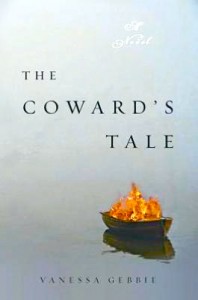 It has been two years since I have added a new book to my list of All-Time Favorites, but that has just changed with the release of this novel which deserves a special place on my Favorites list. Set in the mining country of southern Wales, Vanessa Gebbie’s incandescent new novel captures the cadences and speech patterns that lovers of Dylan Thomas’s Under Milk Wood have celebrated for years, and as I read the book (as slowly as possible), I felt as if Richard Burton, the Welsh narrator of Under Milk Wood, were whispering in my ear. A collection of stories recounted by Ianto Passchendaele Jenkins, a beggar who lives on a stone bench in front of a disused chapel, the novel eventually becomes the history of the small Welsh mining town itself, and readers will come to know all the characters and their families going back for three generations. The emotional power of this novel is overwhelming without becoming sentimental or syrupy.
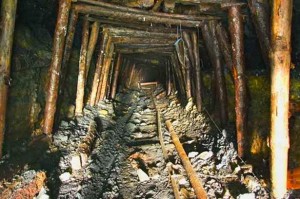
 Telling his stories in exchange for food and coffee, often outside the local movie theatre, Ianto is always haunted by the explosion and collapse of the Kindly Light mine, which killed eighty-five townsmen three generations ago. He, a child whose father was dying from lung complications after working the mines for most of his life, was forced to go to work in the mines himself to support the family at age twelve. After working for only a few terrifying days, however, Ianto found himself inside the mine when it exploded. His rescue was an enormous disappointment for the dozens of the miners’ wives and mothers – who were hoping instead that the rescued person would be someone’s husband or father – and when, upon his rescue, this naive and terrified twelve-year-old tearfully announced that the explosion and deaths were all his fault, he became the scapegoat for the emotional horrors of the community. Now, as an old man, he nears the end of his life, one spent in penance for actions, real or imagined, which have prevented him from having a life of his own since he was twelve.
 The stories he tells are inspired by the friendship which evolves between Ianto and Laddy Merridew, a red-haired nine-year-old who has just come to live with his grandmother following the breakup of his parents’ marriage. In an introduction overlaid with symbolism, Laddy, weeping from the mockery of schoolboys because his clothes smell of mothballs, introduces himself to Ianto by saying, “My name is Laddy Merridew. I’m a cry-baby. I’m sorry.” Though Ianto does not stop walking or even look back at the needy boy, he responds, “And my name is Ianto Jenkins. I am a coward. And that’s worse.”
Ianto’s stories all have mystical significance, and how much “truth” resides in them, in terms of real life events, becomes irrelevant as their emotional and personal truth and their family significance are revealed. The cumulative impact of Ianto’s many stories provides a unique look at life in a small Welsh mining village, but just as importantly, it provides a look at Ianto’s own life since the mining disaster which determined the outcomes of families for generations.
 “The Woodwork Teacher’s Tale,” about Icarus Evans, the grandson of a man who died in Kindly Light, tells of Laddy’s attempts to befriend him. Icarus has been teaching woodworking in the local school for thirty years, and each year he has given his students one final assignment, telling them that “When you make me a feather out of wood, only then are you a real carpenter.” For thirty years, his students have tried to accomplish this miracle, and he has kept their separate, failed efforts in boxes labeled by year. “The Half-Wit’s Tale” and the “Deputy Bank Manager’s Tale” overlap. “Half” Harris, intellectually challenged and “born twice,” loves fishing, and fishes in the local river for the junk that others throw away, carting his catch home in an old pram. The deputy bank manager, Matty Harris (“no relation”) also loves fishing, and is always looking for the perfect fish. The intersection of their lives changes both of them forever.
 “The Baker’s Tale” tells of Andrew Bowen, who is not a baker at all, living in a “bakery” which is not a bakery, though his grandfather was a baker, and explains how he became the person who created a town ceremony that takes place each year. “The Window Cleaner’s Tale” is an unusual love story. “The Gas Meter Emptier’s Tale” is one of the most revealing of the town’s culture, and its main character, James Little, became one of my favorites, a man whose father was branded a thief and who always felt victimized by those who rejected his father. At the end, Peter Philips, the Collier, an illiterate (probably dyslexic) boy whose father was determined that he would be a scholar, not a miner, ultimately provides insights into the young Ianto Jenkins. Ianto Jenkins’s own story, revealed slowly during the whole novel in interludes scattered among the other tales, provides the reasons he always blamed himself for the mine disaster, and a reader would have to have a heart of coal not to respond to this wrenching conclusion.
Filled with unforgettable descriptions and emotionally moving insights into people of all types, The Coward’s Tale recreates an entire town, and as the characters develop and overlap throughout the book, the wonder of this author’s achievement expands. I have never enjoyed sentimental and cliché-driven novels in which the author “pushes buttons” to create artificial sentiment, so when I tell you that I loved this novel for the very real feelings and genuine sadness it conjures, I do so in the hope that you will eventually agree that this novel is special, different, and honest in its depictions of the lives of miners in a small town in Wales, and ultimately, of other thoughtful people who must deal with tragedies within a closed system of community values.
The author’s website is here: http://www.vanessagebbie.com/
Photos, in order: The author’s photo, by Andrew Hasson, appears on http://newwritingsouth.com
The hands holding coal, by Robert Nickelsburg, Getty Images, is from http://www.guardian.co.uk
The last two photos are posted to honor the miners who died in the Gleision Colliery in Wales in September, 2011. The photo of the entrance to the flooded mine is from http://www.telegraph.co.uk/ The iconic photo of the exhausted rescue workers is from http://www.boston.com. Four trapped miners died in this accident. Working in one of the most dangerous professions in the world, miners continue to give their lives to the mines as they have done for generations.
 Mathematical genius Tetsuya Ishigami and his equally brilliant friend Manabu Yukawa, from the physics department at Imperial University in Tokyo, are at the heart of Keigo Higashino’s complex and satisfying murder mystery from Japan. From the outset the reader knows who has killed a loathsome and terrifying bully; the big question is whether or not the person will ever be caught. The victim, Shinji Togashi, has been divorced from Yasuko Hanaoka for five years, but he has constantly haunted her, wanting money, pushing her around, and making life miserable for her and her teenage daughter Misato. When Togashi threatens his stepdaughter Misato, she strikes out, and when he retaliates, his death is swift. Panicked by the outcome, Yasuko and Misato become willing participants in a “solution” offered by their shy and overweight next-door neighbor, professor Tetsuya Ishigami, who has heard the commotion. All of them believe that Togashi deserved to die, but only Ishigami, the mathematical genius, can think clearly under the circumstances. Knowing that “he would never be this close to so beautiful a woman ever again,” Ishigami asks Yasuko to “Trust me. Logical thinking will get us through this.” He takes over.
 When Togashi’s nude body is later discovered under the Shin-Ohashi Bridge, it is difficult to identify. The face is smashed, and there are no fingerprints or teeth to allow for easy identification. When he is eventually identified through other means, Yasuko and Misato have air-tight alibis. Police Det. Kusanagi feels that something is not quite right, however, something he discusses when he visits the physics professor Yukawa, his long-time friend. Yukawa often offers friendly lessons in pure deductive reasoning and provides logical direction for Kusanagi and the police.
 Meanwhile, the daily lives of the characters continue – with Yasuko working at a small Benten-tei luncheon shop, Misato going to school, Ishigami teaching his classes, Kuniaki Kudo inviting Yasuko out to dinner, Ichigami and Yukawa chatting about problem-solving, and Kusanagi following various characters in an effort to figure out who the killer is. Eventually, Yukawa even suggests that Ichikawa keep tabs on Yasuko and report on her actions, one of the ironies that pervade the novel.
 ctly “typical,” in that few mysteries feature characters with his level of brilliance, he is not a character one comes to know. Yasuko, the victim’s ex-wife, a former club dancer who now works in a lunch shop, is so shallow that it is difficult to gain any understanding of her – she is someone who is considered pretty but not much else.
 cal underpinnings, a welcome addition to the genre. The carefully composed details and slow unraveling of the action keep the reader thinking on more than one plane – not just about whether the killer or killers will get away with the murder of a person who is no real loss to society, but about the interactions of human beings and the discovery of what is real, as opposed to camouflage.
 Now an eighty-four year-old Dame Commander of the British Empire for her services to literature, Penelope Lively is nothing short of an inspiration. Always firmly rooted in the real world, her recent novels and main characters have followed her own path into old age. Her (mostly) good-humored acceptance of its inevitable indignities and the insightful and sometimes ironic commentary made by her elderly characters, keep the reader aware that old age, however challenging, is not necessarily a catastrophe to characters who possess grit, determination, and a sense of independence.
 Her prose style often resembles a perfectly constructed musical composition in which individual characters have brilliant solo turns, followed by remarkable duets in which they try to communicate with each other. New themes and motifs, as the characters’ lives change, are reflected in changes of tempo and rhythm in the prose. Ultimately, they lead to a resolution in which all the thematic motifs come together successfully but never really “conclude.” As the author says, “An ending is an artificial device; we like endings, they are satisfying, convenient, and a point has been made. But time does not end, and stories march in step with time. Equally, chaos theory does not assume an ending; the ripple effect goes on, and on…[the stories] spin away from one another, each on its own course,” as they do here.
 The novel opens with the impressionistic description of the mugging of Charlotte Rainsford, age seventy-eight, who is thrown to the ground when her purse is stolen by a teenager. Her subsequent recovery from a broken hip at the home of her daughter and son-in-law begins the cycle of change from which ripples radiate for the rest of the novel. Though Charlotte and her deceased husband were both brilliant and charismatic teachers, their daughter Rose is much more staid, working part-time as a personal assistant to Lord Henry Peters, an elderly former history professor who spends his time doing obscure historical research, trying to convince himself and others that he is still “relevant.” Rose’s need to stay home with Charlotte at the beginning of her recuperation leads Lord Henry to contact his niece, Marion Clark, a divorced career woman, who comes to Lord Peters’s estate to fill in for Rose. Marion, a successful interior designer, is having an affair with Jeremy Dalton, the married father of two, who feels no qualms about betraying his wife. When, in the first ten pages, Jeremy’s wife Stella discovers a revealing text message from Marion on Jeremy’s cellphone, however, “The Daltons’ marriage broke up, [all] because Charlotte
 Rainsford was mugged.” And when the disabled Charlotte decides to continue to teach reading to immigrants one day a week, she invites Anton, from Kosovo, to come to Rose’s house for tutoring. This introduces yet another series of changes and complications. Sir Henry’s attempt to write a TV series begins a final set of widening ripples.
 Always a voracious reader, Charlotte realizes that throughout her life “she [has] read to discover how not to be Charlotte, how to escape the prison of her own mind, how to expand, and experience. Thus has reading wound in with living, each a complement to the other…She is as much a product of what she has read as of the way in which she has lived.” Ultimately, she decides that the reason Anton, a bright accountant in his own country, is unable to get a job in that field in this country is that he has never learned the narrative patterns of the English language through stories, as she has. She quickly introduces him to children’s books with adult themes, gradually increasing the difficulty and the content. Soon Anton is being “built by books,” gaining verbal skills and connecting pieces of information which will enable him to change his life.
 Dan Vyleta’s The Quiet Twin offers a unique perspective on the growing menace of National Socialism in Vienna, in 1939. Using an ordinary apartment complex and the events which affect the seemingly ordinary characters who inhabit it as a microcosm for the terrifying realities which are about to come, Vyleta creates an almost unparalleled atmosphere of fear and dread. An absorbing literary novel, which never loses its way as it progresses, it is ultimately a horror novel which out-horrors almost all others, not only because of the awful events which unfold, but because the unfolding action feels so casual and so domestic in the context of the residents’ lives. And that is the whole point. Throughout the action, each character decides in a moment of crisis, that “just this once” s/he will ignore the promises made to others and the values which have always been paramount in civilized society in favor of what works best for himself/herself at that moment. The result is a societal compromise of epic proportions, one which allows the Nazi menace to take hold. The word “Holocaust” never appears, though the psychological horror, political horror, sociological horror, and moral horror come to life in new ways as the action in this apartment house unfolds.

 Psychiatrist Albert von Shrenck-Notzing studied paranormal phenomena in the late nineteenth century, especially the ability of people like “Eva C.,” who could create ectoplasmic materializations. Significantly, Schrenck-Notzing was also a researcher into the phenomenon of “suggestion-induced falsification of memory.” Herbert Gerdes created the 1936 film “Erbkrank: the Hereditary Defective,” filmed inside a German mental institution and shown in all five thousand German and Austrian theatres as justification for the extermination of the patients. All these direct parallels between past and present make the action especially vivid and horrifying.
 l’s title are all the individual characters who have “quiet twins” – completely different selves in private from what is known in public to everyone else, including sometimes the reader. As Vyleta continues his characters’ lives through to the conclusion, their private lives become more understandable, and more pathetic. Ultimately, the lack of real communal values, combined with fear, leads to opportunistic decisions which affect all the other characters in the novel.
 In this readable, exciting, and historically enlightening novel with two separate plots, Audrey Schulman accomplishes an incredible feat. She makes the individual plots totally compelling and uniquely character-driven as they shift back and forth in alternating chapters, always leaving the reader panting for more, anxious to reach the conclusion and a hoped for resolution of the plots. What is most seductive about the novel is that the plots take place in two different time periods and settings—one in Kenya in 1899, and the other, in Virunga National Park, on the border of the Democratic Republic of Congo and Rwanda, in 2000. In the first plot a man from Bangor, Maine, responsible for building a railroad from Mombasa to Kisumu must deal with two large and bloodthirsty lions, reportedly over nine feet in length, as they repeatedly attack and kill railroad workers; in the second, a young scientist with Asperger’s Syndrome is responsible for securing a vine, consumed by mountain gorillas, which dramatically reduces the incidence of both stroke and heart disease in their species. If Max, the researcher is able to obtain samples of the vine, a pharmaceutical company will, among other benefits, provide armed security to ensure the survival of the gorilla population in Virunga National Park.


 hich depends largely on child soldiers, operates out of the Congo and constantly threatens the gorilla population. A drought has caused widespread starvation among the local population, and one massacred silverback gorilla can supply enough meat to serve an entire small village for a week. Max must deal with threats like these as she searches for the mysterious vine, known only to the gorilla population, which could eliminate or reduce strokes and heart disease in the human population.
 Schulman effectively uses this well-known story to provide an African context in which the introverted Jeremy can face his personal demons, away from his dominating Maine family. The story of Max Tombay, in Rwanda, is equally fascinating, and even more unusual, as Max discovers that her status as an “Aspie” makes her uniquely qualified to understand the gorilla population with which she deals, and she makes the details of Asperger’s Syndrome completely understandable in the context of her story. Though the novel is more a dramatic and beautifully realized adventure novel than it is heavy-duty literary fiction, it is flawlessly organized and executed and is a thrilling book to read. Its unlikely coincidences and the romantic conclusion are just small distractions in this well crafted novel which will keep many readers reading into the early morning hours.