“I speak of a love that brings sight to the blind. Of a love stronger than fear. I speak of a love that breathes meaning into life, that defies the natural laws of deterioration, that causes us to flourish, that knows no bounds. I speak of the triumph of the human spirit over selfishness and death.”
 It is easy to see why this novel, published in the author’s native Germany in 2002, has been such a resounding popular success there for the past three years, with booksellers giving it rave reviews, hand-selling it, and in one case even telling customers “they can bring it back if they don’t like it…[and] get their money back, no questions asked.” Nobody has ever returned it. Word of mouth and book club interest have done the rest, making the book a huge best seller. Newly translated into English, the novel is now available here, and it will be interesting to see if its story “travels” as well to the US and UK.
Jan-Philipp Sendker’s The Art of Hearing Heartbeats pulls out all the stops. Set in Burma (now Myanmar), it is the consummately romantic story of an abandoned and traumatized orphan boy, Tin Win, whose adoptive mother and the monks at the local monastery slowly enable him to make connections with the world beyond. It is both a look back at the past and a look forward into the future, as the boy’s story develops and he learns to love. The novel is also a triumph over adversity, as two characters, one blind and one crippled, movingly overcome their “handicaps” and no longer see themselves as any different from anyone else. The blind character learns to listen to the world so carefully that he can find people by listening for their unique heartbeats. The crippled character has a voice so beautiful that people come for miles to hear her sing. And it is also a novel of suspense, as Julia Win, the young American daughter of Tin Win, searches for her missing father, traveling into rural Burma in search of the writer of a love letter from almost fifty years ago, which Julia has found among her father’s effects. Throughout the novel, the involvement of Burmese astrologers and helpful Buddhist priests add another dimension, both magical and mystical, to the thinking of the Burmese characters. Stories within stories within stories keep the love stories swirling and the sense of otherworldliness growing.

Kalaw , photo by Christina Koukkos
The basic story line opens with U ba, a Burmese priest, approaching Julia Win in a tea house in the rural mountain village of Kalaw, in Burma, telling her that he has been awaiting her arrival for four years. Startled, since Julia does not know him, she wonders, at first, if he represents a scam, since she has just arrived from New York, searching for her father, who disappeared four years ago. Soon, she is learning her father’s background from U ba, a rewarding experience, since even her own mother never knew anything about Tin Win’s life before he was twenty years old. Born on a Saturday in December, an astrologically disastrous day, Tin Win had entered a hostile world in which both his parents rejected him because the local astrologer had told them that “the child will bring sorrow on his parents.” Later abandoned, he was taken in by a neighbor and schooled at the monastery.

Schwedagan Pagoda
Time in this novel is not linear, with Julia suddenly remembering and retelling one of her father’s stories about a strict king who made his son study, morning and night. Then the prince falls in love. His friendship with a crocodile introduces imagery which continues throughout the novel and expands the love theme and its connection to place. Another early diversion from the main story occurs with the story of U May, the abbot of the monastery to which Su Kyi, Tin Win’s adoptive mother, takes Tin Win in an effort to coax him out of his emotional darkness. U May’s own love story parallels in many ways the story which eventually grows up around Tin Win, a sad story with symbolism (or sense of foreboding) on several levels.

The Golden Buddhas of the Schwedagan Pagoda
U ba’s stories of Tin Win grow with the introduction of Mi Mi, the young girl he loves, and the novel becomes almost a morality tale, with many statements about the nature of life and love: “Love has so many faces that our imagination is not prepared to see them all…because we see only what we already know. We project our own capacities – for good as well as evil – onto the other person. Then we acknowledge as love primarily those things that correspond to our own image thereof. We wish to be loved as we ourselves would love. Any other way makes us uncomfortable.” A poem by Pablo Neruda asks us, “How much does a man live, after all?/ Does he live a thousand days, or only one?/…What does it mean to say ‘for ever’?” Another adage asserts that “Life is a gift that none might disdain…Life is a gift full of riddles in which suffering and happiness are inextricably intertwined.”

Double-click to enlarge the map.
The stories are told with detail which keeps them fresh, but they are recited at us by a good storyteller, primarily U ba, the action not being recreated in a way which makes the reader feel s/he is actually participating directly. This makes the novel seem “talky” – conversational – and leaves the burden on the reader to imagine it and make it feel lively and personal. Some of the plot feels operatic, and on a couple of occasions, I thought of Mimi in La Boheme as a parallel to Mi Mi in the novel. With all the aphorisms and commentary about life and love, the novel sometimes has a moralistic, ponderous tone, which is certainly in keeping with the lessons being given by the monks but which many readers prefer to glean for themselves from plot elements which ideally illustrate themes more subtly. Still, Sendker’s descriptions and his setting in Burma, a country which few readers know, lend a sense of atmosphere and mystery to the novel, and his often lyrical approach to the points of view of Tin Win and Mi Mi creates a charming romance which will keep many readers fascinated.
Photos, in order: The author’s photo is from http://meng-gemeng.rtl.lu
The photo of Kalaw, by Christina Koukkos, appears on http://www.theexpeditioner.com
The Schwedagan Pagoda and the Golden Buddhas, which Julia visits, appear on http://wanderinground.wordpress.com and on http://www.heybrian.com/
The map of Burma/Myanmar is from http://www.divetheworldburma.com
 Newly appointed Aboriginal Community Police Officer Emily Tempest has returned to her roots in Bluebush – in the Northern Territories of Australia – after more than ten years spent traveling the world. The daughter of Motor Jack, a white geologist/gold prospector and an aborigine mother, she grew up in her mother’s culture until she was a teenager and has always felt more comfortable there, despite the educational programs and travels which later took her all over the world. Having returned to live with “her” people when she is in her twenties, she continues to resent the intrusions of the “civilized” white world and the damage it has caused to the natural world venerated by the aborigines. Having won their claim to their ancestral lands (in author Adrian Hyland’s previous novel, Moonlight Downs), the community, Emily notes, has “taken the first tentative steps to independence: built a few rough houses, put in a water supply, planted an orchard…and started a cattle project, [and] there was talk of a school, a store, a clinic.” Life seems to have improved somewhat from the previous novel, at least as far as physical comforts are concerned.
 Hyland himself spent many years living and working with the indigenous people in the Northern Territories, and he vividly recreates aborigine family life, which is still nomadic and hand-to-mouth in many communities. The young people are easily attracted to alcohol and drugs, readily available in towns, more than they are to schools and to the traditional values of their elders, and the unemployment rate is stratospheric. In this second novel in the Emily Tempest series, little seems to have changed in the racial attitudes of the “whitefellers” toward the aborigines, with many police investigations, as Emily quickly sees, guided more by what investigators still expect than by what any evidence actually shows. A smart woman, as hard as the local rocks and geological strata that have attracted opportunistic miners from all over the world, Emily can also be as quixotic and mysterious as the spirits which she and her people believe move in and out of their lives, keeping the forces of nature in balance. “Say what you like about me and my mob,” she announces, “there’s one thing you can’t deny: we’re survivors. You can kick us and kill us and drown us in bible and booze, but you better get used to us because we’re not going away.”
 Filled with atmosphere, local color, and nonstop action, the novel opens with a gruesome attack at Green Swamp Well, in which a drunk, elderly prospector is found with his hammer embedded in his throat. Another prospector, also drunk, found asleep near the body, is arrested. When Emily discovers that the dead man is Doc, an old friend of her father whom she has known since childhood, and that the supposed killer is Wireless, another old friend, she is determined to help. Doc believed that Martians, devils, the CIA, and missionaries were all out to get him, b
 ut he was an educated former employee of the Geological Survey, and his shack is filled with books, files, and hand-drawn maps. He had been recreating mysterious geological formations in his backyard, and he and Wireless had been arguing about Zeno’s Paradox. Both have lived by their own rules, and Emily believes that Wireless, who remembers nothing about the killing, will die if he is shut up in prison.
 family in the bush that he will develop the inner resources he needs to stay clean and become productive. Doc’s brother, Wishy Ozolins, his wife, and their three well-individualized daughters play a role and show their family dynamics, and when Wishy claims Doc’s files, he is perturbed that a major file on the
  he educated and uneducated, the whites and the blacks, and the men and the women. As morally bankrupt entrepreneurs gravitate to the gold and mineral wealth of the area with their strike-it-rich schemes, it is those with strong ties to family and culture, it seems, who are most likely to survive.
 ters, their interactions, and subplots that it is sometimes difficult to identify the main themes and main plot line. Even Emily herself is sometimes so unpredictable in her behavior that she is difficult to figure. Still, for those interested in this fascinating setting and its close-up on those aborigines who must exist in close proximity to a completely alien world and way of life, it offers new insights and understandings and does so with enthusiasm and respect.
 Setting her novel at the end of the twentieth century, Penelope Lively begins Spiderweb (1998) by presenting a sociological picture of the west of England and the once-remote counties of Somerset, Devon, and Cornwall, which are now attracting new residents from “outside.” A letter from Richard Faraday to Stella Brentwood regarding a property in Kingston Florey in nearby Somerset describes a cottage for sale and its pluses and minuses, and indicates that Richard has been helping Stella find such a property to purchase. We know nothing about either of them except that Stella was best friend of Richard Faraday’s wife Nadine from their college days. Gradually, the reader learns more about Stella, a sixty-five-year-old, newly retired social anthropologist and teacher, who filters all the impressions one gains about the village and its people through her own experience. When she buys this cottage, she approaches her new village not as a new member of the community, but as an academic and specialist in social structures.
 professionally. Excerpts from her diaries, including one from her stay in a small village in Egypt in 1964, suggest her approach: “My many expensive years of education have left me quite unequipped for life in this mud village with two transistor radios, one moped, one petrol-driven engine and two hundred people, many of whom cannot write their names. What it has given me is the urge and the ability to cast a cold eye upon them and their way of life. Do I find this uncomfortable? Of course.” The parallels to the life about to unfold for her in Kingston Florey are obvious.
 st Somerset would cheerfully bare its soul to her…She had only to get talking at a bus stop or supermarket check-out, share a table in a pub, stop to chat at a filling station. Her credentials were instantly apparent: agreeably spoken, no spring chicken, origins uncertain, but that’s what you expect these days.”
 new of him in the past, even judging the elegant restaurant to which he takes her: “Food is more than meets the eye…it usually has ritual significance…[it says] the resources of civilization are available [here]. Mud and muck there may be, but immunity is available for those with discrimination.” She compares this man to the love of her life, a journalist she met in Malta many years ago, and the man in the Orkney Islands who begged her to marry him. Ultimately, she realizes that her life, like “this place” is a “web,”and its connections may also bind and destroy.
 The author, in creating a gossipy and initially cheerful commentary on village life, makes us empathize with Stella, even as we are ready to throttle her, sympathize even as we recognize she is perhaps hopelessly obtuse. We see her actions with a kind of dark humor, even as we may feel guilty for feeling judgmental about her. The reader recognizes elements of foreshadowing given by the author and understands many of the social issues which underlie the behavior of the local people around her, but Stella, the anthropologist, is not privy to this information and has no way of ever learning it. Ironies, such as these, give the story a kind of resonance and universality which broaden the scope far beyond the limitations of Kingston Florey and offer commentary on what it takes to be a “successful” person. Stella, at sixty-five, has squandered her chance to experience a full life, at least by the standards of most of the rest of the world, and whether she is or can be truly happy is not clear. Whether or not she really cares is an even bigger question.
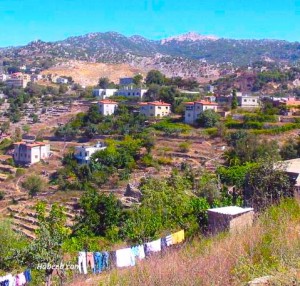
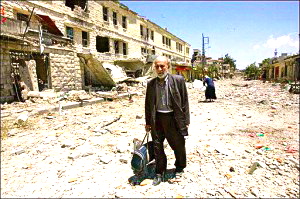
 Told by Marianna, a young woman who has lost all sense of “home” as a result of the more than ten years of warfare she lived through in her homeland of Lebanon, this impressionistic psychological novel begins with her dreams of “before the war was real.” Romantic images of her mother “wander[ing] outside, smelling the ghostly jasmine in the dark, and Daddy open[ing] another old book under a lamp” overlap with images of her grandparents lighting the candles on a Christmas tree while sweet wine boils on the stove. Marianna herself often picked thyme with a young friend, visited ancient sites with her family, walked along the seashore in Beirut, and shopped in the souks. Summers were special, as the family vacationed in the countryside, where they harvested lavender, picked figs, and enjoyed the terraces that ran through fields filled with poppies, daisies, and heather.



 William Kennedy’s latest novel in the Albany Cycle, his eighth, continues the story of several families from Albany, New York, during the heyday of its infamous, politically corrupt “machine.” Focusing on Daniel Quinn, a newspaper reporter who is the grandson of the Daniel Quinn who reported on the Civil War in Quinn’s Book, and son of the now-senile George, a “hail-fellow-well-met” charmer with connections to seemingly everyone in Albany, this novel begins in August, 1936, when Daniel is a child. Peering over the banister of the front staircase in Mayor Alex Fitzgibbon’s house, Daniel sits quietly watching as his father brings a piano (origins unknown) into the Mayor’s house. Cody Mason, a pianist specializing in Harlem “stride,” is about to put on a private show with the young Bing Crosby. Daniel Quinn is overcome by the passion of this music.

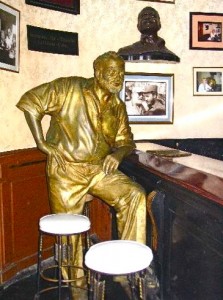
 te. He is warned about the dangers to himself because of his associations with Renata, and he accepts the red and white “Chango beads” given to him by Narciso, an aged Santeria priest. He travels to Santiago and into the Cuban Sierra, and he observes the atrocities committed by Batista’s army. Throughout, Quinn believes himself to be following in the footsteps of his grandfather, also named Daniel, who was fascinated by Carlos Manuel de Cespedes, a Cuban planter who freed his slaves in 1868 and fought a ten year war against the Spanish in Cuba. He imagines himself writing a future novel about Castro, similar to the book which his grandfather wrote about Cespedes and the Mambi.
 an old neighborhood, now completely changed, and tries to relive his memories; Tremont Van Ort, an alcoholic who finds himself sought by a Black Power activist, who wants him to kill the Mayor; and an assortment of prostitutes, drug bosses, and musicians. In this section, like the Cuba section, Quinn also sees himself writing a novel – this one about the race riots, and especially about Tremont. The final seventy-five pages unite the two sections and explain some of the long-lived questions about everything that happened in Cuba when Quinn visited in 1957.