“As he sat with his back against an inside wall of a Motel 6 just north of Phoenix…Driver would wonder whether he had made a terrible mistake. Later still, of course, there’d be no doubt. But for now Driver is, as they say, in the moment.”
 As a long-time fan of author James Sallis, I am excited to see how this novel “plays,” now that it has just been released as a film, a first for Sallis. A novelist who writes some of the most compressed novels ever, with big stories conveyed in a few perfect word choices, absolutely right images, and terse but revelatory dialogue, Sallis says more in one sentence than most other authors say in a page or two. His novels are the darkest of the dark, and the lives of his damaged characters are often the messiest of the messy, but his style is powerful and seductive, despite the graphic violence, and I cannot imagine any lover of fine writing not becoming excited by the honesty that underlies his stories and themes and the mysterious attraction of his characters, no matter how sick they may be. Perhaps the film of Drive will lead readers to discover this novel and some of his twelve other novels so that this fine writer will finally find the audience he deserves.
In Drive, a quintessentially minimalist novel, a main character known only as “Driver” works as a stunt man by day and as the driver of getaway cars at night. Purely pragmatic and living only in the moment, he has no real dreams and no long-term goals, the result of his violent childhood, which was not a childhood at all. No one gets close to him,  though he occasionally shows signs that he has some feelings for a few other damaged creatures. When it comes to his work, however, he is all business – “I don’t take part, I don’t know anyone, I don’t carry weapons. I drive.”
Opening dramatically with Driver leaning against a wall in a Motel 6 room, his arm wounded so badly it is useless, with three dead bodies around him, the novel repeats these images like a bizarre refrain throughout, as the background for this scene and the action which follows are revealed. In terse prose, as efficient in conveying information as Driver is in killing those who threaten him, Sallis follows Driver as he moves between Los Angeles and Phoenix, doing jobs.
Episodes from his life hit the reader with the intensity of gunfire and in random order, connected not by transitions but through the character and violent background of Driver as his life unfolds without any linearity to the narrative, its episodes requiring the reader to sort and develop his own picture of Driver’s life, with no beginning, no middle, and an end that can only be imagined. Scenes from Driver’s film assignments overlap with scenes from his real life, sometimes inspiring Driver to reminisce or to try to look forward to see how and why he ended up where he is.

Actions speak louder than words here, but the dialogue, when it occurs, is memorable and dramatic. Scenes in which Driver tries to visit his estranged mother and later his foster family are intensely moving because they emphasize an emotional connection which is otherwise lacking in his life. He is intelligent, and he keeps trying to communicate with people through words, not violence, though the circumstances of his life are almost entirely violent. He has no dreams, forced to believe instead in a brutal reality – he is Borges, the writer/realist, not Don Quixote, the tilter at windmills, he notes. “I don’t think [our lives] are thrust upon us,” he explains in one conversation. “What it feels like to me is, they’re forever seeping up under our feet.”
A dramatic, thoughtful, and powerfully moving examination of the life of someone who has few choices, this novel transcends its darkness and violence to show the continuing desire for connection even among life’s most violent people. And Sallis is already at work on a sequel, set seven years into the future, inspired by a request from the film’s producers.
Note: The film production of this novel, directed by Nicolas Refn and starring Ryan Gosling, is reviewed here: Drive, the film
Also by James Sallis: Driven (the sequel to Drive), The Killer is Dying (at the top of my Favorites List for 2011), What You Have Left, which consists of the three novels of his John Turner Trilogy: Cripple Creek, Cypress Grove, and Salt River. Also Others of My Kind, Willnot Sarah Jane
Photos, in order: The author’s photo by Valere Pennicino/Getty and an interview appear on http://www.latimes.com
The photo from the film, starring Ryan Gosling, is by Richard Foreman from AP Photo/Film District and appears on http://www.buzzsugar.com
 Winner of an extraordinary number of literary prizes in Tasmania, Australia, and England, Wanting by Tasmanian author Richard Flanagan emphasizes, by its ambiguous title, two of the most contradictory characteristics of Queen Victoria’s reign—the “wanting,” or desire, to conquer other lands and bring “civilization” to them, and the “want,” or lack, of empathy and respect for the people and cultures which they deliberately destroy in the process. The same contradictory characteristics are also reflected in the personal relationships of the socially prominent men and women of the era, some of whom we meet here. Lust, desire, or physical “wanting” are feelings to be overcome because they are “uncivilized,” but men routinely indulge their passions with those far “beneath” them – servants, prostitutes, native women – people considered outside the limits of educated and wise society.
 Ten pages (and fifteen years) later, Lady Jane Franklin, wife of Sir John Franklin, the former Governor of Van Dieman’s Land, is in London, trying to raise money for new Arctic expeditions to discover the fate of her explorer husband, his ships, and their crews, now lost for nine years. One of her exhibits is the skull of King Romeo, which she displays to phrenologists, who have concluded that the King was a savage, enslaved by his passions. Ironies abound. Lady Franklin is frantic to find an influential ally who can help her quell the rumor that Sir John Franklin and his crew became so desperate during their final days in the Arctic that they engaged in cannibalism and other “savage” behavior.


 Once again, Deon Meyer creates a vivid and sometimes frightening look at life in contemporary South Africa, which serves as the background for a real can’t-put-it-downer of a thriller. In the course of his six previous novels, each of which has been more exciting than the previous one, he has continued to expand his plotting and characters. This is his most complex and intricate novel yet, filled with twists and ironies and a series of surprises in the conclusion that make it all work. Unlike most of his previous novels, however, this one is divided into four separate sections, each of which develops independently from the others, like individual novellas, with little to connect them until late in the novel. What the reader knows from the outset is that South Africa’s Presidential Intelligence Agency (PIA) has uncovered a plot which suggests that militant Muslims are planning a takeover of the country with the aid of violent gangs and disaffected youth from the poorest neighborhoods of Capetown. Since the PIA itself is threatened with the prospect of its absorption into a national super-intelligence agency, they are sometimes overly zealous in promoting their own interests.
 been “Don’t Get Involved,” he eventually accepts a private commission to fly to Zimbabwe, meet a truck transporting two rare black rhinos, and smuggle it in to South Africa, where a local man has a private game reserve. An attempted hijacking brings out Lemmer’s dark side, reminding us that he can be a dangerous man.
 develop four separate plots, with casts of only-rarely overlapping characters, Meyer actually seems to be deliberately recreating the problems of security agencies in South Africa and other countries in which “homeland security” means dealing with many different kinds of issues, often by competing agencies. Protecting turf and failure to share information, even with international agencies, obviously allow dangers to grow, and as we see here, often lead to the mischaracterization of people, the dangers they pose, and the actions they take.
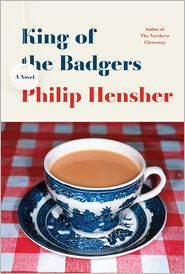 his previous novel, The Northern Clemency (2008) was nominated for the Man Booker Prize, many readers have never forgiven him for what may be one of the most infamously nasty book reviews ever written. A writer for the Guardian and the Independent in the UK, Hensher reviewed The Book of Kings by debut author James Thackara in 2000, a book on which Thackara had reportedly worked for twenty-five years. After praising the quality of the paper in the book and the readable typeface and the photo of the author, which Hensher notes was in focus, he then goes on to say “it’s terrible, startlingly badly written…so awful, it’s not even funny, and with nothing but falsity and a useless sincerity.” And he doesn’t stop there, saying ultimately that “It may be the very worst novel I have ever read.”
 Divided into three parts, the first part concerns the search for China O’Connor, though most of the text is devoted to the development of the characters in the town and their interrelationships. The disappearance becomes secondary to the development of atmosphere, the local characters (often depicted satirically), and the social snobbery. Part II has virtually nothing to do with the disappearance. In a sensitive and often moving character study, the book focuses on David, the thirty-six-year-old gay son of Cath Butterworth and her husband Alec. David is fat and lonely, and all he wants is someone to love him. His parents, relative newcomers to Hanmouth, are no longer as much a part of his life as they have been, and his loneliness has peaked. He enlists Mauro, an opportunistic but “suitable” gay man to pretend to be his boyfriend when he visits his parents. (This section includes a gay orgy which stretches the boundaries between realism and pornography.) Part III moves to academia, among other settings, and the issues facing Miranda, a member of the faculty from Hanmouth, but the author also brings continuing threads up to date–the increase of cameras as part of Neighborhood Watch, the continuing intrusion of government on privacy, the deaths of several people the reader has come to know, and the outcome of China’s disappearance.
 The book is hard to put down, and as the characters develop into real people, they exert their own charms on the reader, however uncharming they might be in personality. The threats to personal liberty and privacy have never seemed so imminent, and as the Neighborhood Watch cameras become ubiquitous, the reader cannot help but picture the ironic excesses of a Brave New World come to Devon. Ultimately, I became a great admirer of Hencher’s immense talents, despite his tendency to shoot himself in both feet.
 When she died in July, 2010, Beryl Bainbridge, Dame Commander of the British Empire, had been working for the preceding six months on this novel, The Girl in the Polka Dot Dress. Nearly completed at the time of her death, this novel is her twentieth, including five which were nominated for the Booker Prize and two (Injury Time in 1977 and Every Man for Himself in 1996) which won Whitbread Awards. Her 1998 novel Master Georgie was singled out for a posthumous Booker Prize in 2011. Despite the literary honors, Bainbridge has always remained a remarkably accessible author with a mordant wit, a sense of the absurdity of life, a darkly comic approach to her offbeat characters, and an undercurrent of violence which springs to life in unexpected ways. Set in June, 1968, this novel, like many of her other novels, places fictional characters within the fraught circumstances of real historical events, in this case the lead-up to the death of Robert F. Kennedy, and watches them as they twist, trying to adapt to the often bizarre circumstances of their lives.