“It was death she had run away from, of course, on Saturday night, death with its horrible sounds, death by twisted metal, slicing, slashing, tearing. Death searing through white flesh, blood spurting. And now she was trying to hide from death.”
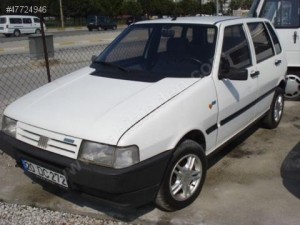
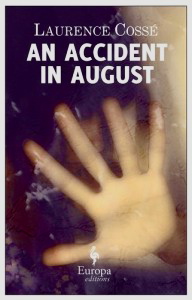 Released to coincide with the fourteenth anniversary of Princess Diana’s death on August 31, 2011, this newly translated novel by Laurence Cosse will attract many of the readers who enjoyed her best-selling A Novel Bookstore, from 2010. In this novel, originally written in 2003, the author picks up one of the remaining mysteries from the investigation of Princess Diana’s death and creates a novel around it—a witness’s report of a slow-moving car which the Princess’s speeding Mercedes grazed at the entrance to the Alma tunnel where the fatal crash occurred. The slow-moving car was described as a white Fiat Uno.
Readers of this novel will learn that the driver, as the author imagines her, was Louise Origan, a young woman living, not quite happily, with her boyfriend Yvon, on her way home from work at a restaurant in Paris. Panicked when the Mercedes crashes, Lou never stops, and on reaching the safety of her home, she relives her actions: “I never thought of stopping, not one second. I was running away. It was my foot that decided, or fear, in any case something that isn’t like me.” It is not until the next morning that she learns who the victims of the crash are, and though she may have contemplated going to the police to admit involvement in what she thought at first was an “ordinary” accident, she realizes that “there was no way she could go to the police now.” The media circus wouldn’t be just “a rough patch” for a few weeks, she knows. “You’re in it for life,” she realizes. “You are marked…For all the days you still have to live, you’ll be the girl who caused Diana’s death.” She tells no one.

Over the next few days, Lou is consumed with guilt, but at the same time she is doing everything she can possibly do to avoid being identified, eventually making herself sick with worry. She reads newspapers compulsively to find out whether the police have any more information from the dozen or so witnesses to the accident, whether her car and license number have shown up on the cameras in the tunnel, whether there is any record on radar, whether the make and model of the car have been identified, and whether Trevor Rees-Jones, the Princess’s bodyguard and the only survivor, is able to tell the police anything about the brush with her car. He represents, for her, “A time bomb…How soon would it explode?” she wonders.
Two weeks after the accident, the by-now terrified Lou makes some dramatic decisions and then acts, her self-protective behavior so shocking that it cannot be described without involving spoilers. It is this behavior and its consequences which form the bulk of the novel.
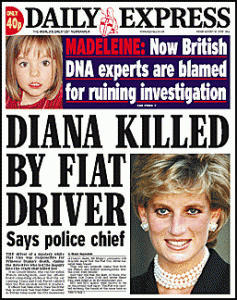 As a main character dealing with a crisis of conscience of this magnitude, Lou conjures up the reader’s worst nightmares, and the author plays on those, making the nightmares and the guilt worse and worse over time, so that the reader cannot help wondering “what if…?” For the reader to identify with Lou and feel empathy toward her, however, the reader must also be able to imagine making the same choices that Lou makes–to run away from the moral obligations which one human being has toward another human being when that person needs critical help. This moral obligation is regarded as so important to society that France has even made it a legal requirement. (A person responsible for an accidental death may get three years in prison, but a person who fails to render assistance after an accident like this one may get five years.) Since we know that Lou might have turned herself in to the police if the victim had not been the princess, the reader must believe that Lou’s fear of the paparazzi is so great (and so well justified) that her actions are not only understandable but also a reason to sympathize with her.
As Lou acts to guarantee that she will not be discovered to be the driver of the car, the action becomes increasingly melodramatic–and sometimes absurd. Lou becomes more calculating as the novel progresses, able to take very carefully considered actions in her own self-interest during times which would terrify any rational person (or reader). The style of the narrative gradually becomes faster and more intense, but when the surprising climax does occur, it is dealt with in fewer than seventy-five words, after which Lou carries on as she has been doing, without a backward glance.
If Lou, under the same exact circumstances, had been involved in the death of an anonymous teenager out for a joyride, however devastating that would have been for the victim’s family, I do not believe this book would have found an audience, and I am sad that the death of Princess Diana was used as the crux of this sensationalized novel. It does allow the author to explore behaviors that Lou herself indicates might not have been an issue if the victim had been anyone else, but is that enough to justify its use? Important books gain their weight and significance because of the universality of their themes and the unique ways in which the author develops them, often through their characters, but for me, Lou is much too weak a character to give us those insights–she thinks of nothing except her own escape. Her concluding statements will not endear her to readers expecting more, making the book’s release, especially on an anniversary of the Princess’s death, feel more than a little exploitative.
Photos, in order: The author’s photo is from http://www.musanostra.fr
The white Fiat Uno is shown on http://www.sahibinden.com
Also by Laurence Cosse: A NOVEL BOOKSTORE
 Q: It is clear that Omar, the newspaper publisher, is, in some ways, your alter-ego, and you are obviously having fun with him. Like Omar, you, too, have been in the financial services industry with jobs in both Cairo and London, so I’m going to ask the obvious: How much of yourself have you put into Omar? In what ways is he very different from you? And are you Egyptian, British, or a dual citizen?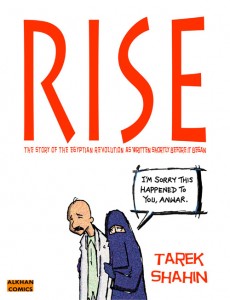
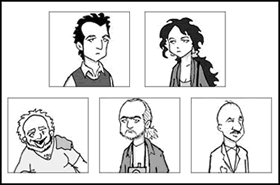 Q. I was really impressed by the variety of beliefs you managed to present with such good humor—Omar is a “liberal capitalist” who tries to see all sides of issues, though his ego and pragmatism sometimes get in his way; Nada is an extreme leftist, considered a communist by Omar; Anwar’s a conservative Muslim who uses the idea of taking other wives as a ploy to keep his wife (in niqab and burka) in check; Yunan is a Coptic Christian, whose views I haven’t found very often in Egyptian fiction, so that especially interested me. And the Big Falafel, the beggar, is obviously extremely intelligent, able to absorb mountains of information. Were you ever harassed for the points of view you presented so humorously (and often satirized) in the cartoon?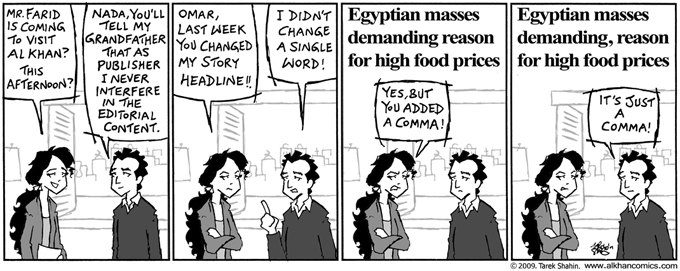
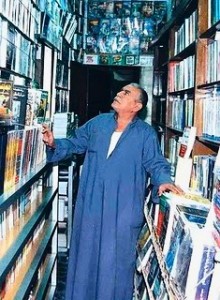 extracurricular activity. Our job was to go door to door to business owners and corporate CEOs to raise money for the student conference in return for advertising space on our university campus. After signing several such contracts as well as getting many more rejections, I walk into Madbuli’s flagship bookstore (incidentally adjacent to Tahrir Square) and ask for the store manager. Instead, as it happens, the man himself is there. I do the pitch: Madbuli (the business) helps sponsor the conference and in return we offer ad space for Madbuli. Hajj Madbuli takes a roll of cash out of his pocket and puts it in my hand. We’d never met before. I ask him if he’d like to know more about the on-campus advertising package we offer in return for his sponsorship. “The only return,” he said, “is that one day I will pass by a big building – a company, a hospital, a law office – and the sign at the entrance will read your name.” I would meet him another time many years later at the Cairo book festival but of course he was surrounded by people who wanted to shake his hand. He died the following year.
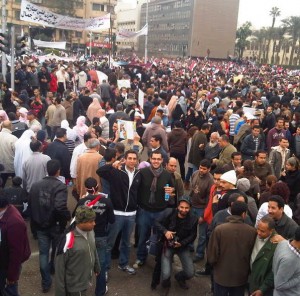
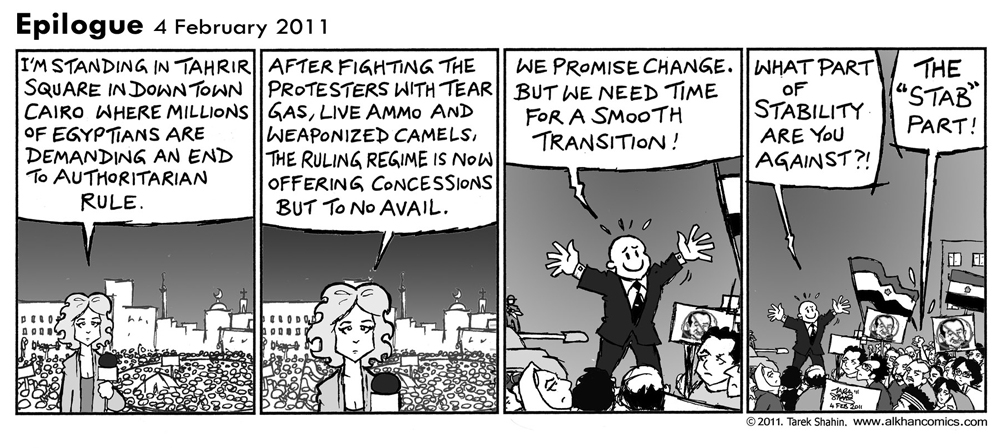
  from April, 2008, through April, 2010, in the Daily Star, Egypt’s independent English language newspaper, Shahin’s “Al Khan” cartoons foreshadowed the popular revolution which eventually took place in Tahrir Square between January 25 and February 11, 2011. Using daily life and newsworthy events, both social and political, as his inspiration, Shahin provides an unforgettable vision of what life was like in Cairo in the months leading up to the revolution. For a western reader like myself, who saw the revolution from a distance and may have regarded it as a bit of a surprise, Shahin’s cartoons make this momentous event much more personal, immediate, dramatic, and most of all, understandable because the forces leading up to it, along with its full, lasting impact, can be connected with “real” people, even though those “real” people are cartoon characters.
 back to take over as publisher of his grandfather’s magazine, “Al Khan,” an appointment which is not met with universal delight among the staff. Nada Saleh, a reporter whom the grandfather has appointed editor-in-chief of the magazine, plans to emphasize socially liberal causes, and she frequently finds herself nose to nose with Omar, who, though a “liberal capitalist,” is far more pragmatic than she is. Dr. Anwar Abutaleb, a devout Muslim and general practitioner with a large but not lucrative practice, is a friend who often shares “shisha” with Omar, though Omar regards him as extremely conservative. Because of his job, however, Anwar sees the accidents of history in ways different from other characters and often provides unusual insights.
 Wonderful peripheral characters also provide unique glimpses of Cairo life. Anwar’s wife Aisha wears both the hijab and the niqab, covering all but her eyes, and her face is never shown, blurred out even in those cartoons which take place in her home with Anwar. Noah Levy, a Jewish exchange student from England, comes to study in Cairo and becomes a close friend of Anwar, who does not realize that Noah is Jewish, leading to some “interesting” conversations. Jane, Omar’s ex-girlfriend from London, and (hilariously clueless) Dr. Ebaa Antar, an American sociologist, writing a book about women in the Arab world, round out the list of intriguing characters who appear regularly.
 delineated. A new Minister of Prosperity, appointed to create structural reform, pledges to “patriotically uphold the status quo.” The issue of privatizing a major engineering company brings out three potential buyers—an Egyptian with suspicious money sources and connections, a woman with a huge and diversified business empire, and a “Gulfie,” from Qatar, with more money than he knows what to do with. The election of Barack Obama, the killing of every pig in Egypt as a “precaution” against swine flu (though no flu was found to exist there), and attacks on Egyptian embassies in Yemen, Lebanon, and Indonesia are other timely issues discussed on the cartoon series.
 The wonderfully depicted characters, the wry humor and satire, and the concentration on real issues give the reader new insights into life in Cairo just before the Revolution, and the author’s obvious love for the country and its people pervades even the most pointed satire. The conclusion of the series, nine months prior to the revolution, is done with panache, as the author resolves issues in the lives of the characters with whom his readers have spent two years and lets us know the directions he sees them taking. Finely drawn and finely conceived, this visual portrait of Cairo reveals some of the background issues which eventually come to a head on January, 25, 2011. Tarek Shahrir dedicates this book to those eight hundred fifty people who died to make that revolution possible.
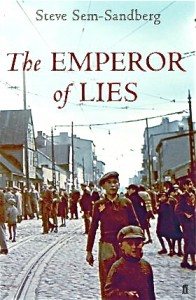 It is no overstatement to compare Swedish author Steve Sem-Sandberg’s epic novel about the people in the Lodz ghetto during World War II to Tolstoy’s War and Peace, published almost one hundred fifty years earlier. The real life dramas which the book illustrates, the memorable characters, the carefully developed themes which Sem-Sandburg treats in new ways, and the magnitude of the horrors easily make this book the equal of Tolstoy’s epic. The nature of the subject matter, of course, precludes any hint of romanticism here, but Sem-Sandburg is so good at varying scenes involving a series of fully human, repeating characters, that I cannot imagine any reader not becoming totally engaged with them, even though their stories have been created from piles of archival records, lists, and photographs and obviously have no happy endings. Beautifully written to memorialize the people of the ghetto, rather than the horrors of the Holocaust itself, this book is an awe-inspiring literary achievement.
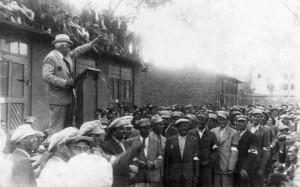 The philosophy of Rumkowski from the outset had been to make his ghetto so indispensable to the Nazi war machine because of its productivity that they would be spared deportation—at least a sizable number would be. “When the Germans spoke of Jews,” he knew “they were speaking not of human beings but of a potentially useful though basically repulsive raw material…[thought of] in collective form. In fixed numbers. Quotas, quantities.” And Rumkowski believed that “to make the monster understand what you mean, you yourself had to start thinking like the monster. See not one [person], but a larger number.” A believer in utilitarian goals, he consistently aimed to achieve the greatest good for the greatest number of people. It is this belief which lies at the heart of the moral conundrum against which Rumkowski is always judged by history. Some believe that he was heartless, morally bankrupt, inhuman. Others, especially some who survived their eventual deportation, believe that Rumkowski was their savior—they lived because they were able to earn enough food by working.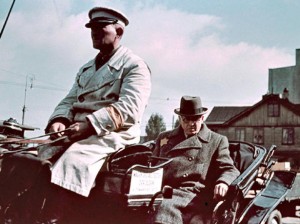
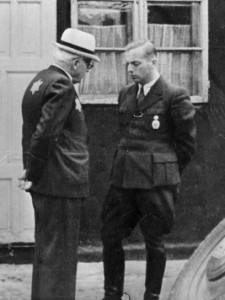 Not all the ghetto characters are good. There are gangs and Jewish crooks who act as bullies and shake down those who need favors, including Schlomo Hercberg, on the Resettlement Commission, who is getting rich from bribes; and David Gertler, the head of the ghetto police, who is famous for his shakedowns and his drive for power.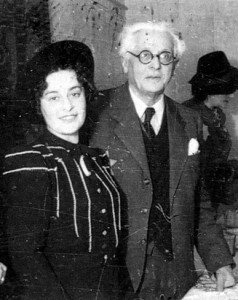

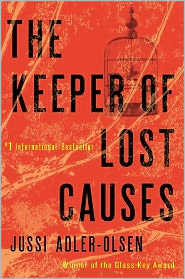
 appropriated for Department Q for other projects and other cases. Morck is happy to continue his bad habits in the basement, sitting with his feet up, sleeping, and smoking. As a new department head whose job has been well funded, however, Morck demands and gets a new car, better than standard issue, and an assistant, who turns out to be very different from “standard issue.”