“Most fiction, maybe all of it, from the grandest tales to the commonplace, was about things that were missing. Family, lovers, sustenance, peace, ideals. At the heart of those stories were emptinesses, yearnings, hollows that couldn’t be filled—as though bereavement were hardwired into mankind.”
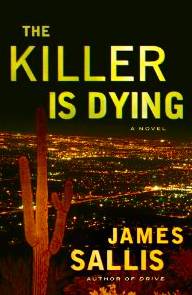 It is nearly impossible to try to describe the power of James Sallis’s writing to someone who has never read any of his books or who has never experienced a “mystery” which is also a breathtaking and complete literary experience. I was so overwhelmed by this heart-stopping novel, his best one yet, that I had to stop in the middle for a breather overnight, and I am still having difficulty coming back to earth to write this review. Though the novel “out-noirs” almost every “noir” novel I have ever imagined with its sad and desperate characters trying to cope with the miseries fate has dealt them, Sallis’s characters never expect life to be any different. All they want is to be able to cope with the here and now. As Sayles, one of the police investigators, muses, “So many stories come down to good and evil, guy in the white hat and guy in the black, hawk and dove, this struggle between them, like one will win. You saw and read and heard that long enough, you started to believe it, started to think like that. But the bad stuff is right there with you, always.” It is only when the characters are able to share on some level, however limited, that they begin to feel a part of humanity, even a humanity into which “bereavement” is “hardwired,” as Christian says in the opening quotation.

Set in Phoenix, The Killer is Dying is an impressionistic novel focusing on three main characters, and the reader comes to know these characters through a series of descriptive episodes in which the characters are not initially identified. Gradually, one comes to recognize the different points of view from references to details connected with a particular character. In a literary tour de force, none of these characters are associated directly with each other. They live parallel, not interconnected lives, illustrating stylistically the solitary nature of their lives.
The first character, Christian, is a Vietnam vet, a former medic who has been a contract killer for many years. Hired to kill John Rankin, “nondescript office-dweller at a nondescript accounting firm in a featureless city where everything is dun-colored,” he stakes out the man, then discovers, to his fury, that some other assassin has made the hit – and botched it. His goal becomes that of identifying the other hitman and completing the job for which he has been hired, but time is short: Christian is dying.
 The second character, Jimmie Kostof, is all alone – a thirteen-year-old who has fallen through the cracks. His mentally ill mother disappeared more than a year ago, and his father, shortly afterward. Incredibly resilient, he is now actively buying and selling unusual items via computer to raise enough money to stay alive without being discovered by the authorities. Though he never in the past had dreams that he could remember, Jimmie now has nightmares of almost paralyzing intensity. He has somehow tapped into the dreams of Christian, the killer.
Dale Sayles, a police investigator, who has left his card in the hospital room of wounded accountant John Rankin, is also alone. His wife Josie, who is dying a lingering death, has disappeared, leaving a note explaining that she has gone to an unnamed hospice: “I’m not a survivor, Dale. I’ve known that all along.” She wants time alone but promises to contact him.

As Sallis develops his themes by having his three main characters live their separate lives, he creates enormous sympathy for them. Jimmie has discovered that if he visits a local nursing home on Fridays and pretends to be a relative of a patient, that he can get a good, home-cooked meal. Sayles and his partner have never shared anything about their lives, and as they try to identify the hitman of John Rankin, they begin to learn about each other, to their mutual benefit. Even the killer, Christian, inspires some sympathy because he had so much potential before Vietnam, and he himself recognizes that he is sick both emotionally and physically. Though some minimal contact among these three characters does develop at the end of the novel, it is a glancing contact which barely registers.
Sallis includes more information in fewer words than almost any other writer I have ever found. His compressed prose is on the level shown by Hemingway in his short stories, and his ability to evoke emotions is superior. Every word and every image count here, and his descriptions are memorably unique. A man’s “belt buckle [was] recently let out a  couple of notches so that the old half-circle hoofprints showed.” Rankin, “full face, [looked] bland and characterless, as though he’d just gotten up from a chair and left his personality behind.” The passengers on a bus are referred to as “Jonahs.” Sayles, after a sleepless night, believes that “the light…out there somewhere in the night, [is] feeling its way blindly toward him.” The books that Jimmie reads the elderly reflect the novel’s themes, and even a TV program remembered by the killer carries a powerful message without calling attention to itself. As Sayles comments, “Strength was not about overcoming things. Strength was about accepting them.” And, of course, moving on. Powerful, thoughtful, and often heart-breaking, the novel reflects a kind of honesty that is rare in fiction.
ALSO by James Sallis: DRIVE, DRIVEN (the sequel to DRIVE), and WHAT YOU HAVE LEFT, which consists of all three books in the John Turner Trilogy: Cyprus Grove, Cripple Creek, and Salt River. Also, OTHERS OF MY KIND, WILLNOT, SARAH JANE
Photos, in order: The author’s photo by Marshall J. Grier, is from http://www.amazon.co.uk
Dale Sayles, the police investigator, lives near Camelback Mountain in Phoenix: http://www.bridgeandtunnelclub.com
One of the books that Jimmie reads is John Collier’s His Monkey Wife: http://www.amazon.com
A TV program about the stray dogs in Moscow which have learned to “commute” to the city from the suburbs, on their own, features in this novel and has symbolic significance. Here is the story and the photo above: http://www.thefeaturedcreature.com
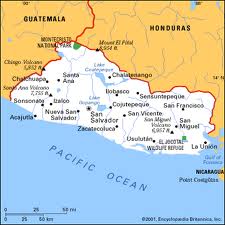
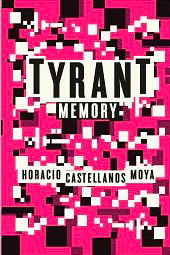 In Tyrant Memory, Horacio Castellanos Moya’s fourth novel to be translated into English, the author once again speaks out courageously about repression, abuses of power, military dictatorship, and cold-blooded executions in Central America, this time setting his novel in El Salvador in 1944. General Maximiliano Hernandez Martinez, a fascist known in the novel as The Warlock, had come to power in a coup led by the military in 1931, and was still holding the country in an iron grip in 1944. Believing that a communist conspiracy is underway in the capital of San Salvador, he uses the power of his army to clamp down on individual freedoms and terrorize his citizens into submitting to his gross abuses of human rights. Dona Haydee Aragon, the middle-aged wife of Pericles Aragon, becomes the first person narrator of the events that eventually culminate in a general strike aimed at the general’s removal.
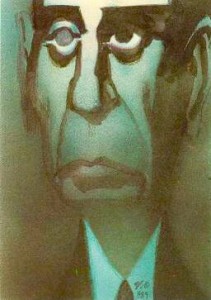

 All this shows the clear separation of roles between men and women at this time, but it also puts the horrors into ironic perspective. The fugitives—Dona Haydee’s silly son Clemen and his much more serious cousin Jimmy—add to the picture of daily life as they try to avoid the military searchers, and at one point, when they enlist the aid of a friendly priest, the novel hits its true comic high point. Eventually, however, the minutiae of Dona Haydee’s daily life become a bit wearing, at least for me, and I found myself longing to know more about the serious points of view of the Warlock and his military vs. the points of view of a vibrant local population. I was curious about Pericles’ interest in communism and wondered how influential a movement that had been. At the same time, I was glad to be spared a succession of horrors committed in retribution for the coup attempt. The author does succeed in raising interest in the history of El Salvador for readers who may be unfamiliar with its tumultuous background, and he wisely recognizes the advantage of standing apart and letting the reader discover new information without polemics and horror tales in this memorable and unusual novel from Central America.
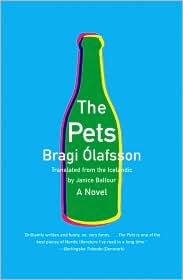 “Hilarious” is certainly not a word that immediately comes to mind when thinking of Icelandic writing.
 Main character Emil Halldorsson has been away in London, celebrating his million-kronur lottery win (about $8500) with a two-week vacation from the hardware store where he works. Upon his return, he learns from a neighbor that someone wearing an anorak with hood and carrying a plastic bag, has been looking for him that day, knocking on his door long after it should have been obvious that no one was at home, and peering in the window. As Emil ponders who the visitor might have been, the point of view shifts to that of the unknown visitor in the anorak, who has now gone on to a local bar, where he enjoys more than one beer, with Jagermeister. As the two men alternate points of view, the reader comes to know Emil, who is not sure if he is in love with Vigdis, his lover; Armann Valur, a chatty “prospective pensioner” and linguist whom he meets on the plane home and who appears to be hopelessly lonely and in need of attention; and Greta, the pretty woman across the aisle on the plane whom he hopes to have visit him in Reykjavic.

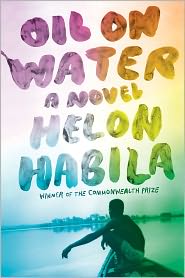 In his third novel, award-winning Nigerian author Helon Habila continues the dialogue he began with
  n to the military and the politicians, a significant rebel movement has now arisen, determined to obtain oil money on their own, and they will do virtually anything to get it. Constantly fighting the military, the rebels have brought a new kind of danger to the countryside, and the poor villagers never know who will invade their villages and threaten them next.


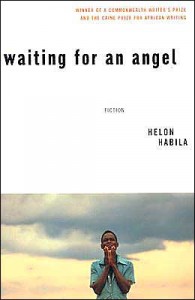 Nigeria in the 1990s, the setting for this novel, was a police state of such sadistic violence, with human rights abuses so staggering, that the country was expelled from the Commonwealth of Nations, and virtually every other country had sanctions against it. Every hint of dissent and every suspicion of democratic thinking by many of the country’s most gifted writers and thinkers were wiped out by the military government of Sani Abacha. Focusing primarily on Lomba, a journalist and frustrated novelist, who, in the opening chapter is a starving political prisoner in a Lagos jail, author Helon Habila jumps back and forth in time, introducing us in succeeding chapters to the lives of ordinary citizens of Lagos, men and women, including Lomba himself, living on Poverty Street, trying to maintain some semblance of hope in an increasingly hopeless world. Lomba, jailed for two years without a trial as the novel opens, has gone beyond anger, which he describes as “the baffled prisoner’s attempt to re-crystallize his slowly dissolving self,” and entered “a state of tranquil acceptance” of his fate. When the jailer finds the poems and journal entries he has written and hidden, he persuades Lomba to write some love poems for the better-educated woman he is courting. A brief ray of hope flickers when the woman recognizes Lomba’s cryptic messages and comes to the prison to meet him.
 The novel then flashes back to the years before Lomba’s arrest, and as various episodes unfold, the author shows us the effects of this dictatorial government on the ordinary people who populate the country. Though life is difficult and opportunities almost non-existent, the young people still have hopes and dreams. When Lomba and a friend have their fortunes told by a poet, one of the young men asks to know the day of his death, which he hopes will be “spectacular and momentous,” a day he is assured he will know when the time comes—and does. A second friend, whose parents have been killed in a car crash, is so grief-stricken that he makes an intemperate and idealistic speech, then is arrested, severely beaten, and driven insane. With no chance of getting his own novel published, Lomba himself takes a job writing for the Dial, for which he occasionally reports on political demonstrations, one of them a demonstration in which people peacefully protest the neglect of their neighborhood. “We are dying from lack of hope,” his friend Joshua says at the demonstration. The unarmed protesters are suddenly attacked by fifty armed riot police, tear gas is exploded, protesters are severely beaten, and running women and children are killed by cars speeding on the adjacent highway.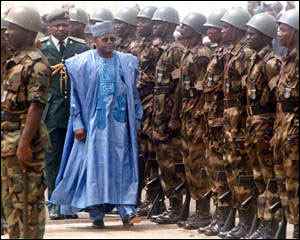

 Habila’s novel is a powerful defense of the freedom of the press and a celebration of the lives of those courageous writers who have refused to be silenced, even when faced with death. As he says, “Every oppressor knows that wherever one word is joined to another word to form a sentence, there’ll be revolt. That is our work, the media: to refuse to be silenced, to encourage legitimate criticism wherever we find it.” This moving study of idealistic young people refusing to give up, even when faced with threats to their very lives, is an unforgettable story of the human spirit waiting for an angel–and sometimes meeting the Angel of Death.