Note: This novel was WINNER of The Commonwealth Writers Prize (UK) in 2010.
“Remembering has its own pleasure, like spreading wings. The mind unfurls and proclaims its own sensuality—and sometimes it does not matter if the memory is bleak.”
Usually when I re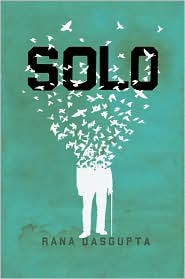 ad a novel described as “controversial,” I find myself seeing both sides of the controversy and writing about both sides when I write a review. With this novel, however, I was so exhilarated at the author’s bold originality, his ability to juggle his characters’ vibrant and creative inner lives while also examining the depressing circumstances under which they have lived, the sweeping historical scope which includes the entire twentieth century, and his total control of language with all its potential to amaze with its images and ideas, that this review will be, I hope, a celebration of one of the best and most innovative books I have read in a long time.
Daringly experimental, the book appears, superficially, to be two separate novels, but though it does fall into two parts, these two parts represent the two parts of our lives, the world of reality and the world of the imagination; here the events of the imaginative second part are a direct outcome of events from the first part, with clear parallels. As the main character remarks, “There is far more to 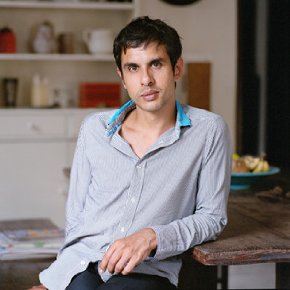 us than what we live…Life happens in a certain place for a certain time. But there is a great surplus left over, and where will we stow it but in our dreams?” Here author Rana Dasgupta shows that even a main character like this one, who appears to be a stodgy and uninteresting plodder, may have a vibrant fantasy world which keeps him alive when there is little else left in his world to provide inspiration and satisfaction.
Ulrich, the Bulgarian main character, is almost a hundred years old as the novel opens. Blind, impoverished (after all the failed economic experiments of the various governments in Bulgaria), and alone, he spends his days looking out a window from which he cannot see anything, though he can hear the shouting and banging at the bus terminal outside his window and smell the fumes from the wall below him, which is used by “all the men who pass through the bus station.” His inner world, however, is lively and filled with events, real and imagined. “He knows that no living person is interested in his thoughts. But he has survived a long time, and he does not want to end with a mindless falling-off.”
 Gradually, his past unfolds, and the reader comes to know the pivotal events in his life. A lover of music who had hoped to study violin, he switches to chemistry after his father angrily destroys his instrument, going to Berlin to study science until he runs out of money. There, however, he sees Albert Einstein, for whom he picks up some dropped papers, and is rewarded with the statement, “I am nothing without you,” a statement which haunts him till the end of his days. As a chemist, Ulrich dreams of someday finding something that will change the world forever. Only in his dreams is he able to be the musician that he believes himself to be at heart. Back home in Sofia, his best friend Boris exposes him to new ideas, as the post World War I political tumult unfolds. Boris, a talented violinist, is also a communist at a time when the fascists are vying for power. The fascist coup (1934) is superseded by the entrance of the Russians and their takeover of the government (1944). Ulrich eventually achieves a high position in the Kremikovtzi Steel Works, a company built by the Russians (1959) and which pollutes the land, rivers, and air for the rest of the century.
When Ulrich is blinded in an experiment, he retires. Already nearly seventy, he remembers something Einstein said, when considering his own death, “I feel such solidarity with all things that it does not matter where the individual begins and ends.” Ulrich, too, senses an expanding of his spirit upon his retirement and the approach of his old age. “When his mind is particularly aware, Ulrich can sense the great black ocean of forgotten things, and, ignoring his beginning and end, he casts off into it. Everything he has known has drained, over time, from the actual world into this ocean, and he is blissful in the endless oblivion.”
Obviously, the plot described above is more philosophical and historical than it is psychological, emotional, or exciting. These pages, however, set up the second part of the novel, which begins at the halfway point of the book, the book of Ulrich’s memories and wild fantasies. Here a young man, Petar, much like Ulrich in size and personality, lives on a pig farm, where he eventually has a son named Boris. Boris, an instinctive musician, teaches himself to play the violin, learns from the gypsies, and enjoys his music. Succeeding chapters introduce other characters, such as Khatuna, a beautiful and very ambitious woman, and her sensitive poet brother, Irakli, who bring the country’s history and the collapse of communism up to date. Eventually, these two meet up with Boris, the violinist from the pig farm, and move from Tblisi to New York. The two artists, Boris and Irakli , are the vehicles through which the author comments on the art scene, its commercialization, and its parasites, like agent/manager Plastic Munari. Even the seemingly idyllic world of music and poetry has its down side.
When Boris, “the son of [Ulrich’s] daydreams,” faces the death of a friend, Ulrich enters the story himself to offer advice. In a passage of extraordinary beauty and sensitivity, one of the high points of the novel for me, Ulrich says, “[Your friend] will find his way inside you, and you’ll carry him onward. Behind your heartbeat, you’ll hear another one, faint and out of step…Gradually, you’ll grow older than him, and love him as your son. You’ll live astride the line that separates life from death. You’ll become experienced in the wisdom of grief. You won’t wait until people die to grieve for them; you’ll give them their grief while they are still alive, for then judgment falls away, and there remains only the miracle of being.” A fine definition of love from a thoughtful and gifted author, not yet forty, in a book that I found riveting.
Photos, in order: The auth or’s photo is from his Amazon Author Page.
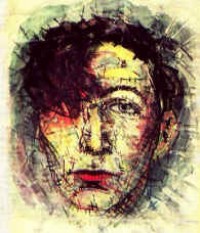
The self-portrait of Geo Milev, one of Ulrich’s friends, shows his expressionistic style. Milev, a communist who is a peripheral character here, was arrested and executed after the St. Nedelya bombing in 1925, which killed over a hundred high-ranking army members attending a funeral. His haircut hides his missing eye, lost fighting for his country in World War I. See http://en.wikipedia.org
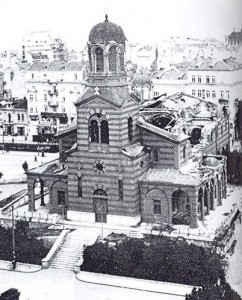
The bombed out St. Nedelya Church, 1925: http://en.wikipedia.org
The Kremikovtzi Steel Works, built by the Soviets in 1959, where Ulrich works for many years. The works shut down some facilities and eventually closed in 2008, “because it did not have the raw materials needed to keep them going.” http://sofiaecho.com.
The final photo is of Bulgarian violin virtuoso Svetlin Russev, with his four-hundred-year-old violin. I imagine Boris as resembling him.: http://paper.standartnews.com
 hat is pure unadulterated fun, Kate Atkinson creates her second Jackson Brodie mystery (2006), featuring a series of bizarre characters, all involved with murder–either planning it, committing it, or trying to avoid it. Many seemingly unrelated characters, involved in several seemingly unrelated plot lines, make their appearance in the first fifty pages. During the four days in which the novel takes place, however, these characters and plots start to overlap and eventually come together, until, at the end, the reader is smiling with pleasure at the brilliant plotting and ironic twists of fate–full of admiration for Atkinson’s skill in bringing it all together with such panache.
 , a former police inspector turned private investigator, is investigating three old cases, which soon begin to converge and then overlap. Three-year-old Olivia Land disappeared without a trace thirty-five years ago while sleeping in a tent with one of her sisters, two of whom have hired Jackson to find out what happened to her. Theo Wyre has hired him to investigate the death of his daughter Laura, his much-loved 18-year-old daughter, who was slashed and killed by a maniac ten years before while working in her father’s office. Theo, having spent ten years accumulating information, has turned over a roomful of files to Jackson. Shirley Morrison, Jackson’s third client, is trying to locate her sister and her niece. Her sister Michelle, married at eighteen and living with her husband and screaming daughter on an isolated farm, has vanished from Shirley’s life, and after twenty-five years, Shirley wants to find her.
 vered physically but not emotionally from an accident which cost the life of his fiancée, followed by a downward spiral which led to his breaking of a superior officer’s nose, J McNee has wisely left the CID and has been working as a private investigator in his home town of Dundee, Scotland. Morose and cynical, he suffers from agonizing psychosomatic injuries which sometimes nearly paralyze him as a result of the violence of his past life. When he is asked to investigate a missing person by reporter Cameron Connolly, a wheelchair-bound man whose spine was broken by members of the local drug trade which he had been investigating, McNee takes the job, “off the books,” working in parallel with the Dundee CID. The missing person is Mary Furst, a fourteen-year-old girl, a promising student and artist, who is also the god-daughter of David Burns, a thug who is “knuckle deep in drug money, extortion, rackets, underground deals, and blackmail.” Detective Constable Ernie Bright, a man who had trained McNee at CID and who still hopes he will return to the force, is his contact there, though he will work most closely with Susan Bright, Ernie’s daughter.
 ward, almost hard-boiled style, McNee tells his own story in a first person narrative which is much more psychological in approach than most other noir novels. McNee has to deal with his own problems and then apply his insights to the problems of other characters in the novel. As one of his colleagues tells him, “You’re a man with a conscience and a code and all that other bollocks, but you’re also a man who drags his own disaster around with him like a wrecking ball. You want to help people. But you can’t. Can’t even help your…self.”
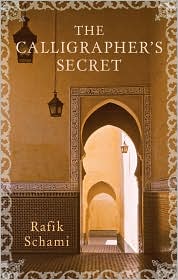 ia, from 1931 through 1956, The Calligrapher’s Secret seems, on the surface, to be an impressionistic and romantic novel which strolls at its own leisurely pace, dropping in on first one character and then another, moving back and forth in time and across ethnic, religious, and social groups. Several main characters and families share their lives and problems, and, in the process, convey an intimate picture of life in Damascus, filled with vibrant descriptions of the city, its neighborhoods, and its varied social life. The novel is much more than a series of little domestic stories, however charming and interesting those may sometimes be. It is also a serious exploration of the issues surrounding Arabic calligraphy, issues so serious that some who want to make Arabic script more modern, so it can accommodate new words from science and philosophy, face death threats and personal attacks by traditionalists. They consider the language of the Quran the word of God, to be sacred, inviolable, unchanging.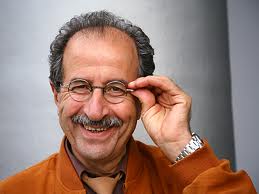
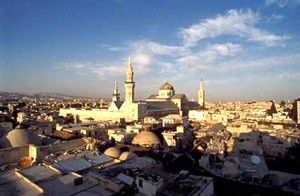 957, and Noura, the twenty-year-old wife of Hamid Farsi, one of the most esteemed calligraphers in Damascus, has run away. Backing up to 1942, the novel then reveals her family and life at that time. Her father, Sheikh Rami Arabi, a famous scholar, bemoans the lack of religious feeling among some of his students: “They treat God like a waiter in a restaurant. They order rain, and as soon as he brings them their order, they turn their backs on him.” An episode in which a gang torments a Christian by pulling down his pants in public gives some insight into ethnic issues with which everyone is dealing. Noura’s schooling, which she loves, as opposed to the lack of schooling available for a poor Christian boy named Salman, who is taught to read and write by a bright young female friend, emphasizes class differences and the difference in opportunities.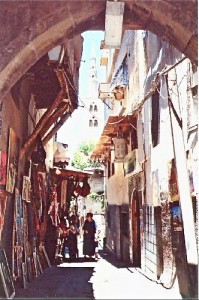
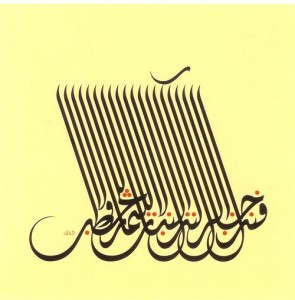 bplots keep the reader entertained, but at several places in the novel, I asked myself where all this was going. At four hundred forty-four pages, this is a long book, and I am not sure that the family backgrounds of the parents, grandparents, aunts, uncles, cousins, wives, prostitutes, and employees of the main characters are all necessary to advancing the plot or giving a lively picture of life in Damascus. Then again, the plot itself is not really a plot as one may be accustomed to knowing it. Rather it is a series of subplots, and though these are often connected, they are not unified or connected in the traditional sense. Noura and Salman, responsible for the love story, disappear, and nothing more is heard of them for almost a hundred fifty pages. Instead, the novel devolves into an analysis of aspects of Arabic script, the Sunni/Shiite conflicts about language, and conflicts between traditionalists and. progressives which have apparently rent the Arab world.