“Old ladies who lived next to serial killers for years always tell the papers what a ‘wonderful normal boy’ he was. You refuse to believe in the presence of evil and go searching for the good ‘at the bottom of the soul.’ Me and Rosie, we know better now. If there’s black tar in that well, you won’t find fresh flowers when you drain it.”
Darlin g Jim has every characteristic that I usually avoid in novels–it’s melodramatic, gothic, completely unrealistic, filled with horror and romance and magic, and over-the-top with coincidence, bloody medieval battles, and men turning into wolves. And I loved every minute of it! From the opening pages to the absolutely perfect (and perfectly outrageous) ending, I was engrossed, smiling at the author’s deliberate manipulation of my feelings, his unembarrassed use of well-worn plot devices, and his comic book style of narrative which kept the action coming and coming and coming—a book to be read for pure, unadulterated fun!
Written by Danish author Christian Moerk, who breaks “the rules” at the outset by setting the novel in Ireland, not Denmark, or any of the other places he has lived, the novel winningly captures the spirit of Ireland’s story-telling tradition, with its mysteries, its spirit world, and its fascination with knaves. Four story-tellers—the narrator, two writers who tell stories from beyond the grave through their diaries, and a mysterious central character, who is a traditional Irish storyteller (a seanchai), keep the excitement high and the reader constantly “suspending disbelief” to get to the conclusions of their various stories.

The novel begins when an elderly postman from Malahide peeks through the mail slot while on his route and sees the murdered body of a woman with whom he occasionally had a cup of coffee. The gardai discover two more bodies upstairs–young women who appear to have starved to death inside a locked room. Evidence suggests that a third young woman, now missing, once lived in the basement. Young Niall Cleary, who replaces the distraught postman at the office, finds a thick “letter” from Fiona Walsh, one of the young victims, in the local dead letter bin. Addressed to “anyone at all, post office,” the letter is actually Fiona’s diary, detailing the three months she and her sister were captives of their aunt Moira, also dead, and the reason: “We loved a man named Jim without knowing his true nature.”
Niall, dismissed from his job for not minding his own business, travels from Malahide to Castletownbere, where the major events leading to a series of past tragedies have taken place. Here in this small town on the wild and windy Beara Peninsula of southwest Ireland, he not only learns more about the lives of Fiona, her sister Roisin, and Roisin’s twin Aoife, but also about Jim Quick, the storyteller who is at the heart of the novel. Jim has traveled throughout the area, telling one chapter of a story here and the next chapter in another town, and women of all ages have fallen instantly in love under his spell, many of them following him from town to town. Jim was “a force of nature there’s no name for yet.”
 It is in Castletownbere that Niall is eventually able to find and read Roisin’s diary, similar to Fiona’s in many ways, but adding greatly to the story of Jim Quick. Roisin also describes the story which Jim tells in his travels throughout the Beara peninsula, a story which begins in Ireland in 1177 A.D., and features tales of battles, civil war, and the role of Prince Euan, who killed his much braver brother Ned. Euan was a sadist with a fetish about wolves, and he killed hundreds of them, collecting their heads–so many, in fact, that his castle became known as the Fort of the Wolf. As Jim’s story about Prince Euan starts to overlap with the recent crimes in Castletownbere, the several narratives begin to come together, and history and myth begin to be reconciled with the modern mysteries and murders.
Moerk’s two diary writers are hip, smart-alecky young women who are well individualized. Fiona, the eldest, is an elementary school teacher about to be married to Finbar, a successful local man. Roisin is a goth who spends hours on her CB radio, a woman who is warned by “Gatekeeper” on the CB that “If he speaks to you about love, run for your life.” Aoife, Roisin’s twin, is the strongest of all the sisters, a woman who rides a motorcycle and shows no fear of Jim or anyone else, a woman who mysteriously vanishes for three years. As the book comes to a close, there is no doubt that the author will tie up all the loose ends and resolve the action to the satisfaction of his readers.

Darling Jim is a unique book in the sense that it is written with the straightforward energy of young adult fiction, but it is written, with all its bells and whistles and magic, for adults—much like an adult comic book. Over-the-top in its sensational action, the novel succeeds in persuading readers to abandon their preconceived notions about likes and dislikes in fiction and simply yield to the story, in part because the author’s prose style is mature–and effective. Not a word is out of place as author Christian Moerk creates his magic and weaves his spell, bringing to life a character who epitomizes the idea that “happy maidens dancing with leprechauns and fairies on the green meadows of our peaceful emerald island are a load of shite.”
Photos, in order: The author’s photo from his website: http://www.christianmoerk.com/ Double click on the photo for a terrific story on how the book came to be written. Fiona’s Diary and Bronagh’s Confessional are also depicted.
A Malahide cottage, perhaps the one featured in the novel, is shown here: http://www.let.ie.
MacCarthy’s Bar in Castletownbere, shown here, may have been one of the ones visited by Jim as he told stories throughout the Beara Peninsula. http://www.visitbereisland.com
 I cannot claim to be one of the people that author Stephen Benatar has greeted at London bookstores and persuaded to read one of his novels, though his career-long commitment to the self-publishing and self-publicizing of his books has certainly made him many friends and earned him many readers. Instead, halfway around the world, I received this book from an astute British friend, who knows how much I enjoy the dark British comedies written in the 1980s by writers like Jane Gardam, Alice Thomas Ellis, Molly Keane, Muriel Spark, and Barbara Pym. These authors, however, were fortunate to have found major publishers who brought their often-satiric, sometimes twisted little comedies about odd characters to public attention, wide acclaim, and significant sales. Stephen Benatar, whose work is certainly the equal of these other writers, received wide acclaim and prize nominations when his first two novels (including this one, his second) were published in the early 1980s. His books did not catch on with the public, however, and for the past thirty years, he has been self-publishing and hand-selling his books in bookshops around London, where he purportedly sells fifty to a hundred books at each weekend reading. With the recent re-publication of this novel by the New York Review of Books in 2010, Benatar, now seventy-three, may finally be on the road to finding the audience he has worked so hard for, and the screen rights for this novel have recently been sold.
  Nominated for the Booker Prize in 1982, when it was first published in London, Wish Her Safe at Home is a startling novel with an even more startling main character, Rachel Waring, a forty-seven-year-old woman who has a dead end job, a cynical roommate, and no friends. Brought up by an overbearing mother whose sense of “correct behavior” seems to have ruined any chances Rachel might have had for a happy life, she is lonely and repressed, with absolutely no understanding of how to meet and make connections with strangers. On one occasion on a train, she tries to open a conversation with a man reading in the seat across from her: “Do you mind if I talk to you for a moment? I’ve just read the most frightful description of a hanging, drawing, and quartering, and I’m afraid I can’t stop reliving it.” At a christening, later in the book, she begins chatting with an attractive young man by asking, out of the blue, “If this were an invasion of the body snatchers, would you be one of the bodies or one of the snatchers?”
  Benatar wisely lets Rachel tell her own story, creating a classic novel in which the reader identifies with Rachel because she is so pathetic and earnest about her needs and disappointments, at the same time that it is impossible not to recognize how far from “ordinary” Rachel really is in her thinking. Every event here is filtered through Rachel’s own mind, and when she becomes the sole beneficiary of her elderly Aunt Alicia’s Georgian home in Bristol, she decides to leave London, asserting: “Bristol was going to treat me well, provide me with a new start.” Once ensconced in the old house, which she refurbishes and refurnishes, she becomes a “new woman,” buying a red dress, flirting with the vicar, revealing vivid sexual fantasies about the handsome young man who works in her garden, and spending lavishly from her savings on things that make her happy. It is not long before the reader realizes that Rachel has serious emotional problems, even as Rachel herself is finding a kind of happiness that she has never known before. As she reminisces about her past and the man with whom she was desperately in love at age twenty-two, her behavior becomes more understandable, though no less bizarre. Her research on the original builder of the house, Horatio Gavin, an idealistic “champion of the underprivileged” and an associate of William Wilberforce (who led the movement to abolish England’s slave trade), becomes so intriguing to her that she decides to write a book about him, and soon she is imagining herself as “an eighteenth-century Rachel” who soothes the broken heart of Horatio Gavin, whose fiancée has died. “Sometimes,” she says, “I felt utterly convinced I had been singled out for glory.”
  Throughout the novel, Rachel sings songs from the past—“If Love Were All,” “Dancing in the Dark,” “Oh, You Beautiful Doll,” and many others, whose romantic lyrics are quoted. She also remembers the dramatic impression she once made on friends twenty-five years ago when she recited Tennyson’s tragic ballad “The Lady of Shalott.” The interjection of these songs and memories provides further entrée into Rachel’s psyche and her deterioration. As her voice becomes increasingly confidential and revelatory, the involved reader will recognize with alarm the growing contrast between Rachel as she sees herself and Rachel as she appears to the rest of the world. This contrast, which Benatar enhances by never intruding upon Rachel’s frayed psyche, provides the drama and emotional connection which good fiction requires. The reader, inevitably drawn into Rachel’s life, cannot help but be moved by Rachel’s story, even as s/he sees its sad absurdities, its ironies, and its dark humor.
 ond novel of the Copenhagen Quartet to be published in the US, American expatriate Thomas E. Kennedy shows his immense versatility, writing a totally different kind of novel from
  of “the Tank” as they navigate the shoals of big business during difficult economic times. Here Kennedy uses the business framework to establish a set of characters whose business lives become part and parcel of their personal lives, with the two different aspects of their lives so intertwined that the characters fail to grow or even recognize who they really are. They become, in essence, servants of their jobs and of the social milieu to which they have entrée as a result of their work. They no longer take the time to contemplate, appreciate or experience life’s mysteries, or feel love on anything other than the sexual level.
 Over the course of one week in autumn, three men from the Tank and their families reveal their dependence upon their business environment, showing in the process their own intellectual and spiritual limitations, and it is not until they are forced to confront issues of who they really are and where they are going that some of them begin to grow beyond their stereotypical behavior to become truly interesting individuals struggling with life’s realities. It is the autumn of their lives, physically, emotionally, and spiritually, and they have, as a group, squandered much of their earthly time chasing shadows.
 red to “clean house” and reduce expenses by firing some long-time employees, which he promptly does. A man with no sensitivity and little conscience, he is the father of Adam Kampman, a seventeen-year-old who finds that he has more in common with the non-conforming Jes Breathwaite and his counterculture life than he has with his parents.
 ation of which Jes Breathwaite thinks would be a perfect job), and death (including the fear of two now-defunct nuclear power plants, fifteen miles from Copenhagen). The real names of the two boys, Adam and Isak, have biblical significance, and major themes flit in, out, and through of the lives of characters, who do not always recognize them or their importance. Kennedy has written an unusual book with multiple main characters, none of whom, at the beginning of the novel, are unique and living full lives. These characters illustrate through their reactions to the situations they face, however, many of the themes which Kennedy has also illustrated in
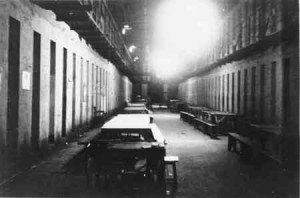
 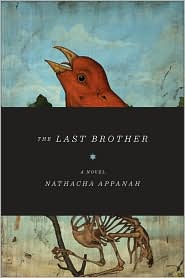 yone reading this novel and not being moved to tears at least once during the action. Set in Mauritius, where the author grew up, the novel is based on real events that took place during World War II, specifically, the internment of fifteen hundred Jews from Europe who managed to escape their countries as the Nazis took over. When they finally reached Palestine in 1940, however, they were turned away by the British rulers of the Palestinian Mandate because they lacked the required “papers,” then put on a rusty old ship and sent to Mauritius, where they were confined to a camp under British rule, almost the equivalent, to many of them, of a concentration camp, though it lacked the “final solution.” Located in the Indian Ocean, about five hundred miles east of Madagascar, Mauritius became the burial place of three hundred of the men, women, and children who were interned there from 1940 – 1945.

 imes reminiscent of Nobel Prize winner J. M. G. Le Clezio’s
  n 1933, but only recently translated into English, Kornel Esti is Hungarian author Dezso Kosztolanyi’s last book, a unique combination of wild romp, thoughtful contemplation of life’s mysteries, and dark commentary on life’s ironic twists. Regarded by the Guardian as “a ringleader in the 20th century flowering of Hungarian literature,” Dezso Kosztolanyi (1885 – 1936), a poet, fiction writer, and journalist, creates a narrator who is also a writer, telling us from the outset that the narrator, now forty, has suddenly decided to contact his oldest friend from childhood. The two friends are complete opposites—the narrator, timid and repressed, is utterly lacking in confidence, while Esti is outrageous, afraid of nothing, and iconoclastic. In their shared childhood, which the narrator reveals through snippets of reminiscence, Esti urges, “Don’t wash up, stay dirty, hooray for dirt.” As they grow older, Esti is “forever getting mixed up in escapades” and practical jokes. As an adult he is a trickster for whom tomorrow never comes, a man who never repays loans, sends anonymous letters, passes out drunk in the street, insults important people, seduces young girls, and lives his life with impunity.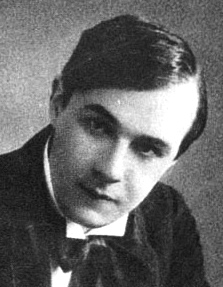
 lows is a series of eighteen episodes, ranging from Kornel Esti’s first day of school, in 1891 (“He was a skinny, anemic little boy, with transparent ears”), through a symbolic tram ride at the end of the novel, a brief chapter in which the narrator/author’s entire philosophy is summed up through Esti’s late-in-life experiences on an overcrowded tram. In between are moments of high comedy, poignant drama, and shocking cruelty, all reflecting aspects of Esti’s life, either real or imagined, and all contributing to the broad panorama of human existence. On an early trip to Italy, for instance, Esti experiences the joy of speaking Italian and “escaping from the prison in which he had been confined since birth.” He swims in the ocean for the first time and finds that a “kiss and that journey had consecrated him for something.” He visits a town (reminiscent of the writing of Swift) in which everyone speaks only the truth. (A bookstore advertises a book as “unreadable rubbish” by an “old writer who has gone senile.”) He visits with his poet friends in coffeehouses in Budapest, comes into a huge inheritance, deals with a mad friend, and learns that “Life has its ups and downs…but let’s add that not only has it ups and downs, it also has deep meaning.”