“People like my brother are the ones you need to understand. Things are changing so fast. Now it is all computers, cell phones, and satellite TV. Not everyone adapts. His fundamentalism gives Shaheed a sense of certainty and being a mutawwa [member of the religious police] gives him respectability…but he never thinks before he acts; he just reacts. I try not to argue.”
When Sara h Moss, a physician in Madison, Wisconsin, falls in love with a fellow student, Ibrahim Suleiman of Khobar, Saudi Arabia, she is unable to persuade him to stay in the US. Instead, he persuades her to go to Saudi Arabia, where she obtains a job at the Suleiman Hospital in Khobar while she sees if she can adjust to Saudi life. What follows is a comprehensive exploration of Saudi families and Saudi society, especially the society of women and their roles in the larger Saudi world, and as Sarah learns more about the world of Saudi women, she must decide whether she can live among them forever as Ib’s wife.
American author Jean Grant, who lived (happily, she says) in Saudi Arabia for nine years, working for the Arab News, shows particularly sensitive insights into both the American and Saudi cultures, dealing with the big issues of women as “second class citizens,” the strict rules for modesty in clothing, the complications created when women must get permission from a man in the family even to obtain emergency medical treatment, the growing Islamist fundamentalism, and the brutal ad hoc punishments the mutawwa’in (religious police) mete out with impunity (fearing no reprisal from secular police). But she also shows the ways in which American women either make compromises in their lives, or, in other cases, refuse to make compromises which would make everyone’s life easier. As Sarah tries to get to know Ib’s family, she discovers what it will take if she is to experience the kind of freedom she needs within the strict boundaries of the family structure and the Muslim culture.
 The individual characters here represent some of the major issues to which Sarah must learn to adapt. Ib’s sister Layla, a relatively free spirit who loves brightly colored, fashionable burkhas, is a teacher in a public school for girls, thrilled by the chance to help mold the lives of her students so that they can grow up to make intelligent choices. Her husband, like Ibrahim, is on the liberal side of Muslim life. Their brother Shaheed, however, is a mutawwa of the strictest commitments, and he tries to impose his beliefs on the family at large, often arguing fiercely with Ibrahim. Shaheed’s wife, who is often seen bruised, quietly accepts his behavior toward her as her lot. It is Ib’s mother Malika who becomes the biggest stumbling block to Sarah’s success within the family. Malika is a woman who believes that no good can possibly come from Sarah’s relationship with Ib, that she is a stranger who can only mean trouble for the family.
As the culture is explored, the reader can truly imagine what it would be like to be a woman living in this family. The way that women achieve levels of freedom on their own, despite the restrictions; their urge for independence but their flexibility within their culture; traditional bridal customs and marriage preparations; and the special society that women share with each other without the presence of men are both fascinating and well integrated into the story of Sarah’s life in Saudi Arabia.
 Grant is particularly harsh on the extreme fundamentalists and the mutawwa’in, unintelligent and incurious men who act without thinking, sometimes in ways we would consider sadistic. A woman who faints with heatstroke is refused help because she is an infidel and a woman. Young, unmarried girls are sometimes attacked by sadistic “Eve teasers,” who may yank off a girl’s headscarf, at which point the unfortunate girl may be arrested or beaten by the mutawwa’in for having uncovered her head in public. On one occasion, this group would not allow panicked girls to escape from a building that was on fire until they had gone back inside the burning building to get their headscarves. On another, a woman is whipped on the legs at a gathering inside a family home because her clothing is a “distraction.” Of these men, a character says, with resignation, “[These] young men no longer fear Allah. They forget they will be held accountable on the Day of Judgment.”
 The 9/11 attack on the Twin Towers is presented through multiple points of view by the Saudis in this family–those who refuse to believe that fifteen of the twenty hijackers were actually Saudis, those who believe the whole thing was an Israeli plot concocted to look like an Arab attack, and those who believe that the US deserved this for the deaths of Palestinians.
Ultimately, Grant presents a fascinating and broad-based picture of Saudi life and the issues which would cause the greatest difficulty for an American woman, should she plan to live in Saudi Arabia. As Sarah’s stay becomes longer, she is eventually forced to choose whether to stay and deal with Ib’s family, with its wide range of beliefs and customs, or to return home to her own family. Though Grant does not hide her anger at the abuses perpetrated by fundamentalists, she is fair and thoughtful in her presentation of other aspects of life and death in this kingdom. Ultimately, she seems to agree with Ib who says, “To fight the real enemies of Islam, you should tackle illiteracy and poverty.”
Photos, in order: The author’s photo and an interview with her are from: http://www.aramcoexpats.com
One place where the women can completely relax is at the oasis at Qatif, where the swimming area is for women only. Sarah and the other women treasure their social lives there: http://www.qatifoasis.com
The women often use swimming costumes like this: http://www.themuslimwoman.org/page/20/
 lsson, the common-law wife of Swedish author Stieg Larsson, has finally published her own book about Larsson, his books, their thirty-two years of living together, and his legacy, which she believes has been sullied. As fans of the Millennium series probably know, a quirk in Swedish law prevents common-law wives from inheriting from the “husband’s” estate, and Larsson’s father and brother, from whom he had purportedly been estranged, have claimed the entire, multimillion dollar estate and all rights to his novels. She is outraged by “the Stieg industry,” promoted by his father and brother, and wonders how long it will be before she sees his photo on a bottle of beer or a car, believing instead that the profits should be donated to the causes for which he worked so tirelessly.
 mied by this short book at first, and even after completing it, I was not sure exactly what I had read, though I recognized that humor and dark irony were at the root of much of the novel. It was not until I had spent considerable time looking up the story of the author’s own life, and the historical events in Chile with which he had been involved, that the full impact of this novel became clear. How anyone who suffered so much could retain any semblance of humor, no matter how dark, is an amazing tribute to the human spirit. Ultimately, I found this to be one of the most interesting novels I have read in a long time, but it is complex, in part because of its brevity, and in part because there is no introduction which provides the background which many non-Chilean readers, such as myself, may want or need to appreciate this book fully.
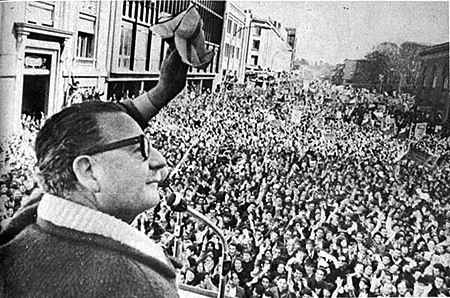 e planned robbery, the men chat about how they returned from exile to a country they no longer recognized, about their memories of life before and after Pinochet, about those among family and friends who have “disappeared.” They discuss the divisions within the Socialist party which prevented them all from keeping the country on a socialist path under Allende, and they comment on what they think might be the possible involvement of the US and the CIA in the overthrow of Allende.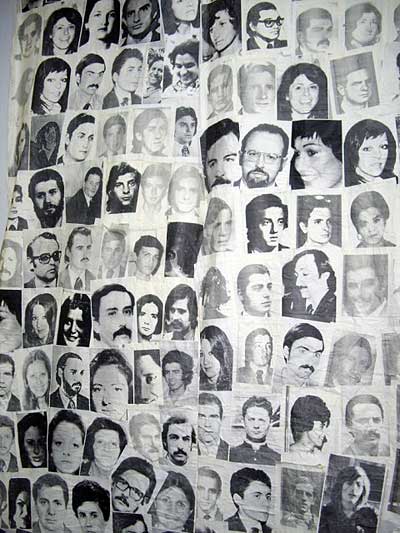
 compulsion to do what he considers good and right, even though it requires him to act in ways that society and the law consider morally and legally wrong, permeates this book on all levels, with several characters assuming this role of “Redeemer” in their actions throughout the novel. Often these characters justify their actions to themselves by believing that these actions are less wrong than the actions of their victims—that society, they themselves, and sometimes even their victims are better off as a result of their actions as “redeemers,” which most often result in deaths.


 lated to the speckled hyena, a new friend in Denmark did some googling and found an interview in Swedish with the author (
 This is especially disconcerting because the main character here, Ismail Agha, a Kurd, is a good man who cares for his neighbors. He has adopted an orphan and then had a son of his own, but his troubles increase as his sons grow up and become resentful of each other, each jealous of the time Ismail spends with the other son. When Ismail is rich, he is admired and respected by the community, but when, in sympathy for his poor neighbors, he uses all his riches to help them and becomes as poor as they, he becomes the subject of their vicious but seductive gossip, slandered by the very people he has helped, who decide that he has found and/or stolen a buried treasure.
 Details of the successive depredations by different aggressors from different cultures are vividly presented, with the author often using nature and its wildlife to show ironic parallels or contrasts between human and animal behavior. With the flavor of a collection of folk tales, this novel offers a unique glimpse of a world largely hidden, except in our current, blazing headlines of Turkish/Kurd depredations.